
In a quiet Kuala Lumpur neighbourhood, rows of terrace homes form a familiar urban rhythm, but Armoua House stands apart, with intention.
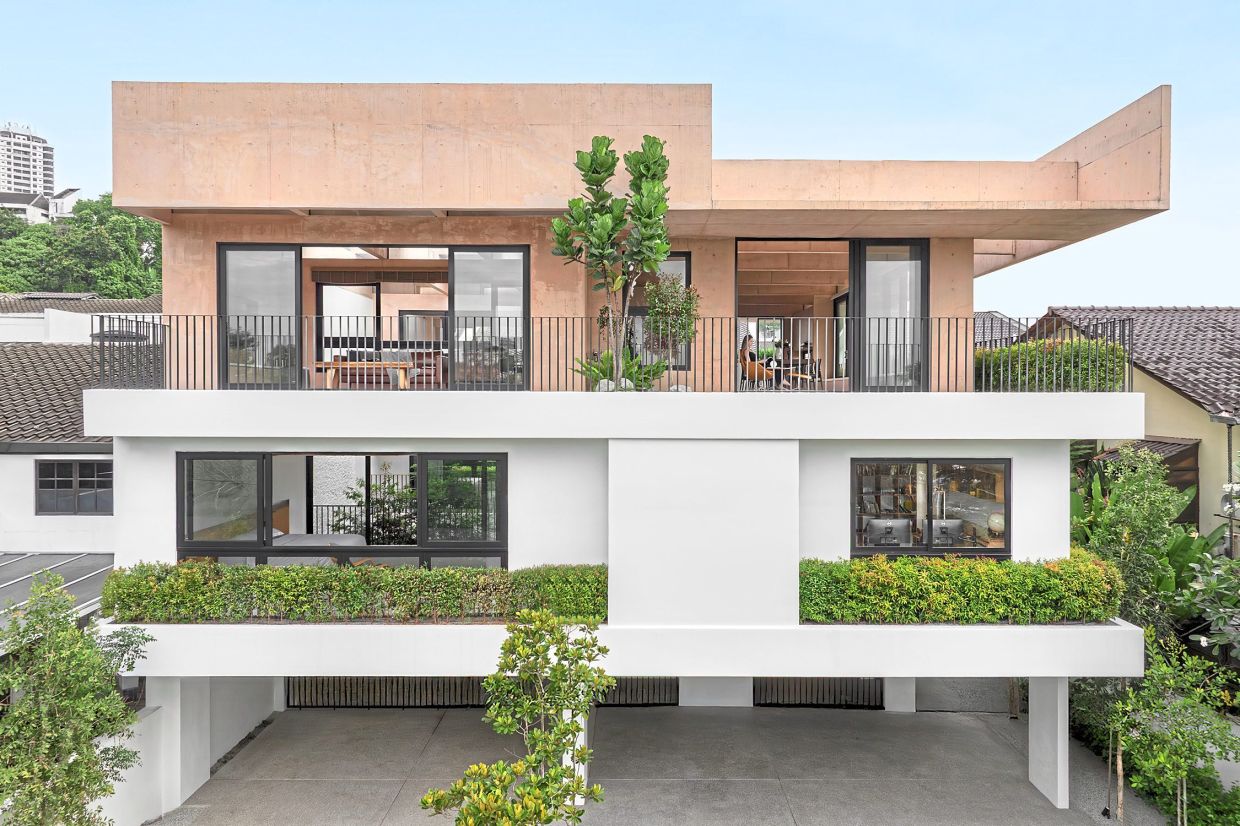
Wrapped in a soft pink concrete shell and framed by expressive structural lines, the residence is at once striking and contemplative. Shaped by circumstance as well as design, the project evolved mid-course and as a result, found a richer architectural voice.
Designed by Fabian Tan, Armoua House began as a half-century old single, three-storey dwelling on an end-lot terrace overlooking treetops and the distant city skyline.
But just before completion, the narrative shifted. The homeowners acquired the adjacent unit, transforming what was once a singular vision into a more complex composition: two homes, reimagined as one.
For Tan, the change was unexpected.
“I was quite taken aback,” he admits. “With the first unit already designed, the immediate challenge was clear – how to merge two structures seamlessly without compromising the integrity of either.”
Yet, he notes, what could have been a disruptive turn became an opportunity, and the transition unfolded more fluidly than anticipated.
“The existing design required minimal alteration, allowing both units to align naturally. I was quite happy with that,” he says.
The result is a 7,300 sq ft (678sq m) house that feels cohesive, yet layered with subtle contrasts – a duality that reveals itself gradually as one moves through the space.
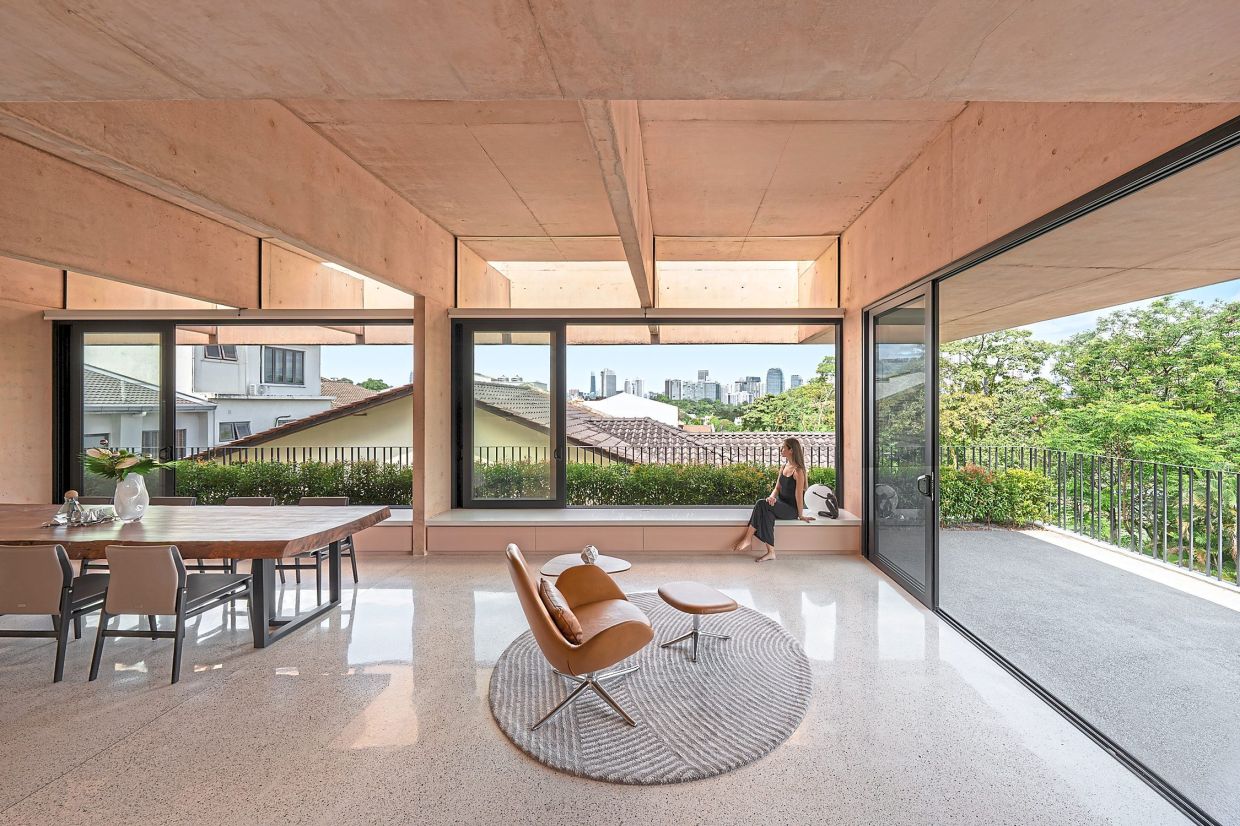
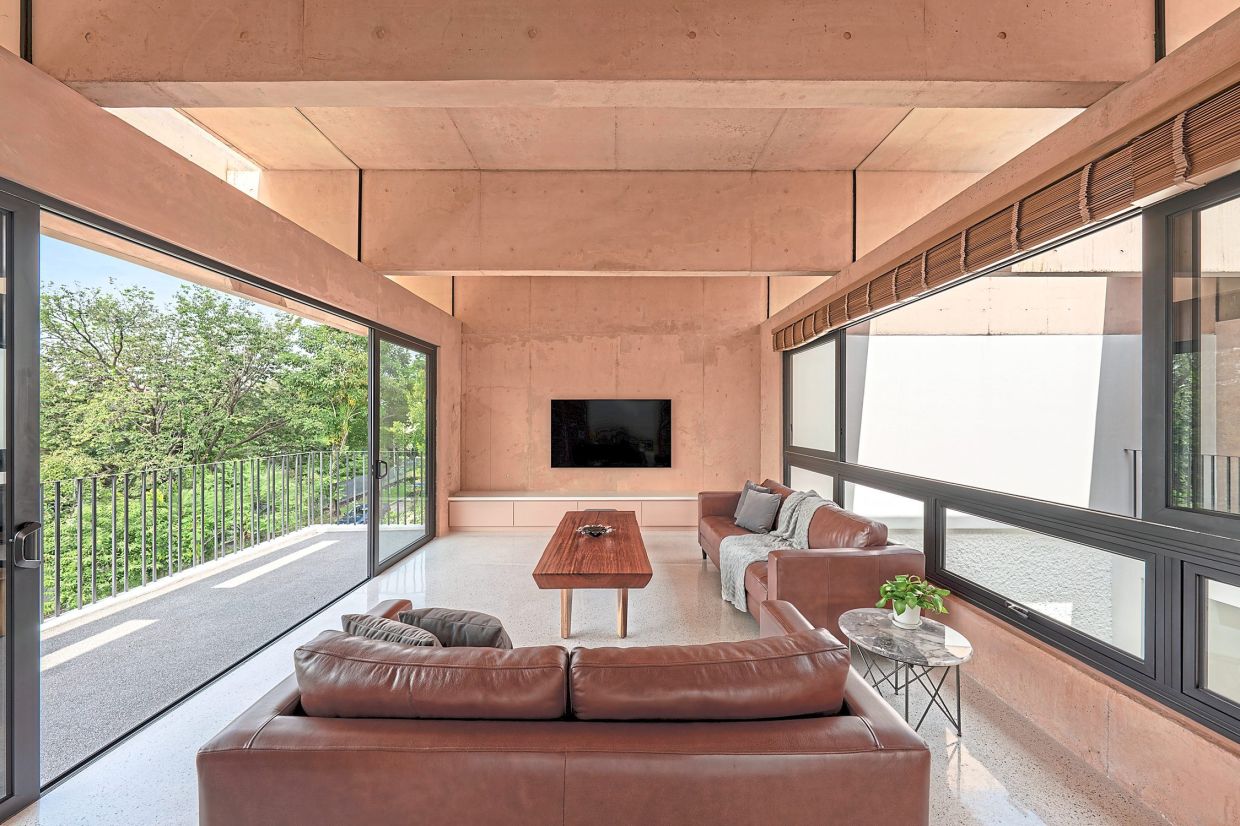
Completed in 2025, Armoua House departs from the conventional layout of terrace homes, where living spaces are typically anchored on the ground floor. Here, the home is arranged vertically, with its primary living areas elevated to the uppermost level.
This decision was not purely aesthetic-driven – it was deeply pragmatic.
In urban settings like Kuala Lumpur, the ground floor often becomes dominated by car porches, making living rooms visually and spatially compromised.
“Usually the living room looks into the car porch, which isn’t a welcome sight,” Tan explains. “By relocating the living spaces upwards, the house reclaims its sense of openness.”
The second floor – or the top level – becomes the heart of the home, offering uninterrupted views of the surrounding greenery and cityscape. The inclusion of a lift from the outset further supports this vertical arrangement, making the transition between levels seamless.
“The first unit already had a clear vertical arrangement influenced by the inclusion of a lift – with the main living spaces at the top, followed by the bedrooms on the first floor and utility areas on the ground floor. The new adjoining unit naturally expanded this sequence, introducing additional bedrooms, a study, an entertainment area, a gym and a central courtyard,” notes Tan.
More importantly, elevating the living spaces enhances privacy and security. Large openings and expansive views can be enjoyed without the vulnerability often associated with ground-level exposure.
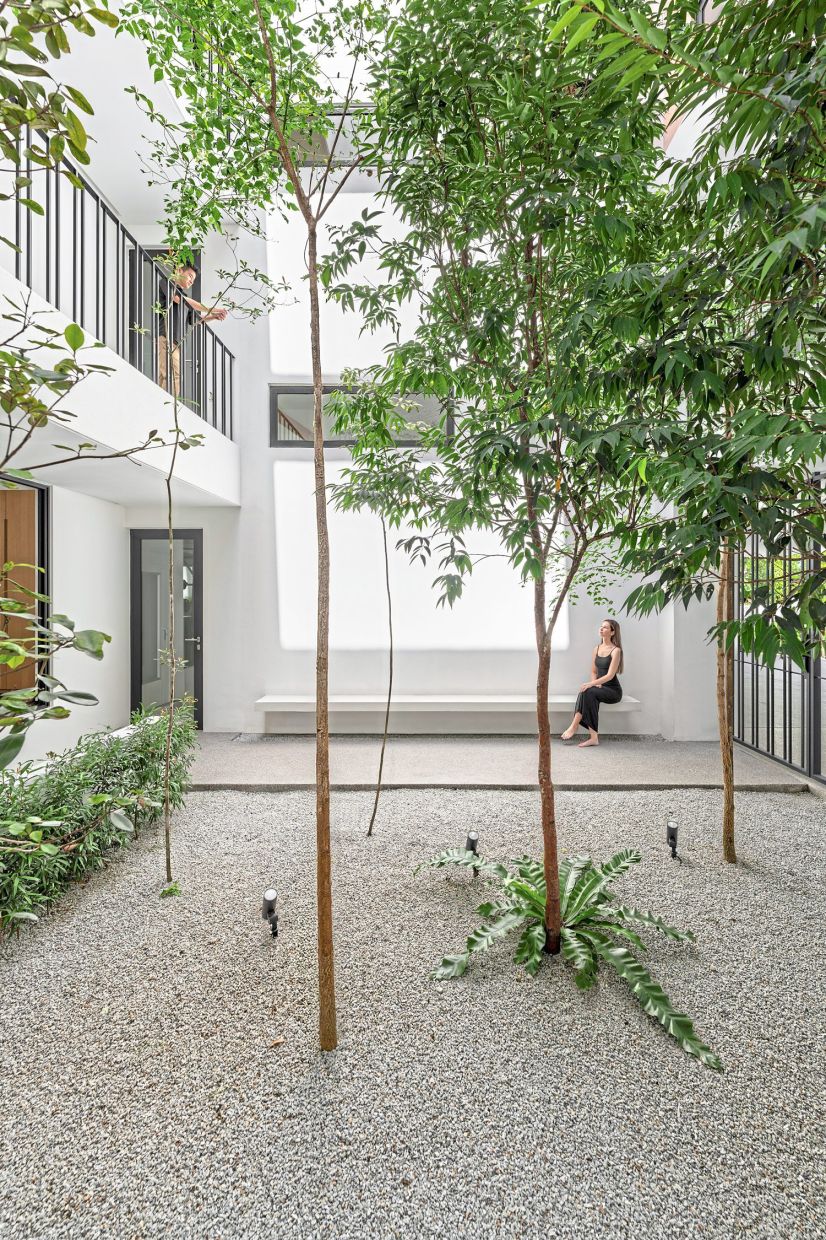
Introduced as part of the second unit, this open-air space acts as both a physical and emotional anchor.
Beyond its aesthetic appeal, the courtyard performs a crucial environmental role. It draws natural light into the interior and facilitates cross ventilation, addressing one of the key challenges of terrace living – long, narrow floor plates that can feel enclosed and dark.
“This courtyard became the anchor of the enlarged plan, bringing daylight and ventilation into what would otherwise have been deep interior spaces.
“Minimal openings were made through the former party wall, allowing the new and old rooms to connect,” explains Tan.
He reveals that the inspiration for the courtyard comes from the historic shophouses of Melaka, where internal courtyards were essential for light and airflow.
Here, that idea is reinterpreted for a contemporary home. Rooms that face the courtyard benefit from both aspects, with windows on both the front and rear sides.
This not only enhances ventilation but also creates visual connections across spaces.
The courtyard also introduces a moment of pause within the home. Amid the structured geometry of beams and walls, it offers a softer, more organic counterpoint – a place where light shifts throughout the day and where nature subtly asserts itself through the presence of greenery.
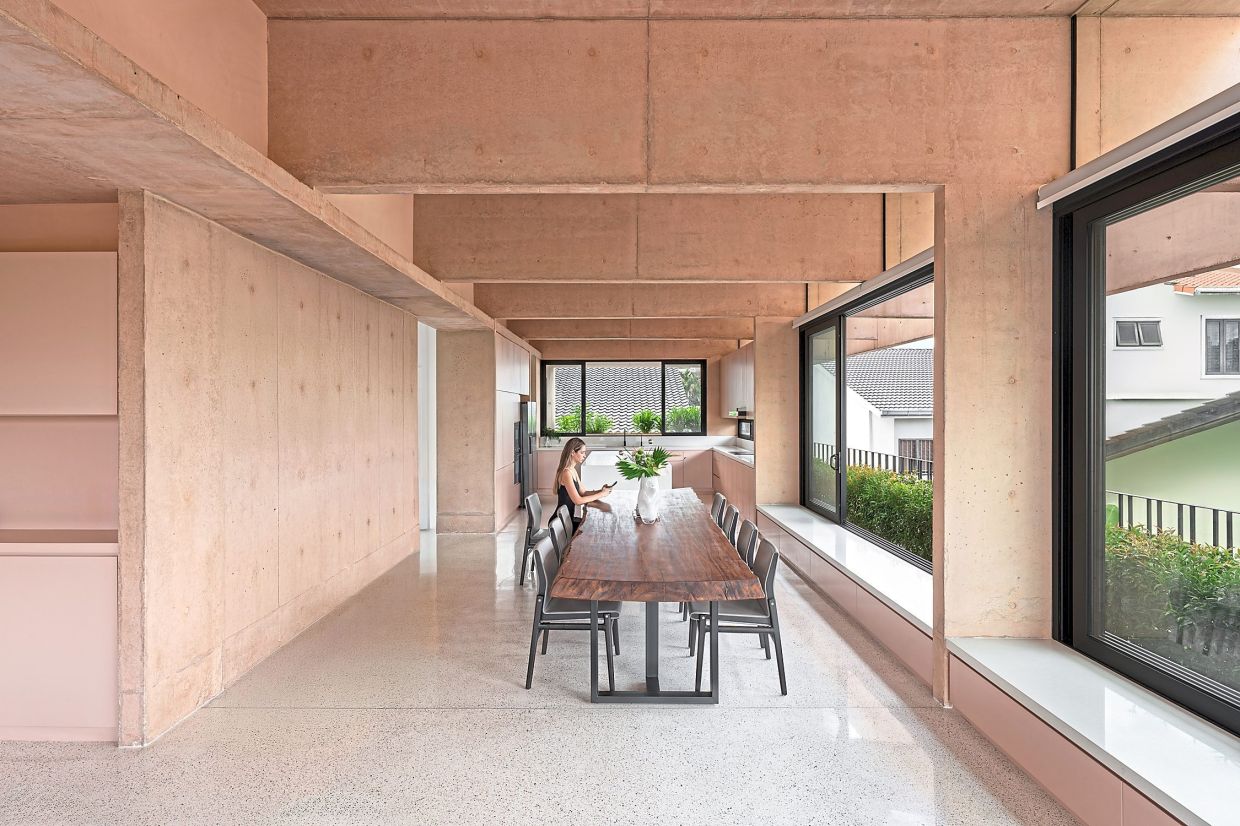
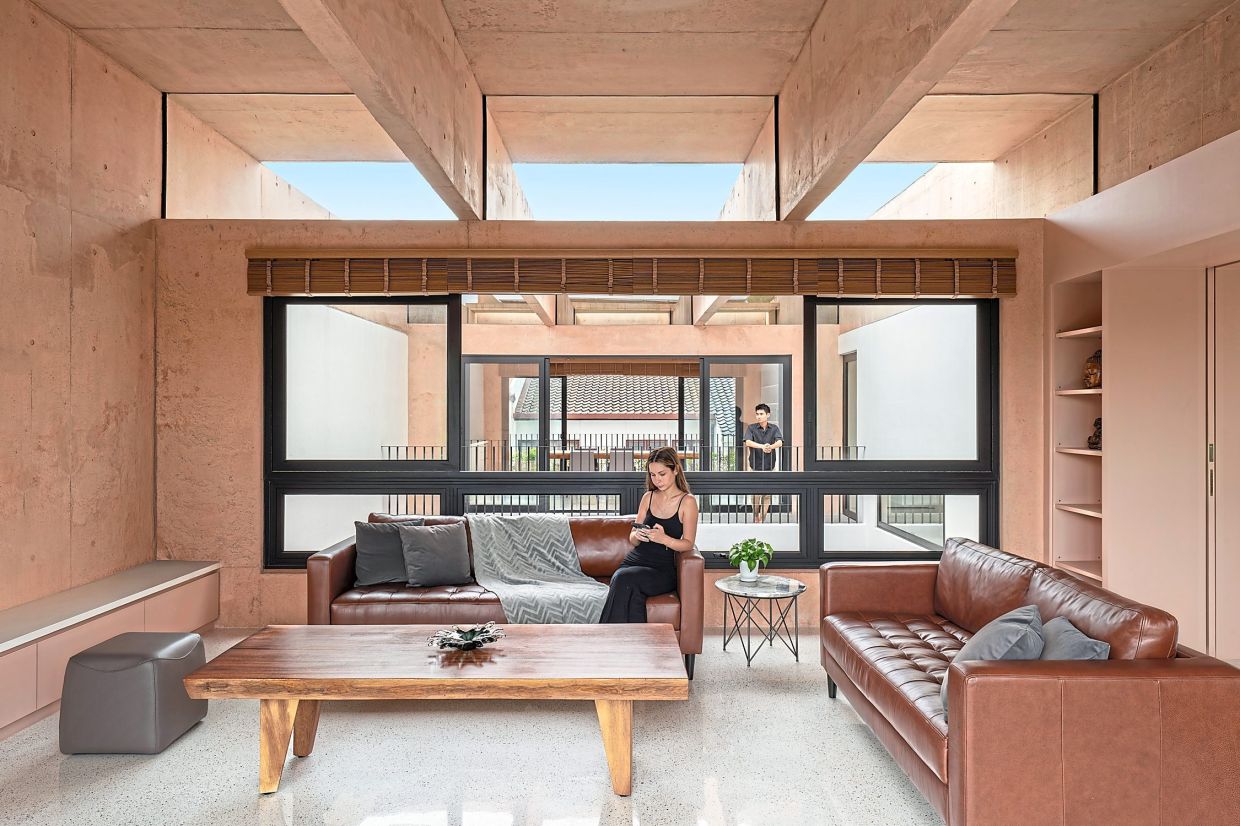
Another distinctive aspect of Armoua House is its celebration of structure. Rather than concealing beams and columns, Tan brings them to the forefront, allowing them to define both aesthetic and spatial experiences.
This approach draws inspiration from ancient architecture, where structural elements were inherently visible. In contrast, modern construction often hides these components, enabled by advances in technology.
At Armoua House, Tan revisits the older ideology, but with a contemporary twist. The beams are not merely exposed; they are exaggerated. Deep and pronounced, they extend beyond the confines of the interior, piercing outward and creating a sense of continuity between the inside and outside.
In the original unit, the beams run perpendicular to the length of the house, while in the newer extension, they shift direction, running length-wise from front to back, even traversing the courtyard. This change in orientation creates a subtle yet deliberate contrast between the two halves of the home, he describes.
As one moves through the spaces, this interplay of directions becomes perceptible and complementary – an architectural conversation that reinforces the idea of two entities coming together as one.
The beams also contribute to the perception of space. Their depth and layering create a sense of volume, making the interiors feel expansive without relying solely on floor area.
Light and shadow interact with these elements throughout the day, adding a dynamic quality to otherwise solid forms.
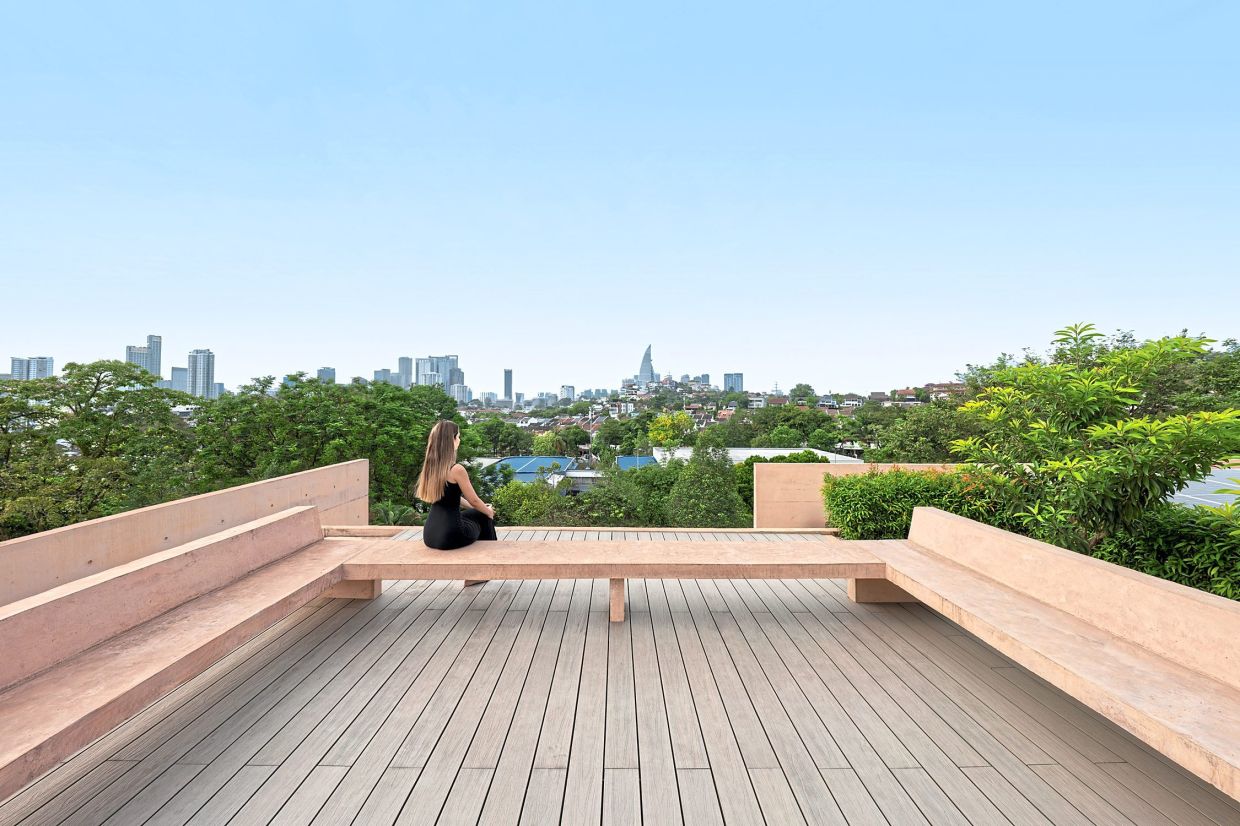
Perhaps the most eye-catching feature of Armoua House is its colour.
Moving away from the conventional grey of raw concrete, the house is finished in a soft pink hue – subtle, earthy, yet quietly bold.
Interestingly, this was not part of the original plan. The shift came from Tan’s imagination of the house as a “monolithic castle in the sky” – a structure that feels grounded yet elevated, both in form and in spirit.
The choice of pink was carefully considered through material samples, resulting in a tone that changes with the light. Under a bright sky, it appears warm and luminous; in softer, overcast conditions, it takes on a more muted, almost introspective quality.
For Tan, this variability is part of the appeal.
“Colour is not constant,” he notes. “In natural materials like concrete, slight variations and imperfections create a sense of authenticity. The house, in this way, becomes responsive – its appearance subtly shifting with the environment.”
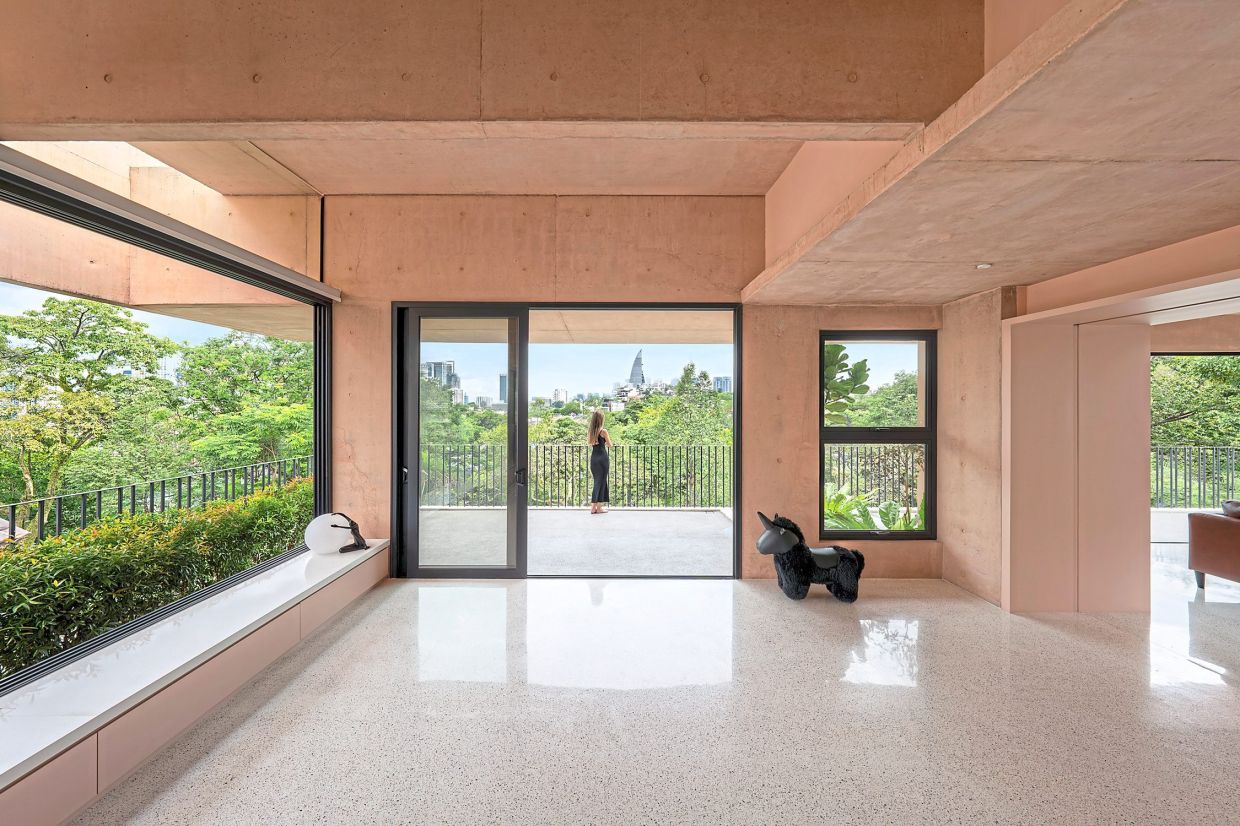
The pink concrete also softens the otherwise robust geometry of the structure, introducing a layer of warmth that makes the home feel inviting rather than imposing.
Despite its strong architectural language, Armoua House remains deeply connected to nature.
Dense planting wraps around the perimeter, creating a green buffer to enhance privacy and environmental effects.
This landscaping is not merely decorative – it is integral to how the house functions.
“The vegetation helps reduce heat, acting as a passive cooling system in Malaysia’s tropical climate. It also contributes to the overall sense of wellbeing, offering visual relief and a connection to the outdoors,” explains Tan.
Edible gardens are woven into the landscape, allowing the homeowners to engage more directly with their environment. It is a small but meaningful gesture – one that transforms the act of gardening into a part of daily life, he adds.
For Tan, this integration is essential.
“Architecture should exist with nature,” he emphasises.
Besides passive design strategies, the house also incorporates several active sustainability features. Solar panels reduce reliance on external energy sources, while a rainwater harvesting system supports irrigation and other non-potable uses. Automated systems ensure these features operate efficiently without adding complexity to everyday living.
Yet, Tan is careful to emphasise that sustainability begins with the fundamentals.
“In a tropical context, this means designing for heat, rain and humidity first – ensuring the building itself responds appropriately to its environment before additional technologies are layered on.”
This balanced approach ensures that eco-friendly design does not come at the expense of comfort. Instead, it enhances it, creating a home that is both responsible and liveable.
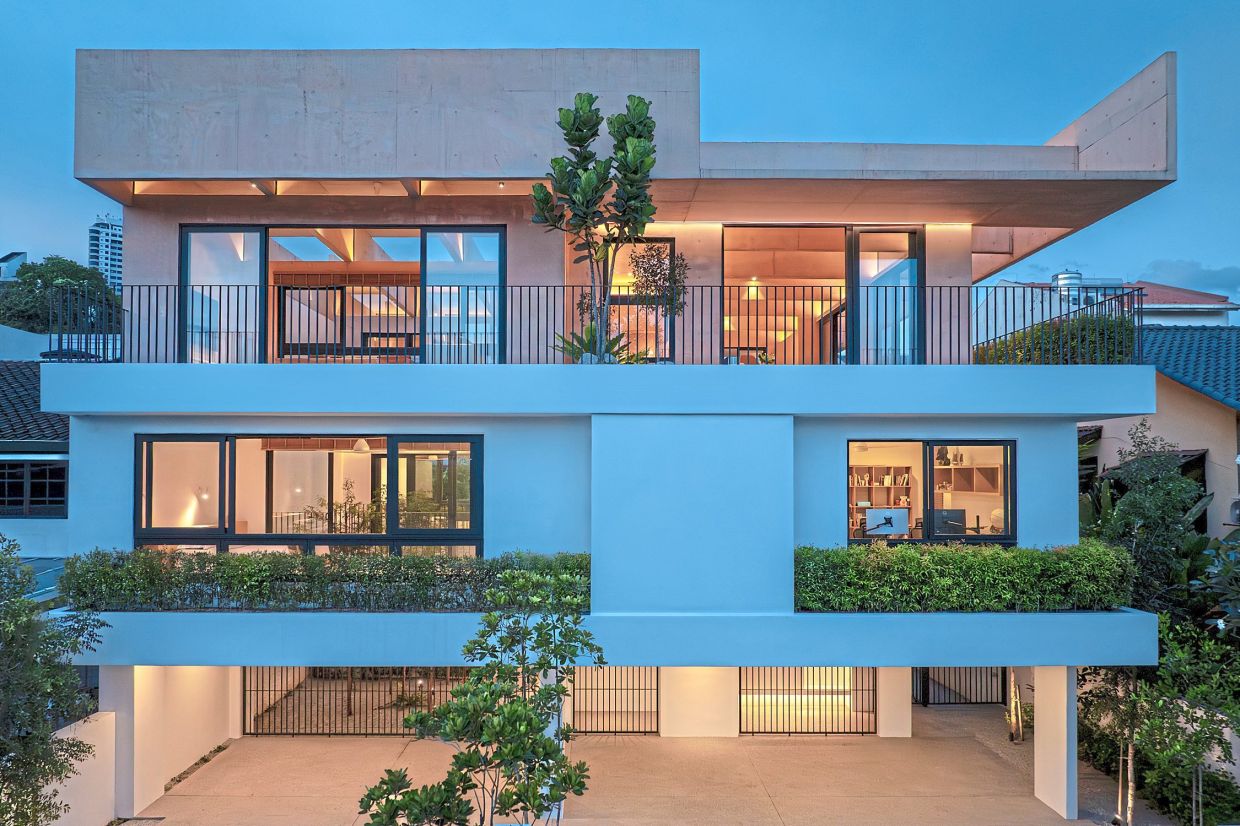
As evening falls, Armoua House exudes a different character.
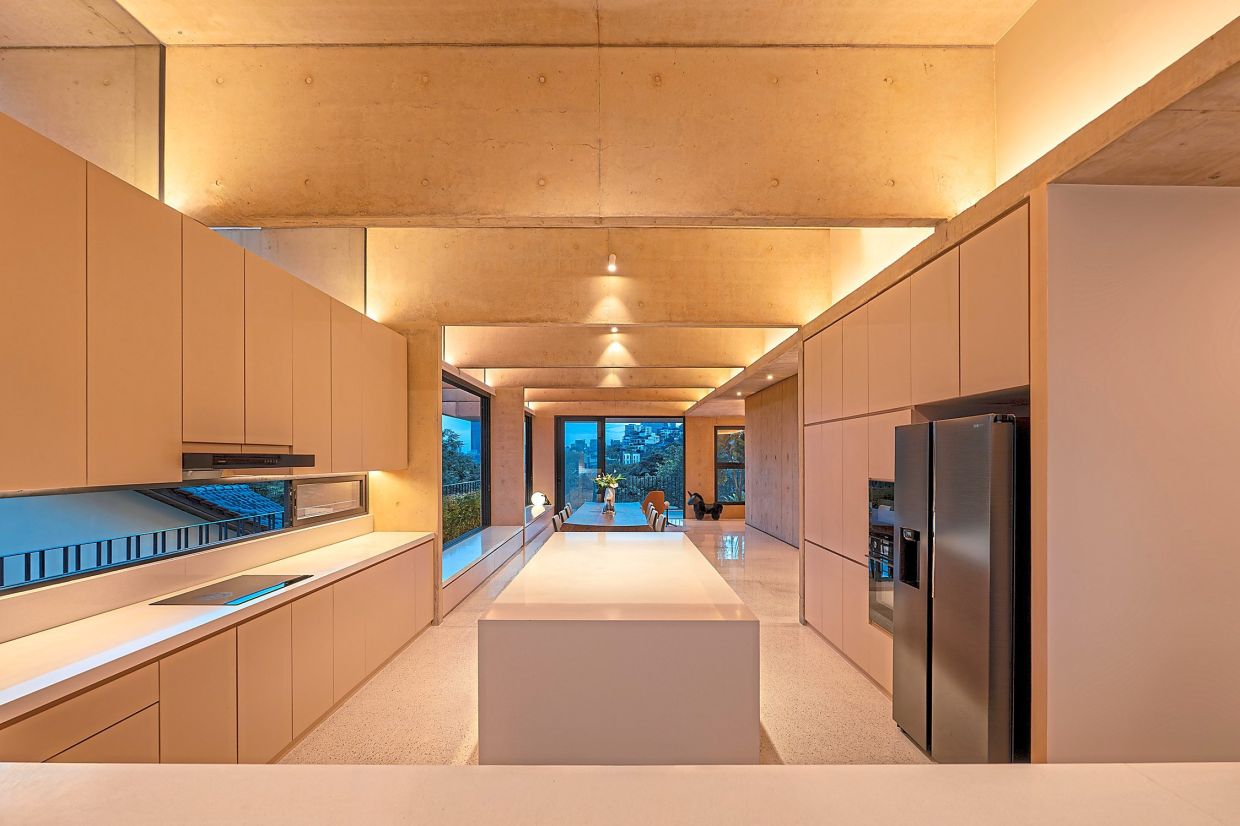
From the street, the house is quietly dramatic. Soft lighting reveals the depth of its beams and the layering of its ceilings, casting gentle shadows that accentuate the structure’s geometry.
Looking back, Tan sees Armoua House as more than just another completed project.
“It represents an opportunity to explore an architectural language that is deeply personal – one shaped by context, timing and collaboration with open-minded clients.”
For those who step inside, the hope is simple: to feel both comfort and a sense of something special. And in many ways, that is what Armoua House achieves.
It is a home that doesn’t shout for attention, yet leaves a lasting impression – a space where structure, light and nature come together in quiet harmony.
Double the charm
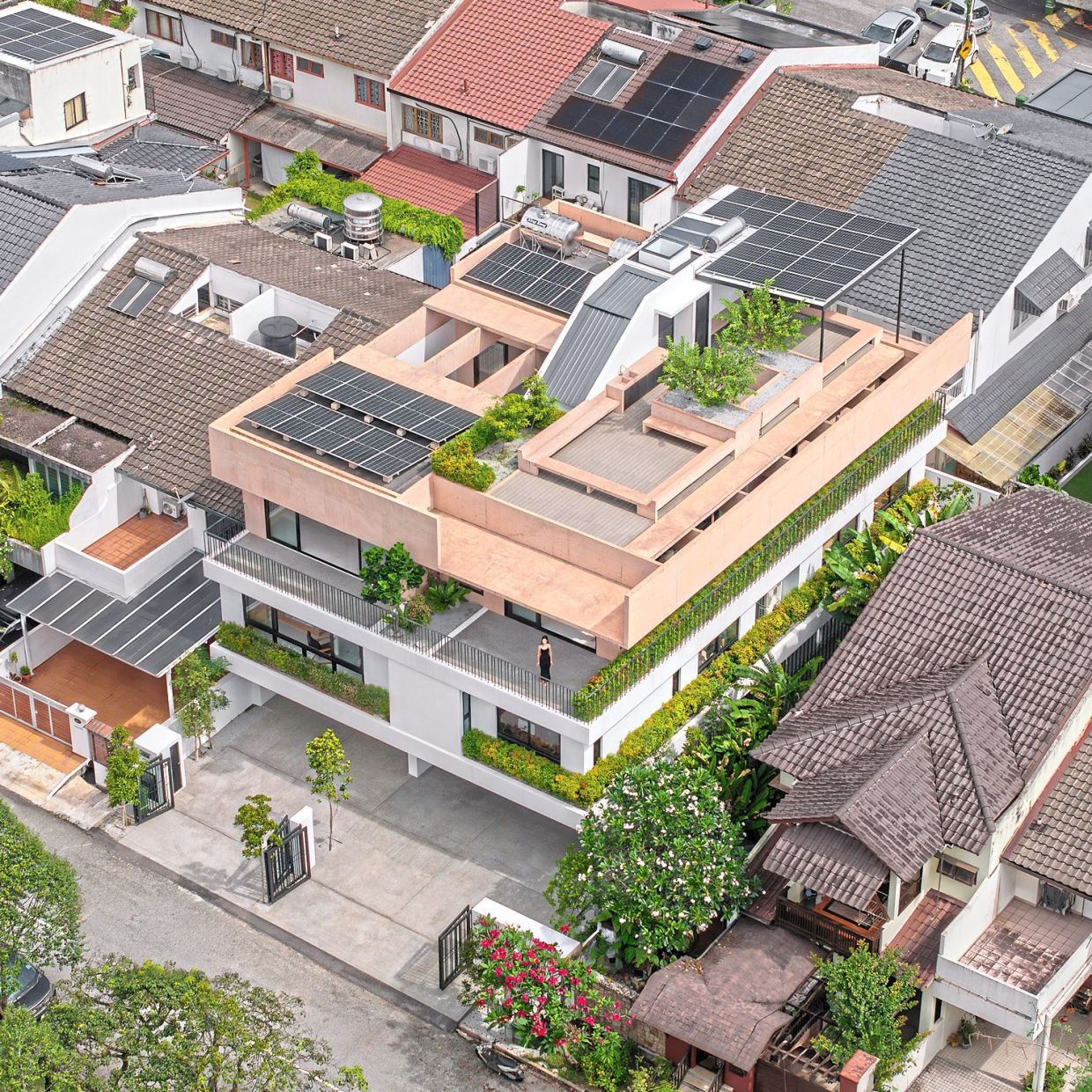
Anchored by a courtyard in the middle, the two terrace houses are seamlessly merged into one.
Exterior night view of Armoua House.
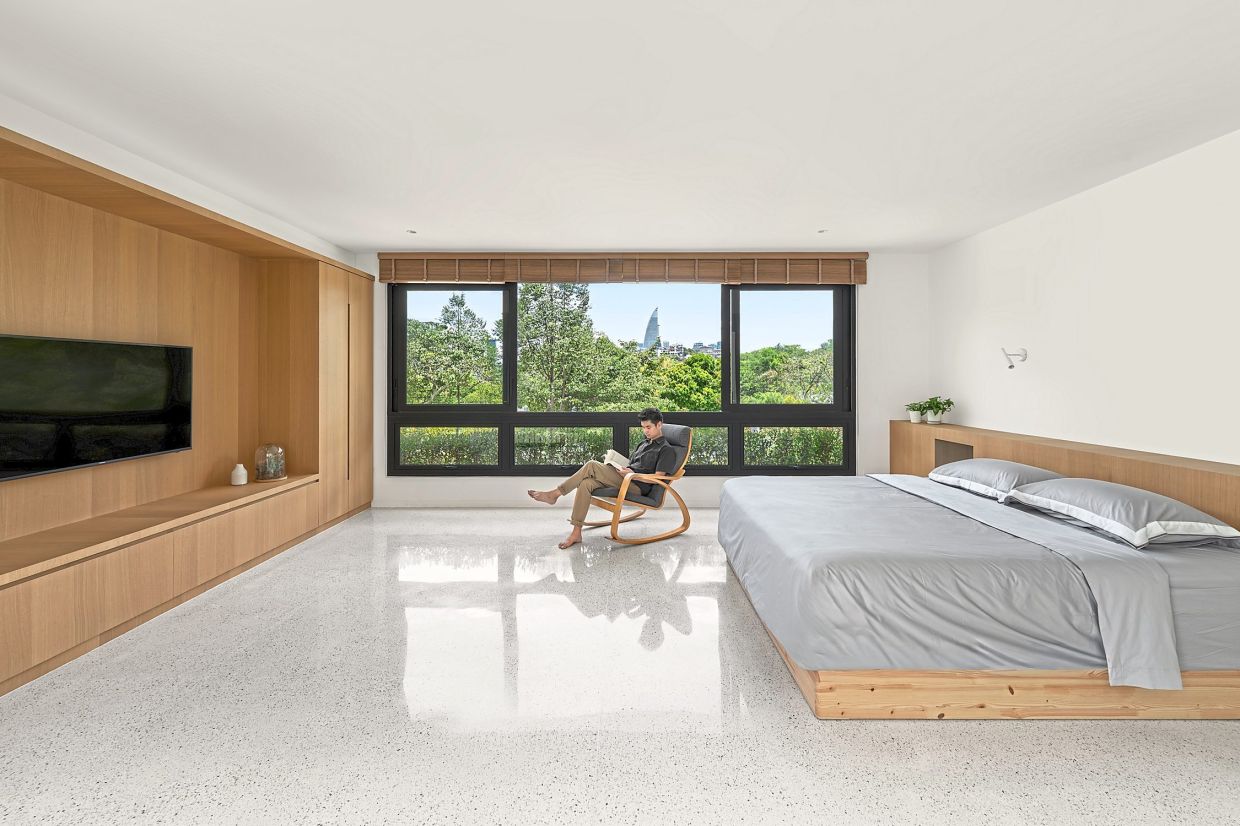
The spacious bedroom in Armoua House.
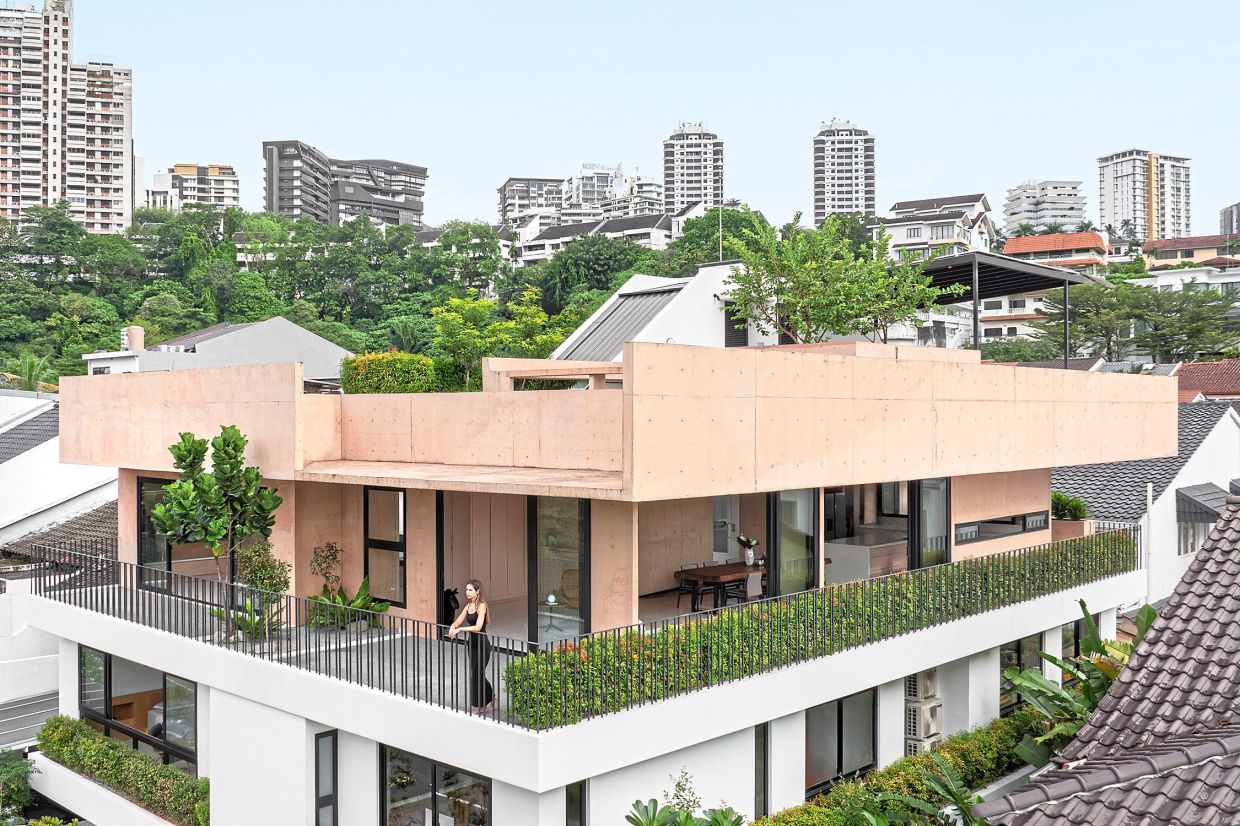
The upper levels are embraced by greenery while offering a view of the surroundings.
The dining room with its signature pink concrete walls.
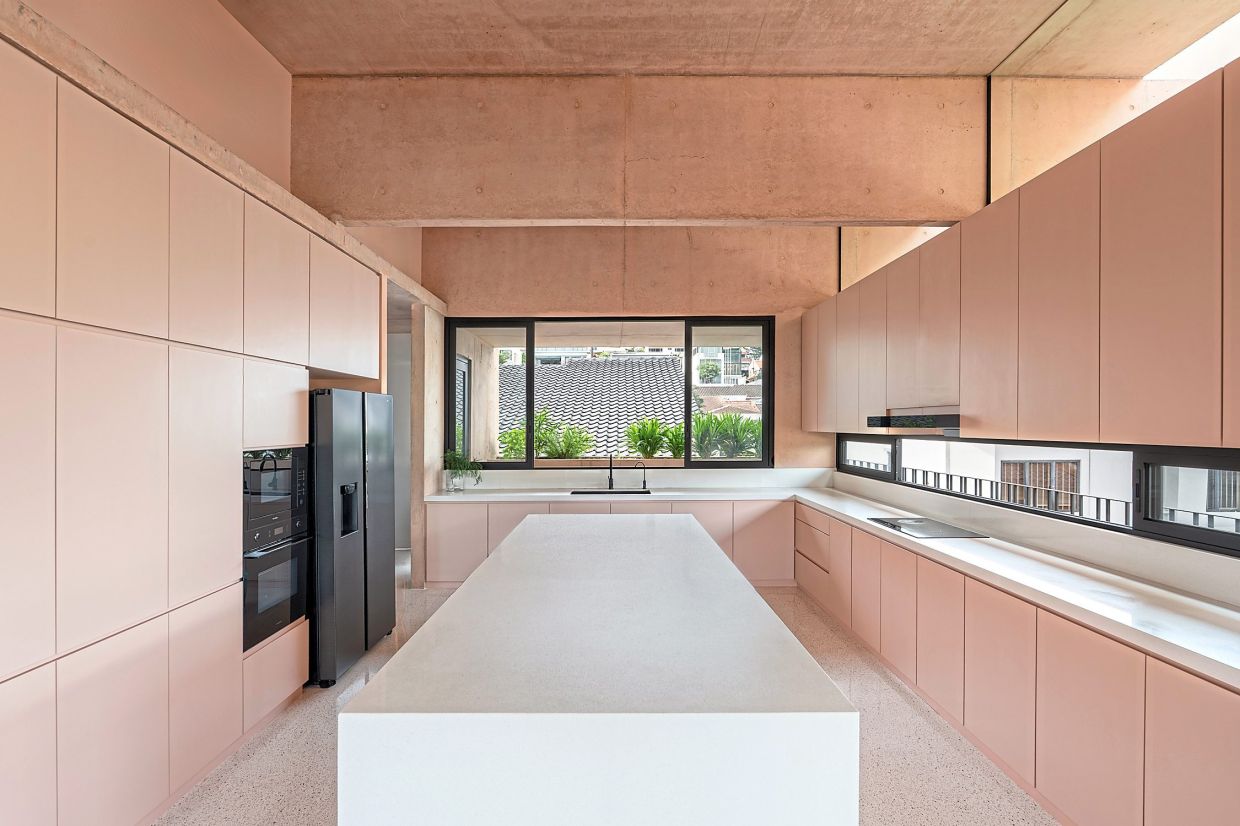
The kitchen also features the signature soft pink hue.
A view of Armoua House against a backdrop of the Kuala Lumpur city skyline.
The roof deck offers expansive views of the Kuala Lumpur city skyline.
Aerial view of Armoua House.
The living room is intentionally located on the upper level.
Nestled in greenery, the balcony of Armoua House offers an expansive view of the Kuala Lumpur city skyline. — Fabian Tan Architect
When lit up at night, the kitchen takes on stronger hues than in the daytime.
The central courtyard draws natural light into the interior and facilitates cross ventilation.
Moving away from the conventional grey of raw concrete, Armoua House is finished in a soft pink shade.