The United States recorded 2,318 measles cases in the first seven months of 2026, higher than the total for all of 2025, which was itself the highest in more than three decades. There are four months still to go in 2026. It is the worst year for measles in America since 1991.
And the thing that makes that fact insane? Measles was declared eliminated in the United States in 2000. This is an official designation requiring 12 consecutive months with no domestic transmission. Measles was solved. An entire generation grew up never experiencing it. This “measles eliminated” status in the US is expected to be revoked in November.
The reason isn’t rocket science. Childhood vaccination rates for measles, mumps, and rubella have fallen from 95.2% in 2019 to 92.5% last year. The threshold required to prevent outbreaks is 95%. Of those infected people mentioned earlier, 93% are unvaccinated.
Epidemiologists believe the real number of people with measles is higher because the same distrust that gets people thinking vaccines don’t work (they do) makes them not want to report when they do get sick.
And that is why people aren’t getting vaccinated in America. They don’t trust vaccines. Or the government. Or big pharma. And a small portion of the US has unlearned that vaccines work. How does society lose its knowledge?
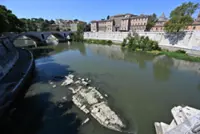
It has happened before, and historically it happened for dramatic reasons. Rome fell and took the knowledge of how to make high grade concrete with it, and the formula that built the Pantheon, a dome that has stood for 2,000 years, was lost for over a millennium.
Damascus steel went the same way: the technique disappeared in the 18th century, and metallurgists have only recently worked out the famous blades contained carbon nanotubes, a structure we thought was a modern discovery.
The way to make Greek fire, a weapon that burned on water, was guarded so carefully that the formula died with the men guarding it. The Antikythera mechanism, an analogue computer built 2,000 years ago that predicted eclipses then disappeared, had no equivalent until the 14th century. Somebody built that. Then nobody could.
That is loss by catastrophe. Libraries burn, empires collapse, plagues take the specific people who knew how. It is tragic but comprehensible.
There is a second kind of unlearning that is less forgiveable. The kind that happens because we have not experienced a thing and decide not to listen to pesky things like history.
Tom Wolfe wrote about a version of this in a 1987 essay called “The Great Relearning” that was published in the The American Spectator magazine.
He describes communes in 1968 San Francisco in California where young people abandoned conventional hygiene. Being clean was elitist nonsense, was the thinking. But then they found themselves dealing with outbreaks of diseases doctors had not seen since the Middle Ages. They had to rediscover from first principles why the rules about cleanliness exist. Although it shouldn’t have taken a lot of brain power to know that cleanliness is healthier than living filthy.
Which brings us back to measles. The vaccine worked so well it erased its own evidence. No American under 50 has watched a child struggle to breathe with measles. No American has been to a funeral of a child who died due to measles. The entire argument for the vaccine was deleted by the vaccine.
But here is what makes this different from every historical example of lost knowledge. Nobody burned the library this time. The information has never been more available. The vaccine still exists, still works, still costs almost nothing. Not a single fact was lost. There was no collapse, no invasion, no plague that took the people who knew.
People just decided they did not believe in vaccines anymore.
This is a whole new category of unlearning that is, frankly, ridiculous. Forgive me for sounding judgy (or not, that’s fine too). But no one took this knowledge from anybody. Vaccines are a modern miracle that keep societies safe. There is a reason why life expectancies have increased in the modern world, and that’s science, and a large part of that is vaccines.
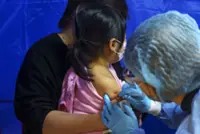
My son hadn’t been vaccinated against measles until recently because he has an egg allergy and our doctor had old information that he couldn’t be vaccinated. These measles outbreaks made me genuinely fear for him. When I looked into it again and found he could get vaccinated, we did that immediately. He cried for a minute because of the needle and then we got some sweets, and he’s all good – and I’m sleeping a lot better. I prefer not to learn my lessons the hard way.