Science, Technology, Engineering and Mathematics (STEM) education is often associated with primary schools, secondary schools and universities. However, children can be introduced to STEM much earlier, even during their kindergarten years.
At this age, children are naturally curious. They enjoy asking questions, trying new things and exploring the world through play. This curiosity can be used to introduce basic STEM concepts through simple, enjoyable and age appropriate learning activities.
One approach is Project-Based Learning (PBL), which allows children to explore a topic, share ideas and work together to create a project with guidance from their teachers.
Unlike lessons that mainly focus on teacher explanations and written exercises, PBL encourages children to take an active role in learning. Instead of simply receiving information, they have opportunities to explore, make decisions and create something based on what they have learned.
This approach was introduced through Our Big Idea, a new learning initiative launched by Genius Aulad in 2026. The programme allows kindergarten children to take part in projects based on different themes throughout the year.
Each project is carried out over four weeks. The first week introduces the topic, followed by group formation and task distribution in the second week. During the third week, children design and build their projects. The final week gives them an opportunity to present their work and share ideas with their classmates.
This structure allows children to understand a topic gradually before completing their projects. Teachers prepare materials, give instructions and guide children according to their different learning abilities.
One interesting example is the Malaysian Landmarks project. The theme introduces children to famous landmarks in Malaysia while building on their earlier lessons about the country and its state flags.
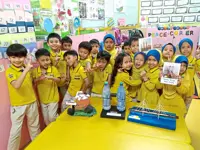
As part of this project, children from Class 6 Damsyik in Genius Aulad Bangi Avenue worked in groups to create three models: the Petronas Twin Towers, Penang Bridge and Mount Kinabalu. They used materials provided by their teachers and received guidance throughout the activity.During the building process, children discussed ideas, shared materials and worked together to complete their tasks. Although the activity may look like a simple arts and crafts project, it also provides opportunities for children to explore basic STEM skills.
For example, building models allows children to learn about shapes and structures. They also need to think about how to arrange materials and put different parts together to create a model of a landmark.
Although engineering and mathematics are not taught in great detail at kindergarten level, such activities can introduce children to basic planning, designing and problem-solving skills.
Group projects also help children develop communication and teamwork. They learn to listen to others, share responsibilities and work towards a common goal. These skills are important because learning is not only about gaining knowledge, but also about interacting and working with others.
However, carrying out PBL in kindergarten requires careful planning and classroom management. Children develop at different rates, even when they are in the same age group.
Some children understand instructions quickly, while others need more time and guidance. During group activities, more confident children may also take on larger roles, leaving quieter children with fewer opportunities to participate.
Teachers therefore play an important role in making sure every child is involved. Giving simple instructions, assigning suitable tasks and providing guidance throughout the activity can help children participate according to their abilities.
Besides guiding children during the building process, teachers also help with the finishing touches. At kindergarten age, children's fine motor skills are still developing. As a result, their projects may not always look neat or turn out as planned.
Teachers may need to strengthen certain parts, adjust the arrangement or tidy up the models before they are displayed. However, this should not mean taking over the children's work. The aim is to improve the final presentation while keeping the children's original ideas and efforts.
At the same time, classrooms may become busier than usual during project activities. Children move around, ask questions, discuss ideas and use different materials to complete their work.
The classroom may appear less organised, but these interactions are part of active learning. What matters is that children are learning in a safe environment with proper guidance and supervision.
The success of PBL should also not be measured only by the final product. A model may not look perfect, but the learning process itself is valuable. Children have the opportunities to try, make mistakes, improve their work and share their ideas with others.
Initiatives such as Our BIG Idea show how PBL can be used to introduce STEM during the early years. Projects using simple materials and familiar themes can encourage children to explore, think creatively and work together.
As Malaysia continues to strengthen STEM education, attention should not be limited to science and mathematics at higher levels of schooling. Early exposure is also important in helping children develop an interest in learning and a positive attitude towards STEM.
STEM education in kindergarten is not about turning young children into scientists or engineers. Instead, it is about giving them opportunities to ask questions, think, explore and understand the world around them through enjoyable experiences.
PBL can therefore be one way to enrich early childhood education, provided that activities are suitable for children's development and supported by proper planning and teacher guidance.
Ultimately, the true value of a project is not only in what children create, but also in the experiences, skills and interests they develop along the way.
If young children can learn so much simply by exploring, creating and working together, shouldn't we give them more opportunities to do so in our kindergartens?