
YOUNG Malaysians today can effortlessly juggle half a dozen social platforms at once and edit viral content with astonishing ease.
However, such digital fluency offers zero immunity against modern scams. If anything, it has simply made them prime targets for digital syndicates.
“Spending twelve hours a day on a screen does not automatically make someone cautious or secure,” warns Malaysia Cyber Consumer Association (MCCA) president Siraj Jalil.
He points out that there is a big and dangerous difference between being social media-savvy and being genuinely cyber-safe.
“Because young people are so comfortable online, they fall into an illusion of invulnerability. They assume scams only happen to older folks through poorly written SMS messages or clumsy phishing emails,” Siraj says.
“In reality, syndicates target young people right where they hang out – on TikTok, Instagram, and Telegram – using deepfakes, AI voice clones, fake job offers, and spoofed online shops.”
He notes that this vulnerability is heightened when youths overshare daily routines and personal details for social engagement, inadvertently handing fraudsters the exact data needed for social engineering.
“Without real cyber defence skills, heavy social media use just makes a person an easier target,” he cautions.
Building resilience by design
Addressing this vulnerability requires moving beyond traditional government awareness campaigns, which often rely on public service posters or digital certificates that young people largely ignore.
Siraj emphasises that long-term safety comes from building civic values and practical cyber defence directly into the digital environments youths interact with daily.
“Do you want to remain a passive consumer whose attention is monetised by algorithms, or do you want to be the one commanding the technology?” Siraj asks.
“AI might not take your job tomorrow, but someone who knows how to use it safely and effectively certainly will. This is not about earning another certificate. It is about protecting your financial identity while mastering the tools needed to thrive in a digital economy.”
Technical capability, however, is only half the equation. Siraj stresses that expanding digital access without an ethical foundation merely scales up potential harm.
“Grounding technical adoption in Malaysia MADANI values like amanah (trust and integrity), ihsan (doing good), and karamah insaniah (human dignity) gives young people a clear internal compass. It ensures they use digital platforms to solve community problems rather than exploit online loopholes.
“When young developers, content creators, and digital marketers understand cyber consumer protection from the start, they are far less likely to fall for, or build, deceptive design tricks or invasive tracking models. Technical skills teach them how to navigate the web, but civic values ensure that what they build actually protects people.”
Security by default
From an enterprise and cybersecurity standpoint, embedding safety directly into national technology frameworks is a vital strategy.
“Most breaches actually start with people, not hackers. For example, misconfigured cloud servers or sensitive data being pasted into public cloud AI tools.
“As Generative AI and cloud adoption spreads, every user has become part of that attack surface already. A national baseline of AI and cloud literacy raises the floor for our cyber resilience,” notes cybersecurity expert Fong Choong Fook, executive chairman of cybersecurity firm LGMS Bhd.
Fong strongly endorses applying safety controls at the structural level, saying: “Security by default should apply to people. Making safety guidelines integral to public platforms builds good habits before access to advanced tools is granted. Fixing bad habits later is much harder, which is why prevention is always better.”
Looking toward workforce readiness, Fong adds that structured digital literacy builds a robust talent pipeline.
“Generative AI and Agentic AI are redefining entry-level work. Youths who learn to use these tools properly and safely will enter the workforce productively from day one.
“A unified national tech environment gives employees a common known baseline. Companies like LGMS can then spend less time on fundamentals and focus more on specialised skills, providing the context needed to keep pace with fast-changing threats,” he says.
Public sector infrastructure
This drive toward digital maturity coincides with a broader structural cleanup across public services. Spearheaded by Digital Minister Gobind Singh Deo, the Digital Ministry is utilising GovTech Malaysia to break down longstanding bureaucratic silos.
Instead of individual agencies hiring external vendors to construct standalone, duplicate systems, GovTech operates on a "Whole-of-Government" approach by building shared platforms in-house using local public sector technical talent.
Early figures across six core projects indicate that internal development cost RM18.15mil compared to an estimated RM93.9mil if outsourced to external vendors, saving the government approximately RM75.8mil (80%) in procurement expenditure.
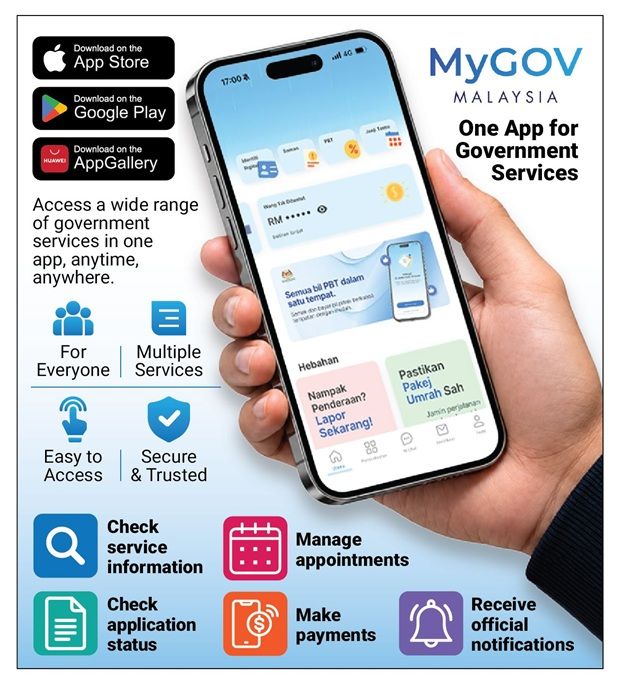
The public face of this unified backend is the MyGOV app. Launched in beta in early 2025, the platform has expanded to over 2.9 million users, consolidating 52 services across 19 government agencies into a single, secure gateway.
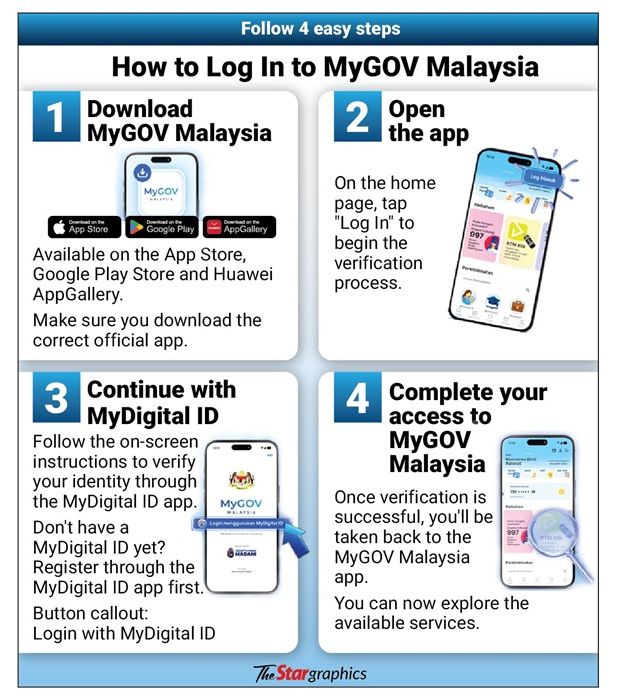
Authenticated securely via a single MyDigital ID login, users can seamlessly renew road tax via MyJPJ, track Sumbangan Tunai Rahmah (STR) financial aid, and monitor essential food prices through PriceCatcher without jumping between separate platforms.
The application is currently trialling Agentic AI, enabling citizens to complete tasks like checking and settling traffic fines using natural conversational prompts rather than navigating complex menus.
As a practical perk, registered users can even stream FIFA World Cup 2026 matches live on their mobile devices.
Closing the divide
To ensure rural communities are not sidelined by rapid digital transformation, the ministry maintains a "digital-first, not digital-only" philosophy.
A nationwide network of over 1,099 National Information Dissemination Centres (NADI) serves as a physical touchpoint for rural and underserved communities, providing hands-on digital assistance, government e-service access, and basic device support to an estimated 2.1 million citizens.
Fong emphasises that long-term success relies on real-world outcomes rather than vanity metrics.
“Symbolic initiatives measure sign-ups, whereas real-world initiatives measure outcomes, such as skills demonstrated, jobs filled, and incidents prevented. What gives me confidence is that safety is built in from the start and targets are specific.
“If we track results honestly, Malaysia can become a producer of AI and cyber talent for the region, not just a consumer of technology,” he says.