Architecture is often associated with buildings, blueprints and technical expertise. Yet at the Kuala Lumpur Architecture Festival (KLAF) 2026, it is presented in a different light – as a way of strengthening connections between people, culture and places.
This vision comes to life through two flagship public projects under the festival’s theme, “Future Culture” – the newly opened Tropical Fruit Pavilion project at Titiwangsa Park, Kuala Lumpur and the reopening of Puncak ALOP (Ampang Lookout Point), Selangor, a beloved destination that has been revitalised after 15 years of closure.
While one celebrates Malaysia’s tropical identity and the other revives a site rich with collective memory, both share a common purpose: to demonstrate how architecture can create meaningful public spaces where communities gather, interact and build a sense of belonging.
“Architecture is no longer only about buildings or physical form,” says KLAF 2026 chief curator Rien Tan. “It is about shaping human experience, community interaction and shared identity.”
Tan believes that public spaces play an increasingly important role in modern cities, where people may live close to one another yet often feel disconnected.
“Public spaces create opportunities for people to meet, pause, interact and share experiences beyond their daily routines,” he says.
“They become common grounds where families, friends, communities and even strangers can gather naturally.”
This people-centred approach lies at the heart of KLAF 2026, an annual architectural festival organised by the Malaysian Institute of Architects (PAM).
Through installations, exhibitions, dialogues and cultural programmes, the festival aims to bring architecture closer to the public and encourage conversations about how design influences everyday life.
One of the festival’s most visible expressions is the Tropical Fruit Pavilion project at Titiwangsa Park, which opened June 6.
Officiated by Housing and Local Government Minister Nga Kor Ming and supported by Tourism Malaysia, it draws inspiration from Malaysia’s tropical heritage, transforming familiar cultural references into immersive architectural experiences.
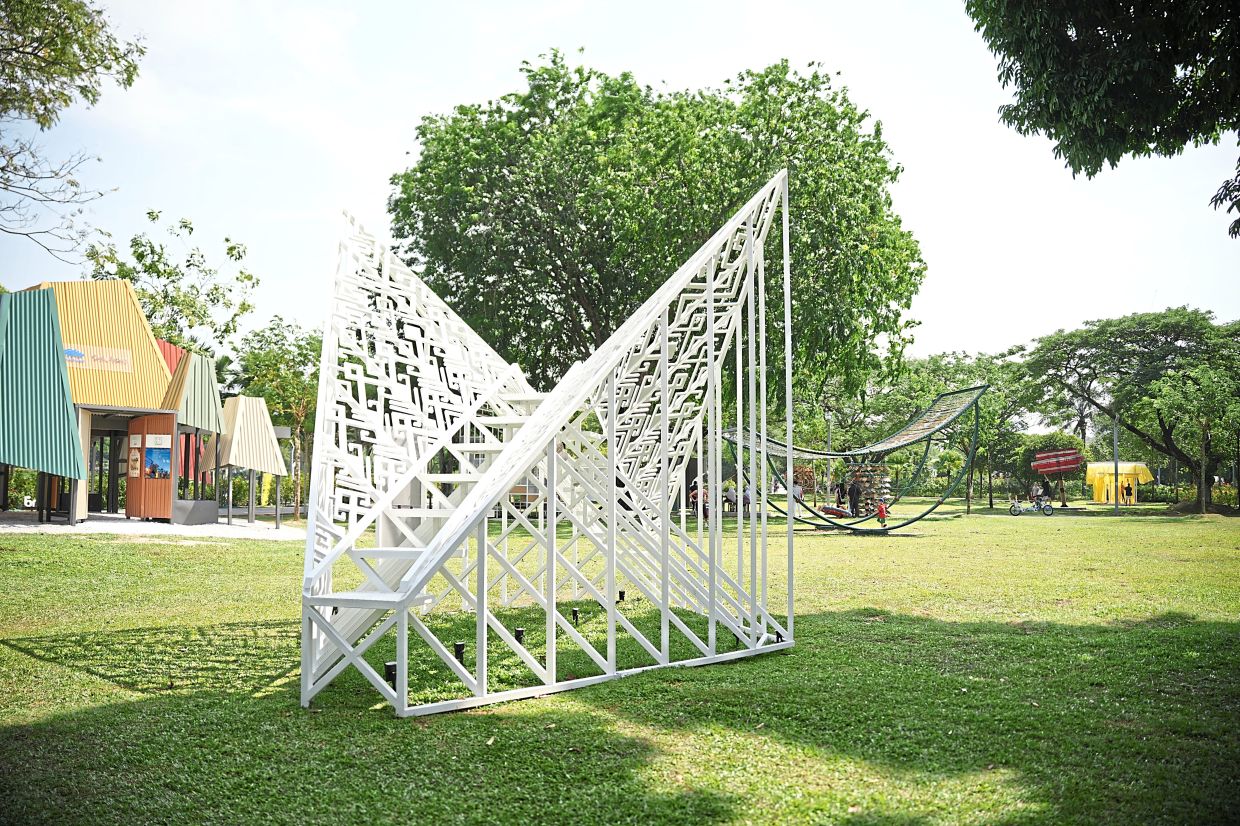
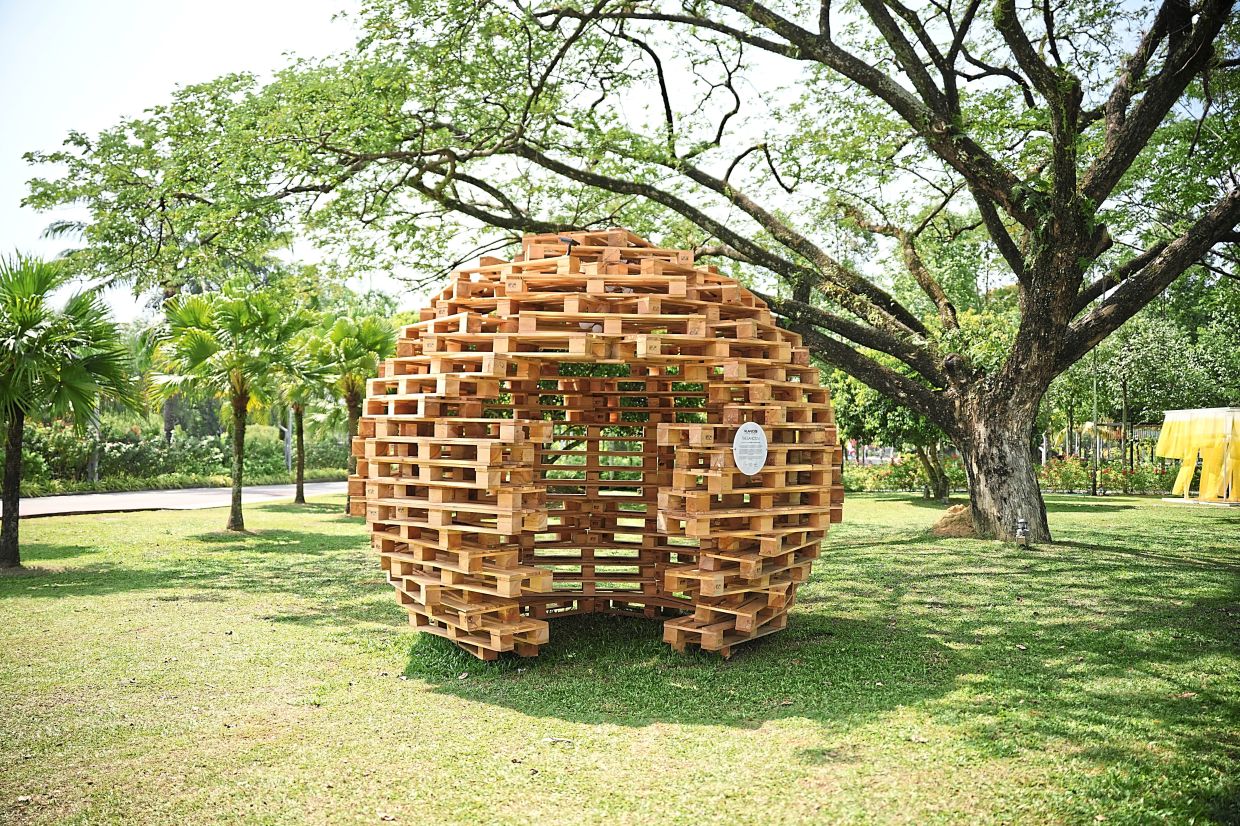
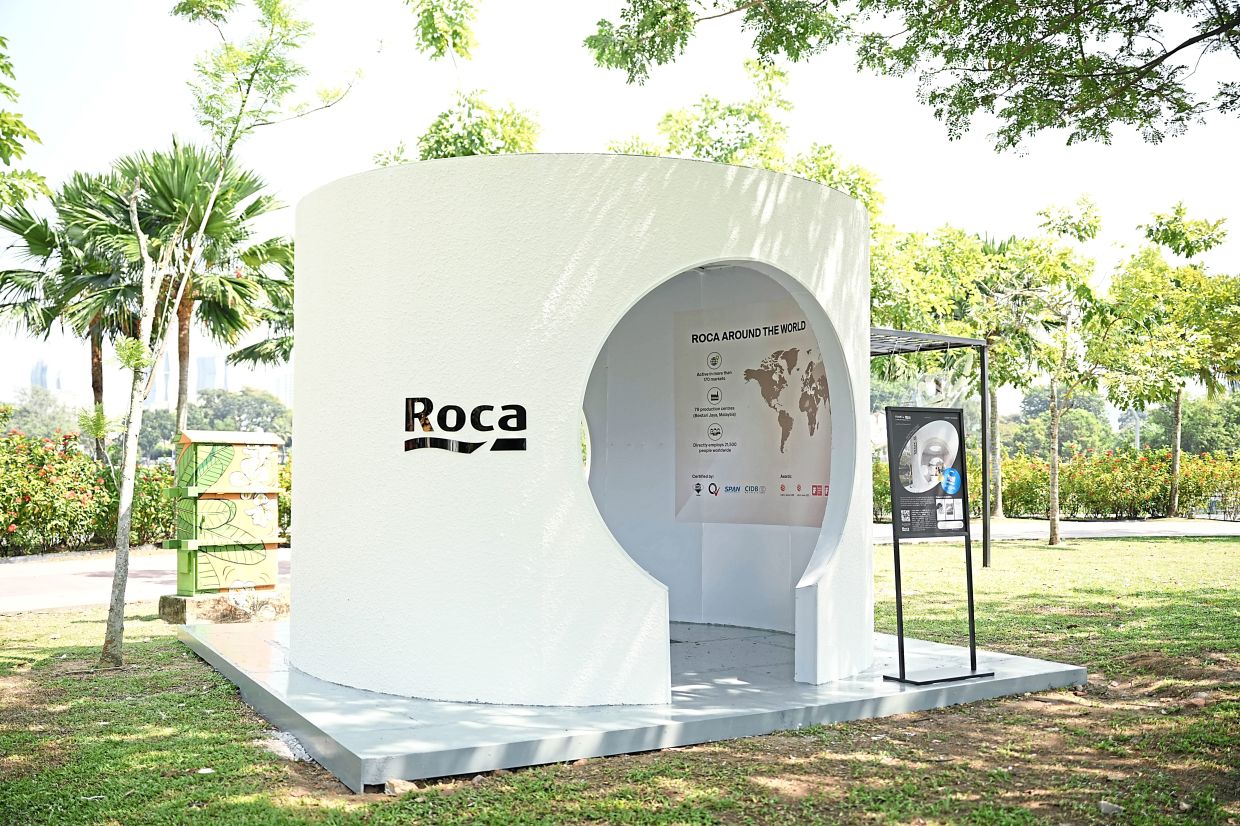
Under the project – thus named because it is launched during the durian and tropical fruit season – a collection of seven curated pavilions (Space Kita, Datum Memory Light, Frame A Roca, Red Chapel, Semula, The Tiboyant and The Escape) sit alongside five winning proposals from the Titiwangsa Pavilion Competition (Di Bawah Kasih Bonda, Paksi, Spinning Axis, Sanctum and Wau), to showcase how emerging designers interpret local identity through contemporary design.
For Tan, tropical fruits are far more than agricultural products; they are symbols of shared experiences that connect Malaysians across generations.
“Tropical fruits are deeply connected to Malaysian life,” he says. “They remind us of local markets, kampung landscapes, family gatherings, festive seasons and shared everyday experiences.
“The pavilion project translates these memories into physical spaces through form, colour, materiality and atmosphere. In doing so, it demonstrates how architecture can help people reconnect with culture in a rapidly changing world,” he adds.
In addition, this year’s Titiwangsa Pavilion Competition, returning for its third consecutive year, also explores the local play culture with the theme of “Cultural Play Pavilions of Malaysian Traditional Games (Reinterpreted)”.
“These pavilion designs delve into the traditional local culture of play, evoking past memories of games such as gasing, hide-and- seek and wau,” explains Tan.
Importantly, he does not view culture as something frozen in time.
“Culture should not be treated as something fixed in the past. It can continue to evolve,” he says.
“The installations show how local identity can be reinterpreted through contemporary design, allowing culture to remain relevant for younger generations and future communities.”
If the Tropical Fruit Pavilion looks towards cultural continuity, the revitalisation of Puncak ALOP reflects the importance of memory.
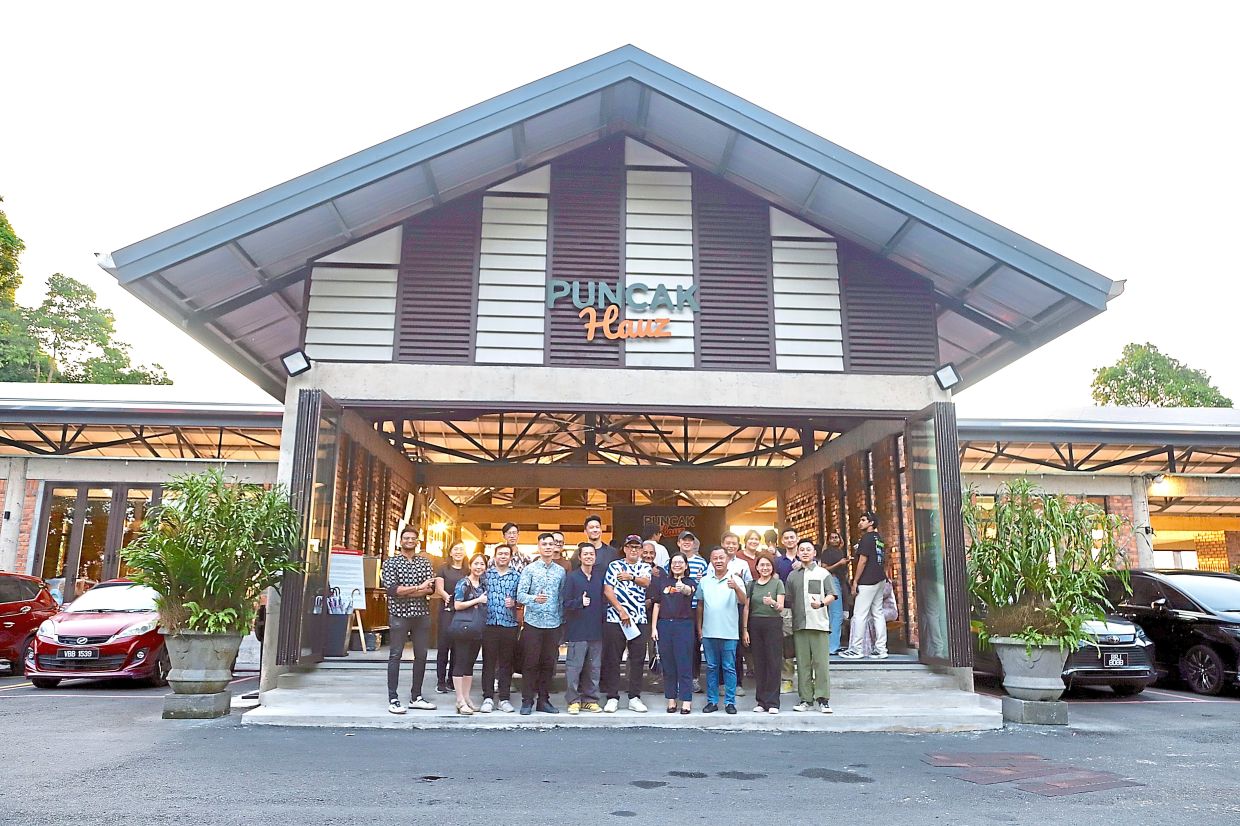
Officially reopened through a collaboration between KLAF 2026, Tourism Selangor, the Selangor Forestry Department and Puncak ALOP, the hilltop destination once held a special place in the hearts of many Malaysians.
Perched above the city with panoramic views of Kuala Lumpur, Ampang Lookout Point was well known as a popular gathering spot before its closure 15 years ago.
Tan says that restoring the site required more than physical upgrades.
“Ampang Lookout Point carries strong collective memory for many Malaysians,” he says. “It is remembered not only for its view, but also for the journey, atmosphere and personal moments people shared there.”
He believes architecture has a crucial role in balancing preservation and renewal.
“When architecture engages with a place like this, it should begin by understanding what people remember and value,” he explains. “The intention is not to erase the past, but to carefully build upon it.”
The ALOP programme’s title, “Trace, Transform, Thrive,” reflects this philosophy. It invites visitors to reflect on the site’s history while imagining its future as a cultural, ecological and tourism destination.
“Preserving memory does not mean keeping a place unchanged,” Tan says.
“It means respecting its spirit while allowing it to take on a renewed purpose.”
Additionally, both sites embody a broader conversation about the challenges facing contemporary cities.
As urban communities grapple with social disconnection, environmental pressures and the erosion of local identity, Tan believes architecture must become more responsive to people and places.
“Architecture can respond to these challenges by being more people-centred, climate-responsive and culturally rooted,” he says.
That means creating inclusive spaces where everyone feels welcome, designing with climate and landscape in mind, and drawing inspiration from local culture, craft and everyday experiences.
Ultimately, Tan hopes visitors to both destinations will have a renewed understanding of architecture’s role in society.
“I hope visitors feel that architecture is not something distant, technical or only meant for professionals. It is part of everyday life,” he says.
“Whether exploring the fruit-inspired pavilions at Titiwangsa Park or rediscovering the sweeping views from Ampang Lookout Point, visitors are invited to experience architecture as a shared journey,” he adds.
“If a visitor can feel more connected to a place, culture, memory and the people around them, then architecture has already created an impact,” says Tan.
“That, to me, is the purpose of KLAF 2026 – to make architecture more accessible to the public and to show that it can help shape not only our cities, but also our shared culture and future.”
Making architecture more accessible
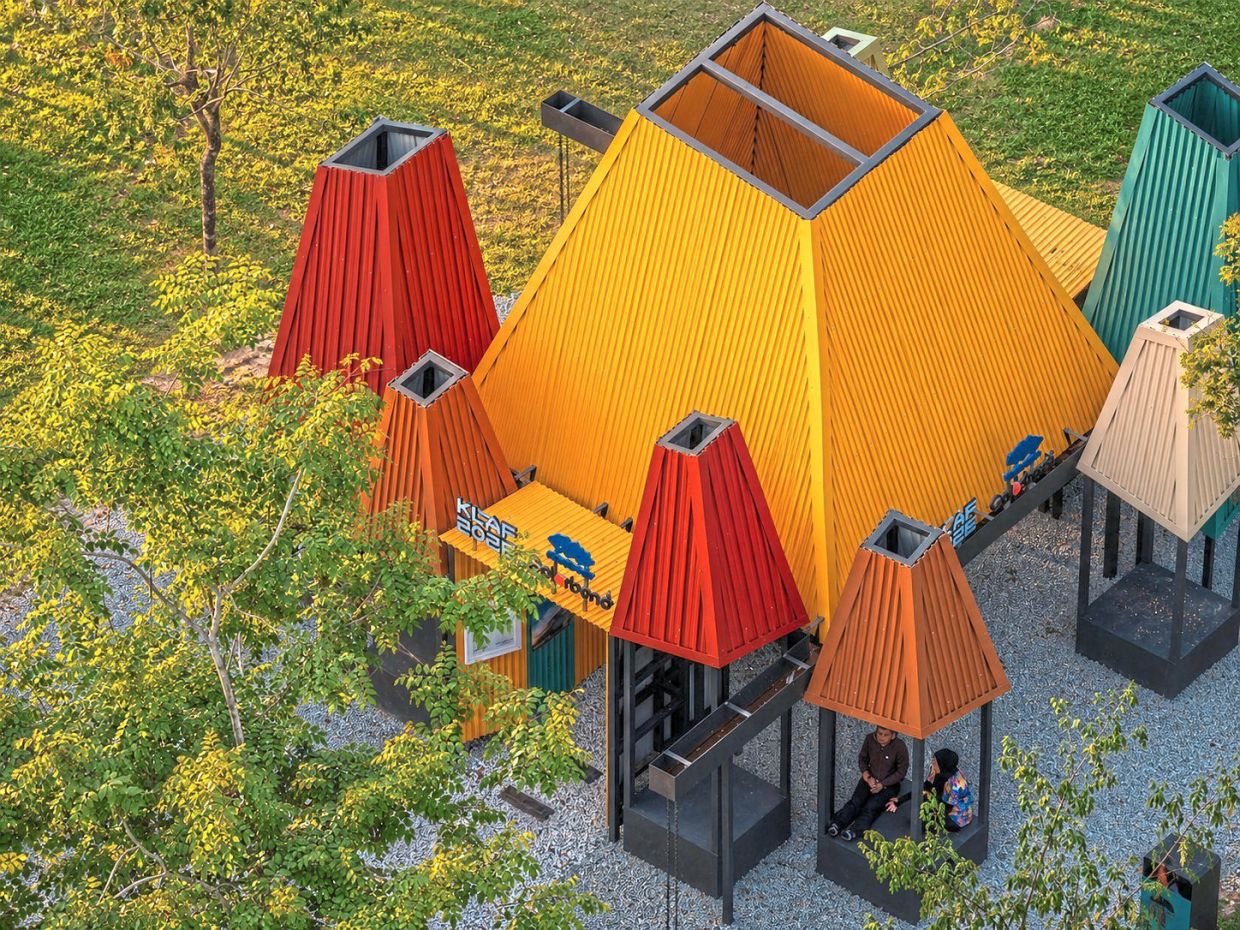
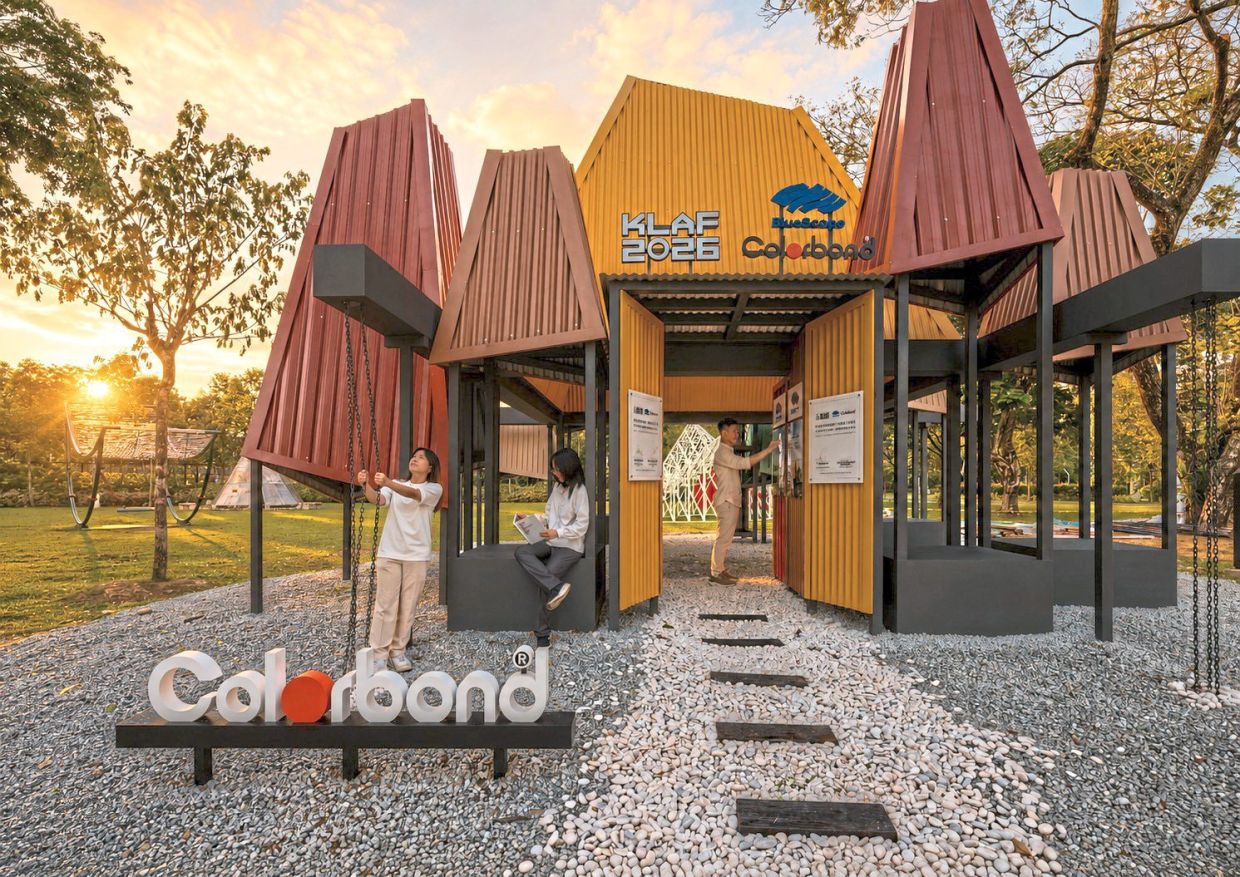
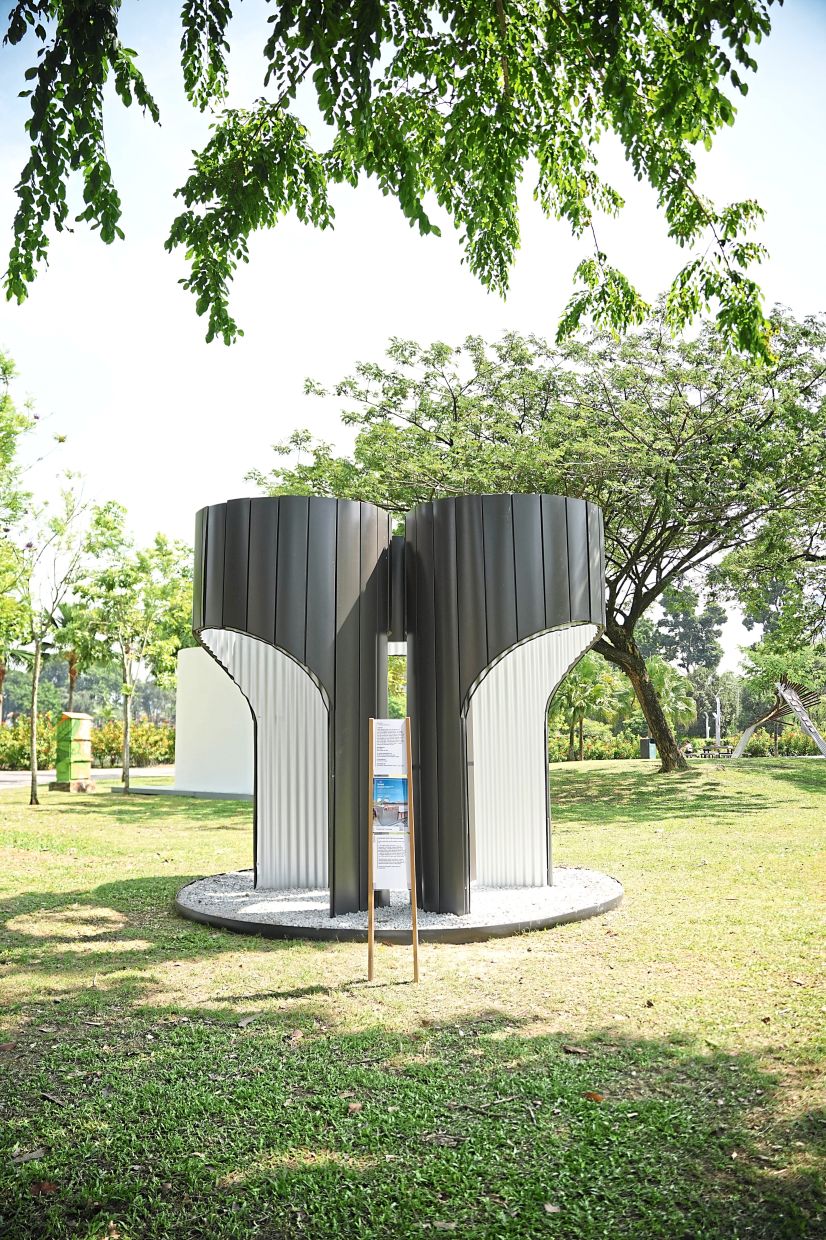
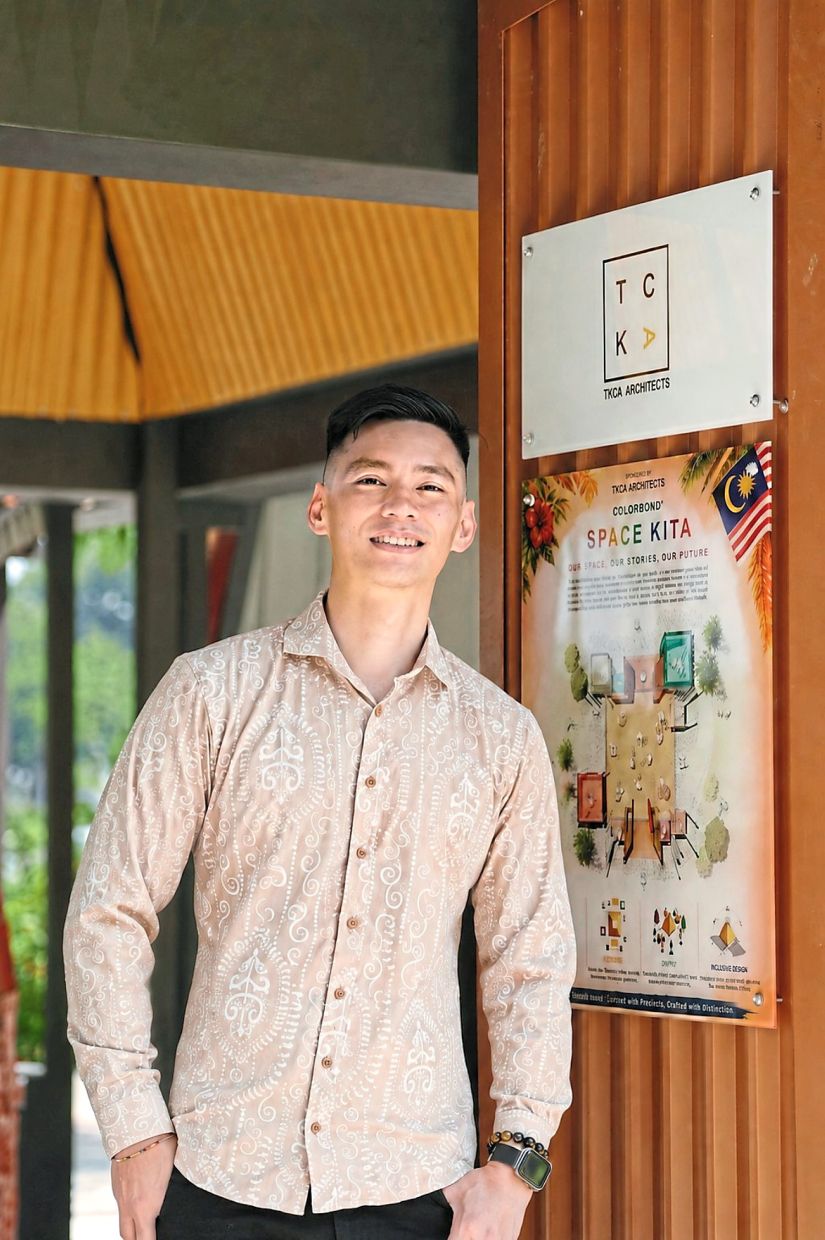
Space Kita by TKCA Architects and partner NS BlueScope Malaysia reinterprets Malaysian cultural identity through an inclusive public pavilion that celebrates community, climate and play.
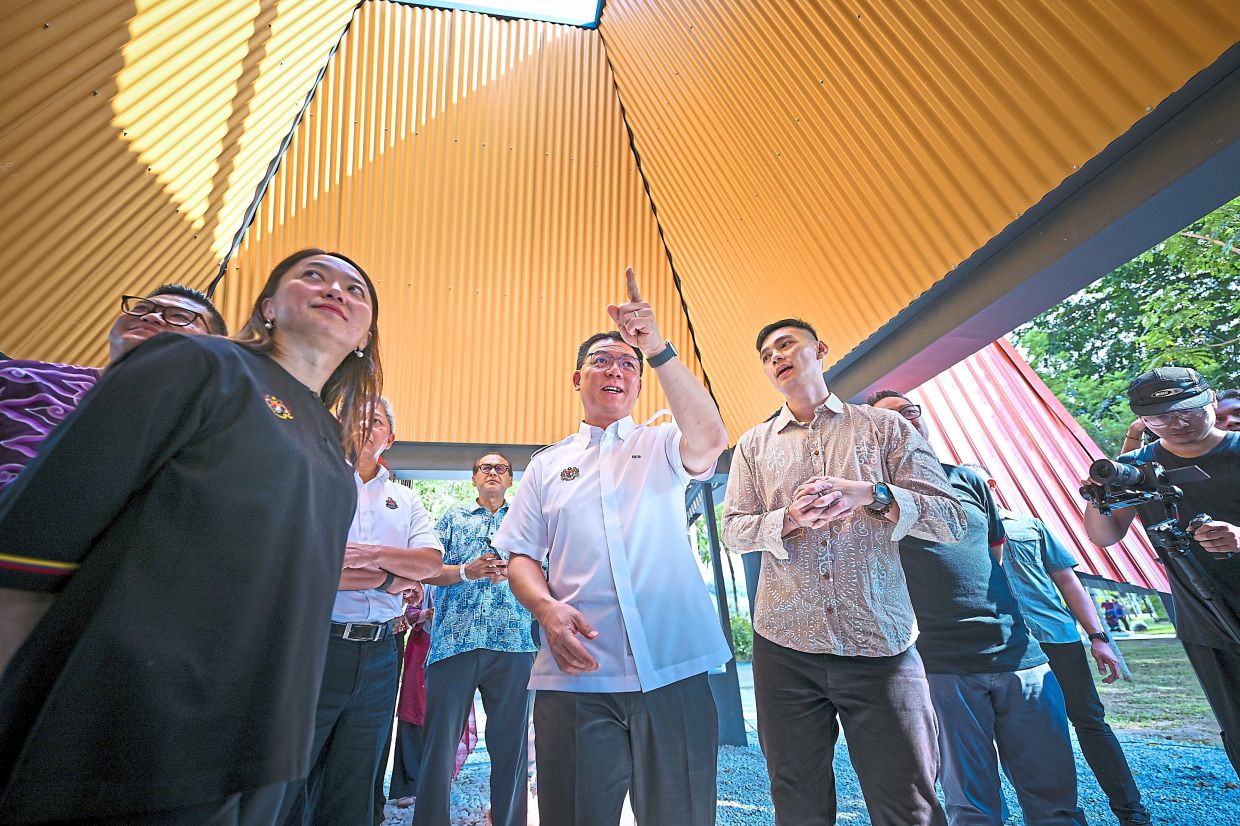
(from left) Yeoh, Nga and Tan at the launch of the Tropical Fruit Pavilion at Titiwangsa, Kuala Lumpur.
Space Kita by TKCA Architects and partner NS BlueScope Malaysia reinterprets Malaysian cultural identity through an inclusive public pavilion that celebrates community, climate and play.
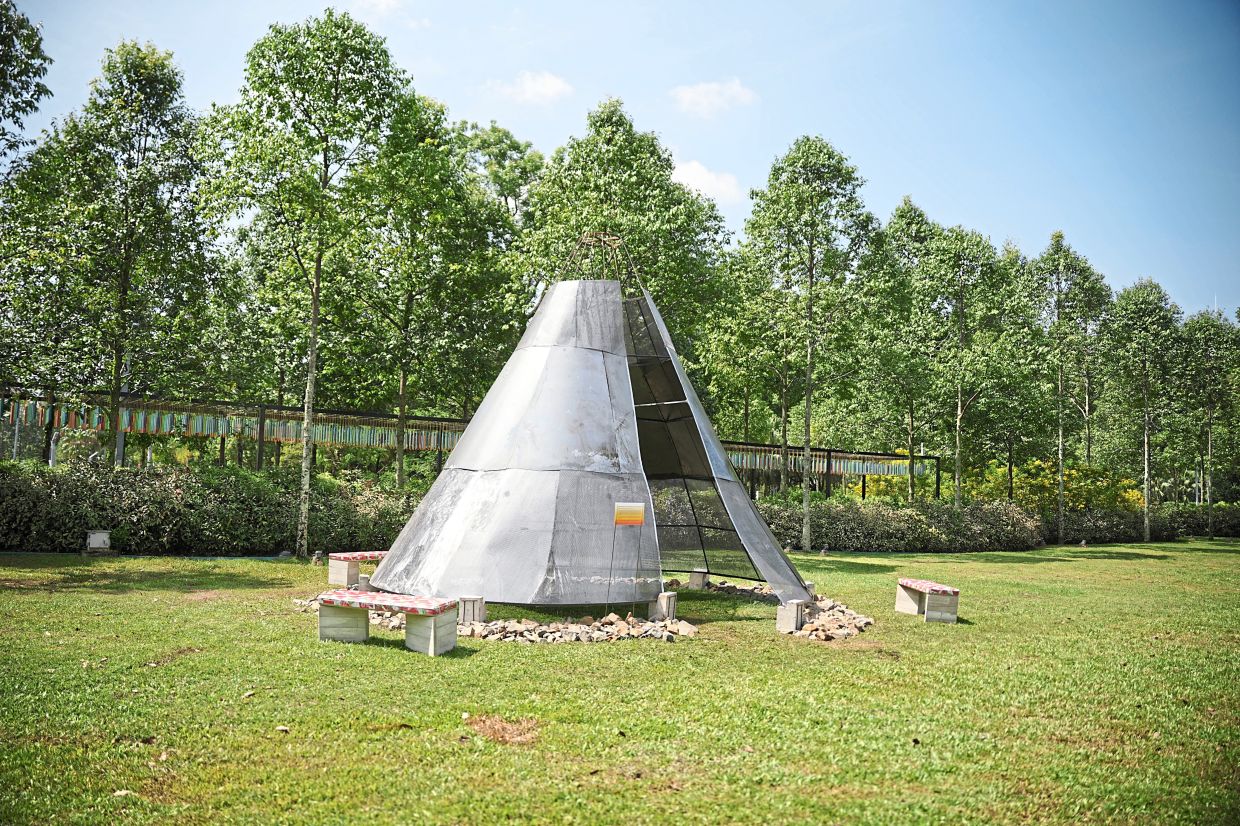
Semula by Syarawi Architect and Design With Honesty, and partner Rockwool Asia, reinterpretes the teepee, one of humanity's earliest shelters, as a contemporary pavilion.
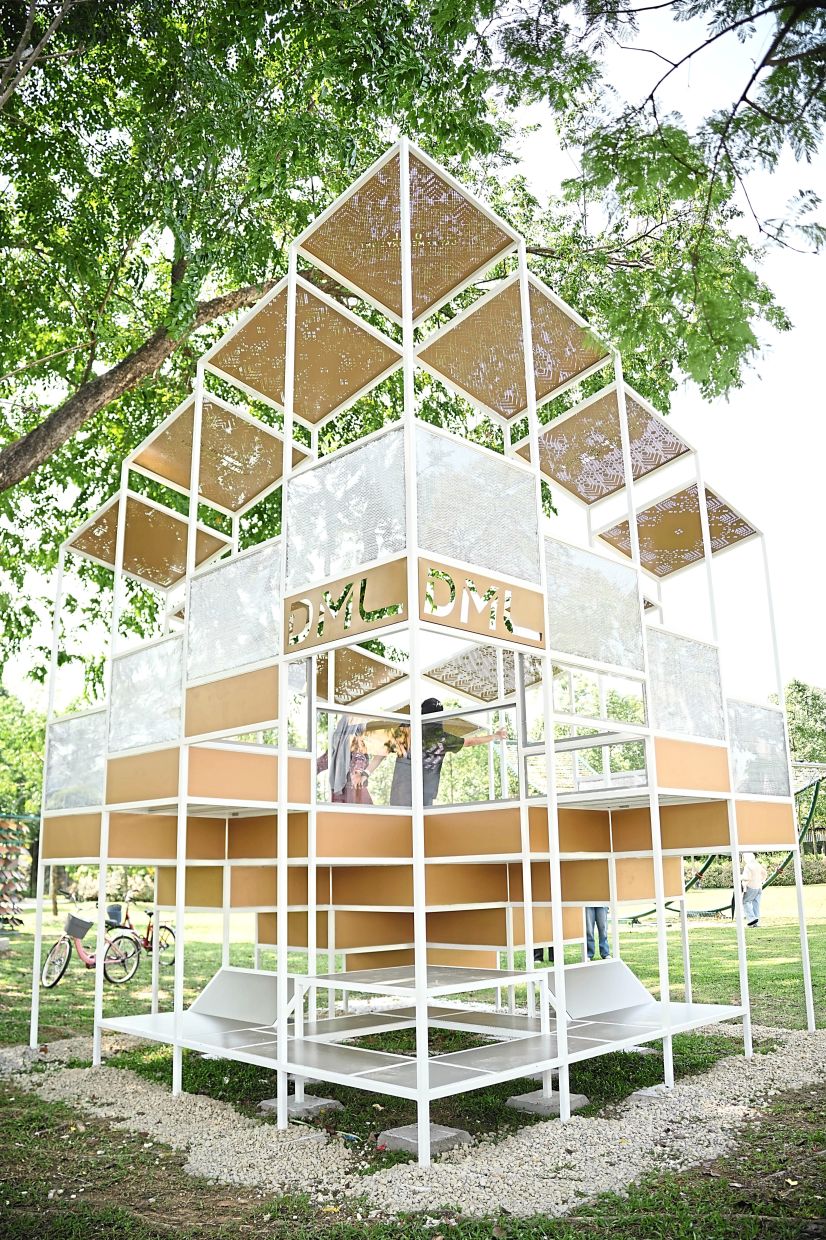
Datum Memory Light Pavilion by architect Howie Lam and partner DML Group of Companies reinterprets Titiwangsa Park’s transformation from a former tin mining landscape into a contemporary cultural park.
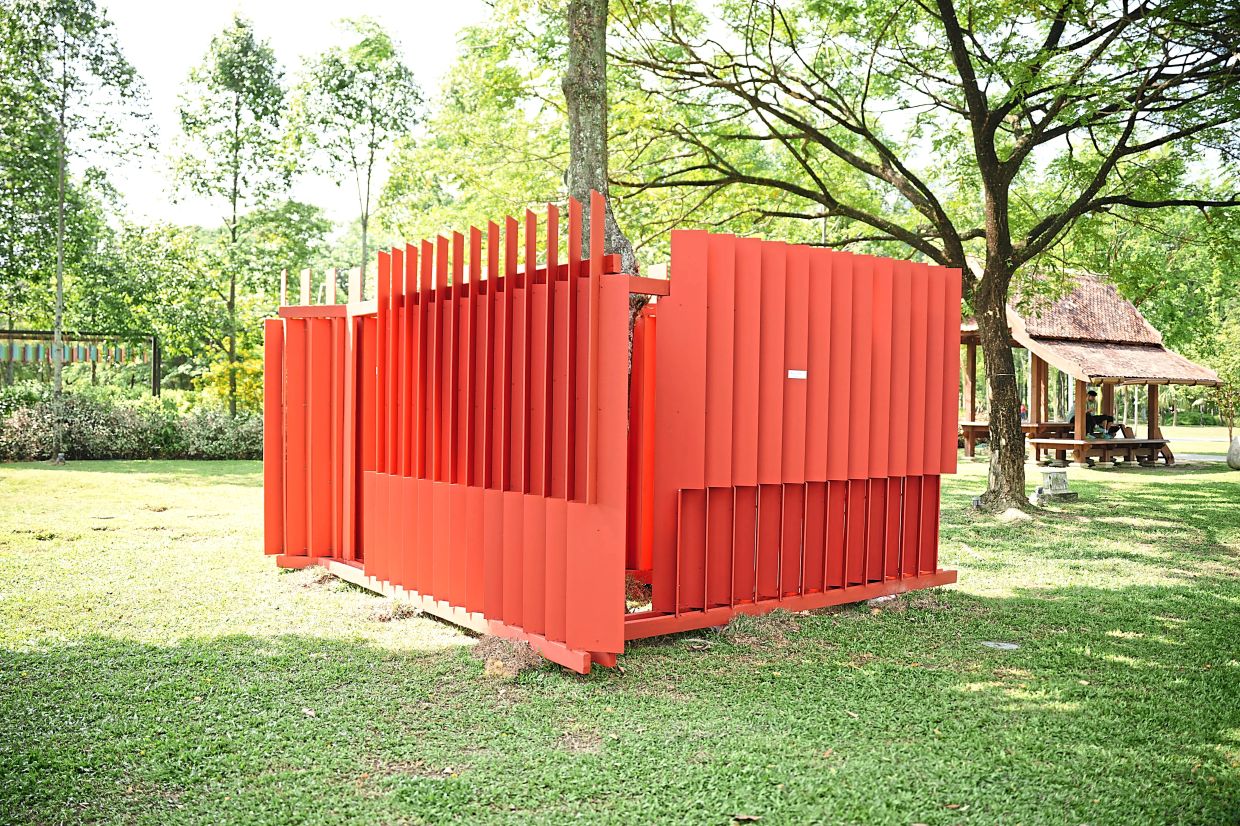
Red Chapel by Weiwen Architecture Studio and partner UAC explores the spatial connection of transition, poised between dwelling and passing, enclosure and exposure.
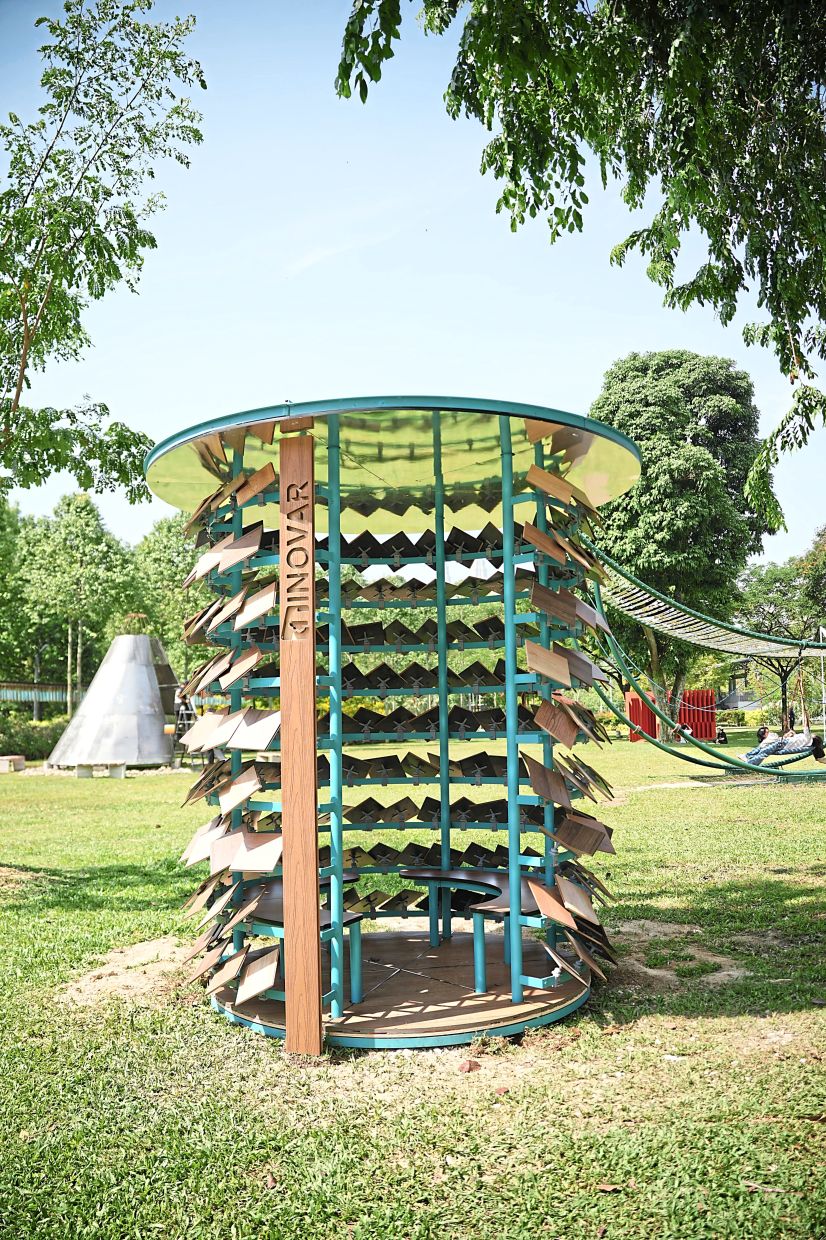
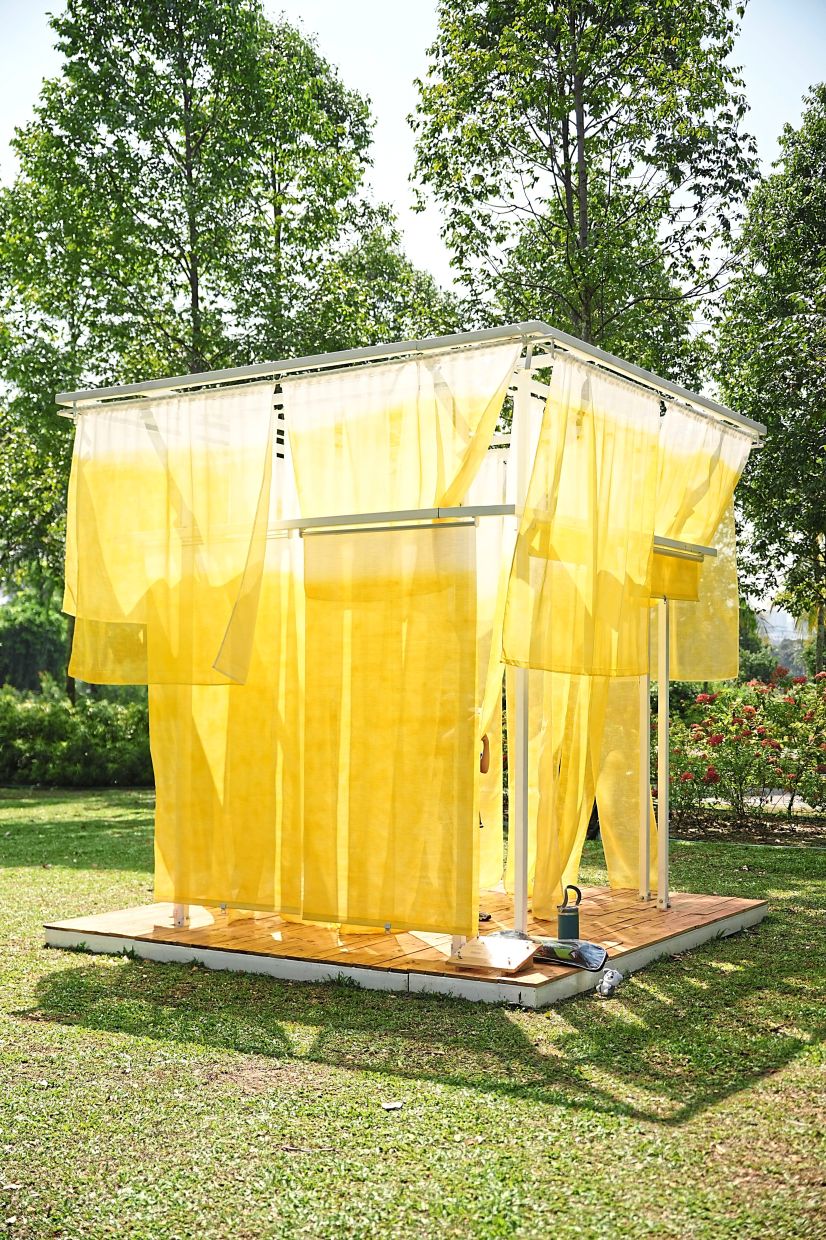
The Escape by Afi Architect and partner Inovar Floor is a minimalist retreat pavilion designed to provide a tranquil sanctuary from surrounding noise and activity.
Frame A Roca by OTWO1 Architects and partner Roca Malaysia is a 'circular drum' at Titiwangsa Lake that opens up a portal to the Kuala Lumpur skyline.
The Tiboyant by Futurground Architects and partner Nippon Paint celebrates a distinctly Malaysian identity by reinterpreting the traditional Bidayuh Bridge of Sarawak.
Di Bawah Kasih Bonda, inspired by Batu Seremban, symbolises a mother’s love with fabric creating a soft and protective environment.
Sanctum is designed to mimic a child’s makeshift fort, simulating the perfect hideout where children escape from mundane realities to explore the infinite world of their imagination.
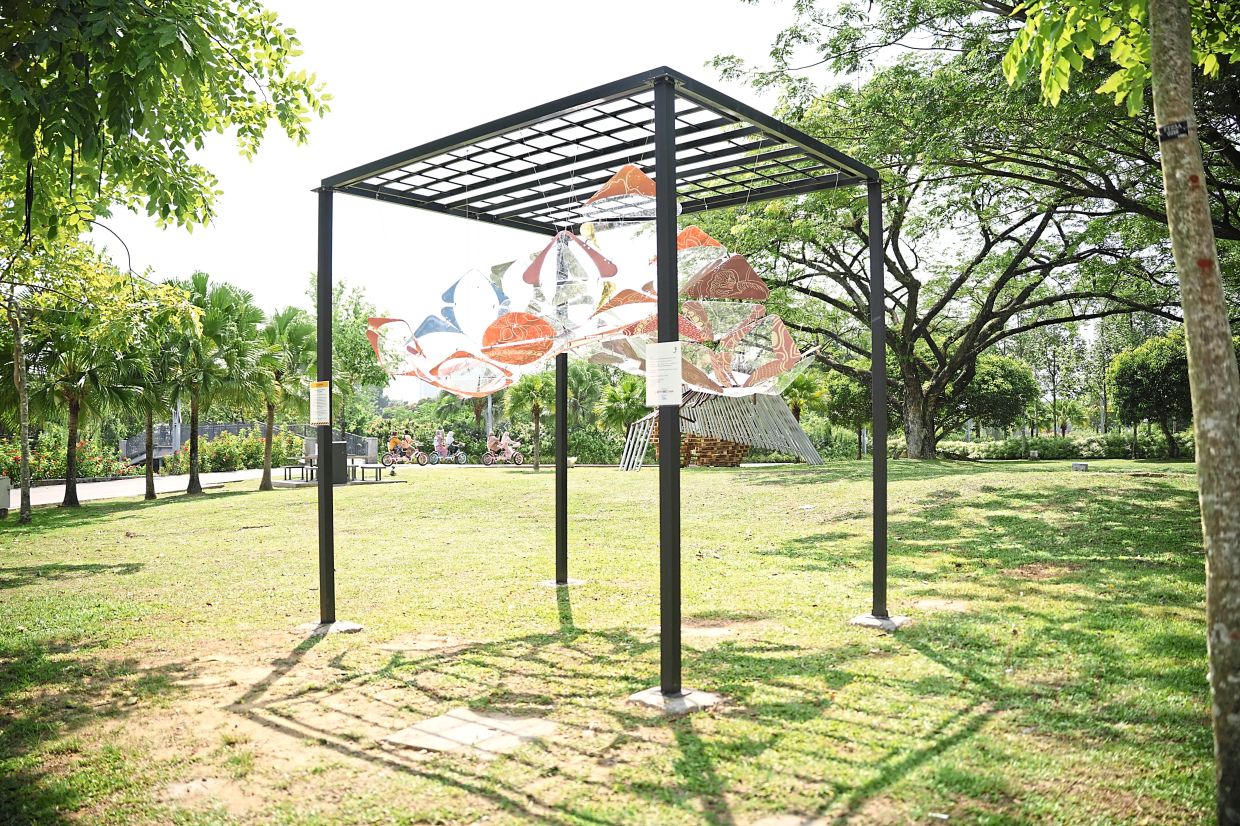
Angin is a pavilion where wind is translated into structure, movement and spatial experience.
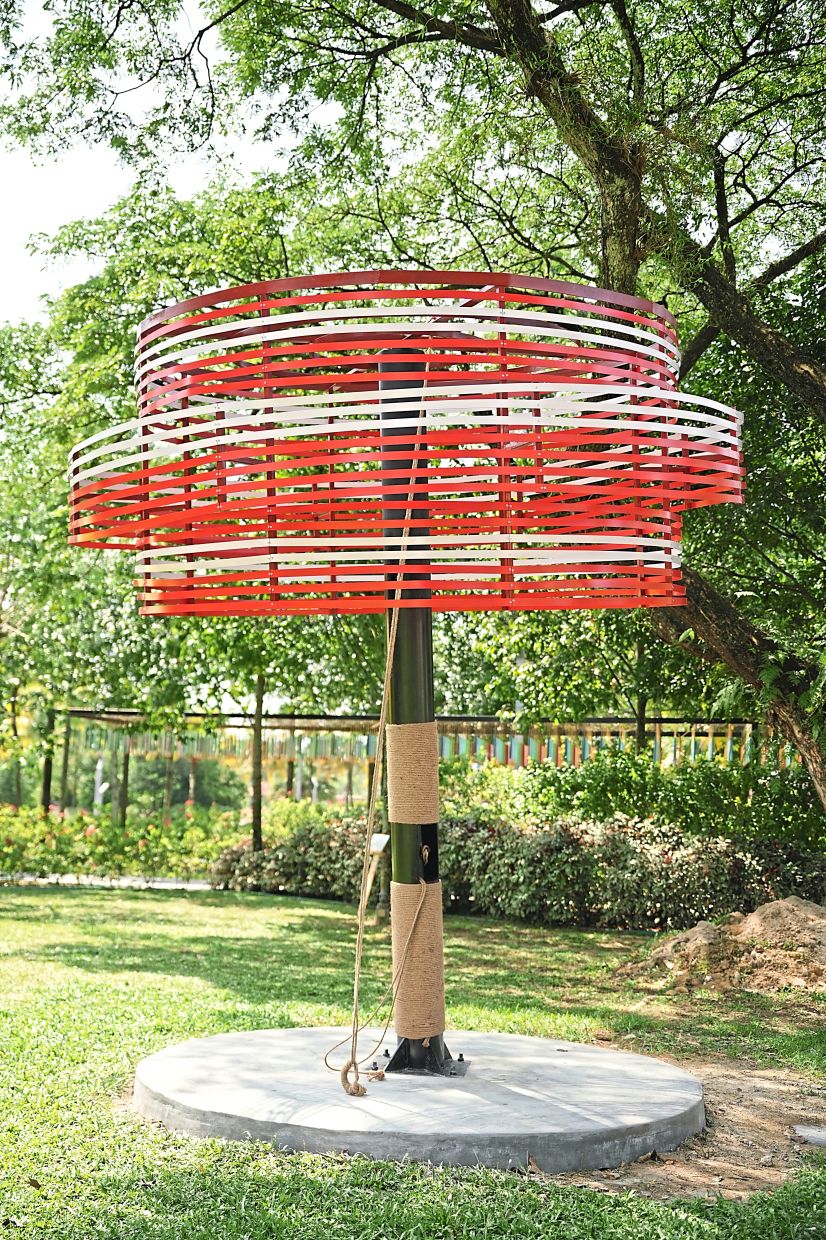
Spinning Axis, derived from the gasing, is translated into a structure of rings.
Paksi draws inspiration from the traditional Malaysian gasing, expressing the sense of motion and balance found in rotation.
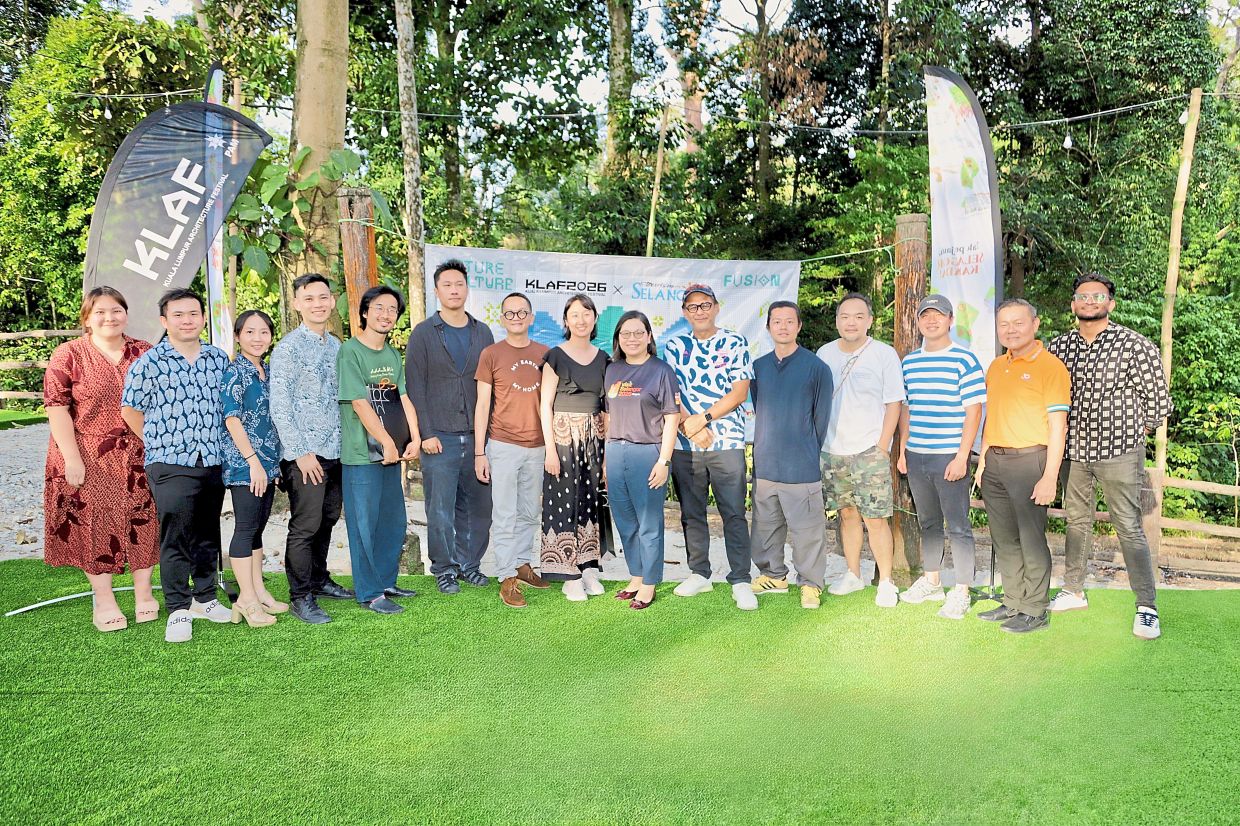
Tourism Selangor CEO Chua Yee Ling, PAM deputy president Nurzaini Mufti, KLAF 2026 director Lim Gim Huang, Tan (fourth to seventh from right) and other architects and guests.
Tourism Selangor CEO Chua Yee Ling (7th from right), PAM deputy president Nurzaini Mufti (6th from right), KLAF 2026 director Lim Gim Huang (5th from right), Tan (fourth from left) with other architects and guests at the KLAF 2026 Puncak ALOP reopening.
Architecture is no longer only about buildings or physical form, but about shaping human experience, community interaction and shared identity, says Tan.