On a humid December morning in Simpang Pulai, Perak, one family stood among a group of volunteers with social enterprise Epic Homes, raising the wooden frame of a simple house.
Oil and gas regional manager Edward Loh, his wife Sheila Poony and their three daughters – Kirsten, Shiobhan and Janyn – worked side by side under the relentless sun, lifting planks, hammering beams and fastening sheets of zinc roofing into place.
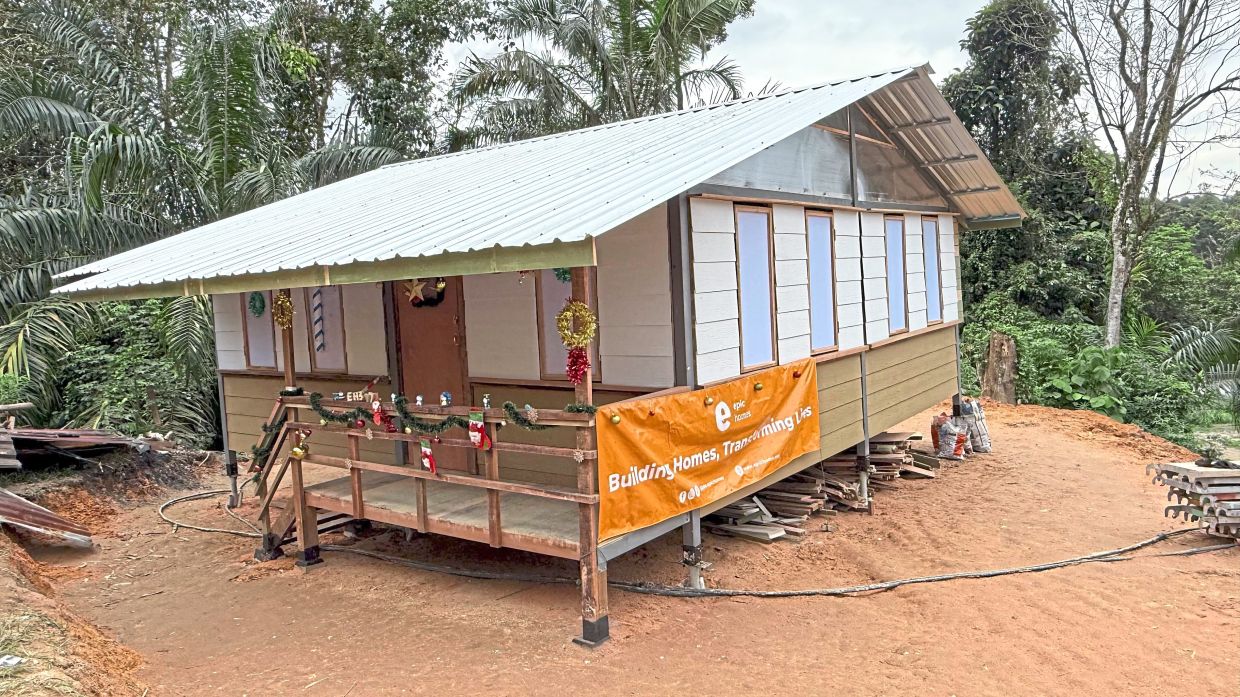
Three and a half days later, the structure stood complete. When the keys were handed to the Orang Asli family who had waited years for a proper home, Loh felt an unexpected swell of emotion.
“We weren’t just building a house,” he says. “We were helping to build someone’s future.”
It is moments like these that have kept the Loh family returning to do volunteer projects year after year.
Not out of obligation, but because the experience has become part of who they are as a family.
Across Malaysia, more parents are choosing to volunteer together with their children, not only to give back to society, but to also build stronger family bonds and raise young people who are grounded, empathetic and socially aware.
What begins as a simple act of service – handing out food, walking shelter dogs or repainting a flood-damaged school – often evolves into something far more meaningful.
For many families, volunteering has become a shared journey that shapes values, deepens conversations and creates memories that linger long after the work is done.
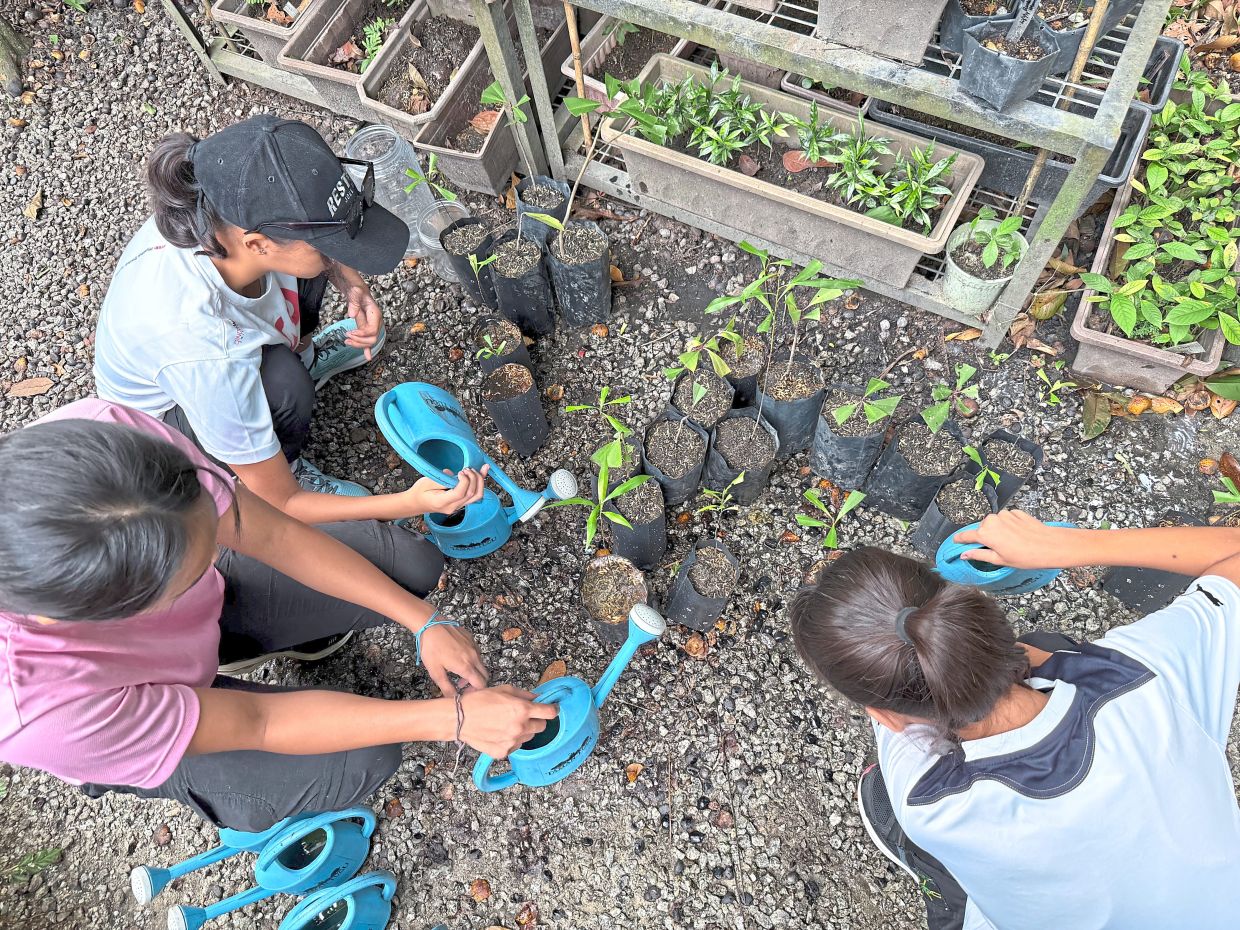
Kirsten, 19, Siobhan, 16, and Janyn, 14, have spent much of their school holidays not in shopping malls or on screens, but repainting schools, cleaning homes after floods, planting mangrove saplings and distributing food to the homeless.
“We wanted our girls to understand that the world is bigger than their own circle,” Poony, an entrepreneur, says. “It’s easy to grow up thinking your life is the norm, when actually many people live very differently.”
The couple also saw volunteering as a way to give their children skills and perspectives that cannot be taught in a classroom.
Loh often describes these experiences as filling a “life backpack” – equipping his daughters with empathy, resilience and practical problem-solving abilities that would serve them well in adulthood.
At first, the girls were not enthusiastic. Like many teenagers, they would rather stay home in the comfort of air-conditioning than spend a weekend hauling supplies or scrubbing walls.
But over time, something shifted.
“After each project, we would talk about what we saw and what we learned,” Loh explains.
“Those conversations helped them understand why we were doing this.”
The change was subtle but unmistakable. Janyn recalls one early experience repainting a flood-damaged school.
“I remember thinking about how lucky I was that my school and home were safe,” she says. “It made me appreciate things I used to take for granted.”
The family has since volunteered for many causes which are close to their hearts, including a school restoration after the flood in Banting, Selangor with EcoKnights; a beach cleanup in Lang Tengah, Terengganu; mangrove tree replanting with Kuala Selangor National Park, Selangor; tree replanting at Taman Tugu, Kuala Lumpur with Free Tree Society; feeding the KL urban poor with Kechara Soup Kitchen and many others.
For the Lohs, volunteering is no longer an occasional activity but a family tradition. They aim to participate in at least two projects together each year, and the daughters are increasingly involved in planning and choosing causes that resonate with them.
“Our choice to join volunteering programmes isn’t just about the act of service itself; more importantly, it’s about the people we’re assisting,” says Kirsten.
These shared experiences have strengthened their relationship in unexpected ways. Working together in physically demanding conditions – carrying materials, coordinating tasks, solving problems – requires cooperation and trust, creating a dynamic very different from everyday family life.
“When you’re doing something challenging together, you see different sides of each other,” says Siobhan. “You learn to rely on one another.”
Loh believes these moments create what he calls “emotional credit” within the family – a reserve of shared memories and goodwill that helps them navigate disagreements and stressful periods later on.
For another Malaysian family, their volunteering activities began during one of the country’s most uncertain periods.
Manager Kris Gopal, 46, and his wife, accounts executive Debra Sarah Sunitha, 44, started distributing groceries during the Covid-19 lockdowns, when many families in low-income flats suddenly found themselves without work or food.
Their children, Zachary and Krisandrah, were brought along not simply to help, but to witness the reality of what was unfolding.
“At first, it was a culture shock for them,” Debra Sarah admits. “They had never seen living conditions like that up close.”
The visits sparked difficult but necessary conversations at home – about inequality, privilege and the reasons why some families struggle despite working hard.
Over time, the children became more comfortable interacting with the communities they were helping and began asking their own questions.
“When they hear other children talk about not being able to go to school or not having enough to eat, it becomes real in a way that no lecture can achieve,” Debra Sarah says.
Even after pandemic restrictions eased, the family continued their efforts, expanding their volunteer work with Project Hope Welfare Association to include Orang Asli villages and outreach to hospital patients and visually impaired individuals.
For Zachary, now 16, the experience has reshaped his outlook.
“It makes me realise how fortunate I am,” he says. “It also makes me feel responsible to help when I can.”
One of the most profound effects of family volunteering, Kris observes, is how naturally children build bridges with other children.
“Kids are more open with someone their own age,” she says. “They tell you things they might not tell adults.”
Through these conversations, she has learned about children who skip school to care for siblings, or families who share a single meal among several children.
These stories have made her more mindful of her own behaviour – from how she spends her allowance to how she treats her belongings.
Krisandrah also discovered that Orang Asli children from remote areas faced difficulties going to school because the schools were very far away, and they were often bullied at school because they were different.
“It’s only when we talk with them and understand what they are going through that we can help them more effectively,” she says.
At home, her parents have noticed a shift: fewer complaints, more gratitude, and a growing willingness to share.
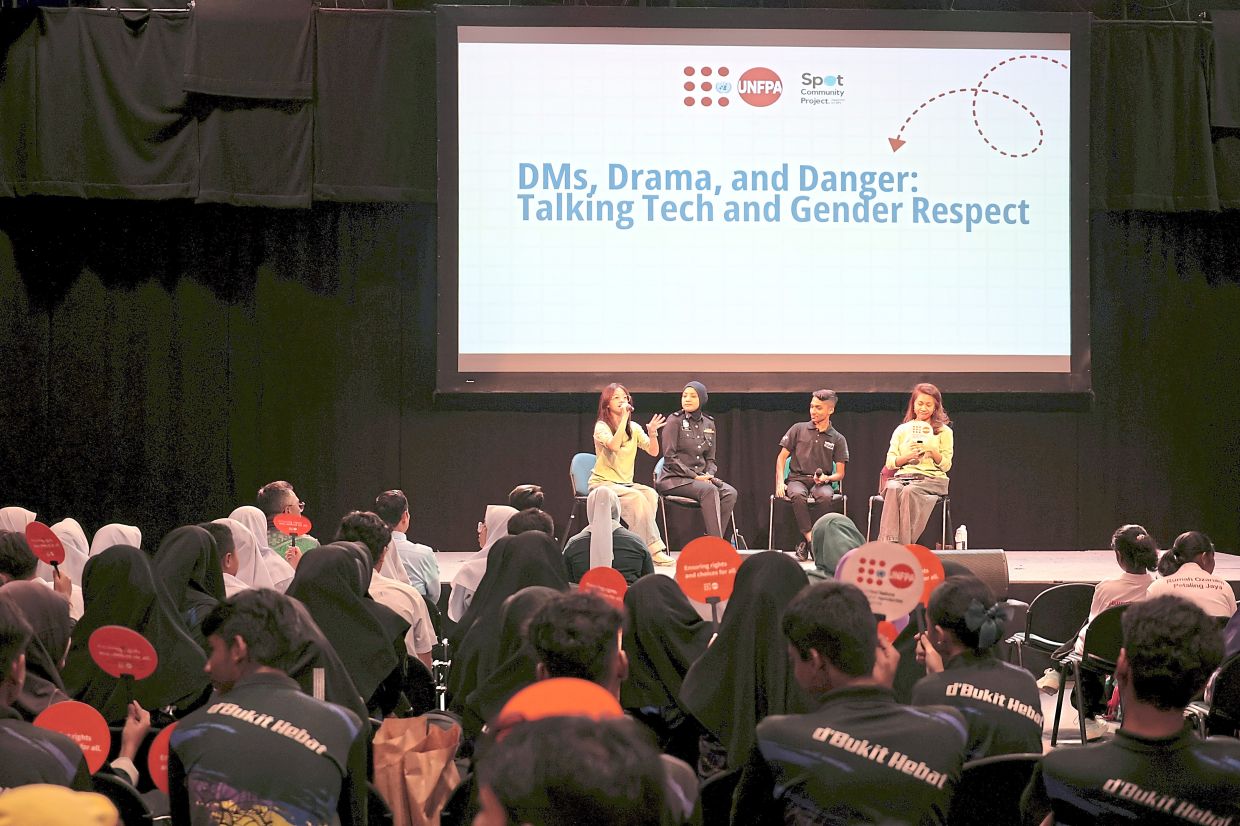
Through the Spot Community Project, Malaika now helps conduct workshops for younger students on topics such as kindness, peer pressure and personal safety.
Eena, a branding and marketing consultant, believes that allowing children to explore volunteer work through their own interests is key to sustaining long-term involvement.
“If it starts with something they genuinely care about, they don’t see it as a chore,” she says. “It becomes something they’re proud of.”
While family dinners and holidays are often cited as essential bonding moments, these parents say volunteering offers a different kind of connection – one rooted in shared purpose rather than passive togetherness.
“When you volunteer, you’re not just spending time together. You’re working towards something meaningful,” Eena says. “That creates a deeper sense of unity.”
Malaika agrees. Some of her most vivid childhood memories are not of vacations or birthday parties, but of muddy fields and long drives home after a day of service.
“It’s tiring, but in a good way,” she says. “You feel like you’ve done something worthwhile together.”
Loh describes these experiences as moments that reveal character – both in his children and in himself.
“You see how your kids respond when things are difficult or uncomfortable,” he says. “And they see the same in you.”

“Children learn values not just from what parents say, but from what they see parents do,” she explains. “When they witness acts of kindness and participate in them, those behaviours become normalised.”
Volunteering also provides children with a sense of agency – the understanding that their actions, however small, can make a difference in someone else’s life. This, she says, contributes to healthier self-esteem and a stronger sense of purpose.
“When children help someone and see a tangible result – whether it’s a clean beach, a rebuilt home or a grateful smile – it reinforces the idea that they are capable of creating positive change.”
Exposure to different living conditions also fosters gratitude and perspective. Instead of taking comforts for granted, children begin to see them as privileges.
However, Anasuya cautions against overscheduling volunteer activities to the point where children feel pressured or resentful.
“It’s important that volunteering remains a positive, meaningful experience rather than another obligation,” she says. “Families should balance service with leisure and ensure that children feel heard in the process.”
One of the most common misconceptions about volunteering is that it requires large commitments of time or money.
In reality, many initiatives begin with simple, spontaneous acts – donating groceries, joining a neighbourhood clean-up, or spending a few hours at an animal shelter.
Loh encourages parents not to wait for the “perfect” opportunity.
“You don’t need to travel far or do something dramatic,” he says. “Even small acts of kindness can leave a strong impression on children.”
Debra Sarah echoes this sentiment, adding that the key is consistency rather than scale.
“When children see you helping others regularly, it becomes part of their worldview,” she says. “They grow up believing that helping is simply what people do.”
As the children in these families approach adulthood, the long-term effects of their upbringing are becoming increasingly evident.
Kirsten has expressed interest in pursuing social impact initiatives, while Siobhan is considering studying psychology to better understand and support people’s mental wellbeing.
Malaika, meanwhile, has taken on leadership roles in youth programmes, guiding younger volunteers and speaking openly about the importance of kindness in an often judgemental digital age.
For their parents, these developments are both gratifying and humbling.
Parents always hope to raise good children. And seeing them choose to continue helping others on their own is the greatest reassurance that you’ve done something right, concludes Eena.
Families who serve
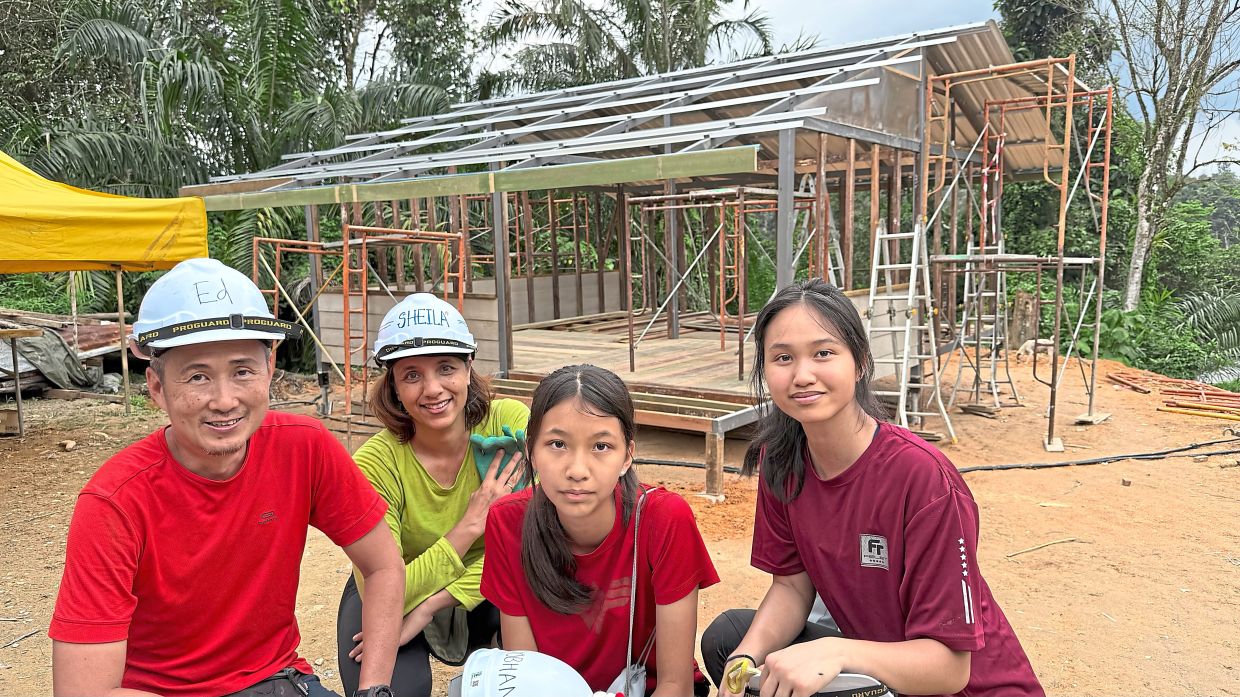



(Fom left) Loh, Poony and their daughters, Siobhan and Kirsten, building homes for the Orang Asli in Simpang Pulai, Perak with Epic Homes. Photo: Edward Loh
The completed Orang Asli home that the Loh family helped to build. Photo: Edward Loh
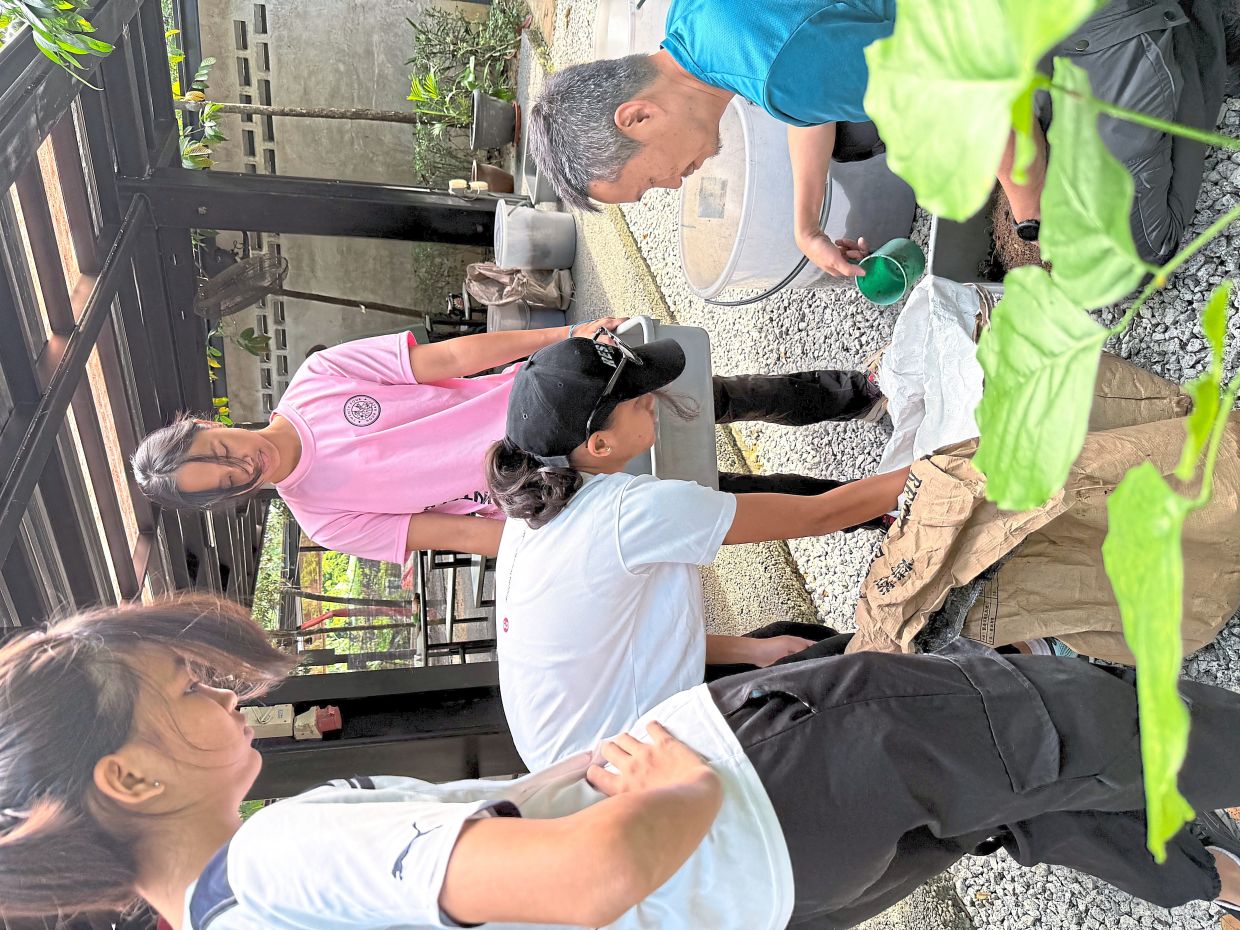
Loh (right) and his daughters replanting trees at Taman Tugu, Kuala Lumpur with Free Tree Society in January 2025. Photo: Edward Loh
Kirsten, Siobhan and Janyn replanting trees at Taman Tugu, KL. Photo: Edward Loh
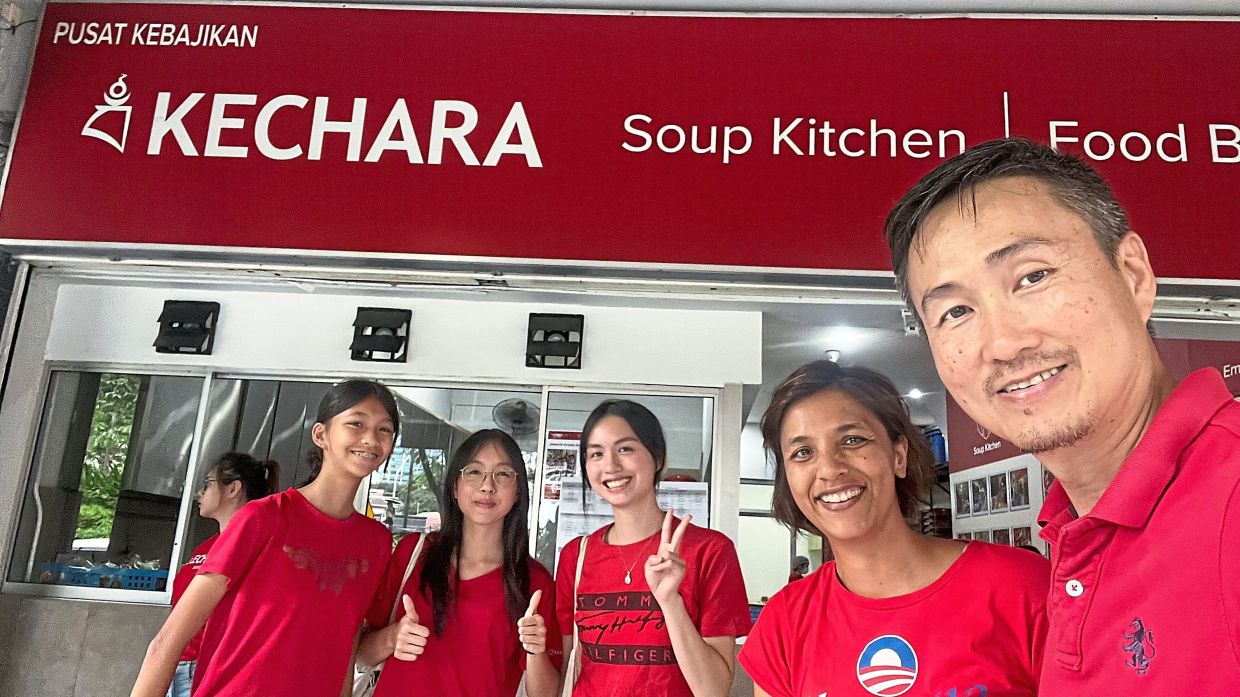
(from right) Loh, Poony, and their daughter (far left) Siobhan who brought along two of her friends - Katelyn and Kendra Ong, volunteering at Kechara Soup Kitchen. Photo: Edward Loh
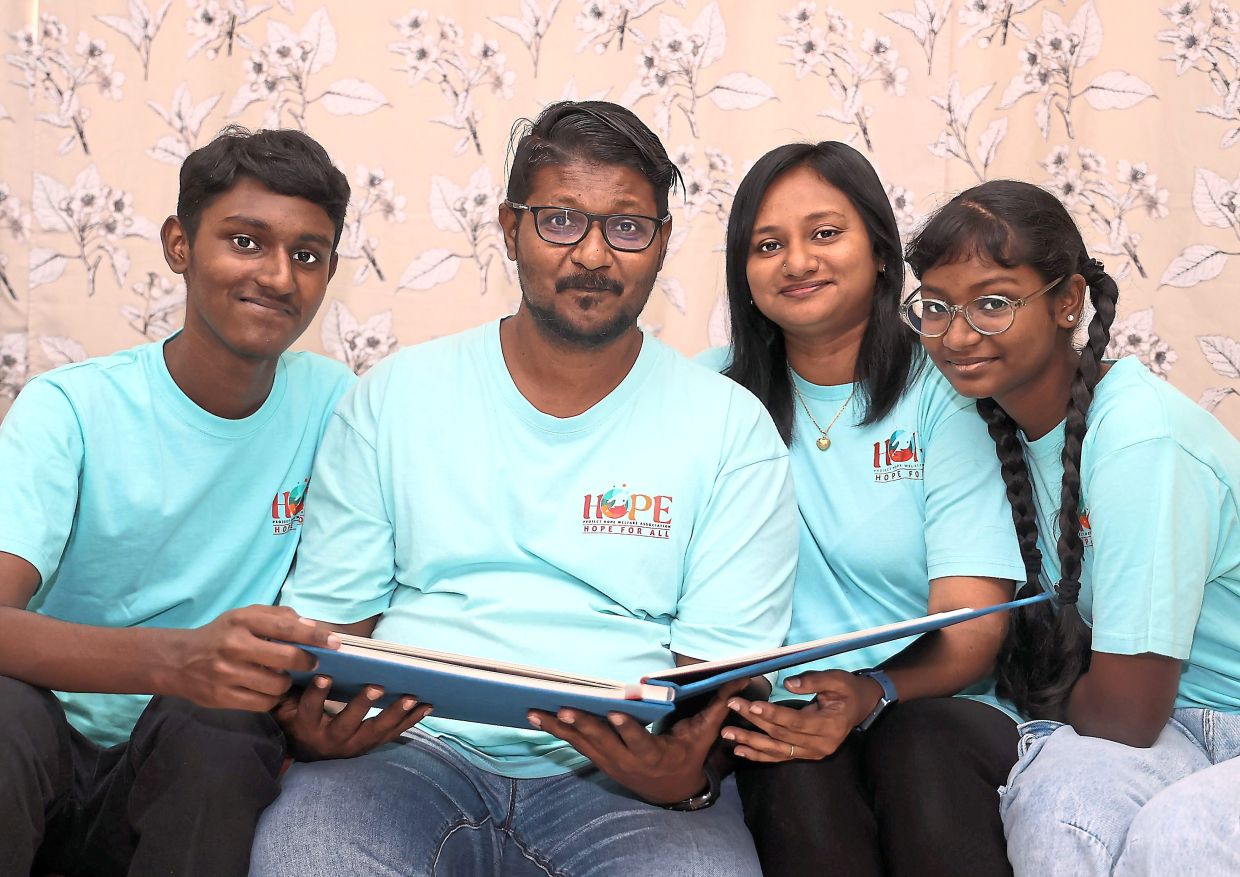
Kris and wife Debra Sarah, volunteer together with their children, son Zachary and daughter Krisandrah, because they believe in giving back to the community. Photo: The Star/Muhamad Shahril Rosli
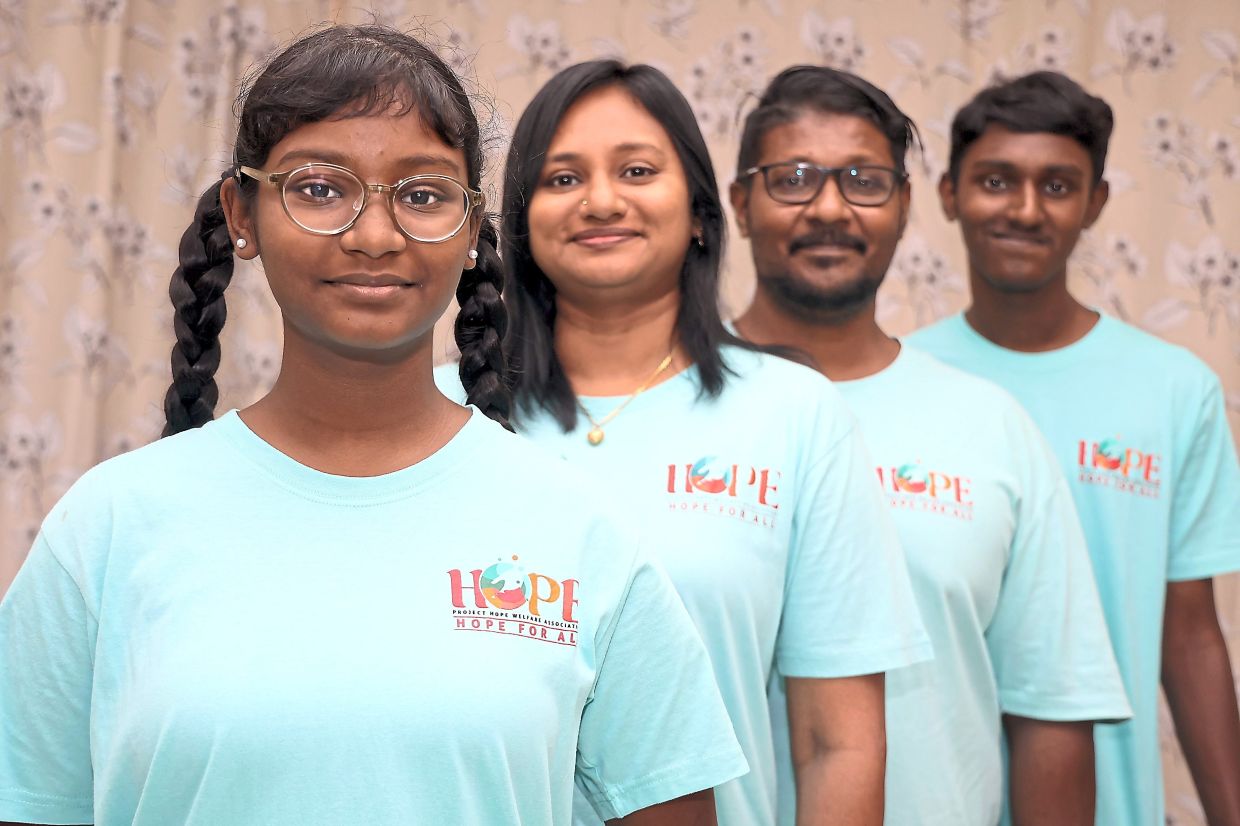
(From left) Krisandrah, Debra Sarah, Kris and Zachary are volunteers with the Project Hope Welfare Association. Photo: The Star/Muhamad Shahril Rosli
Kris (first from left) and his wife Debra Sarah (fifth from left) distributing schoolbags and other necessities to families in need. Photo: Project Hope Welfare Association
Kris and his wife Debra Sarah (first and second from left) believe that volunteering as a family builds good values. They are pictured with the latter's parents and other volunteers. Photo: Project Hope Welfare Association
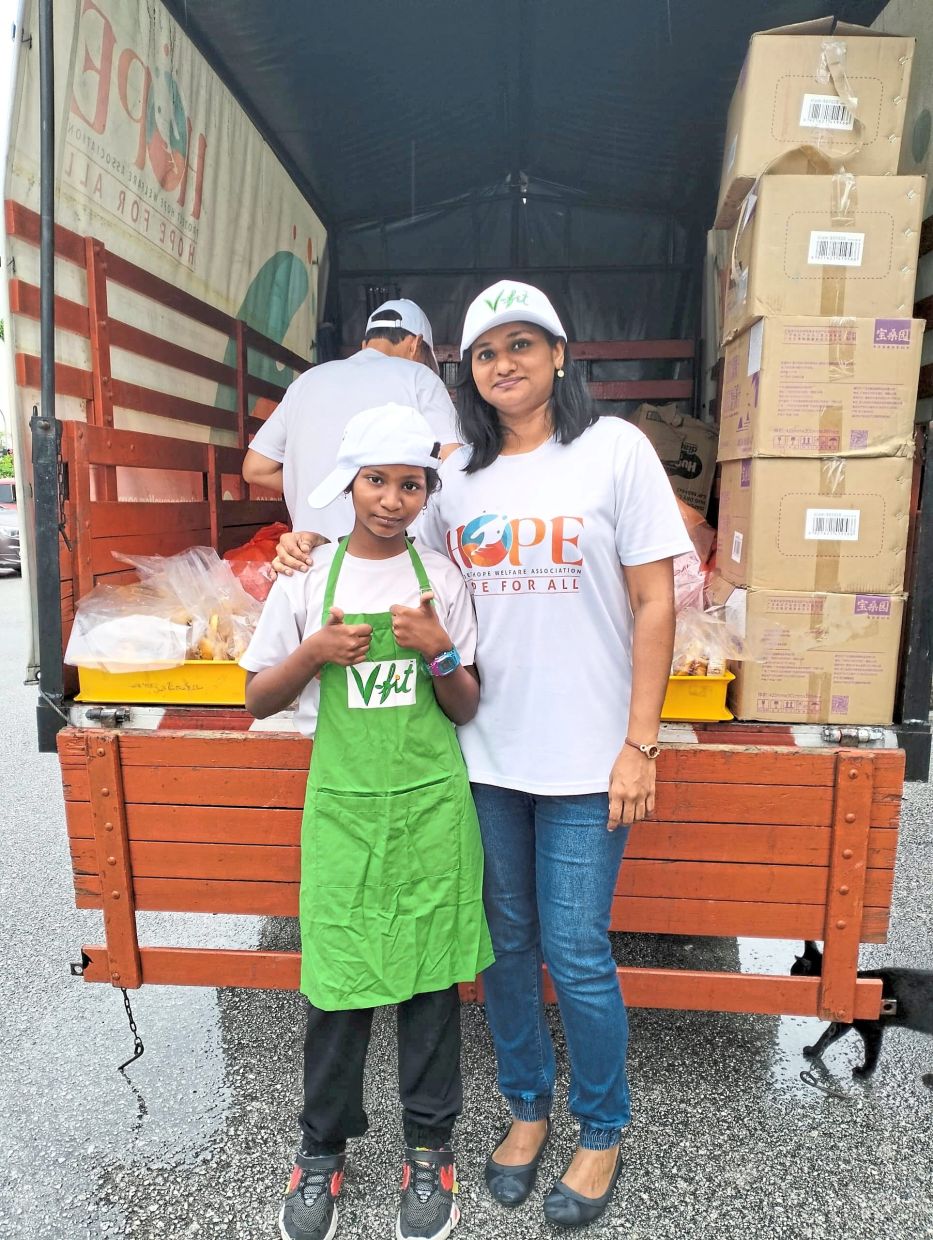
Debra Sarah (right) and her daughter Krisandrah getting ready to distribute food packages to those in need. Photo: Project Hope Welfare Association
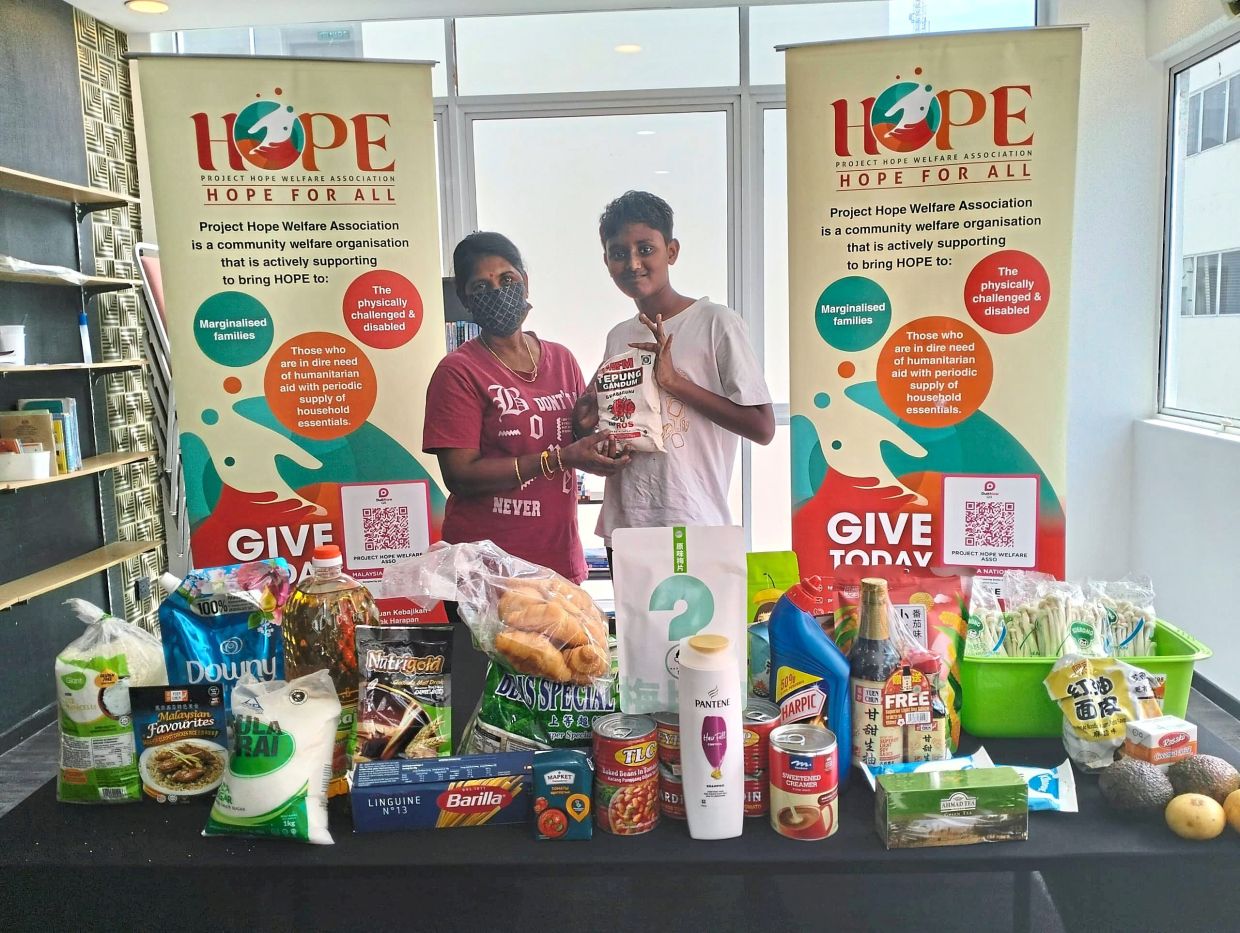
Zachary (right) often volunteers with his parents and sister to distribute foodstuff with Project Hope Welfare Association. Photo: Project Hope Welfare Association
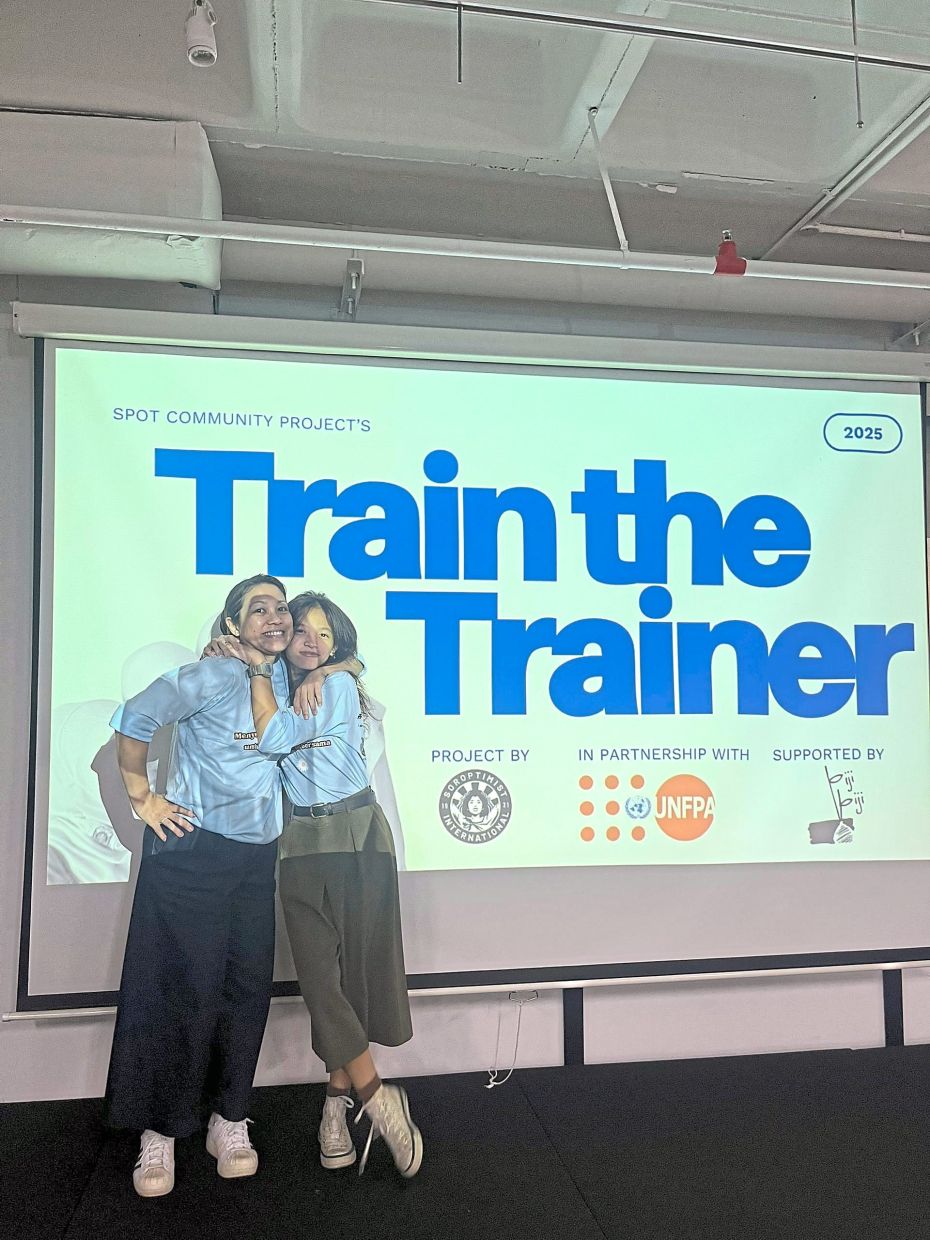
Eena and her daughter Malaika believe that volunteering brings them closer as a family. Photo: Eena Houzyama
With her support, Eena's daughter Malaika volunteers with Spot Community Project Malaysia, which empowers youth to build safer communities. Photo: Eena Houzyama
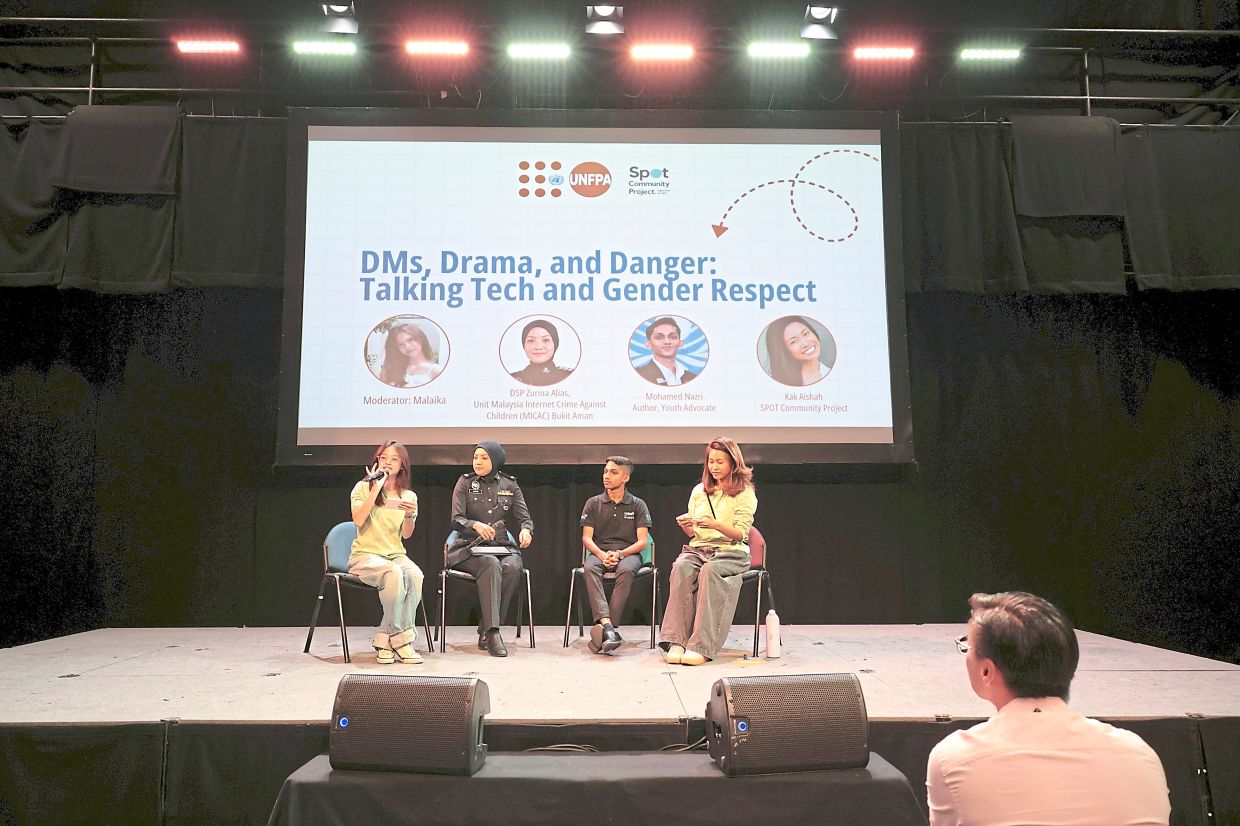
Malaika – a volunteer with Spot Community Project – moderates at a talk. Photo: Eena Houzyama
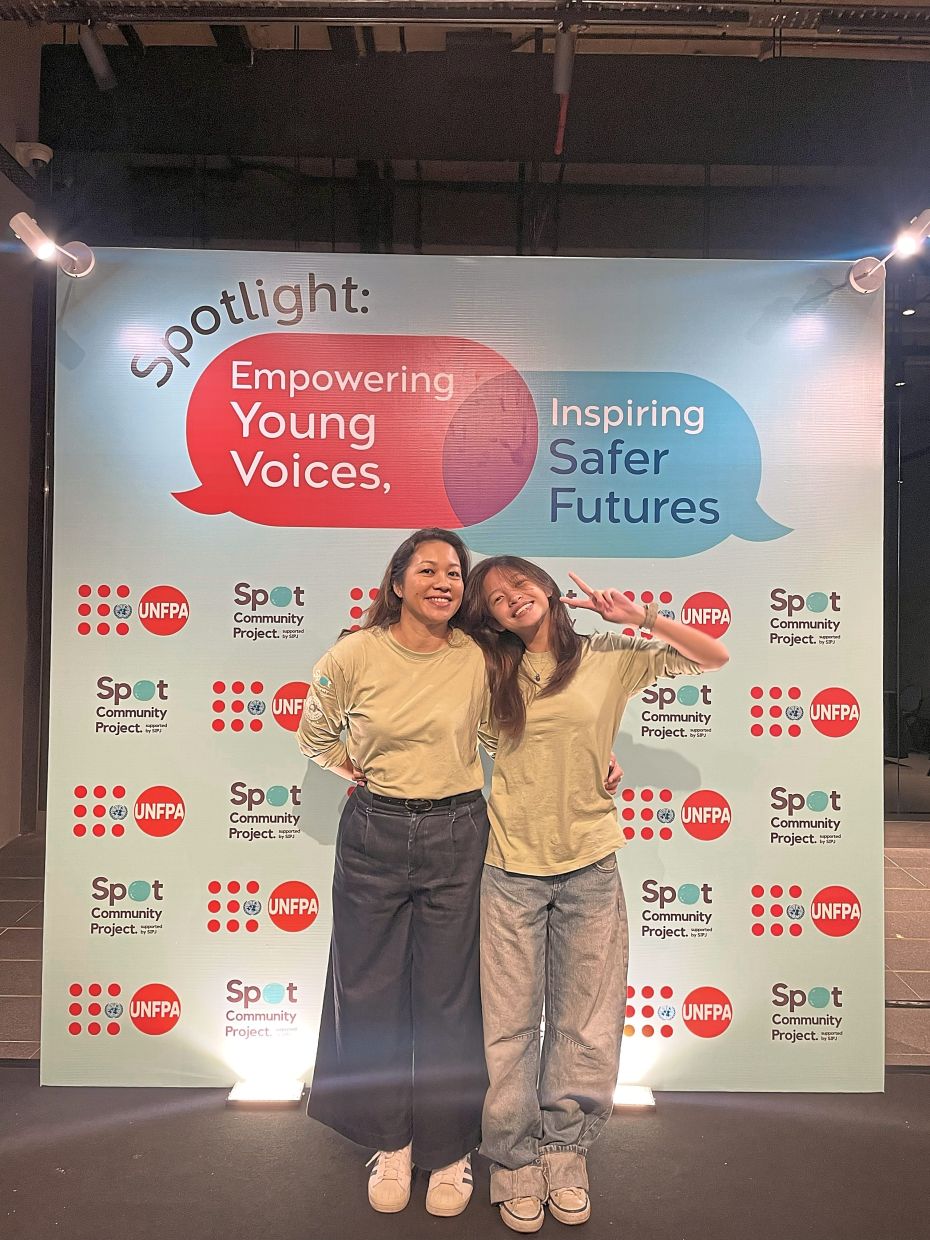
Eena (left) and her daughter Malaika at a Spot Community Project event. Malaika currently helps conduct workshops for younger students. Photo: Eena Houzyama
Anasuya believes that volunteering as a family helps nurture good values and builds togetherness. Photo: Dr Anasuya Jegathevi Jegathesan
Volunteering as a family helps instil empathy, responsibility and generosity in children while strengthening bonds.