
By the time Datuk Nicol David walked off the squash court for the last time, she had already secured her place in sporting history – eight-time world champion and nine years as world number one.
Yet, the legacy she is most invested in today has little to do with titles, trophies and recognition.
Instead, it lives in classrooms, community halls and modest squash courts, where children learn not just how to move, but how to think, relate and believe in themselves.
Today, Nicol is channelling the mental lessons she learnt through elite sports into something with far bigger impact: shaping resilient young Malaysians and instilling values that can help prevent bullying and violence, particularly against women and girls.
At the heart of this mission is the Nicol David Organisation (NDO), a non-profit founded on a simple but powerful belief that sport, when done right, can build strong minds, kind hearts and healthier communities.

Long before sports psychology became a buzzword, Nicol learnt that squash was as much a mental challenge as a physical one.
She was barely in her teens when the Malaysian squash team introduced mental training, including visualisation and reframing negative thoughts into positive viewpoints.
“It really set me up for my future,” Nicol recalls of those early years, explaining how learning to manage pressure at 12 or 13 prepared her for the weight of national expectations that came with representing Malaysia at such a tender age.
Her coach Liz Irving saw it immediately. As a former world-class player herself, she recognised Nicol’s mental fortitude as a rare gift.
Her ability to focus, visualise and enter what athletes call “the zone” set her apart.
“That was one of her absolute superpowers,” Irving says, noting how Nicol could perform at peak mental clarity 90% to 95% of the time – an extraordinary feat in elite sports.
Most importantly, Irving believes these skills were never limited to squash or sports alone.
The same mindset, she says, could have carried Nicol into engineering, academics or any other demanding career.
Sports simply became the training ground where those mental muscles were developed.

What followed was one of the longest and most successful athlete-coach partnerships in modern sports – nearly two decades built on trust, communication and an absence of ego.
At the highest level, Nicol explains, success was never about control or hierarchy.
“We both were working together equally,” she says, emphasising that everyone in the support team had a role to play in maintaining performance and consistency at the top.
Irving’s approach was to remove external pressures so Nicol could focus on her game – managing logistics, shielding distractions and reading the signs when mental fatigue crept in.
Just as crucial was keeping things fresh. Training plans changed constantly, revisiting old techniques when needed and adapting to how opponents were trying to outsmart Nicol on court.
“We never got bored,” Irving says simply – a statement that perhaps explains how their partnership endured when so many others fizzled.

Great as they are, even champions are not immune to burnout.
Nicol’s most profound lesson came in 2018, as she prepared for what she knew would be her final Commonwealth Games. The pressure – external and internal – was immense. Her body and mind eventually shut down. It was a wake-up call she could no longer ignore.
“For the first time, I took two months off from squash,” she says, describing how stepping away was essential for survival, not a sign of weakness.
The result? She returned to win her final Asian Games gold medal for Malaysia – proof that rest can be a performance strategy, not a setback.
Irving, who had lived through similar burnout in her own playing days, had long advocated for these breaks.
She warns that perfectionism, especially among high-achieving young people, often fuels exhaustion and mental distress.
“There’s no such thing as perfect,” Irving says. “That push to be perfect causes a lot of burnout.”
Their message is especially relevant in Malaysia today, where youth face mounting academic, social and digital pressures, often without adequate mental health support.
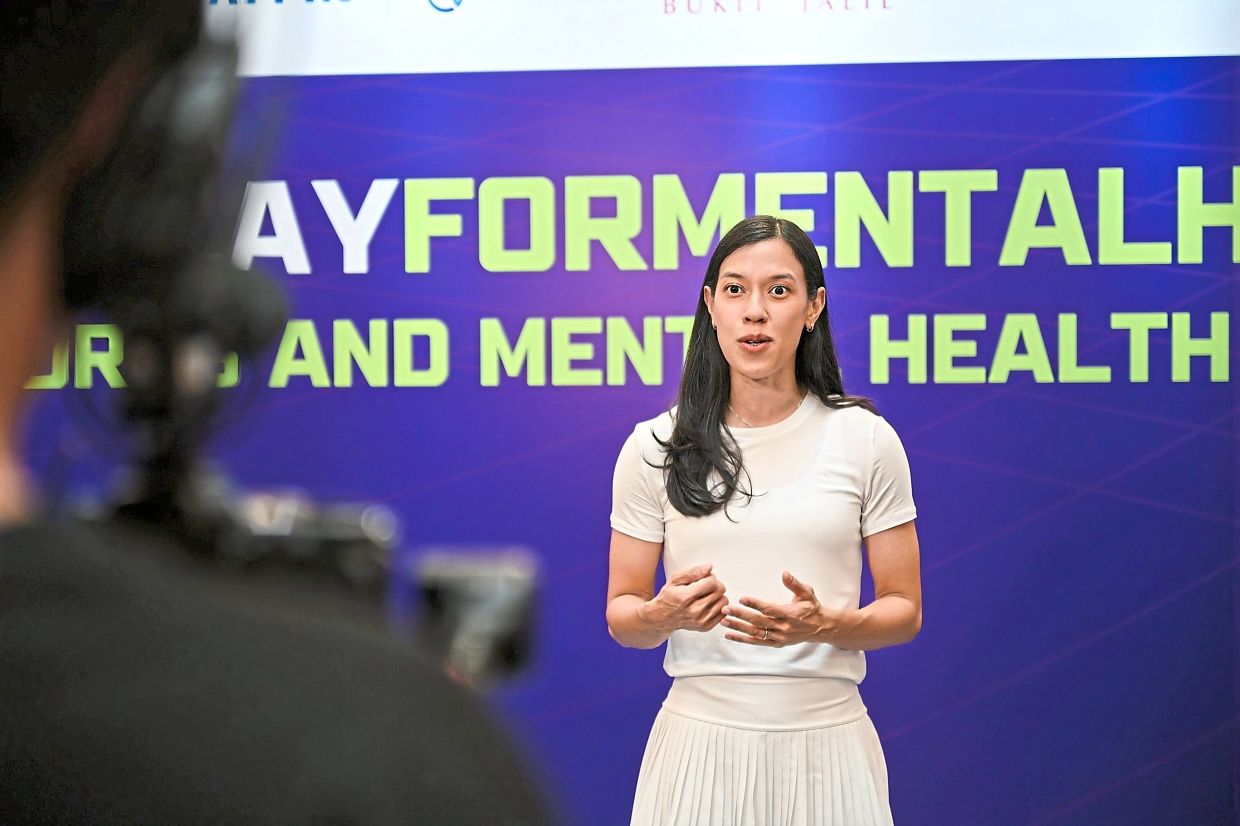
Both Nicol and Irving agree that the responsibility to normalise rest lies with leaders – coaches, parents, teachers and employers.
“Leaders themselves must be in a good place mentally in order to be able to effectively guide those they’re looking after,” Nicol says, stressing that leadership begins with self-care.
Irving draws parallels with the workplace, noting how annual leave is accepted as essential for productivity, yet athletes often struggle with guilt when stepping away.
Coaches too, can burn out and when they do, the impact trickles down.
“It’s a two-way thing,” she says. “If the coach is doing good, the athlete will be too.”
The transition from competition to mentorship was not effortless for Nicol. For years, her identity was defined by being world number one. Like many athletes, she struggled to see her worth beyond the arena.
It took encouragement from those around her – including Irving and NDO co-founder Mariana de Reyes – to recognise that the skills honed through sports were transferable.
“Sports teaches you resilience, adaptability and hard work,” Nicol reflects. “When you fall, you get back up and you can use that principle in anything.”
Running NDO requires Nicol to learn new skills from scratch: public speaking, presentations, and organisational leadership, among others.
But she discovered that learning itself was a familiar territory. Years of being coachable had prepared her for reinvention.
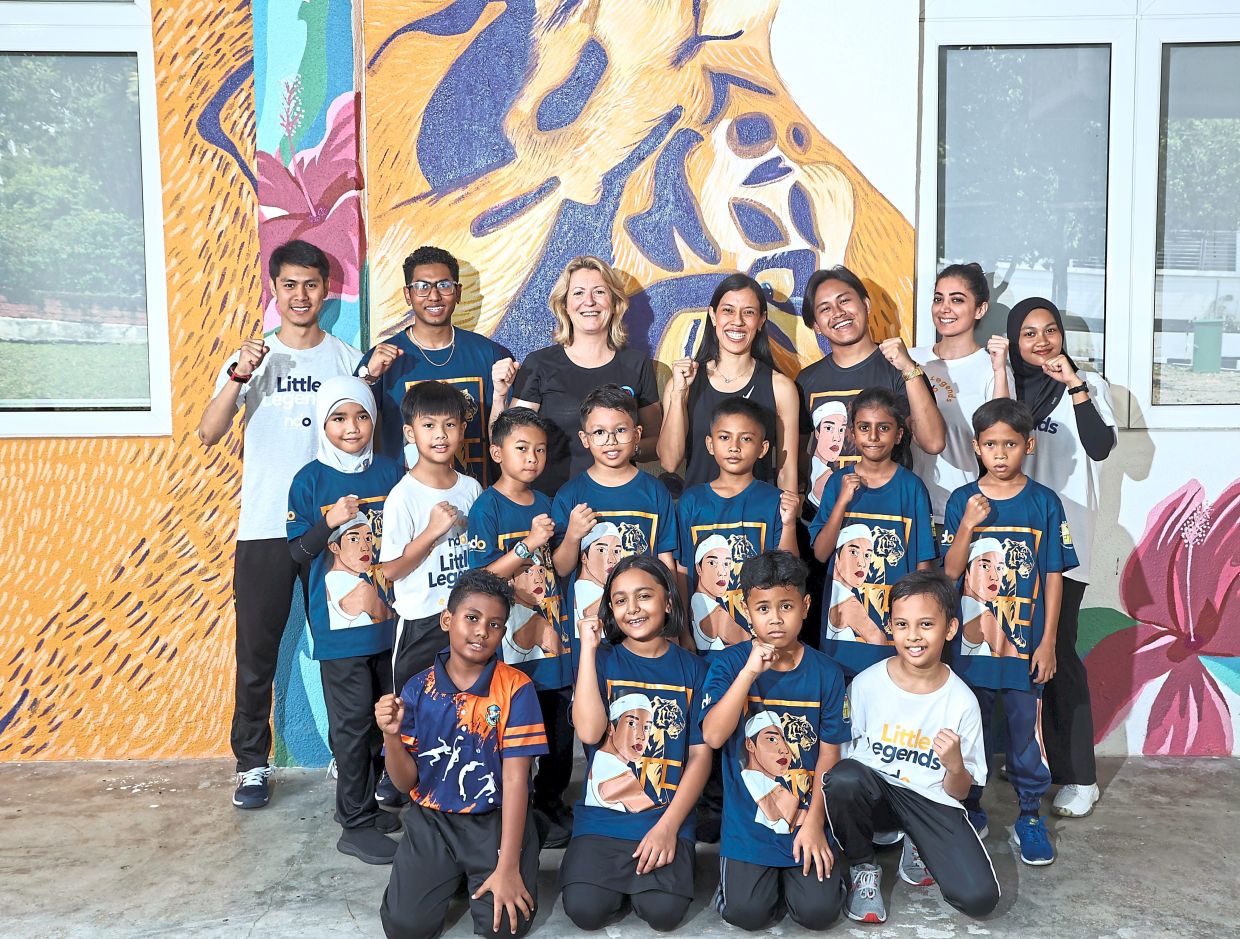
When Nicol retired, many expected her to open a private academy or pursue commercial ventures. Instead, she chose the harder path – building a non-profit focused on access, equity and values.
“I wanted to give back,” she says. “I couldn’t keep all this knowledge and experience to myself.”
The NDO was not conceived to just produce the next world champion. Instead, it was formed to reach children who might never otherwise step onto a squash court – many from B40 communities – and giving them tools for life.
Funded by a mix of government grants, corporate partners and philanthropic foundations, NDO now operates through three pillars: Little Legends (after-school programmes), Ibu Legends (mothers’ empowerment) and Positive Play, a sports-based mental well-being initiative rolled out in schools.
The urgency of this work is underscored by sobering national data. One in five Malaysian children now experiences mental health challenges, while physical inactivity and obesity continue to rise.
NDO’s Positive Play pilot, which combines physical activity with positive psychology, has already reached over 1,000 students across Malaysia. Early results show improvements in confidence, resilience and happiness – proof that movement and mindset are deeply connected.
In collaboration with the Ministry of Youth and Sports, NDO will scale Positive Play nationwide starting this year, positioning sport not as an extracurricular luxury, but as a mental health necessity.

One of NDO’s most powerful interventions lies in its mixed-gender programmes. While initially conceived as a girls-only initiative, Nicol quickly realised that boys must be part of the equation.
“We need boys to understand how to treat girls with respect, kindness and empathy from young,” she explains. “Through shared sports and teamwork, children learn boundaries, cooperation and mutual respect.”
Irving adds that this early socialisation is critical in addressing long-term issues like bullying and violence against women.
The results are already visible. In NDO programmes, girls often emerge as the strongest players and boys learn to respect their capabilities.
Both Nicol and Irving express deep concern about the impact of social media on youth mental health.
Unlike previous generations, today’s children cannot escape bullying or negativity once school hours end.
“Now, it’s constant,” Nicol says. “They’re bombarded online, in isolation – even when they are at home.”
Sports, she believes, offers an antidote – real human interaction, teamwork, shared struggles and joy.
Irving notes that face-to-face communication teaches nuances that texting never can, with studies showing that most emotional meaning is lost in digital exchanges.
Malaysia’s move to restrict social media use among younger teens aligns with these concerns, but both women stress that policies alone are not enough. Children need safe, active spaces to reconnect with themselves and others.
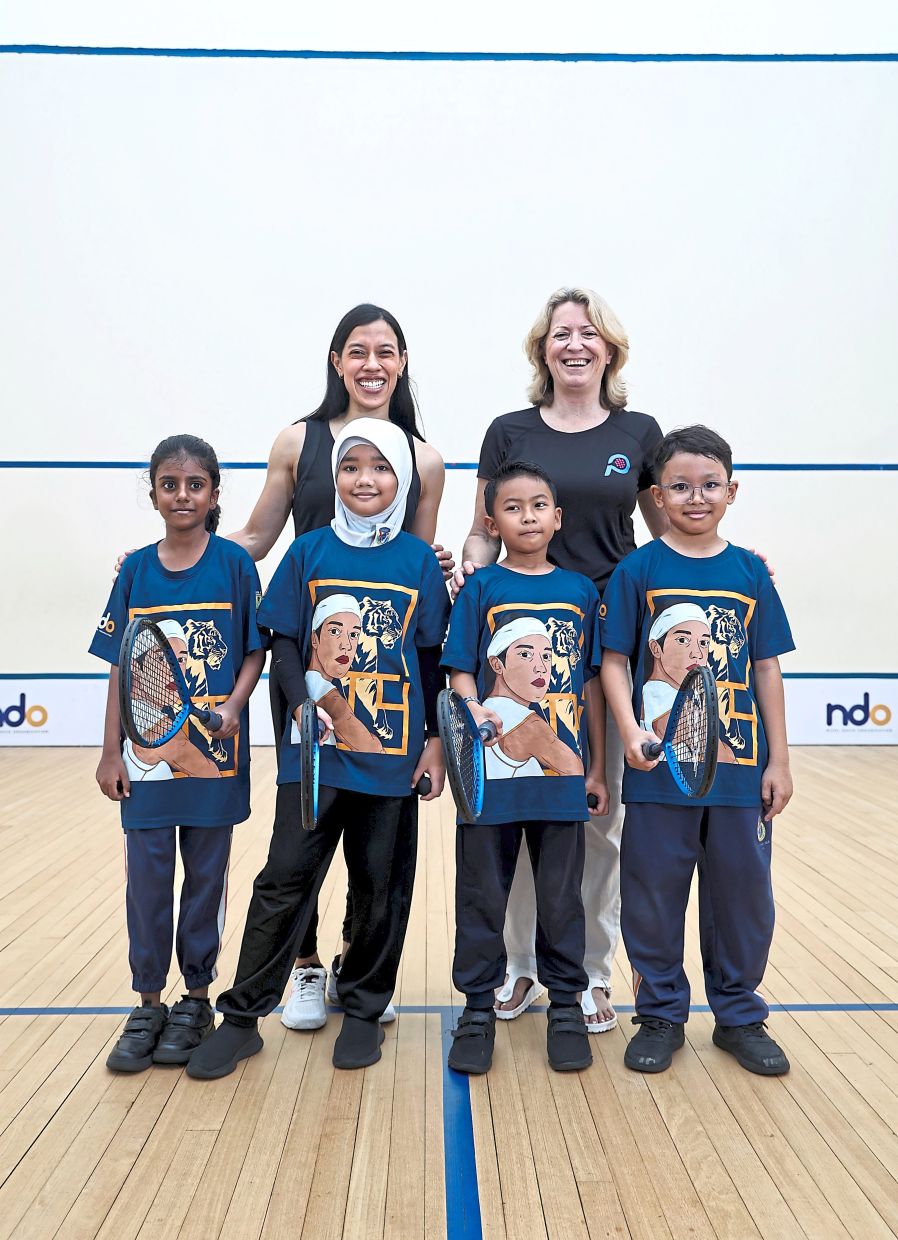
Others are reached through school-based Positive Play sessions, extending the impact far beyond squash courts.
“This foundation was never about sporting excellence or championships,” Nicol says.
“It’s about giving kids the skillset to be the best version of themselves in whichever field they choose.”
For Irving, the rewards of coaching, and now mentoring, far outweigh her own competitive career. Watching young people grow, learn and support one another is the true victory.
Together, Nicol and Irving are redefining what sports legacy looks like.
“It’s not just about medals, but minds. Not just rankings, but resilience. And in a world grappling with mental health challenges, bullying and violence, that may be the most important win of all,” they conclude.
Building the next generation


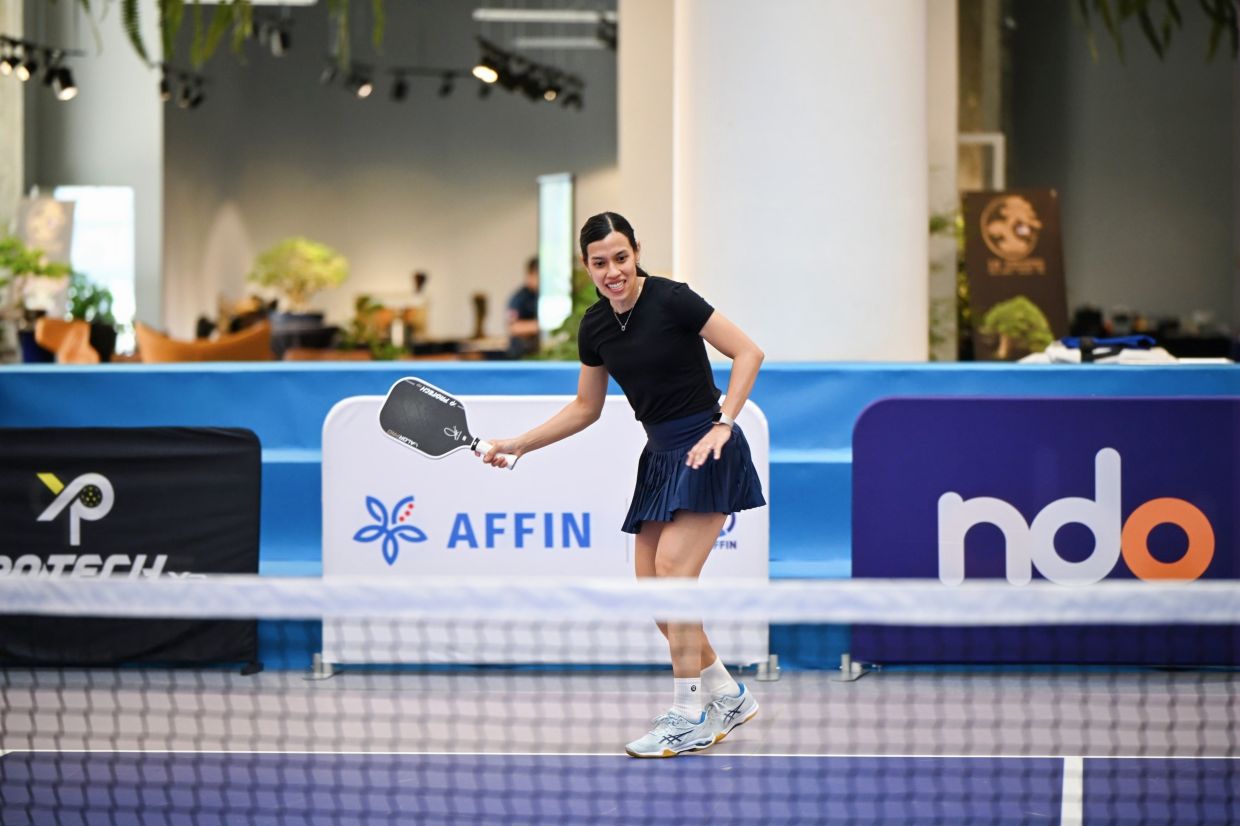
While initially conceived as a girls-only initiative, Nicol quickly realised that boys must be part of the solution.
Through teamwork, children learn boundaries and mutual respect, says Nicol (back row, left), pictured with Irving and students from the Little Leagues Programme.
NDO reaches children who might never otherwise step onto a squash court, giving them tools for life, says Nicol (back row, centre), pictured with Irving (back row, third from left).
Irving notes that face-to-face communication teaches nuances that texting never can, with studies showing that most emotional meaning is lost in digital exchanges.
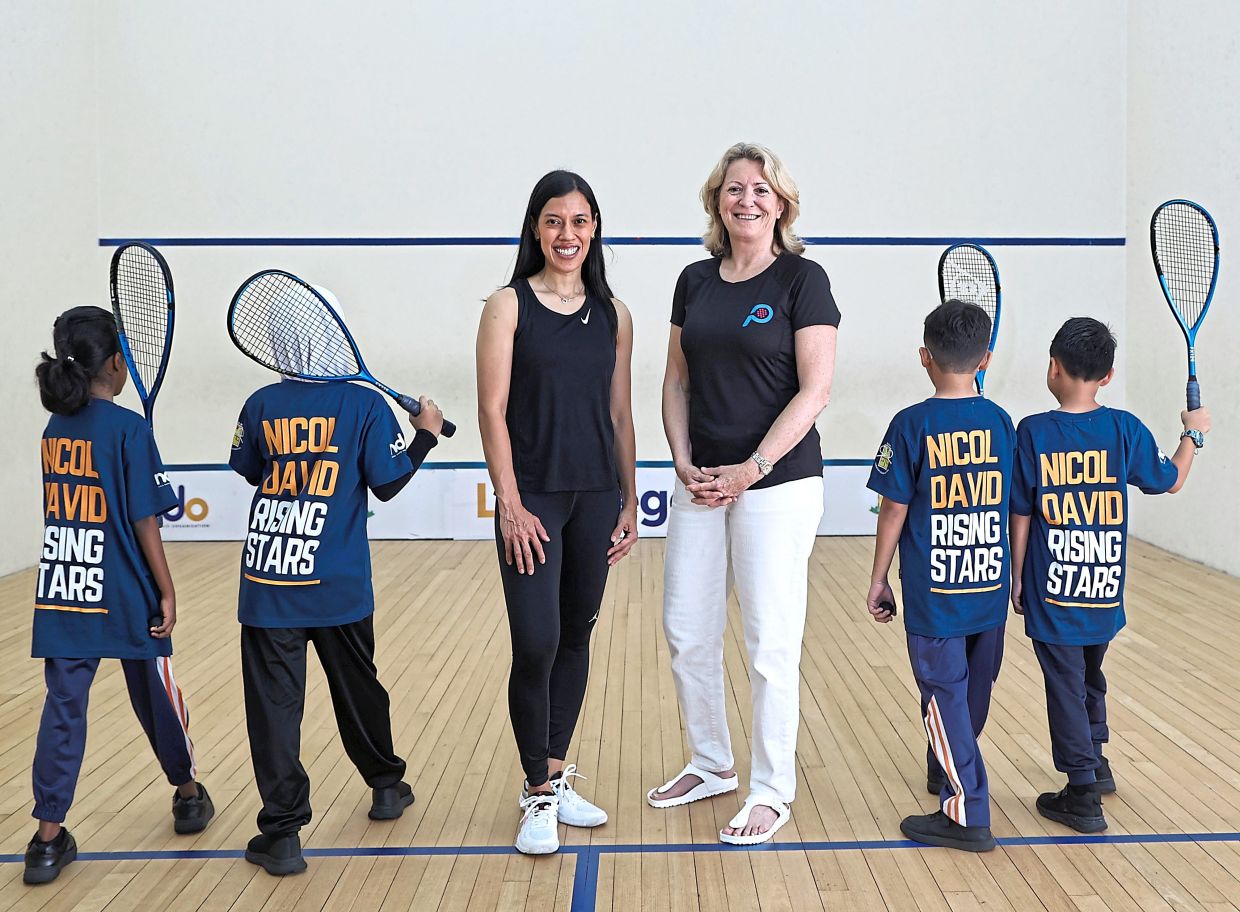
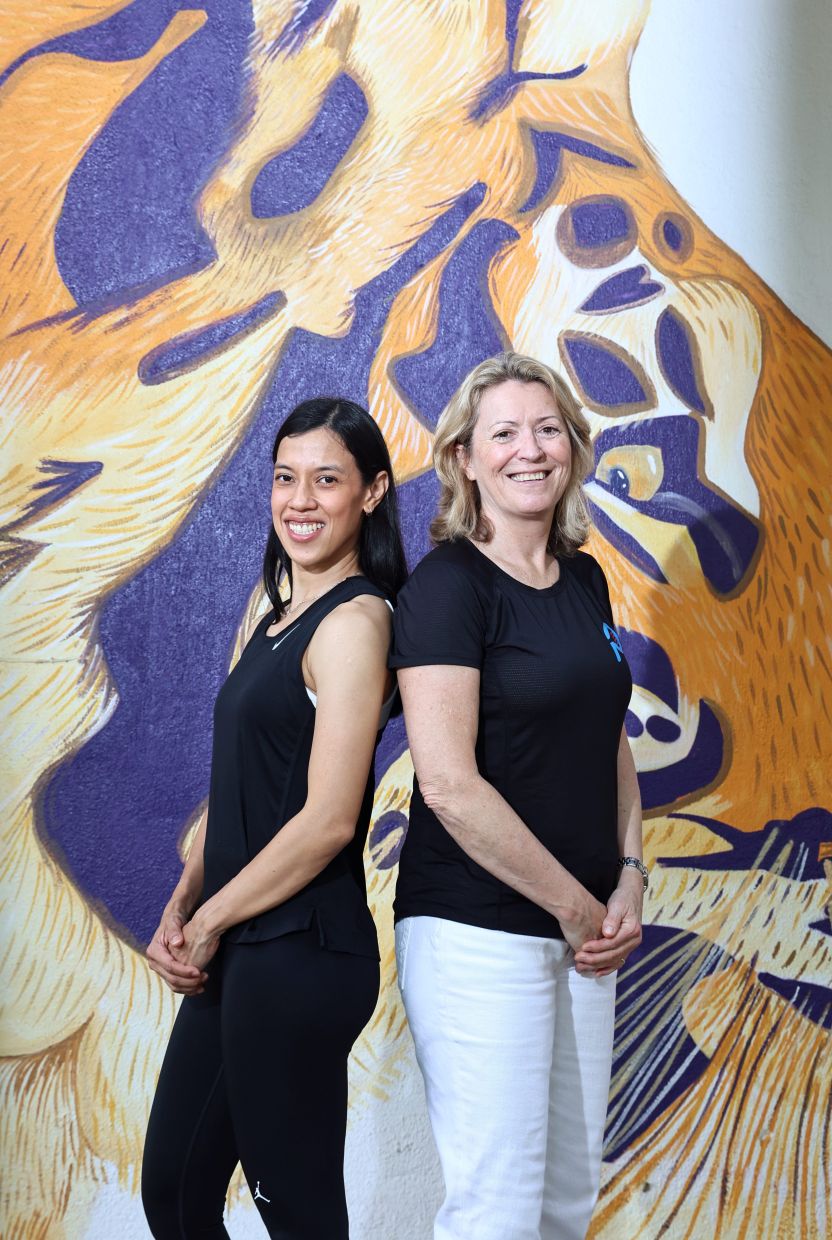
From elite squash to grassroots advocacy, Irving and Nicol use their years in professional sports to help kids forge resilience, kindness and cooperation.
Sport teaches you resilience, adaptability, hard work. When you fall, you get back up, and you can use principle that in anything, says Nicol.
Leaders themselves must be in a good place mentally in order to be able to effectively guide those they’re looking after, Nicol says, stressing that leadership begins with self-care. Photo: Nicol David Organisation
I wanted to give back. I couldn’t keep all this knowledge and experience to myself, says Nicol, on why she started her foundation. Photo: Nicol David Organisation
Instead of opening a private academy or pursuing commercial ventures after her retirement, Nicol built a non-profit focused on access, equity and values. Photo: Nicol David Organisation
Long before sports psychology became a buzzword, Nicol learnt that squash was as much a mental challenge as a physical one. Photo: Nicol David Organisation
This foundation was never about sporting excellence or championships. It’s about giving kids the skillset to be the best version of themselves in whichever field they choose, says Nicol. Photo: Nicol David Organisation
Nicol and Irving have one of the longest and most successful athlete-coach partnerships in modern sports – nearly two decades built on trust, communication and an absence of ego.