For many children, cancer is a word that arrives too early, too suddenly and often without a language they can fully understand.
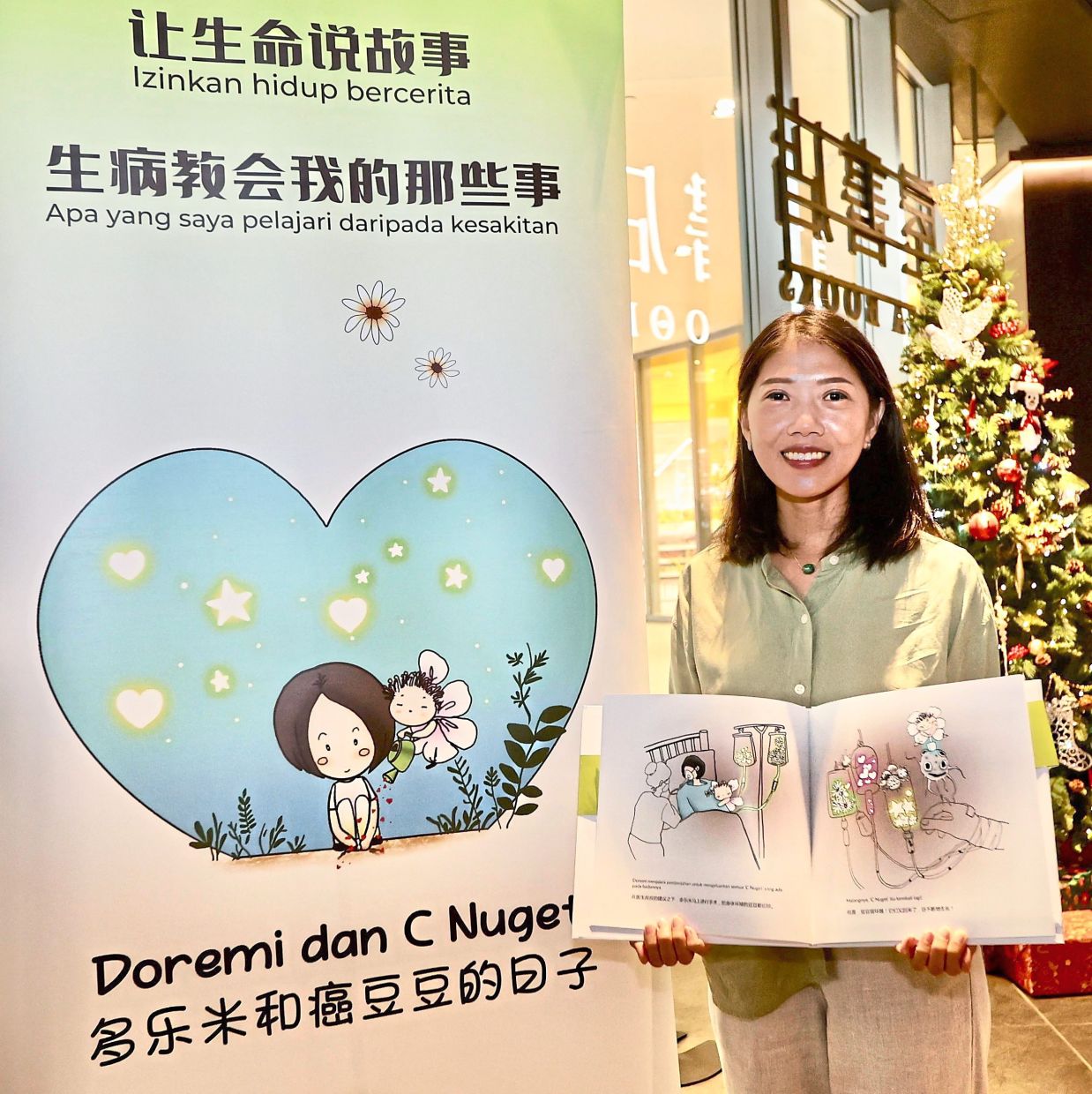
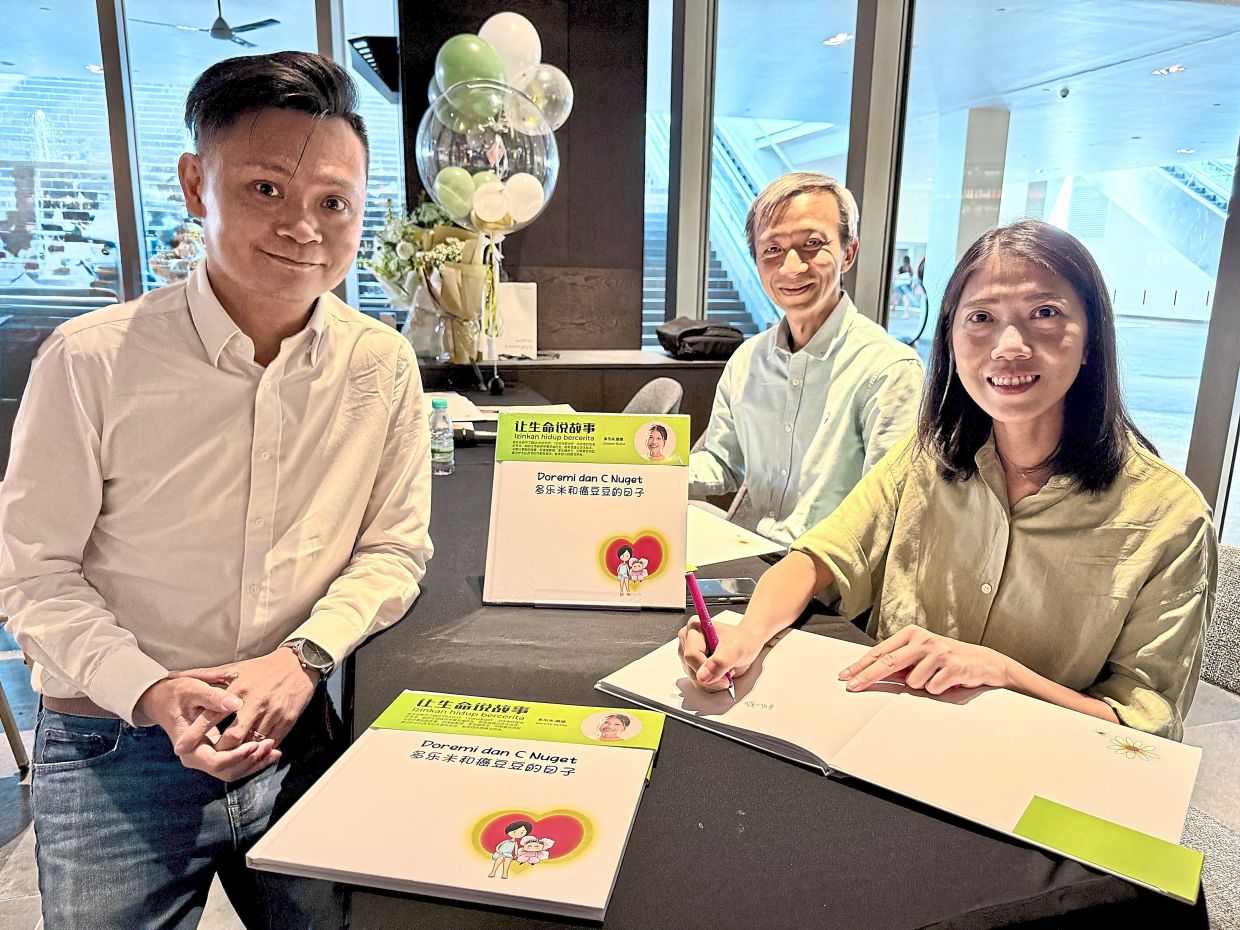
Cancer survivor Ruthe Tio aims to bridge that gap through her first picture book, Doremi Dan C Nuget.
Launched after years of reflection and lived experience, the book is written in Bahasa Malaysia and Mandarin, with a summary in English at the end.
In a publishing landscape where children’s books on cancer are overwhelmingly in English, Doremi Dan C Nuget is a bilingual picture book on the subject – a deliberate choice to ensure accessibility and inclusion.
Tio, a stage four cancer survivor of more than seven years, has undergone over 100 rounds of chemotherapy, more than 130 targeted treatments, 30 radiotherapy sessions and multiple surgeries.
Yet she is careful not to frame the book as a story of triumph.
“I cannot claim this book will be an inspiration,” she says. “But I hope the book will be a companion for those going through illness and other life challenges.”
The idea for the book first emerged during a counselling session, when Tio was asked by her teacher what she would regret not doing most in her life.
The question brought her to both tears and clarity. She realised she wanted to do something meaningful for children and young people who were ill, particularly those navigating cancer with fear, confusion and limited emotional support.
Although she has lived with the possible prognosis of cancer since her teenage years, and was diagnosed with cancer in 2015, the seed for the book only began to grow after a relapse in 2020.
“I felt uncertain about my future,” she recalls. That uncertainty sharpened her sense of purpose – to offer children what she herself lacked when she was younger – understanding, reassurance and the feeling that they are not alone.
Unlike medical pamphlets or health instructional materials, Doremi Dan C Nuget speaks gently.
Through symbolic characters and minimal, thoughtful text, it introduces the illness in a way that is honest yet non-threatening.
Cancer is personified as “C Nuget”, making the concept less frightening and more comprehensible for young readers.
One line in the book reads (translated): “Getting sick doesn’t mean we are a naughty child, but each of us has our own mission in life.” Another reassures children that feeling sad, angry or scared is normal, and that emotions are meant to be shared with family and friends.
“Sometimes a child might blame themselves for being sick,” says Tio. “This book helps them realise it’s part of life, and they don’t have to go through it alone.”
To ensure the book strikes the right balance between emotional sensitivity and factual accuracy, Tio sought guidance from Prof Dr Ho Gwo Fuang, a clinical oncologist at Curie Oncology Malaysia.
Also the former head of clinical oncology at Universiti Malaya Medical Centre, Prof Ho became medical advisor for the book.
“When Ruthe shared her idea, I was already open to it,” says Prof Ho. “There is a real need for this in our society. We don’t have anything like this in the market, especially for children, and especially in BM and Mandarin.”
He notes that most childhood cancers such as leukaemia, lymphoma and brain tumours, are not a result of lifestyle or environmental factors, but genetics. Yet fear and stigma remain widespread. Education and correct knowledge, he believes, are powerful antidotes.
“Part of suffering comes from fear of the unknown,” he says. “Education and companionship are just as important as treatment.”
The book’s emotional resonance is amplified through its illustrations and design, led by Johor-based designer Gordon Yong, founder of drawing centre 9th Taruca.
Yong chose to keep the illustrations raw and hand-drawn – pencil, ink and colours rather than digitally rendered – to preserve emotional honesty.
“There is a lot of symbolism,” he explains. “Colours like grey show sadness or fear. Green represents growth, hope and self-acceptance. Even hospital colours help children recognise and relate to what they are experiencing.”
Yong’s personal connection to the project runs deep; his mother passed away from cancer so he could understand what Tio was feeling.
“I had to feel Ruthe’s emotions first,” he says. “Only then could I translate them into images.”
The result is a book that can be felt as much as it is read, a quality Prof Ho believes gives it power beyond age.
“Even without reading the words, you can feel calmness and peace from the pictures,” he says.
“It’s like talking to a friend.
“And even though it’s a children’s book, adults can also identify with and appreciate it,” he adds.
For Tio, the act of creating the book was mentally demanding but emotionally restrained.
“I didn’t feel anything initially, I just knew in my mind I had to complete this project.”
That is, until the moment she held the finished copy in her hands.
“That’s when a flood of emotions overwhelmed me,” she says. “I felt touched. It was like my dream had come true.”
The process also became unexpectedly therapeutic. Growing up, she had limited access to accurate information about cancer.
Well-meaning but pity-laden comments – “kasihan”, “kesiannya”, “poor thing” – often deepened her sense of isolation. What she longed for instead was empathy, presence and understanding.
“That’s what true companionship is,” she says. “Not pity, but someone saying, ‘I’m here for you’.”
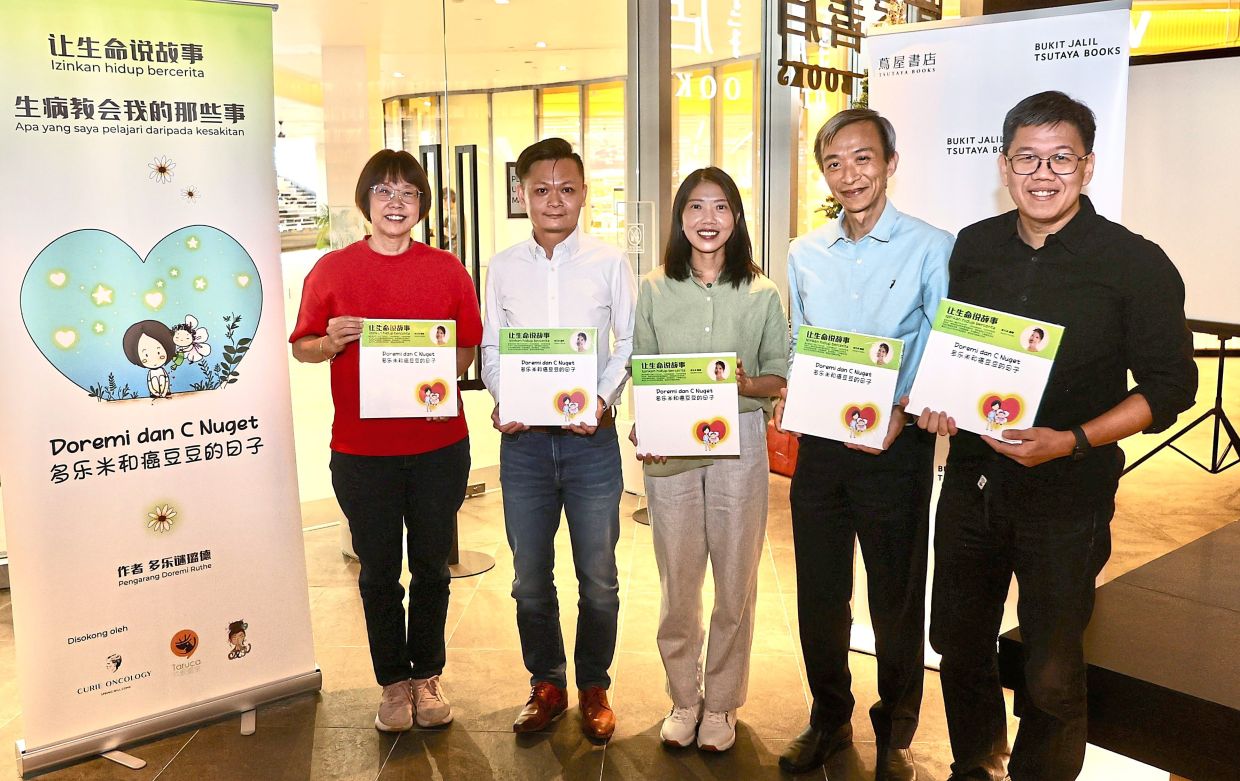
Beyond the story itself, Doremi Dan C Nuget includes a journal section for children to write or draw their thoughts, as well as a simple tabletop game designed to encourage connection with family and friends.
Tio hopes to bring the book into schools, universities and community spaces, widening conversations about illness, courage and care.
Early feedback has already affirmed its impact. An NGO volunteer recently used the book while speaking to a young patient. The child was fully engaged. “They felt connected,” Tio says.
In the end, Doremi Dan C Nuget is not about conquering cancer. It is about naming fear, honouring emotions and reminding children that they are seen, supported and never alone, she concludes.