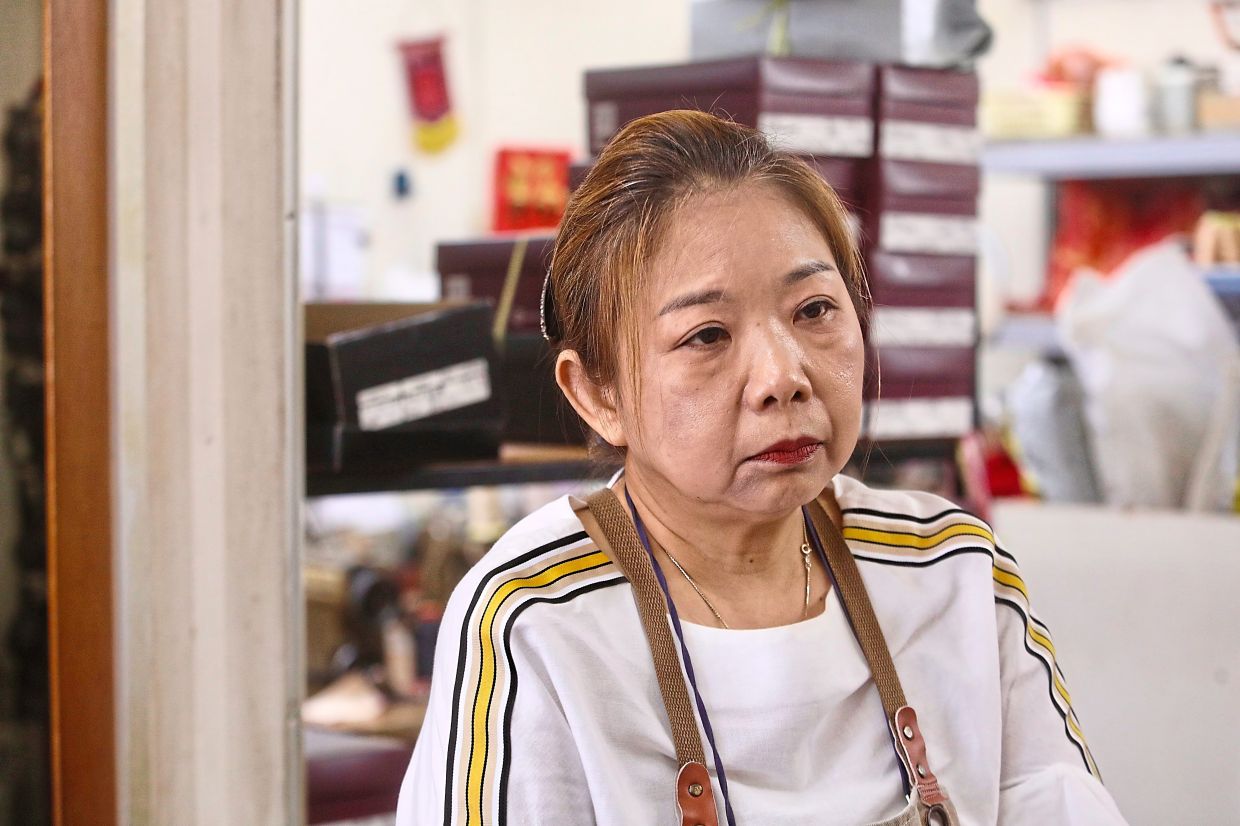
The word “retire” draws a swift, almost incredulous response from Candice Lee. It’s not something she and her husband, Raymond Chook, have seriously considered.
At 56, and with three children aged between 22 and 29, Lee says that they have both “agreed to continue working until we can’t.”
Chook, 57, a second-generation shoemaker who runs his late father’s shoe shop, nods in agreement.
Their modest-looking shop, located in the busy commercial area of Taman Midah in Cheras, Kuala Lumpur, is not your typical retail outlet selling trendy, mass-market footwear.
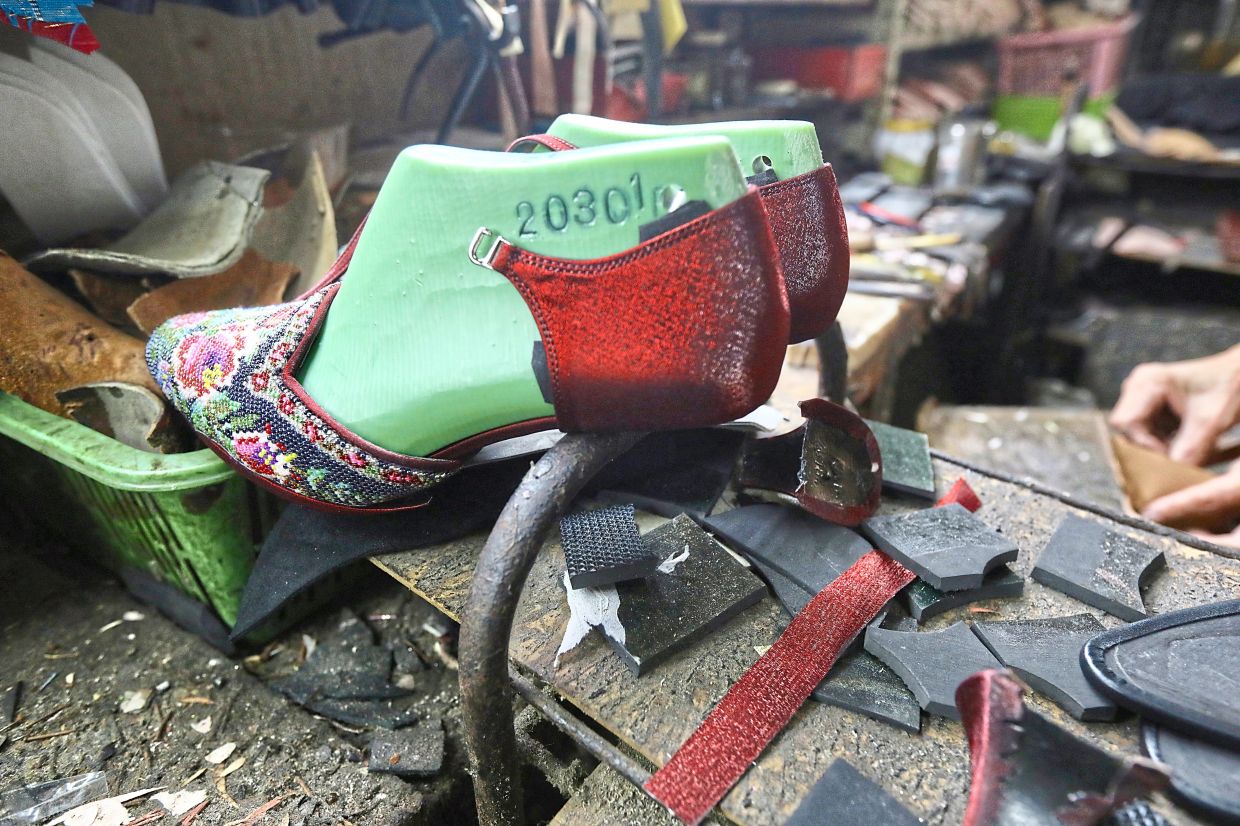
On the shelves of the 57-year-old establishment is an array of shoes that range from glittering dance shoes to sturdy walking pairs – each one handcrafted by the husband-and-wife team and their small crew of seasoned artisans.
While the “glitter” might catch the eye, the true soul of San Lee Shoes lies in what the couple calls their “special shoes”.
These bespoke creations are the reason the couple are intent on staying in the business. It is also what prompted them to pivot their business years ago.
Standing strong as among the last traditional shoemakers in the country, the couple chose to eschew fleeting trends, to focus instead on special-needs footwear – a commitment rooted in conscience rather than commerce.
Where the heart is
While the shop has its roots in traditional walking shoes that Chook’s father began making in 1956, it is now driven by a very different purpose.
The couple have made a firm decision to hold onto their crafting aprons not for the glamour of fashion or the shimmer of the ballroom floor.
It is rooted instead in a sense of responsibility to a very specific – and often overlooked – group: People with “problematic” feet, whether from severe deformities, diabetic swelling, or feet that fall outside standard shapes and sizes.
“(Our business) is about the people who have nowhere else to go (for their shoes),” Lee explains. “Out there, amongst the mass-produced, narrow-cut footwear, they have no options. It’s heartbreaking.”
Realising they could not turn these customers away, Lee says they knew they could make a tangible difference with their specific skills.
“It has become more than a job. It has become a promise,” she continues.
Shoemaking is a demanding trade to begin with, but making these “special shoes” has raised the stakes, particularly as there is no formal manual for orthopaedic shoemaking to guide them.
However, Lee and Chook have something far more valuable: Strong determination, a mission and a deep passion for their craft.
“Every case is different, and there are no templates,” Lee says. “If you don’t have the ‘heart’, you can’t do this.”
The couple accepts orders for these shoes with a simple promise: “We will try (to make it) for you.”
“Sometimes, I can’t sleep ... I lie awake dreaming of the feet (of a customer), thinking about how to build a shoe that truly fits,” Lee admits, at which Chook nods with a laugh.
A severely deformed foot, bent or swollen in specific ways, presents a puzzle for them to solve. They may need to redo a pair multiple times before getting it “just right”.
“Not once or twice. Many times,” she says, adding that there are moments when they feel they have failed their customers. “But, since we have made a promise to the customer, we must try.”
The reward comes at the point of collection. “When we see their faces light up ... that is the happiest moment,” she says.
Even more meaningful are the returning customers who come back after five or 10 years, bringing an old pair worn smooth by daily use.
“They ask us to make a new pair,” Chook says. “Then we know we were part of their life.”
A perfect fit
For Lee and Chook, the shop is more than just a business.
“This shop is about people,” Lee says firmly. “It’s about my father-in-law’s legacy, our senior workers who have been like family, and the customers who just want to walk without pain.”
The roots of that legacy stretch back to 1956, when the senior Chook first established the business after migrating to Kuala Lumpur in his early 20s.
A master craftsman who began his apprenticeship in Ipoh at the tender age of 13, the senior Chook opened his first shop in Pudu Hulu before eventually settling down in Taman Midah in 1969 – the very same address where the hammers still fall today.
Chook continues, “The shop has woven itself into our family’s daily rhythm.”
Growing up above the shop, Chook recalls joining his father in the shop during his school holidays.
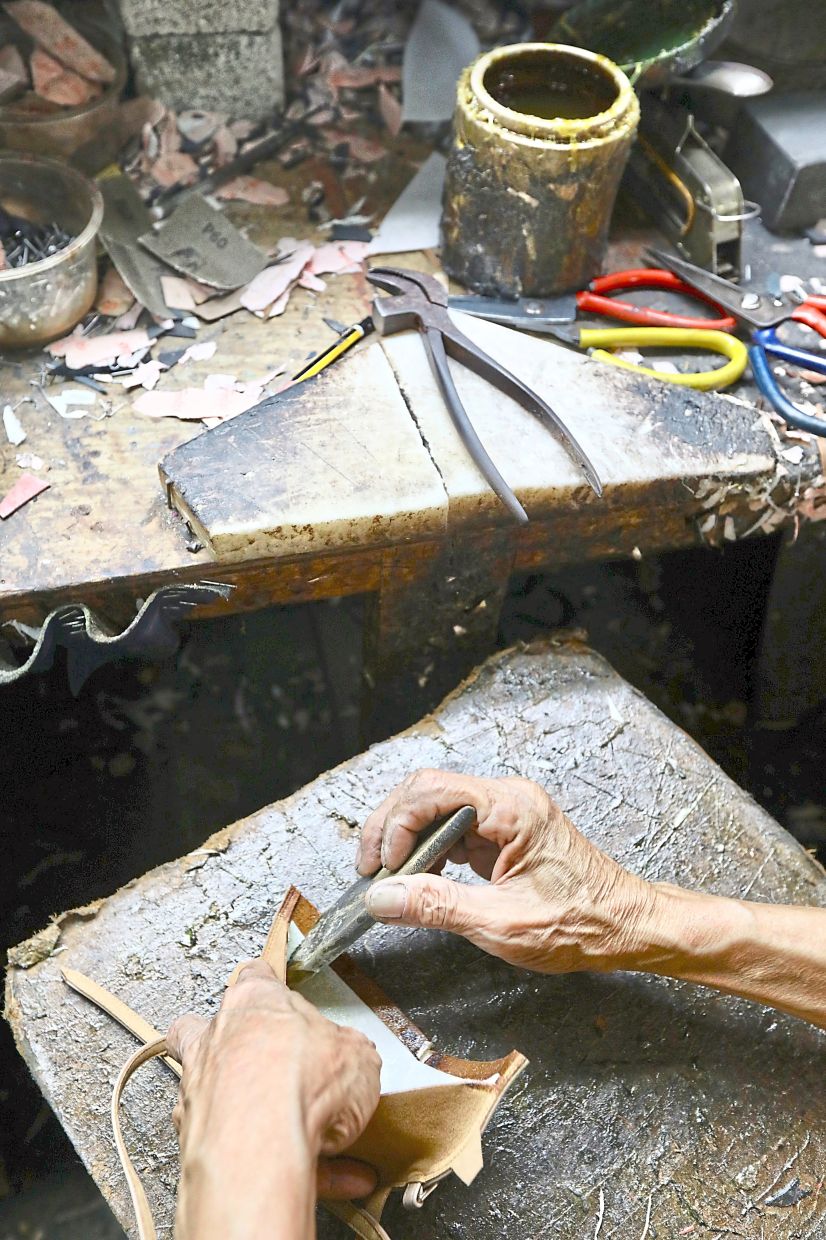
“Not to serve customers, but to make shoes. He taught me everything – the design, the cutting, and the assembly. All of it.”
After secondary school, he joined the business full-time.
“Those days, we obeyed what our parents said,” he says simply. Lee’s entry into the world of leather and soles was circumstantial.
Having lost her mother young, the then 20-year-old Lee needed a job that gave her the flexibility to care for her younger siblings.
“This family business gave me that flexibility,” she says.
She received more than she asked for: She acquired a lifelong skill and a partner to share a passion with.
“I only started to make shoes after I got to know him,” she says with a smile.
Under the tutelage of the senior Chook, the young couple learned the three pillars of the craft: Pattern making, material selection and construction. They also learnt the essentials of design, both the “upper” (the top part of the shoe) and “bottom” (the sole) respectively.
Today, the couple operates like a well-oiled machine, working with seamless coordination. Lee handles the delicate design and pattern-making, while Chook looks after the heavy structural work of the soles.
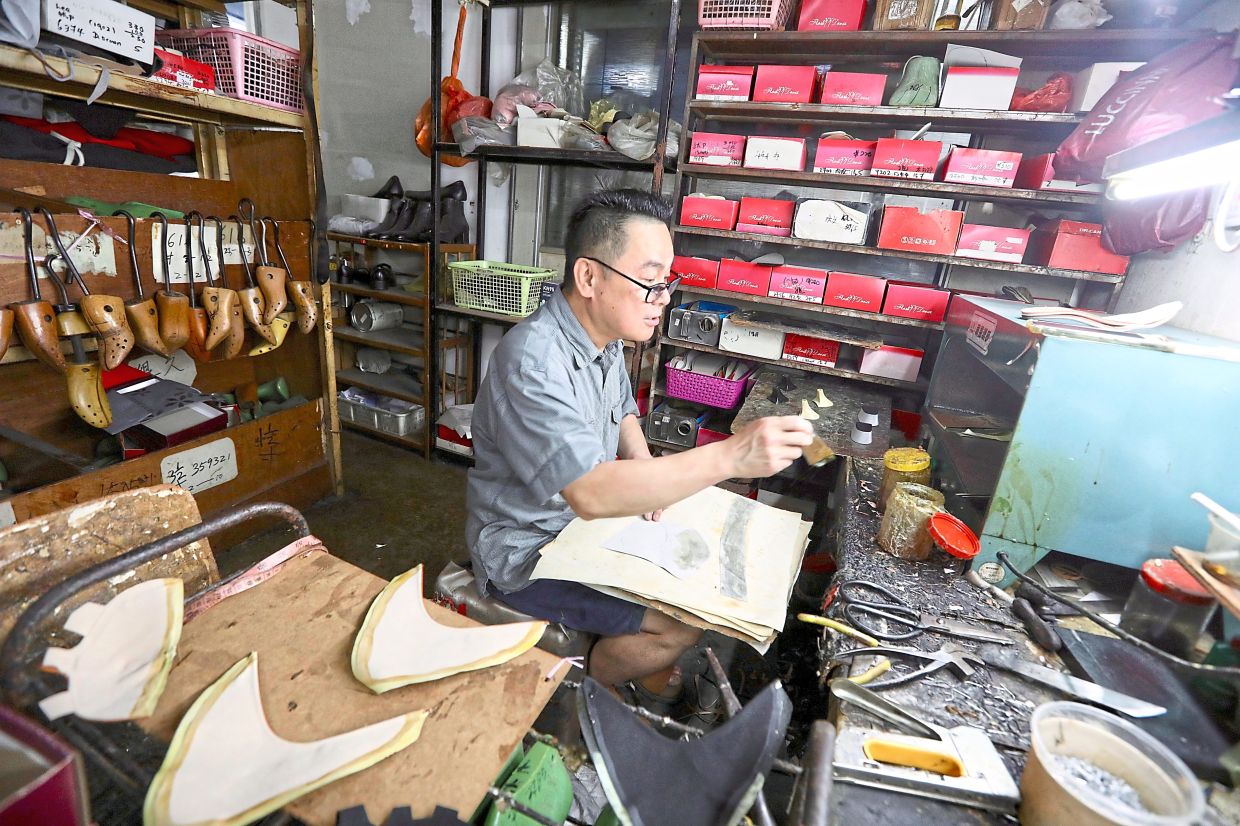
Being “a man of few words”, Chook is comfortable staying behind the closed doors of their workshop (located at the back of the store), while Lee manages the shop floor, meeting and attending to customers.
Over the years, she has sought additional training, studying Taiwanese techniques and later Italian shoemaking methods through various courses.
“Taiwanese and Italian skills are totally different,” she says. “I like to learn. When I know something is important, I go and study.”
That willingness to adapt proved crucial. Lee even took a course on web design to build the shop’s online presence and expand its reach beyond national borders.
“We have orders for custom-made shoes from overseas, even from Italy,” she says, adding that she also managed to put the shop on social media platforms.
“I just haven’t gotten the time to learn TikTok,” she laughs.
Where senior artisans reign
While their digital presence attracts a global clientele, the operations of the shop remains traditional and firmly hands-on.
As they edge towards their sixties, the Chooks see themselves as part of a “bridge generation” – the last to truly master the traditional craft before factory automation takes over completely.
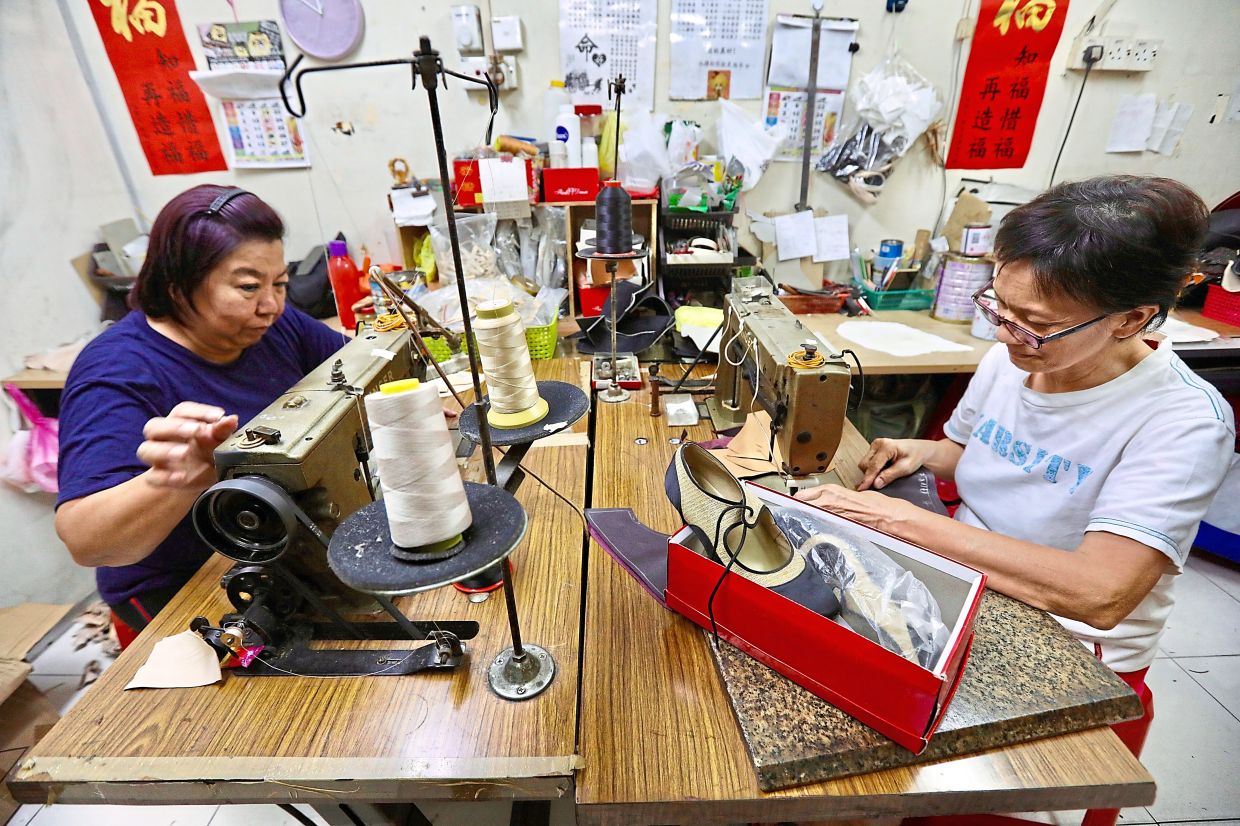
“But we are actually considered the young ones in this shop,” says Lee, gesturing to the workshop where their crew members are hard at work, all well into their 60s, some having been with the shop for over 30 years.
Chin Siew Keong, 71, for example, has been working in the Chooks’ cordwainer shop for more than three decades. He started under Chook’s father and has stayed on through the years, continuing to craft shoes because he genuinely enjoys the work.
“I’m still working at this age because I’m single, and the boss is willing to keep me on. And I’m happy to continue working here,” he says. “I’ve been able to stay for so many years because the bosses have always treated the staff well. My previous boss was good to us, and now Candice and Raymond are the same. It feels like a family here.”
Chin works closely with Chook, handling the bottom part of the construction, assembling the soles and completing the base structure of the shoes.
Lee and Chook admit that though they are younger than their artisans, they are feeling the strains that come with their ageing bodies.
“Our eyes are our biggest problem now,” she laughs. “We really cannot see well.”
This has Lee speaking candidly with her customers: While they can still deliver the best in materials and comfort, the ultra-fine precision of 20-year-old eyes is no longer within reach.
The work is also hard on the hands. Cutting thick, high-quality leather requires a grip that has left them with some “joint issues”.
“We use our hands a lot,” she says. “Now the joints have problems.”
Both Lee and Chook acknowledge that passing the craft on to a new generation has been “almost impossible”.
Their second son spent two years working alongside them, but eventually, the young one admitted to his parents that “his heart was pulling him elsewhere”.
Beyond the lack of apprentices, the couple faces a diminishing supply chain.
“In Malaysia, materials are so scarce now. Only one factory is left for shoe lasts (shoe forms), and also only one for heels,” Lee explains.
A promise for the future
Still, despite the fading eyesight, the joint pain from decades of cutting thick leather, and the logistical nightmares of sourcing, the idea of retirement remains distant.
Instead, they are contemplating a “soft retirement”.
“In another few years, we might stop making regular shoes and just concentrate on our special-needs shoes,” Lee muses. “We really want to work until we cannot.”
For Lee, the future also involves a different kind of service.
She has already begun volunteering for charity work, a path she hopes her husband will join her on when they finally put down their aprons and hammers.
Until that happens, Lee says they are focused on their goal: “To make shoes that let people live comfortably.
“If someone can wear our shoes and walk with confidence, then all the long hours and the sleepless nights dreaming of crooked feet have been worth it.”