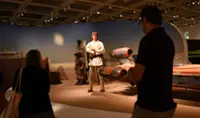
Wander into the space at Galeri Filamen at the GMBB creative mall in Kuala Lumpur and it almost feels like stepping back in time, to when 3D technology was a wide-eyed invention that amazed cinema audiences and comic book fans in the 1950s.
The exhibition Near-Depth Experience brings that old format into the present, using it not for a gimmick, but as an immersive way to experience contemporary art.
The five-minute presentation by new media artist Cerikapak – the moniker of Naqib Idris – plays out across one large projection and three smaller vertical screens, drawing viewers into a shifting visual field.
Near-Depth Experience also marks his debut solo exhibition, on view until March 8. The show builds on his ongoing exploration of 3D art, following earlier experiments with the medium at his album launch party and a performance at the Tekka audiovisual festival at KLPac last year.
When he’s not making art, he can be found producing music inspired by ambient electronic sounds.
“This is the first time I have a manageable space where I have more control over how the visuals are received by the viewer. With stereoscopic 3D effects, you have to calibrate them based on the space and view them from a certain angle, and responses can vary depending on the person,” says Cerikapak, 35, in a recent interview in KL.
“I was lucky enough to have the experience of watching a movie using 3D glasses as a kid, and I was always fascinated by the effects they can produce. Using this method to view art makes it more intimate, you can’t really use your phone to capture it. You have to be present in the moment as the brain is literally engaged in order to produce the effect,” he adds.
Visuals from the mind
Cerikapak knows that 3D art may not be familiar to everyone, and that it helps to have a little explanation first.
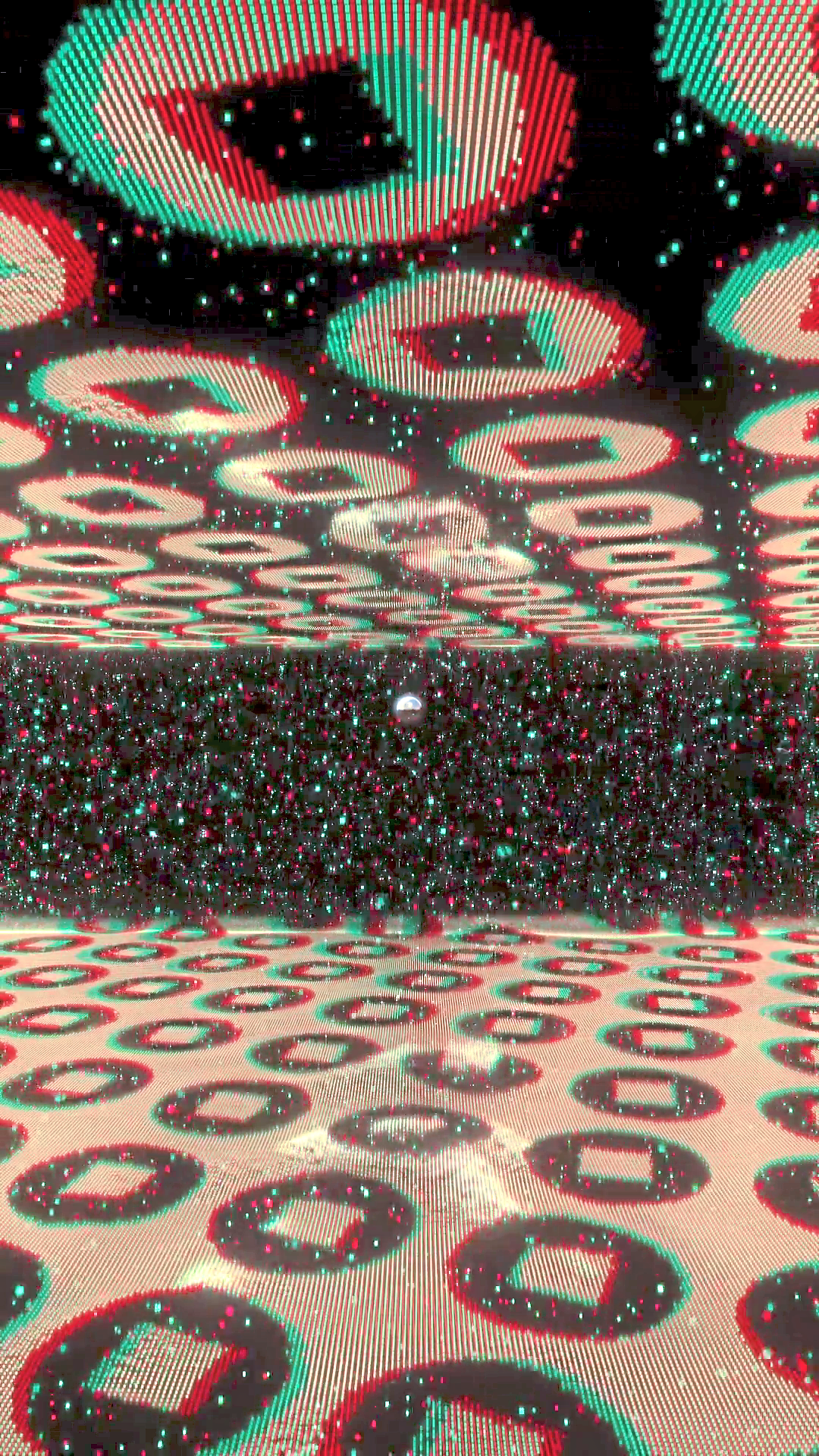
When you look at an anaglyph image through red-and-cyan glasses, he notes, each eye sees a slightly different version of the same picture. The brain then brings these two images together, allowing the visual cortex to combine them into a single scene with depth. What might look flat at first suddenly appears three-dimensional.
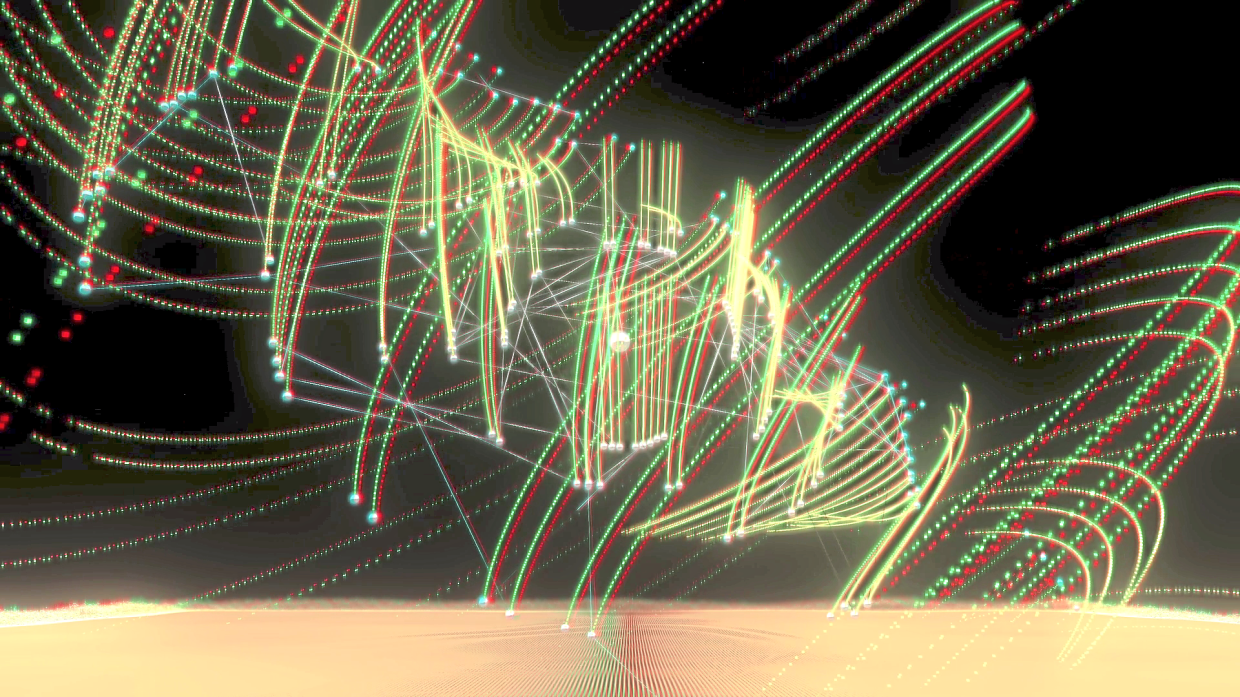
“In 3D software, the environment usually allows you to use one camera and one object – in this case, a particle or orb. But what I do is use two cameras: one channel in red, the other in cyan. By manipulating the angles and parameters of the cameras, I can shift the distance or depth at which the viewer perceives the 3D elements. The cameras in the software simulate your eyes,” says Cerikapak.
But this new video work goes beyond abstract patterns and particle movement. It also weaves in personal imagery and memories, including graphics he captured from his earlier projects.
“One visual shows a wushu performance from last year’s theatre production 40 Or Not (in Petaling Jaya), where I 3D-scanned the performer live on stage. There’s also a timelapse of me driving around KL and walking through Petaling Street. Unlike fast-paced audiovisual shows, this work lets me be methodical, weaving these moments into a story,” he adds.
Self-taught in digital media, Cerikapak’s work shows the potential to branch into multiple disciplines. Beyond music videos and audiovisual performances, the technical side of creating visuals keeps opening new doors.
“A few years ago, I was just making music in my bedroom and experimenting with ‘hardware jamming,’ so the journey has been pretty unexpected. Since I work with both music and visuals, I was already familiar with performing in clubs or selling visuals to venues. You still need a day job to get by, but I’ve started getting approached for more experimental projects, and I’m always curious to take on those challenges,” he concludes.
With Near-Depth Experience, Galeri Filamen continues to showcase new media artists, following earlier exhibitions like Aethera by Vasflow and What Tigers Dream Of, When The Kancil Roars by Roger Ng Wei Lun and Aw Boon Xin.