Fair warning: do not read Janet Tay’s Early Mornings At The Laksa Cafe late at night, or else you will be desperately craving a piping hot bowl of laksa when all the shops have already closed.
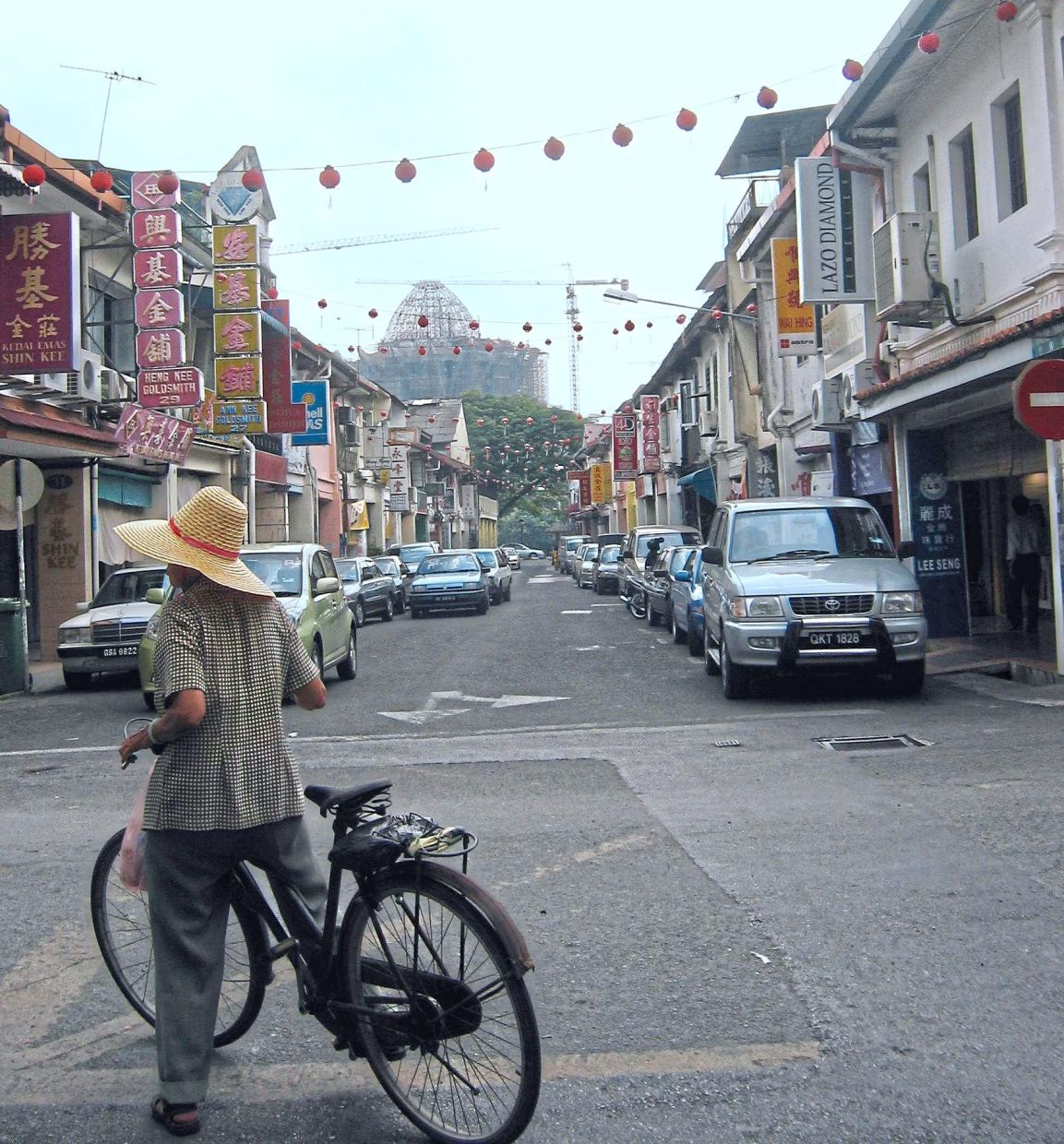
Set in Kuching, Sarawak, Tay’s debut novel follows Lim Ah Hock, the proprietor of a simple, but popular laksa hawker shop on Carpenter Street, a narrow, busy lane filled with colonial-era charm and traditional shophouses.
Raised by a strict father who brought him to Sarawak from Swatow, China as a young child, Ah Hock has dedicated his entire life to the laksa shop, particularly its special ingredient – the ancestral broth that has been bubbling away in the shop for decades.

According to Lim family legend, the broth had been gifted to their ancestor by a deity who promised that the family would remain prosperous as long as the broth is carefully maintained and passed down from generation to generation.
But Ah Hock is ageing, and the broth isn’t what it used to be, despite his efforts. His only son, Wei Ming, has no interest in continuing the family business, having spent the past eight years in Hong Kong trying to prove himself as a chef in his own right, and their relationship is rocky at best.
Troubles in Hong Kong force Wei Ming to return to Kuching just in time for Ah Hock’s 60th birthday. But long-simmering resentments and misunderstandings between the two return to the surface and boil over, just as a local businessman with a personal vendetta threatens to destroy the family legacy.
Filled with deliciously detailed descriptions of culinary delights that will make your mouth water, Early Mornings At The Laksa Cafe questions whether it’s possible for a father and son with different dreams to set their differences aside and build a future with room for both.
A fading heritage
Tay, 49, who grew up in Kuching from the age of six, has always been a bit of a foodie. The laksa shop central to the novel was inspired by a real-life Teochew kopitiam that used to be on Carpenter Street.
“This kopitiam no longer exists, but my dad first brought me there when I was a teenager, telling me, ‘This place is special’. My dad tends to think anything Teochew is great, because he’s Teochew,” she says with a laugh.
“When I first tried the laksa, it seemed like a normal laksa, maybe even a bit bland. But the trick is to add in the sambal until it suits your taste. Then it became perfect for me. I think in a way, that was their secret – anyone can adjust the condiment to their liking. It was a magical place for me,” she adds.
Then one summer, she went to the shop hoping to get some laksa, only to find it had closed for good.
“I was shocked, because the place had been around for a long time, at least 50 years, at my guess. And it was popular. Why had it closed? But of course I never really got a clear answer,” says Tay.
In a way, the novel was a result of her contemplating what happens when a beloved hawker stall has to grapple with elderly owners who can no longer run the business and have no one to pass it down to.
“It’s kind of sad. Many of the places we went to growing up don’t exist anymore – it’s like losing a part of you, a part of your history. I can’t take my son to the kopitiam the way my dad took me,” she shares wistfully.
At the same time, Tay imagines that parents who run hawker stalls worked so hard in order to afford their children a better future.
“They saved up that money to send their kids to study overseas, obviously envisioning a different life for them. But they’re also torn about wanting someone to carry on the family business. So that’s the kind of dilemma I explore in the book, especially from Ah Hock’s perspective, as a parent who worries about the future of his laksa shop, yet also wants what’s best for Wei Ming,” she adds.
Writing from a distance
Although Tay grew up in Kuching and her father is Sarawakian, she admits she sometimes feels like an outsider. In Kuala Lumpur, she worked first as a lawyer and later as an editor at a local publishing house, before taking on the role of homemaker.
“Technically, I was in Kuching from six to 18, then moved away for university and eventually worked in KL. Altogether, I’ve spent more years in KL than in Kuching, especially as an adult. It’s different from my lifelong Kuchingite friends, who were born and raised there, with both parents also from the city.
“So I see myself as both an outsider and also someone with a strong Sarawakian identity. While that sometimes leaves me feeling like an imposter, I think having that bit of distance also made it easier for me to write a story based in Kuching,” she says.
Tay references British-born essayist and novelist Pico Iyer, who has reflected on the experience of writing from an outsider’s perspective.
“One of the things he mentions is that being an outsider helps you write about things more objectively. I was able to romanticise certain things in the book from a distance, but I’m not sure whether I could have written it at all if I had lived in Kuching while I was working on it,” she says.
Room to grow
Nine years in the making, Early Mornings At The Laksa Cafe – published by Harvill, a British imprint – has gone through many edits and iterations over the years.
“At first, it was not a dual narrative, it was just told from Wei Ming’s perspective, a kind of coming-of-age story.
“But then I realised that Ah Hock’s character is quite compelling. His voice is so strong, and was an interesting contrast to Wei Ming’s. It didn’t feel fair to just portray him as some cranky, selfish old man, so I wanted readers to see why he is the way he is,” says Tay.
It’s also the first release in a two-book deal – Tay has already submitted the first draft for the second book, which she plans as a prequel and hints at the appearance of some familiar characters from the first book.

On the subject of writing cosy fiction, Tay acknowledges that the stakes are often perceived as modest due to the genre’s nature, yet emphasises that even quiet, domestic settings can encompass consequences that are profoundly devastating to those living through them.
“For example, in this book. Wei Ming identifies himself most with his job as a chef, because he grew up thinking, ‘I want to be famous, I want to be like my grandpa’. So when he fails at that, then who is he as a person? I like exploring these sorts of ideas, because while it seems like not a big deal to some, it’s very important to the characters in the story,” she says.
Tay has previously published short stories and non-fiction works, but in her first full-length novel, she’s enjoyed the freedom of having a larger word count.
“Even when I was writing short stories, I sensed that I was meant to write longer works – that my ideas needed more space to unfold. While a novel allows greater creative freedom, the real challenge for me lies in its structure.”
She received support from a writing buddy, fellow author DK Furutani – whom she met while remotely participating in the Tin House Winter Workshop in February 2023 – as well as mentorship and guidance from Samuel Burr, author of The Fellowship Of Puzzlemakers in June 2023.
“Having that kind of moral support and guidance is such a crucial part of the process, especially when there are a thousand voices inside your head that tell you to give up. But I always tell people who are interested in becoming a writer – if you’re not resilient and persistent, then you cannot be in this industry,” she concludes.
Janet Tay’s Early Mornings At The Laksa Cafe is set to launch at Books Kinokuniya, Pavilion Damansara Heights in Kuala Lumpur on Feb 7 at 2pm.