A plastic food cover and a set of three aprons purchased from Robinsons department store are unlikely objects for an art exhibition. But these everyday items were used by Singaporean artist Amanda Heng in two works which are part of National Gallery Singapore’s new show, Fear No Power: Women Imagining Otherwise.
The exhibition, which runs till Nov 15, brings together the work of five pioneering South-East Asian women artists and is the result of a three-year research effort.
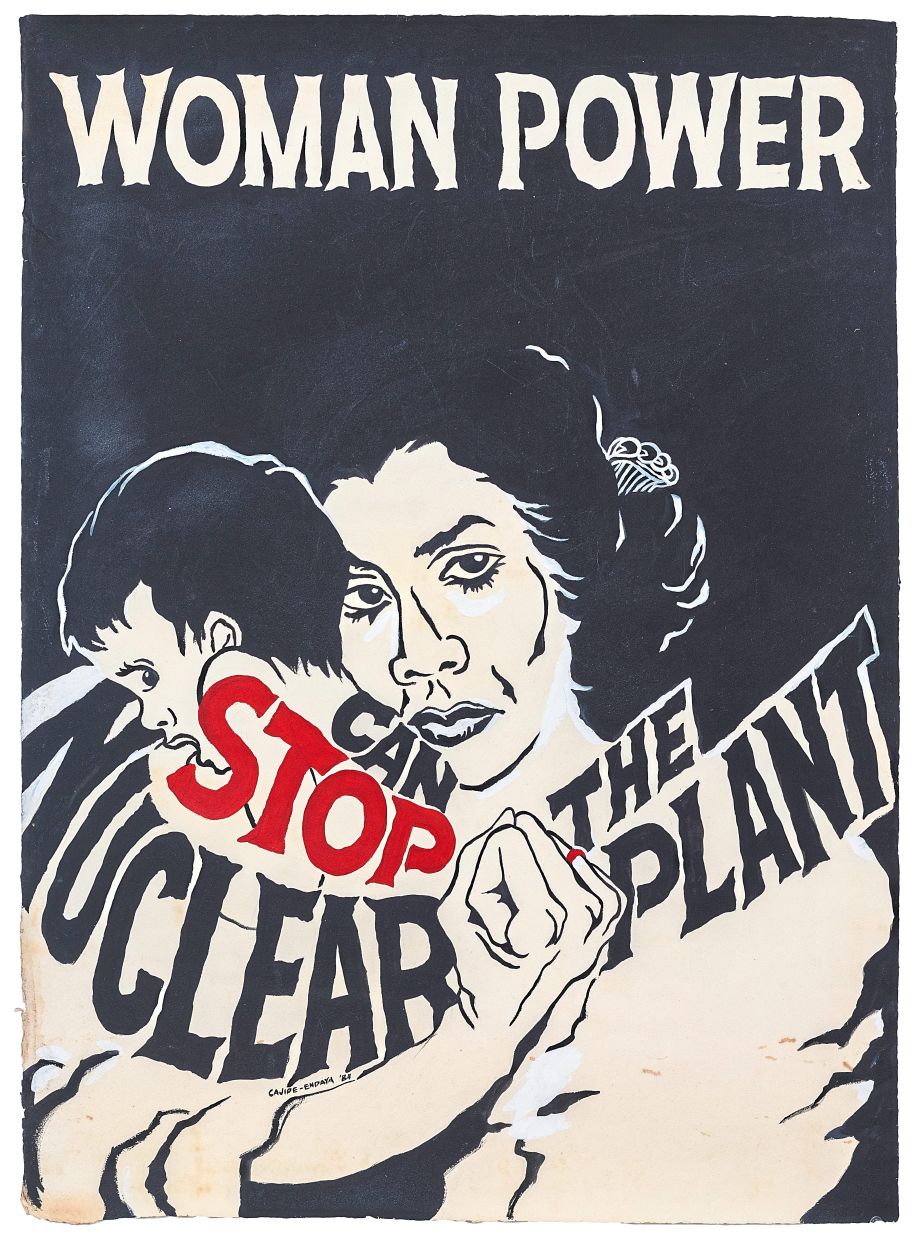
The show includes more than 45 works, as well as a slew of archival materials, by Malaysia’s Nirmala Dutt, Indonesia’s Dolorosa Sinaga, the Philippines’ Imelda Cajipe Endaya and Thailand’s Phaptawan Suwannakudt.
By bringing their works together, co-curators Joleen Loh and Qinyi Lim hope to highlight the lifelong practices of these pioneering artists.
“Many of these artists were often framed by others as feminists or women artists. But our intention here is not so much to cast them as such, nor bring them in a false unity, but to invite everyone to begin with the artworks to understand how these artists were speaking from their own lived experiences. We want to delay this impulse to categorise them,” says Loh.
She emphasises that the show is not meant to be a survey, but its comparative nature does draw out common threads in these women’s works.
While calling them feminists might be regarded as reductionist by some, there is no doubt these artists prioritised women in their artistic practices, highlighting issues central to women and reframing discussions about gender roles.
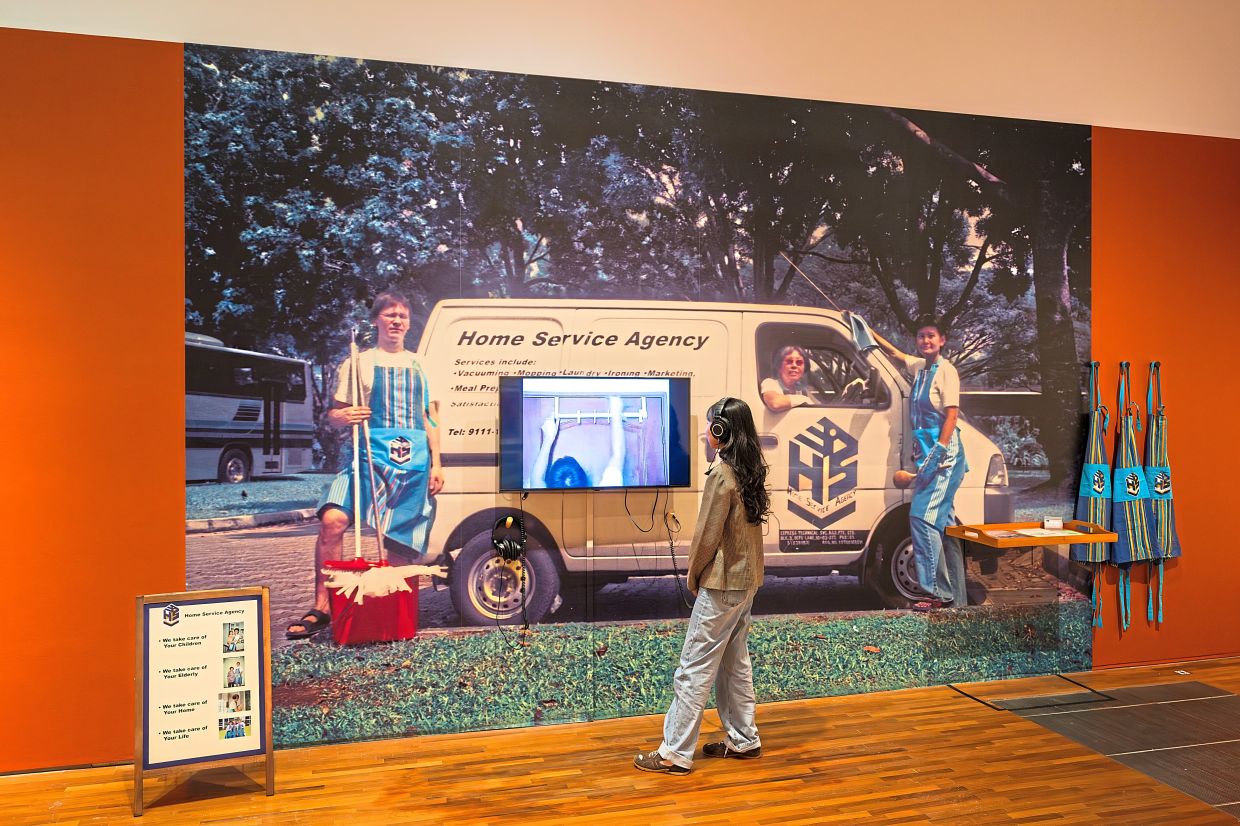
The aforementioned objects used by Heng, for example, confront head-on the issue of women’s invisible labour at a time when the phrase had not yet gained mainstream currency.
The blue plastic food cover was part of She And Her Dishcover (1991), an early installation work first shown at the Singapore Art Museum as part of Women & Their Art. The aprons were part of a 2003 performance art piece titled Home Service, which focused on the issue of unseen domestic labour.
The other women artists, too, addressed how the personal often became political when women attempted to express their concerns in public.
Dolorosa’s modestly scaled sculpture of a bound and gagged woman, for example, which gives the show its name, is a 2003 work that pays tribute to the women political prisoners detained without trial under Indonesia’s New Order regime.
“In a very simple way, Dolorosa’s sculptures often speak about all these women who have been silenced; political prisoners; and their families that were affected by such issues,” says Lim.
The artist, known affectionately as Ibu Dolo, is also fond of depicting women clustered together in groups, emphasising strength in solidarity and celebrating the resilience of the ordinary woman.
The first work a visitor encounters at the exhibition is her sculpture We Will Fight (2004/2025), a bronze that stands outside the gallery space. The work addresses the forced clearing of slums by the government, and the cluster of displaced women are depicted in dramatically active stances, clutching a wok and cradling a baby.
“They lean upon one another. In a way, they gain power from this collectivising. And this sets the tone for the exhibition, that there is a collective empowerment between women,” says Loh.
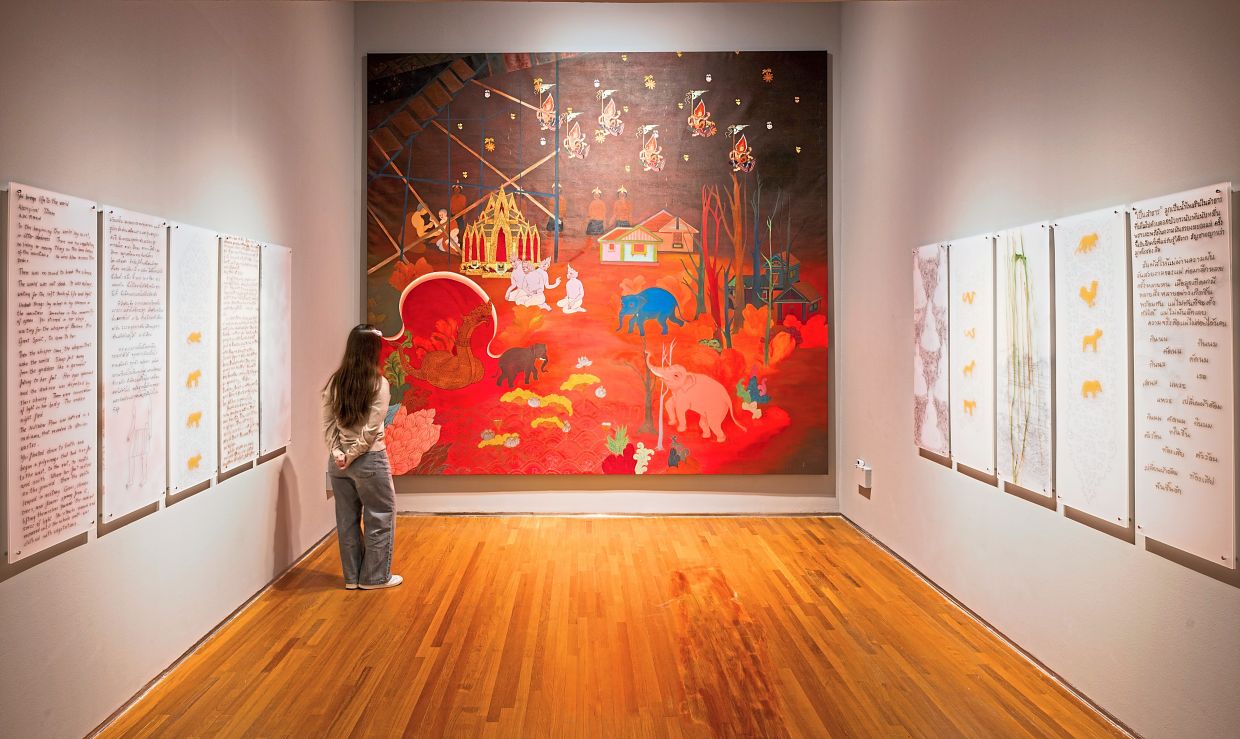
This deriving of strength from a group is also reflected in the artists’ urge to self-organise. Amid the artworks are archival materials that point to informal networks developed between these South-East Asian practitioners.
Lim recalls mentioning Phaptawan to Ibu Dolo when she was working with the latter for the 2021 Jakarta Biennale and Ibu Dolo exclaiming, “Oh, I know her”.
The most famous example of women networking is the artist-led biannual Womanifesto, founded in Thailand in 1997, which brought together women artists in informal exchanges as well as formal exhibitions. Photographs from its early years are an exercise in trainspotting for art fans, as artists such as Heng can be spotted.
Heng, too, was active in supporting fellow women artists, founding Women In The Arts Singapore (Witas), which she refused to register as she declined to introduce formal hierarchies into the organisation.
Loh reiterates that the exhibition is not meant to be a survey, but rather “a very focused and comparative exhibition that invites everybody to think about the connections between the artists”.
The best endorsement for the exhibition’s careful consideration of the artists’ individual voices comes from Phaptawan, who says: “This is the first time my practice has been looked at carefully. I felt myself being listened to, being heard instead of put into a box.” – The Straits Times/Asia News Network