
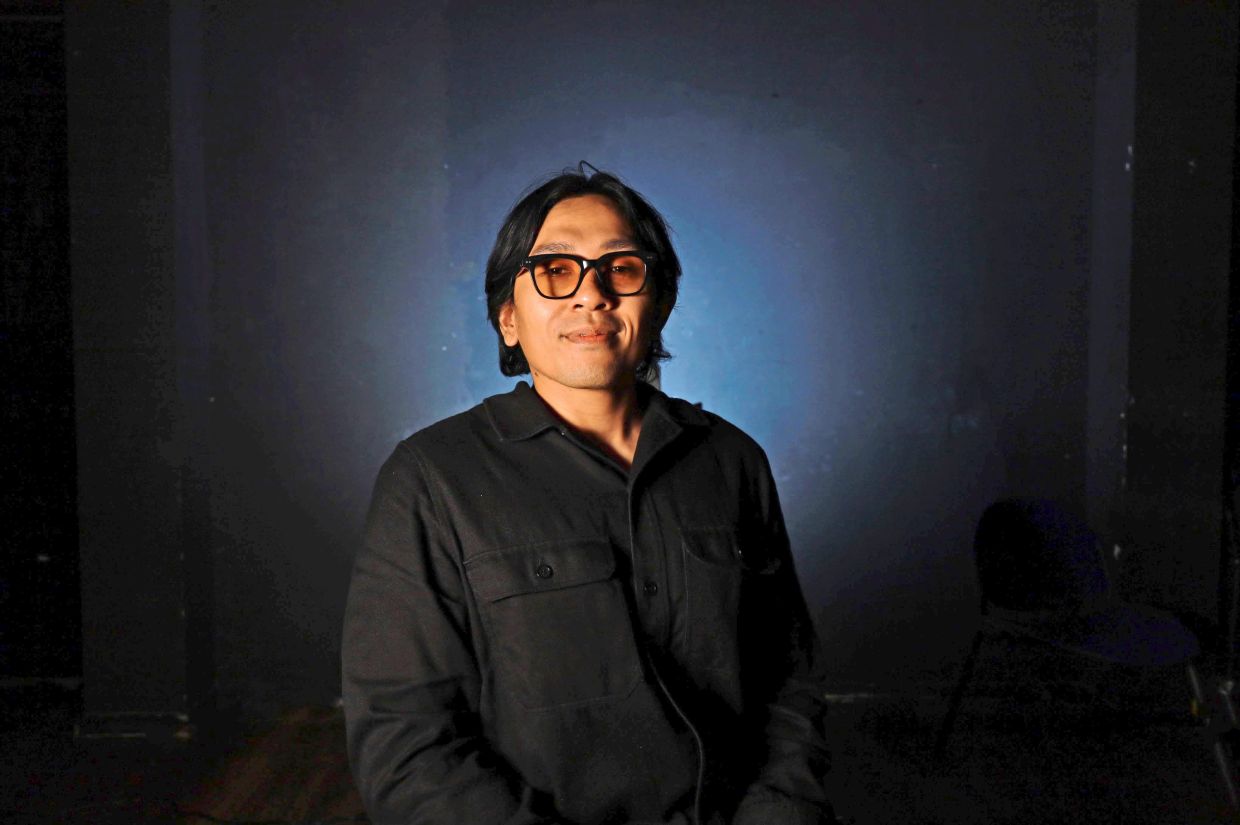
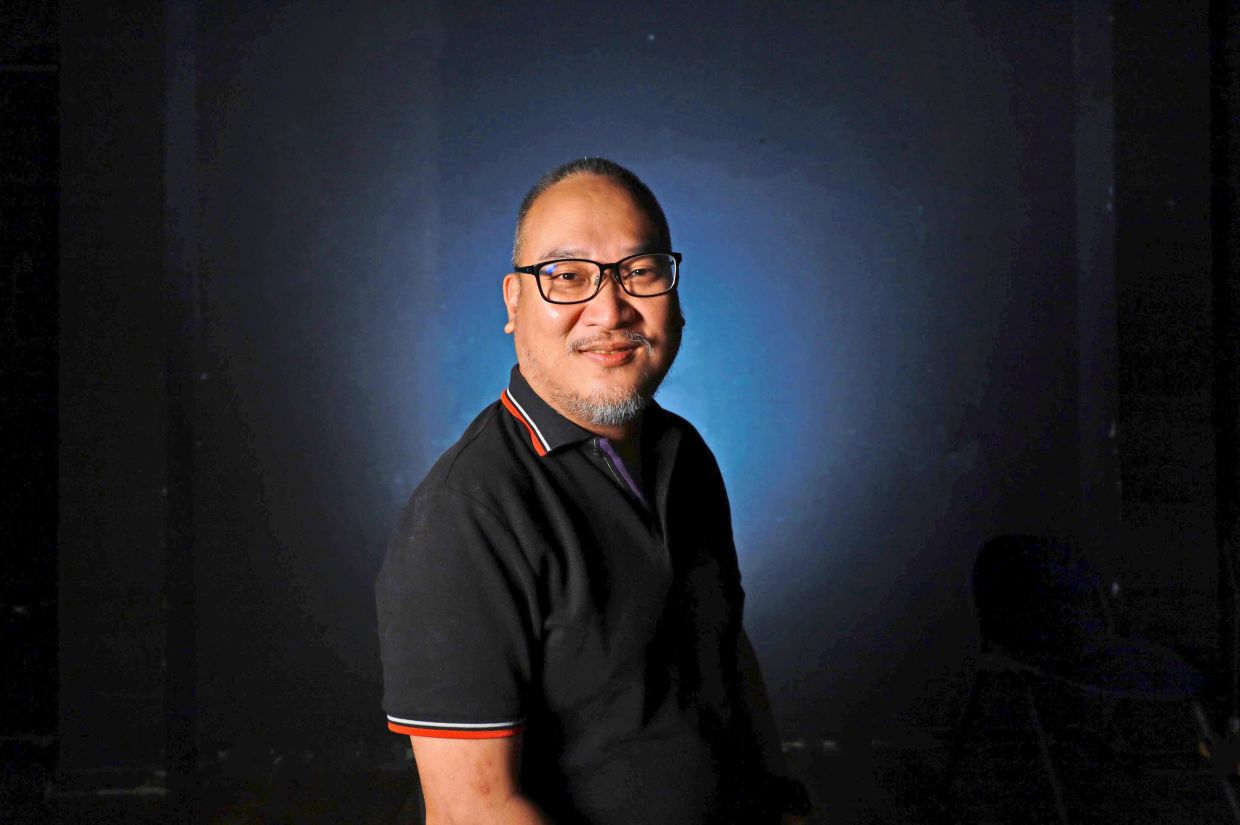
Director Christopher Ling and playwright Arsyad Azrai are kicking off the year by adding fresh voices to the local theatre scene with their brand-new play Mati-Mati (J’aime Ma Mere), running at Indicine, Kuala Lumpur Performing Arts Centre (KLPac) from March 4-8.
The show opens The Actors Studio Seni Teater Rakyat’s 2026 theatre season, and it marks the second instalment of a theatrical trilogy planned by the duo to interrogate familial bonds, grief and obsession.
Saccharine, which sold-out its run at KLPac in May 2024, was the start of this series.
“The idea for the trilogy was not planned from the start, but grew organically after Saccharine," says Ling.
"Though we considered continuing the story while expanding the original characters and universe from the first play, we ultimately chose to connect the trilogy through shared motifs and emotional concerns, allowing each piece to stand on its own," he adds.
While Saccharine focused on a father–son relationship, Mati-Mati (J’aime Ma Mere) – an English language show – turns its attention to brotherhood. The play brings together two legendary figures of Malay folklore locked in conflict over an impossible task, alongside two blood brothers wrestling with the ghosts of their shared past.
Mati-Mati (J’aime Ma Mere) stars Muhammad Ibrahim as Luqman/Temenggung and Daniel Arzman as Hakimi/Hang Tuah.
At the crux of the play, which runs for 65-minutes, is the conflict between the brothers: one brother wants to attempt to resurrect their dead mother through artificial intelligence (AI), the other is vehemently opposed to it.
In questioning how technology alters our perception of life, the play presents an unsettling question: how might it change the way we confront death?
Ling describes this new work as “very much an existentialist play”, moving deftly between myth and memory.
Confronting death
Over the past year, Arsyad notes that the public narrative surrounding AI has evolved, prompting deeper questions about humanity itself.
The trilogy examines the intersection between the human spirit and AI.
The playwright sets the Mati-Mati story in a very contemporary setting, giving a traditional brotherhood dynamic a modern everyday reality.
“The work reflects the experience of estranged children who often have no space to speak without feeling judged or being told how to fix it,” says Arsyad.
The play’s title brings together two contrasting phrases: “mati-mati” (meaning death in Bahasa Malaysia, but also to desperately or urgently desire a particular outcome) and the French “J’aime ma mere” (I love my mother).
“Growing up, the concept of family love is almost promised to you, but the reality is not always the case. Being part of a family that has been torn apart is a very oxymoronic experience," says Arsyad.
“Since Mati-Mati is inspired by magical realism, it’s an indicator to the audience to also prepare themselves for something out of the ordinary," he adds.
Brotherhood bonds
Daniel, who started out in traditional performances like Mak Yong, a dance-drama from Kelantan, has slowly carved a name for himself in contemporary theatre with Mentol Siasat, Takdir and Hati Emas.
He was offered the role in Mati-Mati after director Ling took a liking to his performance in Takdir.
“I accepted the role because I was drawn to the essence of the script and its exploration of grief in its many forms, so I’m approaching the performance with great care and scrutiny, as to be very careful with how I'm portraying the vision,” says Daniel.
For Muhammad, who was also cast by Ling, preparing for this role made him step out of his usual comfort zone as an actor.
“My approach usually involves repetition, self-exploration, and visualising the character from multiple perspectives, so that the performance can resonate with the audience," says Muhammad.
“Before I was cast, I was told this role would really push me – and it has. This experience has been completely different from my previous performances. Rehearsals have been intense, and at times, the challenges make me feel like I might be done as an actor!" he adds candidly.
His previous shows includeThe Amok Of Mat Solo, AYA: Anjalai Yen Amachi, Monologue In Monochrome and Bilik Ahmad Berdaki.
‘Silat in a sarung’
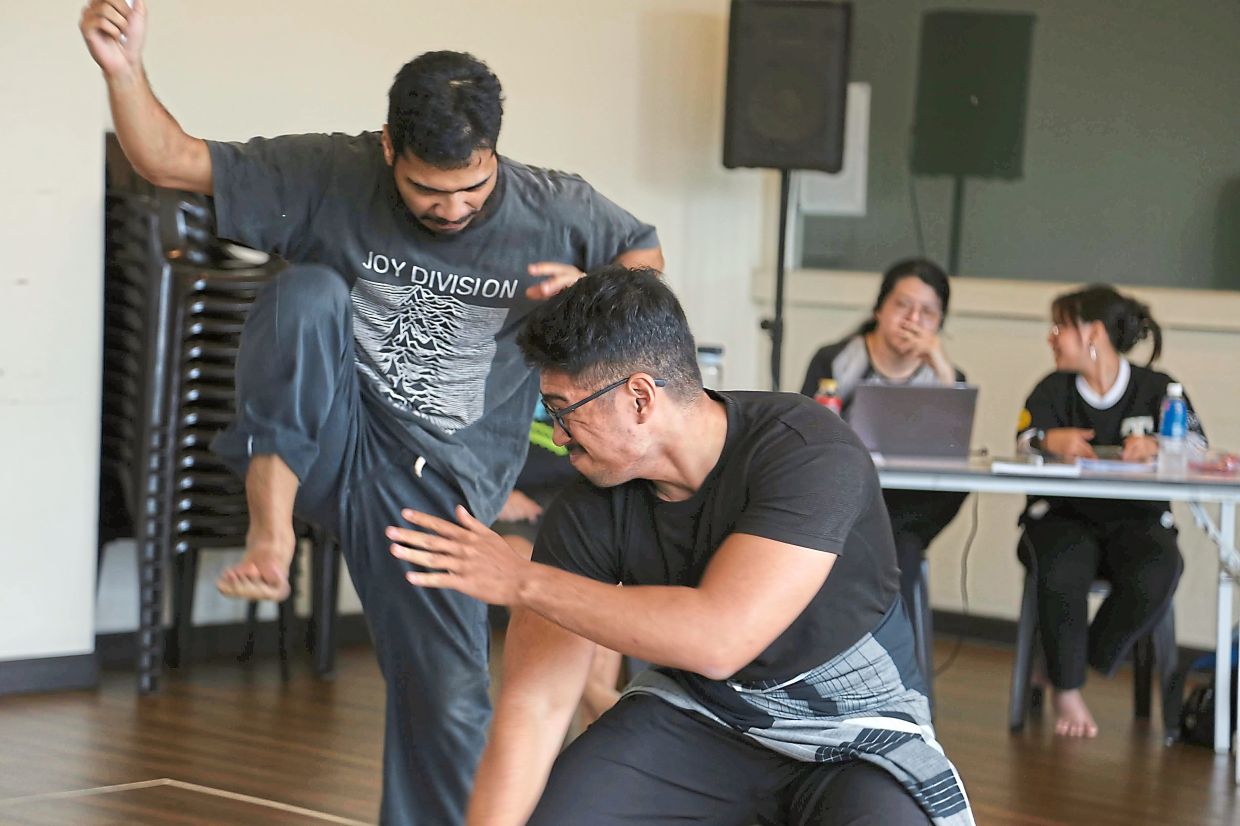
Like all good drama, Mati-Mati also features an intense fight sequence.
A major challenge for both actors was performing a full fight scene, choreographed by Hazzy Alzeeq, known for Trilogi Bulan, fight choreography workshops, and work with The Actors Studio Seni Teater Rakyat and KLPac’s Emerging Artists Residency.
“Stage combat is driven by intention and energy,” says Hazzy, revealing his choreography behind the crucial scene in the play.
“The characters’ backgrounds in this play, and how the actors portray them, determine the style of fighting that is shown to the audience. What I had in mind was silat performed in a sarung.
A reference point would be the 2020 Indonesian film Tarung Sarung, particularly how two characters fight while wearing a sarung. This approach creates a distinctive and striking fight sequence for Mati-Mati,” he explains.
Through rehearsals and deep engagement with the script, Daniel reflects that Mati-Mati is unlike anything he’s tackled before, gently leading him to new levels in both performance and character.
“To me, it’s a ‘comfort piece'. In many of my previous plays, the audience is asked to actively interpret what’s happening. This script, however, simply invites you to sit with it, much like sitting with a friend in need," he concludes.
Mati-Mati (J’aime Ma Mere) will be staged at Indicine, KLPac from March 4-8. Advisory: This show contains foul language, graphic depictions of violence and mentions of domestic abuse. There will also be smoke effects used in the play. Viewer discretion is advised.