In an era of rapid industrialisation and international scientific innovation, it is too easy to forget Malaysia’s role and contributions, especially in the mid 19th century.
The Alfred Russel Wallace As A Medium exhibition, now on view at Think & Tink in Kuching, Sarawak until March 1, began with a research journey in 2021.
Artist Chang Yoong Chia and writer Teoh Ming Wah, a husband-and-wife team, began researching Wallace for Chang’s batik series A Leaf Through History, a pursuit that evolved into the current exhibition.
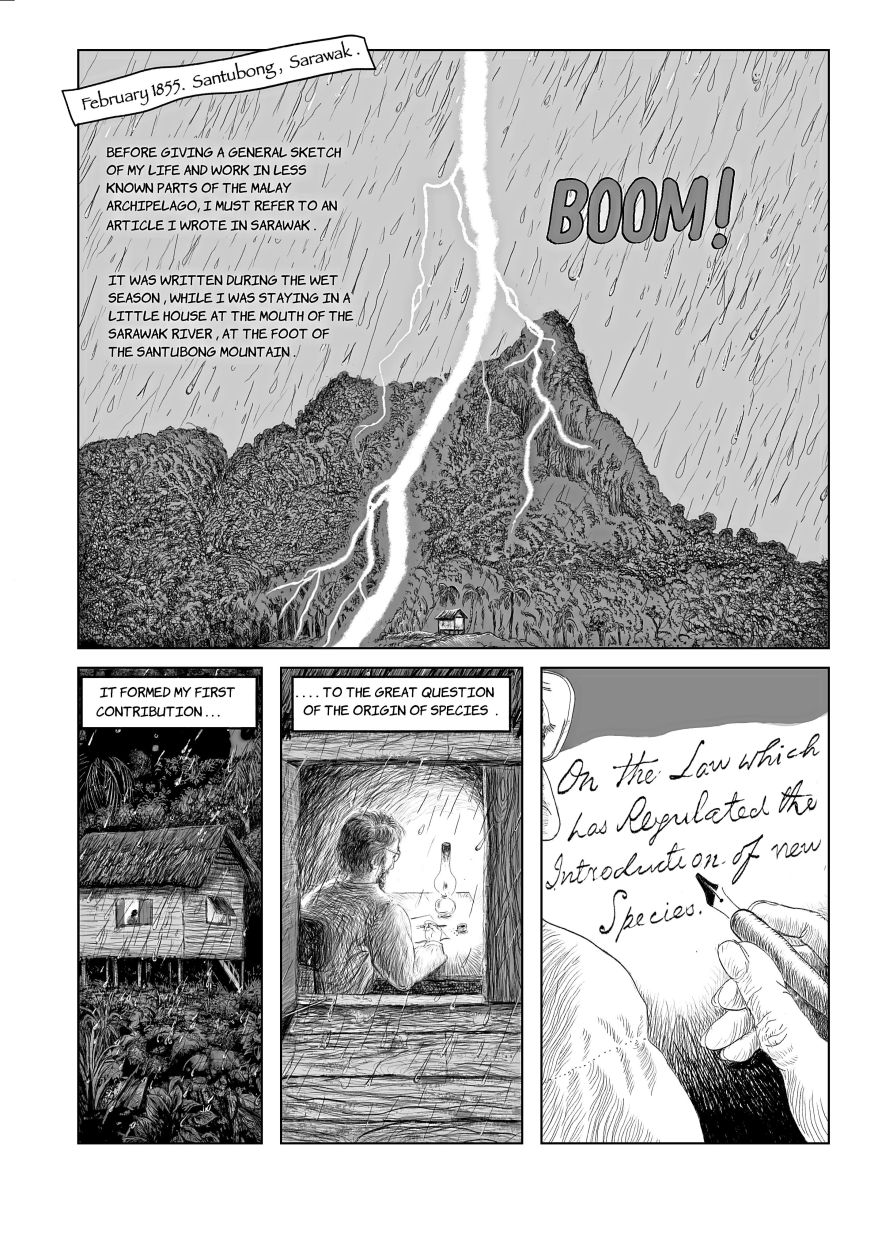
A planned graphic novel – the centrepiece of this preview exhibition – retells and reimagines the story of Wallace, who travelled through Sarawak between 1854 and 1856 and helped advance evolutionary theory alongside Charles Darwin.
Alfred Russel Wallace As A Medium, curated by the duo, reintroduces Wallace and his Sarawak expedition, a piece of Malaysian history, to a wider audience via the accessible medium of a graphic novel. Imaginative and steeped in Chang's natural history drawings, it will be interesting to see how science and mythology culminate in this legacy fantasy graphic novel.
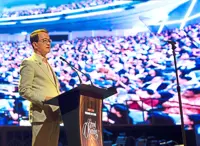
“We realised there are many 'Wallace fans' hidden amongst the Malaysian population who would like to highlight the importance of our country's contribution as an incubator to the theory of evolution,” says Chang, artist, researcher and co-writer of the upcoming graphic novel.
Trained as a painter, the KL-born Chang often professes his fondness for oil. Yet he moves fluidly across styles and mediums – from painting and painted objects to installation, collaboration and performance art.
"Working on canvas is a much more individualistic approach which the artist asserts himself to the viewer. In creating a piece of fine art, especially a painting, the artist creates his or her own visual language, for the viewer to decipher," says Chang.
"As a fine artist who has always incorporated storytelling in my work, It is a joy to be able to finally to work in the medium of comics."
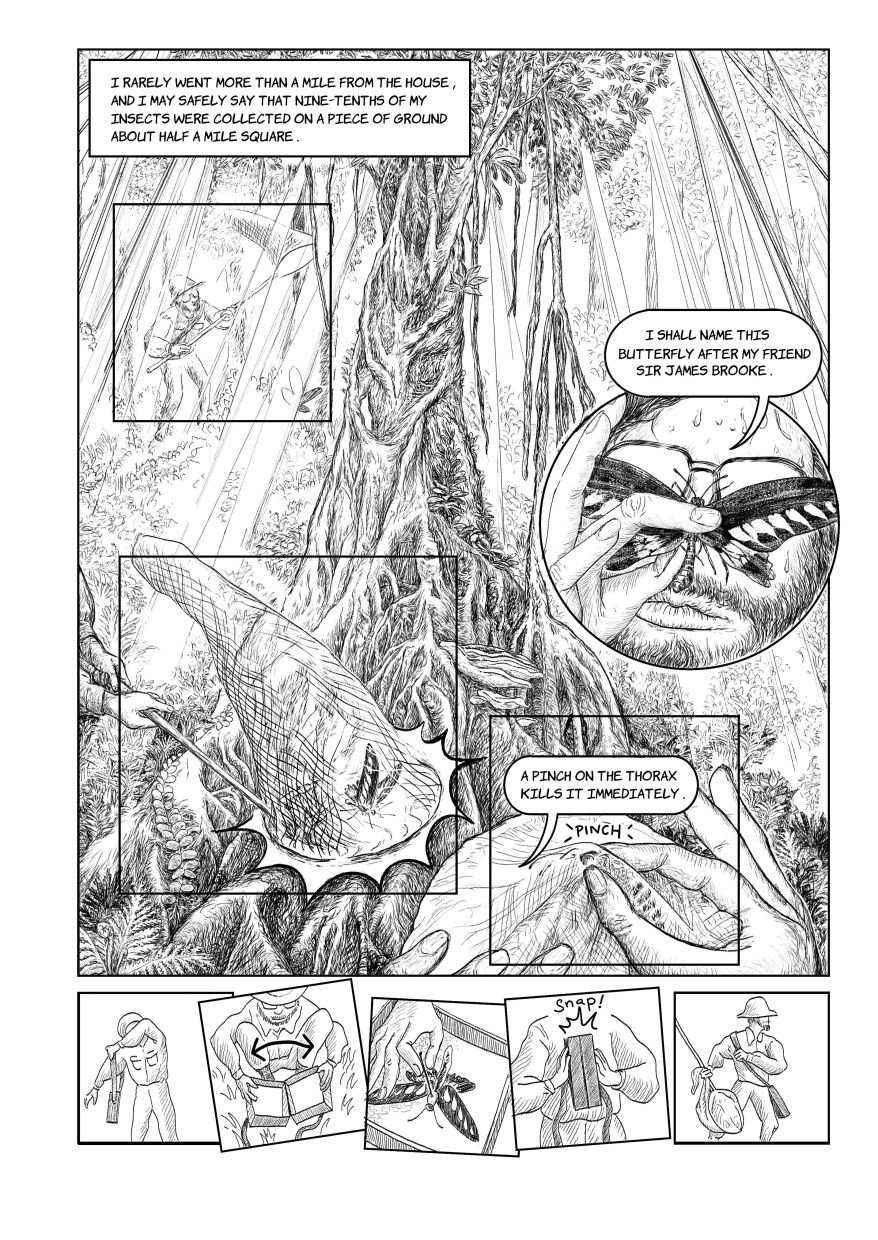
The graphic novel format now presents a fresh challenge for both him and his frequent collaborator, Teoh.
Realising they had only scratched the surface of Wallace’s role, they chose the graphic novel to tell his story – casting the titular figure as a conduit between history and myth, colonial-era science and the broader Malaysian ethos.
“For our exhibition in Kuching, as this is a work-in-progress exhibition on a graphic novel that is not finished. We won't be showing the plot of the story," says Chang.
“Instead, we will be introducing the characters of the story, the creative process, that is: research, scripting, and plotting, three art installations inspired by Wallace's travelogue The Malay Archipelago, papers by Wallace and Darwin, and other experts' and academics' paper on Wallace, and lastly a 30-minute video essay on our field research retracing Wallace's time in Sarawak,” says Chang.
The graphic novel remains untitled at this stage.
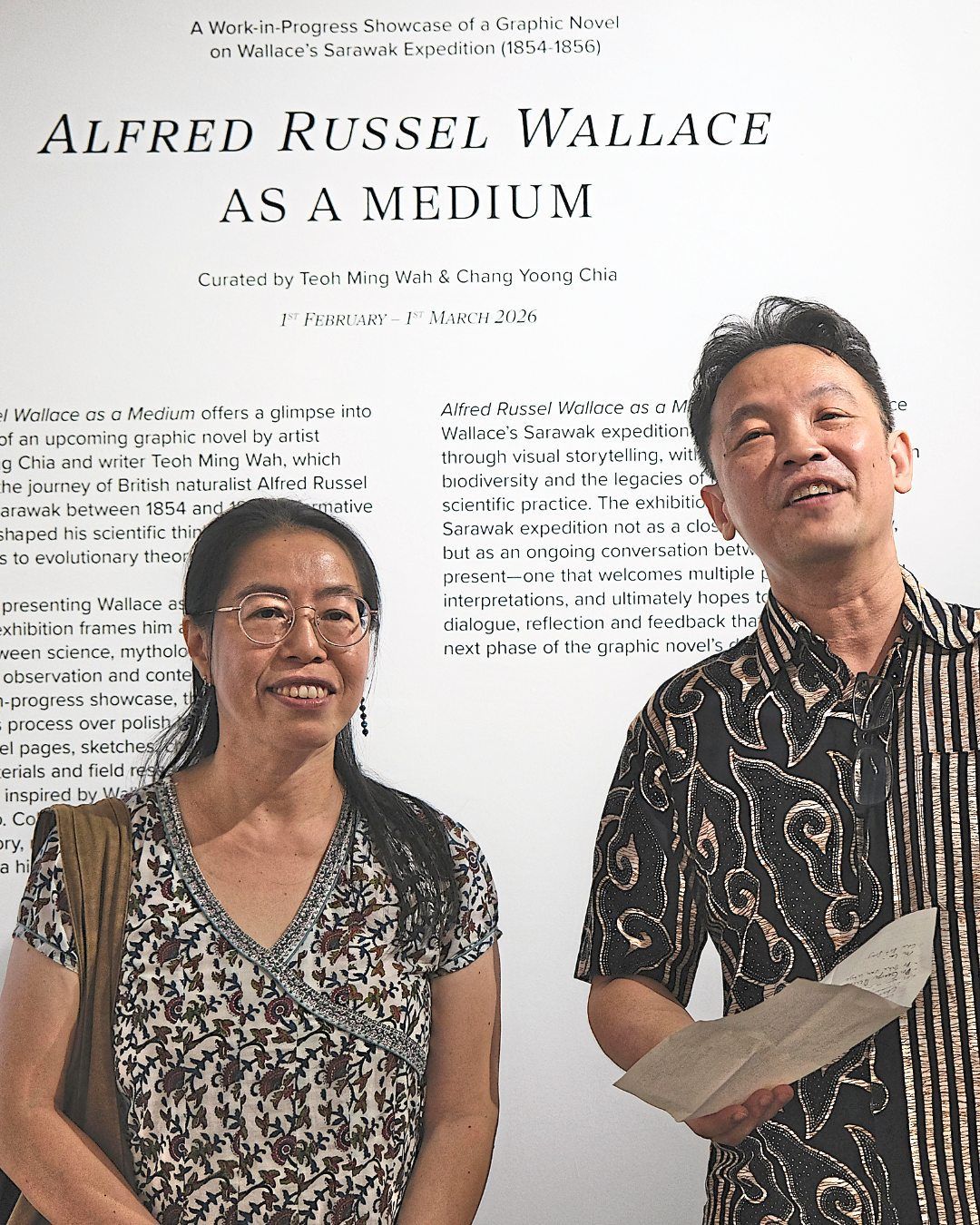
The exhibition, held at the Think & Tink venue and presented by Goethe-Institut Malaysia, aims to demonstrate the process of making a graphic novel and how space and time are one in this medium.
For their fieldwork, they travelled to sites Wallace once visited – Melaka and Gunung Ledang, which he climbed, Singapore, including the Lee Kong Chian Natural History Museum and Bukit Timah, and, with support from the Goethe-Institut Malaysia, Sarawak to retrace his trail. They also corresponded with Wallace scholars in England, Singapore and Malaysia.
Alongside this, they studied the language of comics – weighing whether to draw the graphic novel by hand or digitally, and exploring printing options.
“Different from fine art, the language of comics uses a common visual language that everyone innately understands. That's why Ikea uses comics in its instruction manuals," says Chang.
"Also, comics are read in sequence, from one panel to the next, from one page to the next page, so there has to be continuity. For instance, the character Wallace in our graphic novel on page 1 must still be recognisable even if his back is facing us on page 50. In fine art painting, everything exists in one static moment,” he adds.
In sharing these intricacies such as these, this exhibition invites dialogue, reflection and revision that will chart the completion of this graphic novel, which is over halfway completed.