Forecasts were dire about what’s officially called the David Geffen Galleries, after the donor who gave US$150mil (RM593mil).
"The blob that ate Wilshire Boulevard”, Architectural Record announced in 2014. "Suicide by architecture”, The LA Review of Books lamented five years later.
The building – the latest within the Los Angeles County Museum of Art's (Lacma) grounds – opened to museum members April 19 and to the general public May 4.
By turns uplifting, lyrical and pugnacious, the new Geffen Galleries bid to alter the cultural and civic weather of Los Angeles and reassert the city’s role as an American petri dish for experimental design and derring-do.
The architect is Peter Zumthor, a Swiss winner of the Pritzker Prize who until now was known for mostly modest-size gems, including a spa in the Alps and a tepee-shaped concrete field chapel for a family of farmers outside Cologne, Germany.
When Michael Govan, director of the Los Angeles County Museum of Art (Lacma), tapped Zumthor for the job, the architect had never designed in America, much less anything this big. That was nearly 20 years ago.
The project turned out to be the Battle of the Somme. Critics were brutal. Raising money in LA was a slog. Govan and Zumthor wrestled over details. But they shared a big vision.
Govan enlisted Skidmore, Owings & Merrill to partner with Zumthor and help him navigate US building codes and all the structural engineering, seismic requirements and environmental issues.
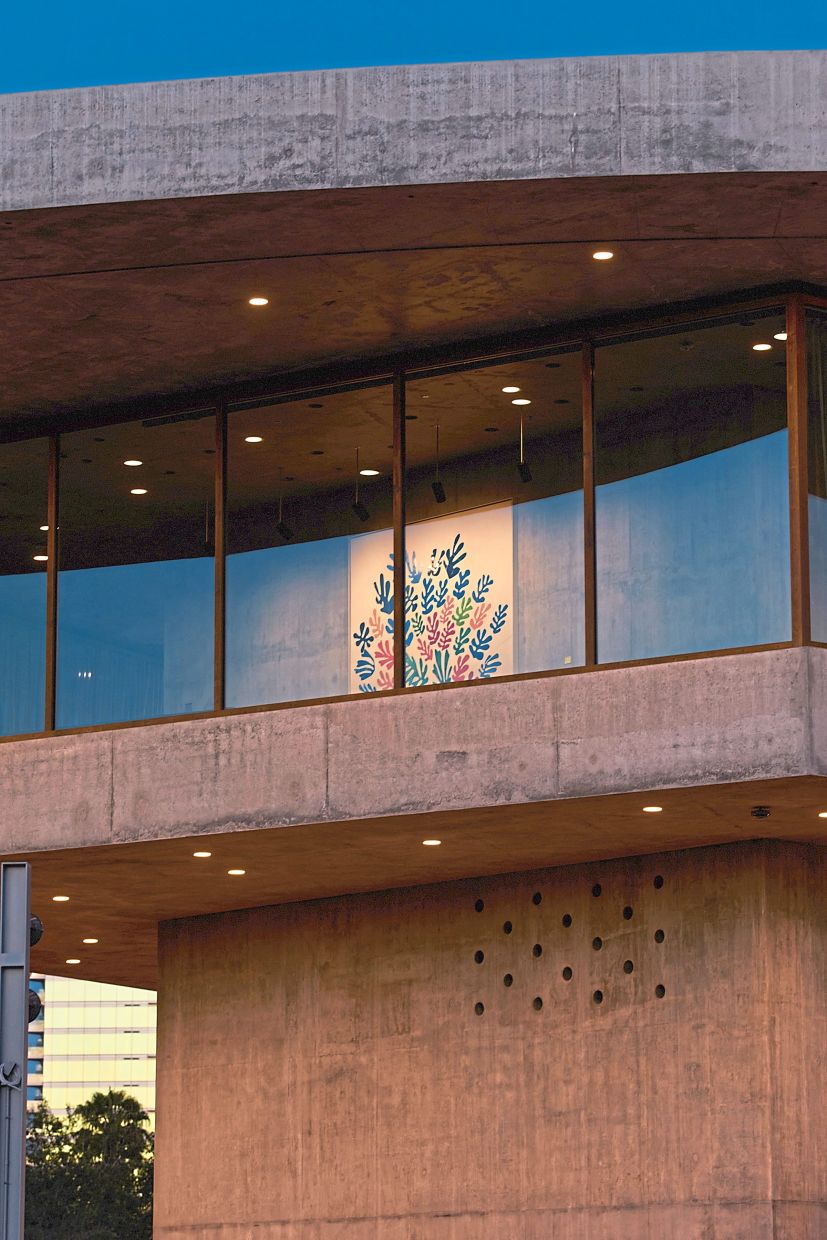
Efforts were made to mitigate the carbon footprint. The museum’s tens of thousands of cubic yards of concrete were intended to look immovable and eternal like the Pyramids.
But the building would also have to be able to slide 5ft (1.5m) in any direction atop seismic isolators in the event of an earthquake.
What results is a feat of concrete engineering to go along with the goals that Govan had for displaying Lacma’s collection. It needed to be reimagined and reshuffled, Govan argued, with ancient Greek sculptures, Indonesian batiks, old master paintings and midcentury automobiles presented on equal footing and in fresh combinations across a single stage.
The approach was something that many art museums have attempted for years, in one version or another, but this was to be an overhaul of an entire institution.
Architecturally, it would require the opposite of the usual orthogonal, white-box galleries. Zumthor devised a labyrinthine arrangement of liminal spaces – like a village with squares, lanes and back alleys – that encourages serendipity and in which it’s easy and useful to get lost.
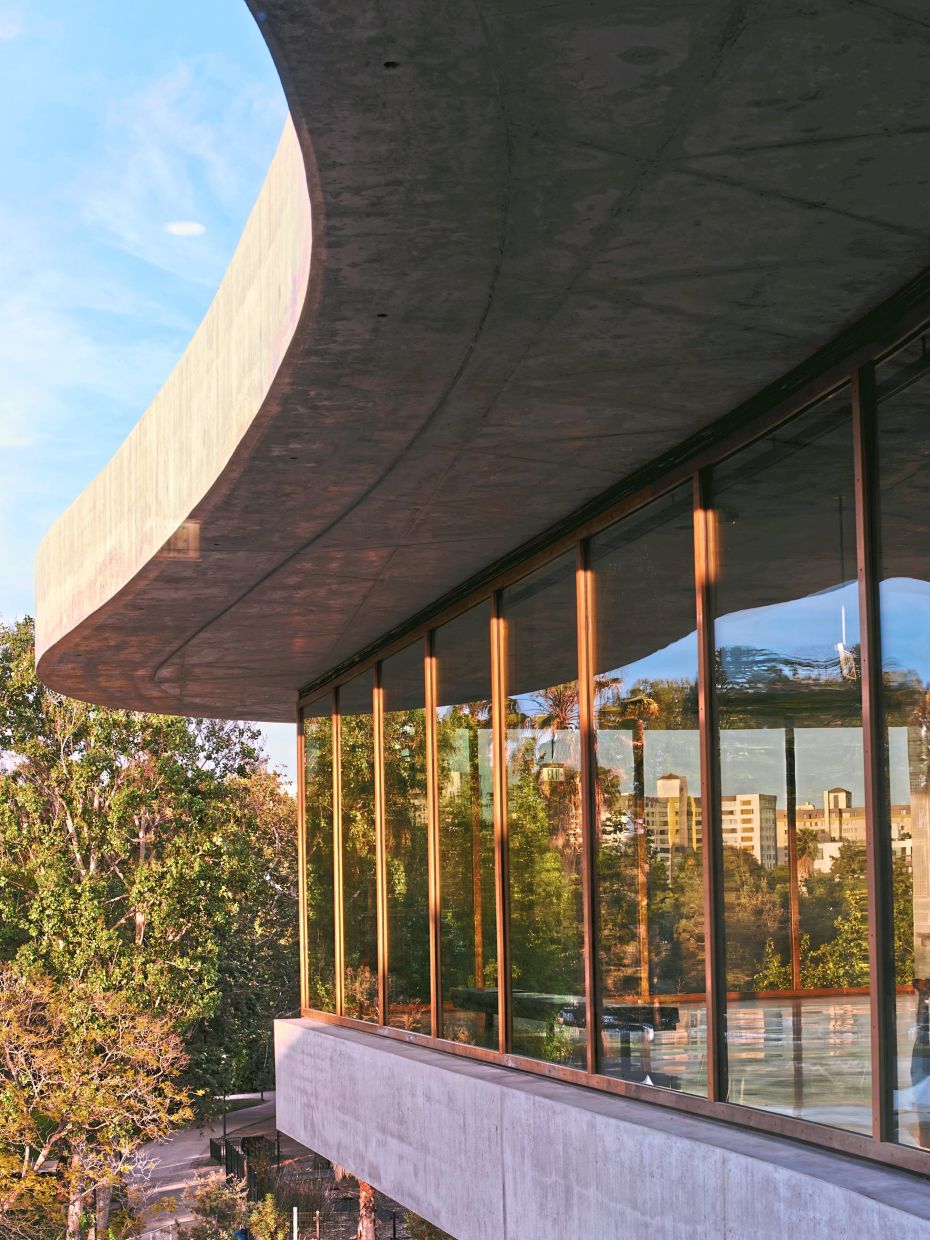
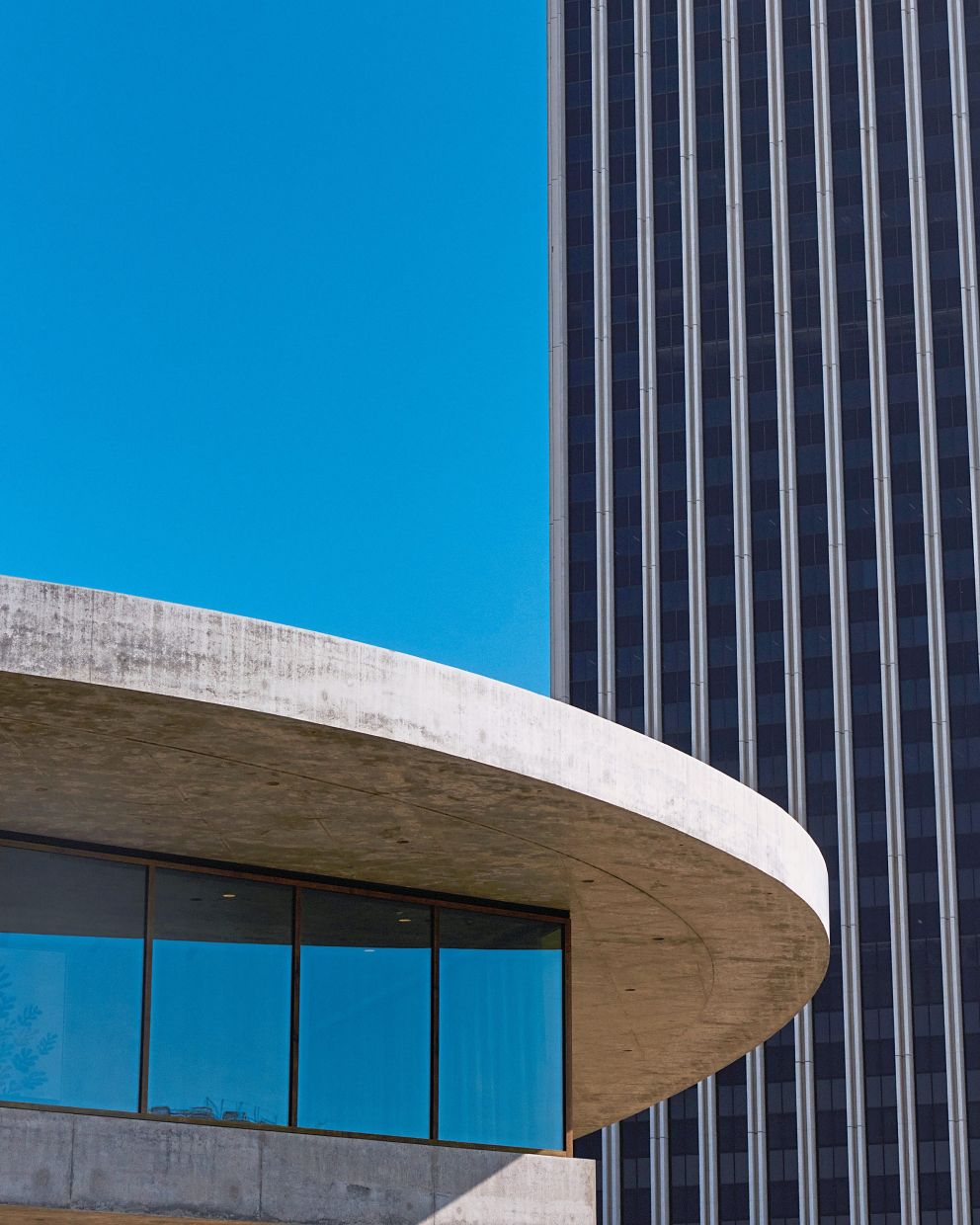
The shape of the building ended up an amorphous multi-legged beast with up to 80ft (24.4m) cantilevers. To a passing driver on Wilshire, it can appear to have emerged from the La Brea Tar Pits next door.
Its sleek, slithering single floor of galleries is lofted 30ft (9m) into the air on seven humongous piers and sandwiched between two slabs of concrete supported by post-tension cables. Zumthor decided he wouldn’t try to make the concrete look immaculate, and it doesn’t.
Early reactions to the building, when the still-drying concrete galleries were unveiled last year without any art on the walls, focused on the splotches and water stains.
Give the concrete time, Zumthor responded. It will age and mellow.
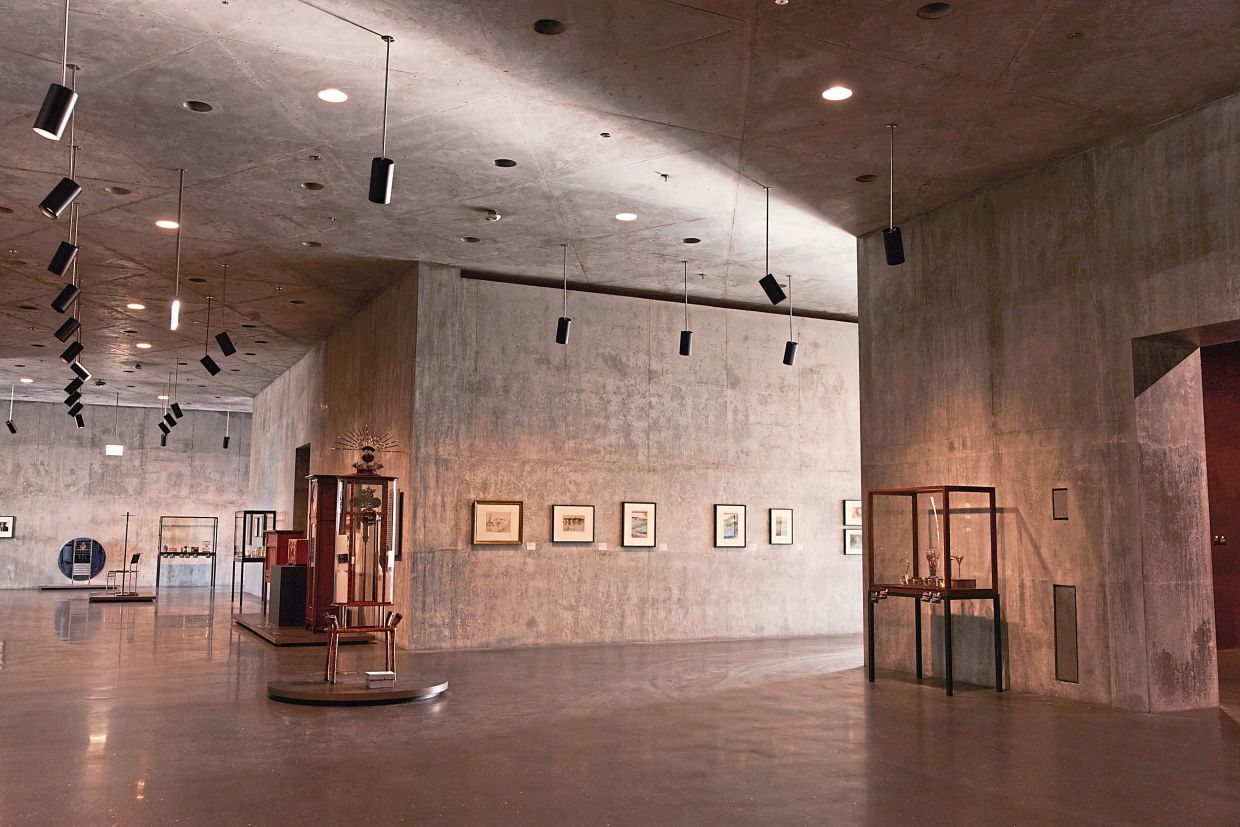
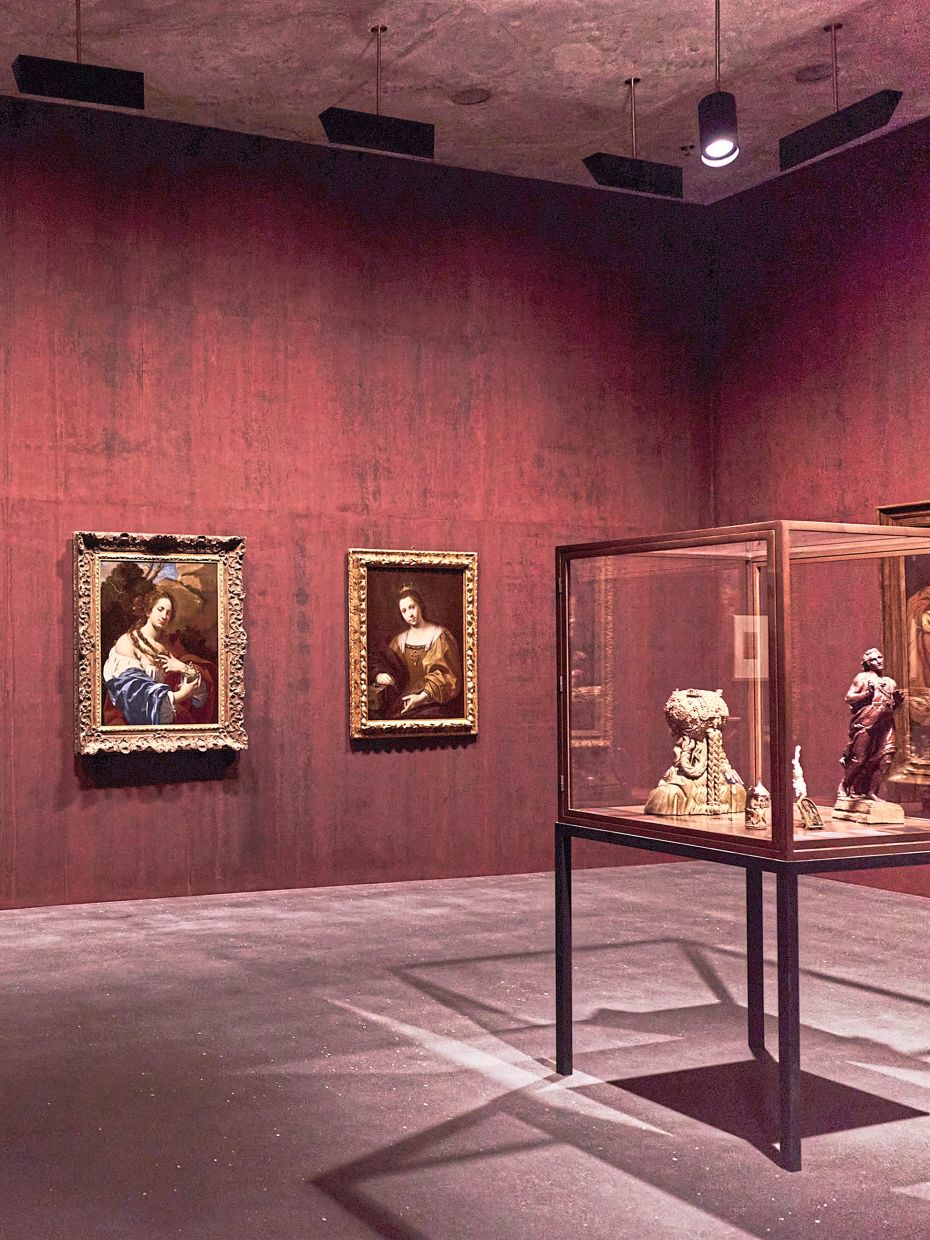
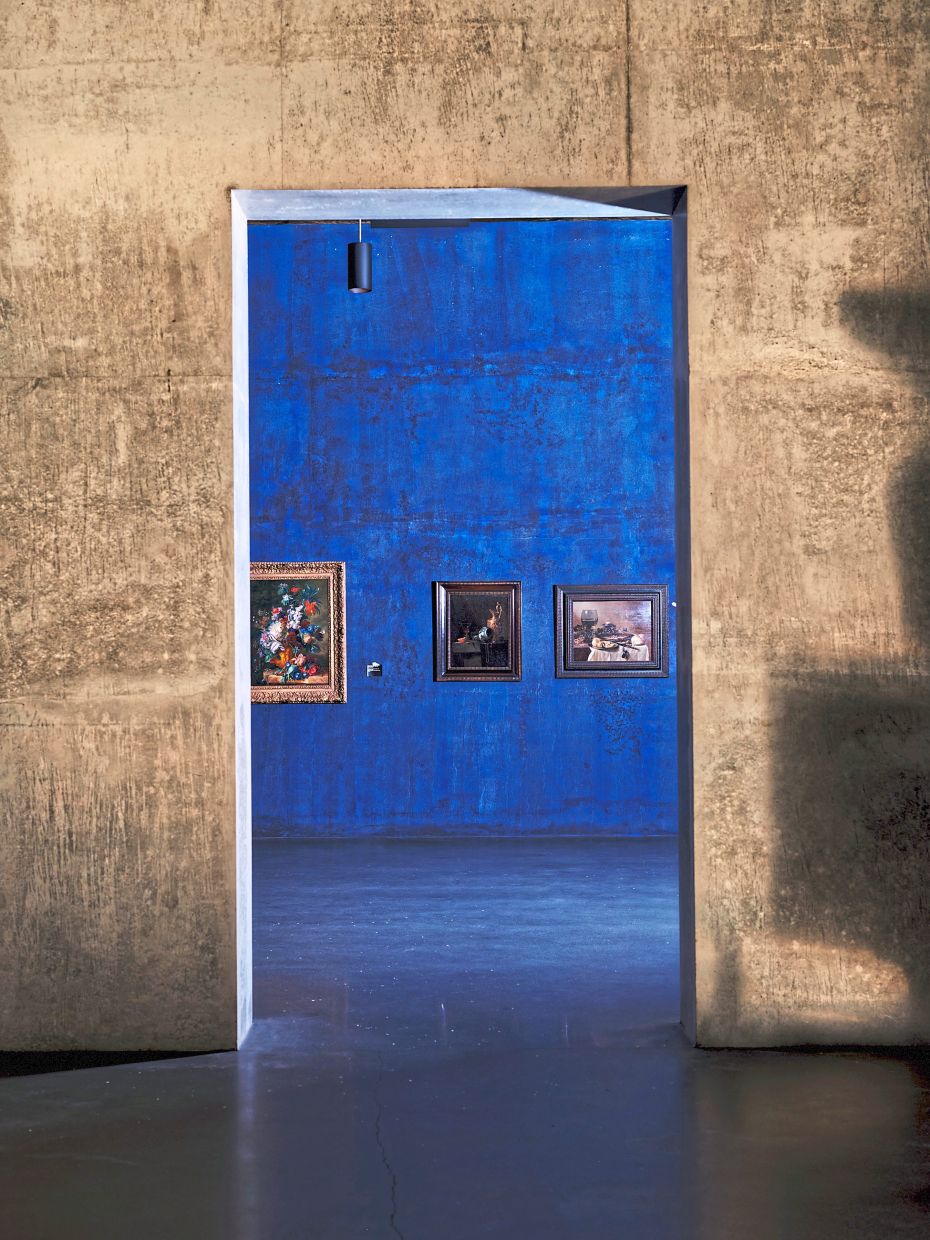
Those stains and fissures have now started to morph into spidery patterns and delicate veils. In rooms that previously looked like bunkers, the walls are painted in coloured pigments mixed with chemicals that bond with the concrete to transfigure the irregularities. The colours are deep and rich. The effect is akin to textured fabric.
Some history might be helpful here. During the 1960s, Lacma split off from the Los Angeles County Museum of Science, History and Art at Exposition Park and moved to county property along Miracle Mile on Wilshire Boulevard.
Two LA titans back then – financier Howard F. Ahmanson and industrialist Norton Simon – led the museum’s board. Ahmanson favoured architect Edward Durell Stone to design the new museum. Simon backed Ludwig Mies van der Rohe.
They settled on William Pereira, an affable Oscar winner for special effects who became the architect of midcentury LA icons like the Theme Building at Los Angeles International Airport.
For Lacma, he came up with a trio of lightly decorative modernist pavilions organised around leaky fountains whose pools blackened when oil leached out of the tar pits.
The collection outgrew Pereira’s buildings by the 1980s, when Lacma built an addition by Hardy Holzman Pfeiffer Associates and a wing by architect Bruce Goff to house a private collection of Japanese art.
Goff was a kind of genius. But the campus was a hodgepodge. More glamorous art museums like the Museum of Contemporary Art and the Getty were stealing the spotlight in LA.
Govan arrived in 2006. He oversaw the completion of two more wings, undistinguished buildings by Renzo Piano, that doubled Lacma’s display space. Piano also made some improvements to the layout of the campus. But Govan had plans of his own.
Salvaging Pereira’s architecture and the Hardy Holzman building were fool’s errands, he announced. That infuriated Angelenos nostalgic for Pereira, who favoured preservation over demolition, but Govan sold county officials on his plan.
He would need US$125mil (RM495mil) in public funds, he told them, to build Zumthor’s project. Fixing Pereira would cost taxpayers some multiple of that. He would get the rest from private donors, he promised.
And astonishingly, he did.
That the Geffen Galleries end up with 110,000sq ft (10,220sq m) of display space, 10,000 fewer than the Pereira buildings had totalled, became a particular fixation of some detractors. What sane, responsible public museum, they asked, spends hundreds of millions of dollars to shrink its institution?
Govan pointed to those wings by Piano, which had doubled Lacma’s display area. But Zumthor’s building turns out to be its own best response. It’s hard to imagine visitors wishing it were any larger.
Wending through the Geffen Galleries is intense. Views of the city provide distraction and joy. The new building romances Los Angeles. Where it curls over the street, spreading an arm across Wilshire, it suggests a civic embrace. Wraparound windows offer killer views over the city.
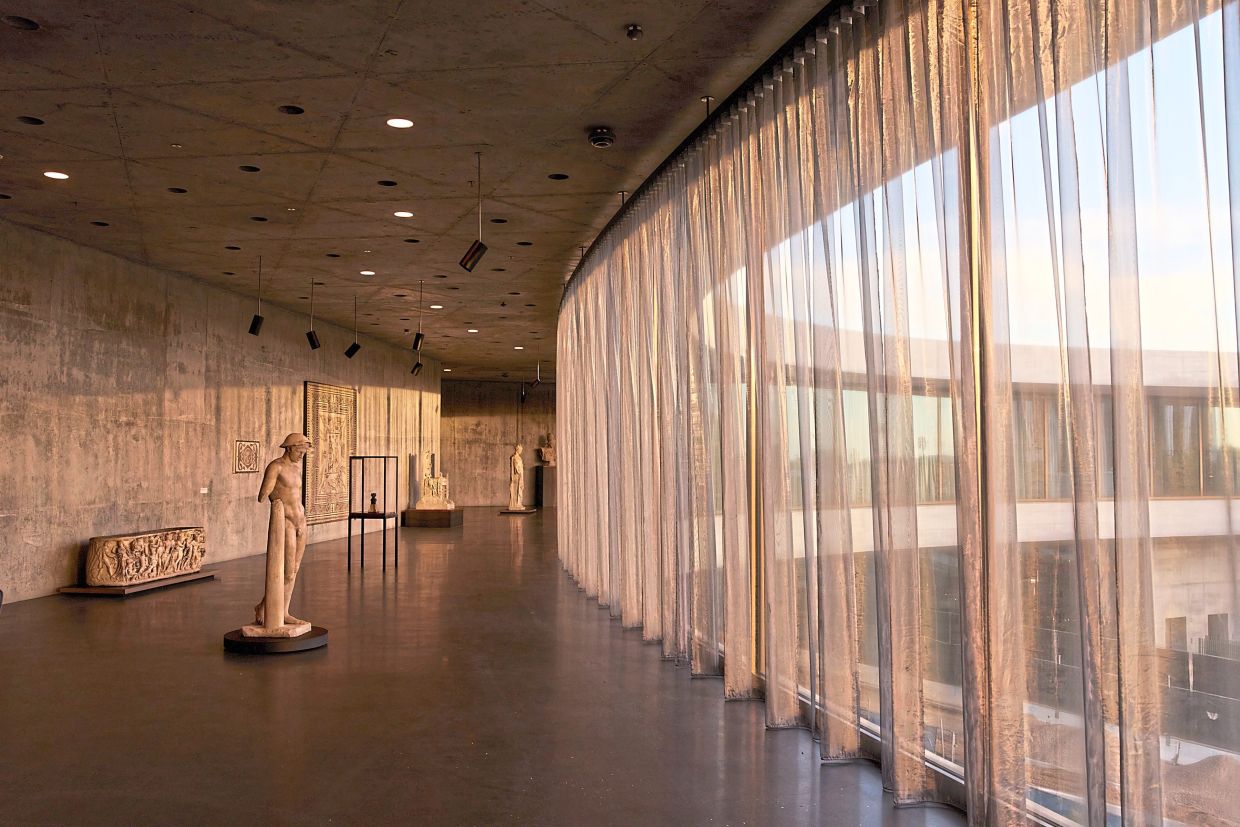
The sun sifts through curtains made of sputtered chrome that Govan commissioned from Reiko Sudo, a textile artist. The curtains cast shadows across walls and floors that shift over the course of the day, making the galleries seem alive. LA twinkles and beckons through the fabric.
Where the new museum meets the street, it’s less seductive. Landscaping remains sketchy. Stairs are steep and forbidding. The splotchiness of the concrete on the exterior will mellow, too, but it’s still distracting.
It hasn’t helped that the county insists on a fence separating the museum from the sidewalk. The new Lacma presents a singular opportunity to expand the public square at the geographic heart of the city into a magnetic urban centre, alongside the tar pits, the Academy Museum of Motion Pictures and a new metro station.
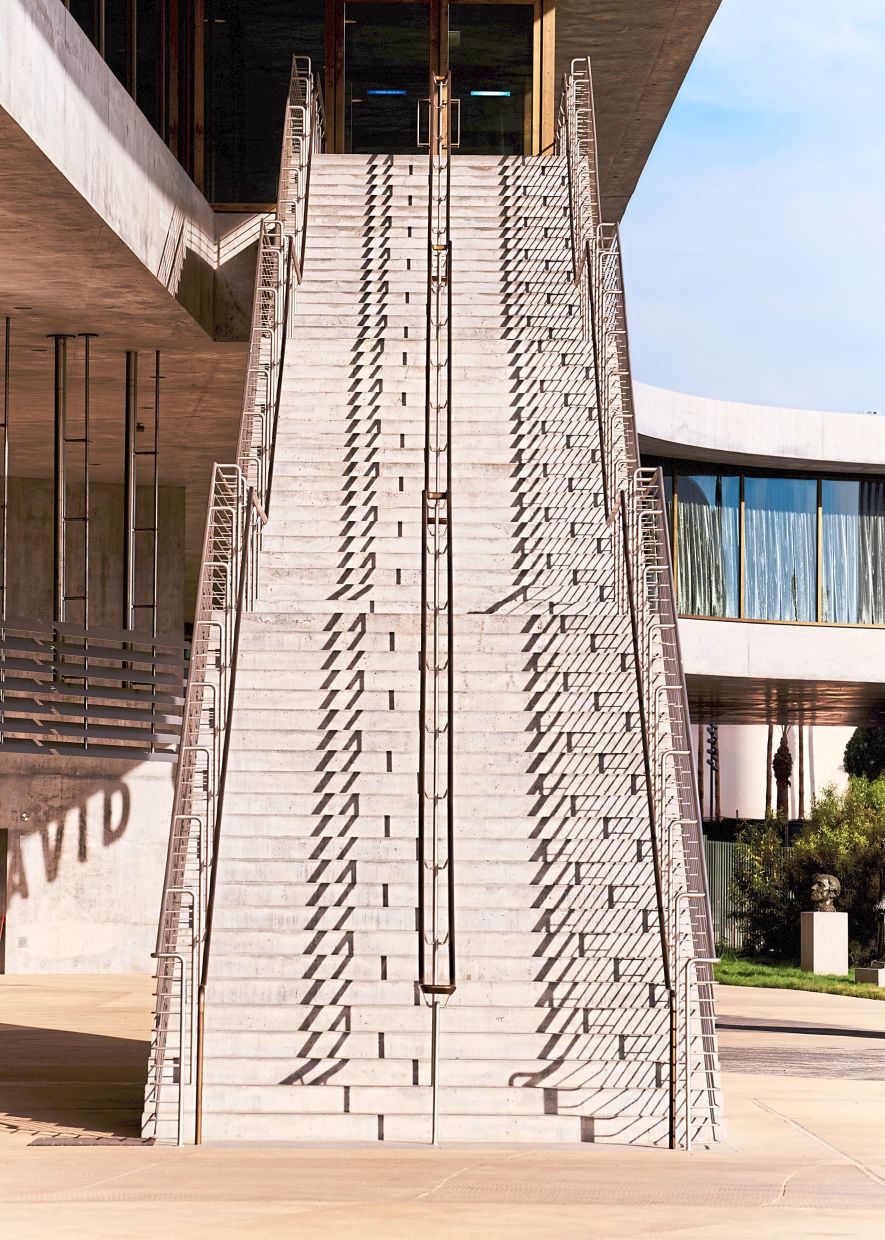
Visitors are going to expect more than jumbo sculptures, cafe chairs and a few palm trees in the hardscaped plazas.
When I visited the museum the other day, curators were finishing up art installations in the painted rooms, which looked sumptuous yet felt monastic.
I was reminded of the chapel Zumthor designed for the farmers outside Cologne. It involved the construction of a tepee made from spruce trees encased in framed concrete.
Zumthor instructed the farmers to burn the logs. What remained was a cone-shaped void, large enough to accommodate a few worshippers, with an oculus where the logs had been tethered, open to the sky. A single door led through a tunnel into the chapel.
The concrete bore the blackened impressions of the burned wood and retained some of its smell. A number of winters ago, I found myself alone in the chapel. The light was blue and soft. Snow drifted through the oculus. The silence felt visceral. It seemed to vibrate.
I hadn’t quite felt that same rush again, until now. – ©2026 The New York Times Company