
FOR most parents, watching their child grow up healthy is the greatest reward.
Yet a silent nutritional concern may be affecting one in three Malaysian children and many families may not be aware of it.
Iron deficiency anaemia (IDA) is a common nutritional deficiency among young children in Malaysia, one in three children being at risk of anaemia, with iron deficiency being the most common cause [1].
The condition often does not present with obvious symptoms, making it difficult to identify without awareness. This is why parents need to know the importance of ensuring adequate iron intake as part of a balanced diet for growing children.
According to consultant family medicine specialist Dr Sri Wahyu Taher, around 90% of children with IDA do not exhibit obvious symptoms. “By the time signs appear, the deficiency may already be more advanced and in many cases, the signs are non-specific such as tiredness, poor appetite, slower development and occasional pale skin.”
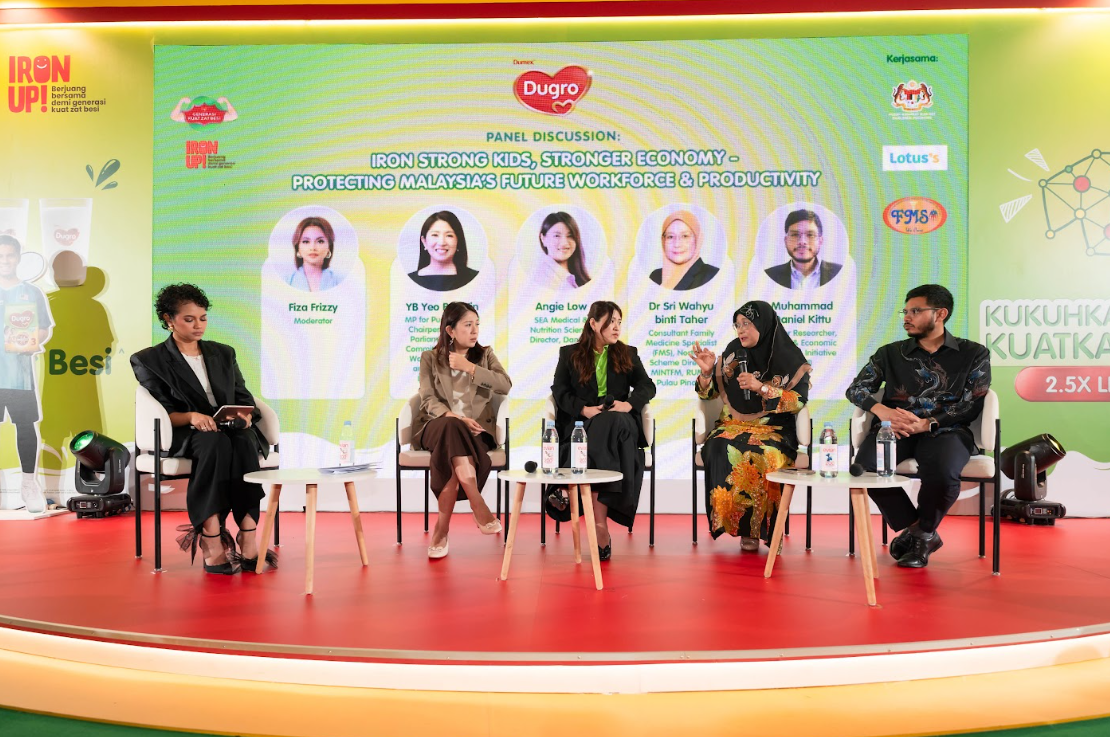
She added that early routine screening is critical while also devising nutritional strategies for children to curb IDA. Dr Sri Wahyu shared this during a panel discussion that was part of the Dugro Iron Strong Generation Arena roadshow at IOI City Mall, Putrajaya.
The discussion, titled “Iron Strong Kids, Stronger Economy – Protecting Malaysia’s Future Workforce and Productivity,” highlighted the need for systemic intervention. She was joined by Social and Economic Research Initiative senior researcher Muhammad Daniel Kittu, Puchong MP Yeo Bee Yin and Danone South-East Asia Medical and Nutritional Science Director, Angie Low.
Why iron matters
Iron plays an important role in early childhood development. It supports the production of healthy red blood cells, which carry oxygen throughout the body.
When iron levels are insufficient, the effects may extend beyond fatigue.
Studies have found that iron deficiency, particularly IDA, has a long-term impact on holistic brain development and is associated with lower IQ scores and poorer cognitive abilities in children with IDA, compared to normal children [2].
A 2022 study published by the American Academy of Pediatrics found that children with chronic IDA demonstrated cognitive scores six to seven points lower, even after four to 12 months of intervention, compared to children who are iron-sufficient [3].
These findings highlight the importance of adequate iron intake during childhood. As an essential nutrient, adequate iron intake supports stronger thinking and learning outcomes in growing children compared to those with chronic iron deficiency.
Low highlighted the scientific findings on IDA at the panel discussion. “90% of the child’s brain develops by age five. Evidence shows that IDA can have long-lasting and potentially irreversible effects on brain development if not addressed early.
“Children without IDA have been shown to score, on average, up to 13 IQ points higher than those with chronic iron deficiency. Research also shows that adequate iron supports up to 2.5 times stronger thinking and learning.”
On the broader economic implications of IDA, Muhammad Daniel explained, “When you scale the issue across our population, productivity losses linked to childhood IDA could be costing Malaysia approximately RM10.8bil, or 0.6% of gross domestic product (GDP) annually, based on 2022’s numbers applying a conservative assumption.
“This underscores its implications on the country’s long-term economic competitiveness, but it also suggests a significant generational investment opportunity that Malaysia is missing out on when we do not address IDA.”
Yeo echoed his sentiments, noting that the RM10.8bil figure should serve as a key consideration in national budget discussions, with greater emphasis placed on healthcare policies that address IDA at an early stage.
“The way I see it, investment in mandatory non-invasive IDA screening for children is one of the highest-return interventions in public health.
“Every child deserves the opportunity to thrive and reach their full potential. They will one day be contributing to our nation’s workforce and development,” said Yeo, who is also the Parliamentary Special Select Committee on Women, Children and Community Development chairperson.
Campaign built around awareness
Dumex Dugro has been instrumental in raising awareness of IDA and, recognising the scale of the issue, launched the Iron Strong Generation movement. Now in its fourth edition, the initiative aims to increase national awareness of IDA and equip parents with the knowledge and tools to take early action.
Part of the movement was the roadshow which took place from June 17 to 21. The event brought the IDA conversation directly to families, not only through the panel discussion but also hands-on activities designed for children aged one to six.
Among the highlights of the event were free, non-invasive haemoglobin screenings and iron intake assessments, to help parents assess their child’s IDA risk, as well as growth checks.
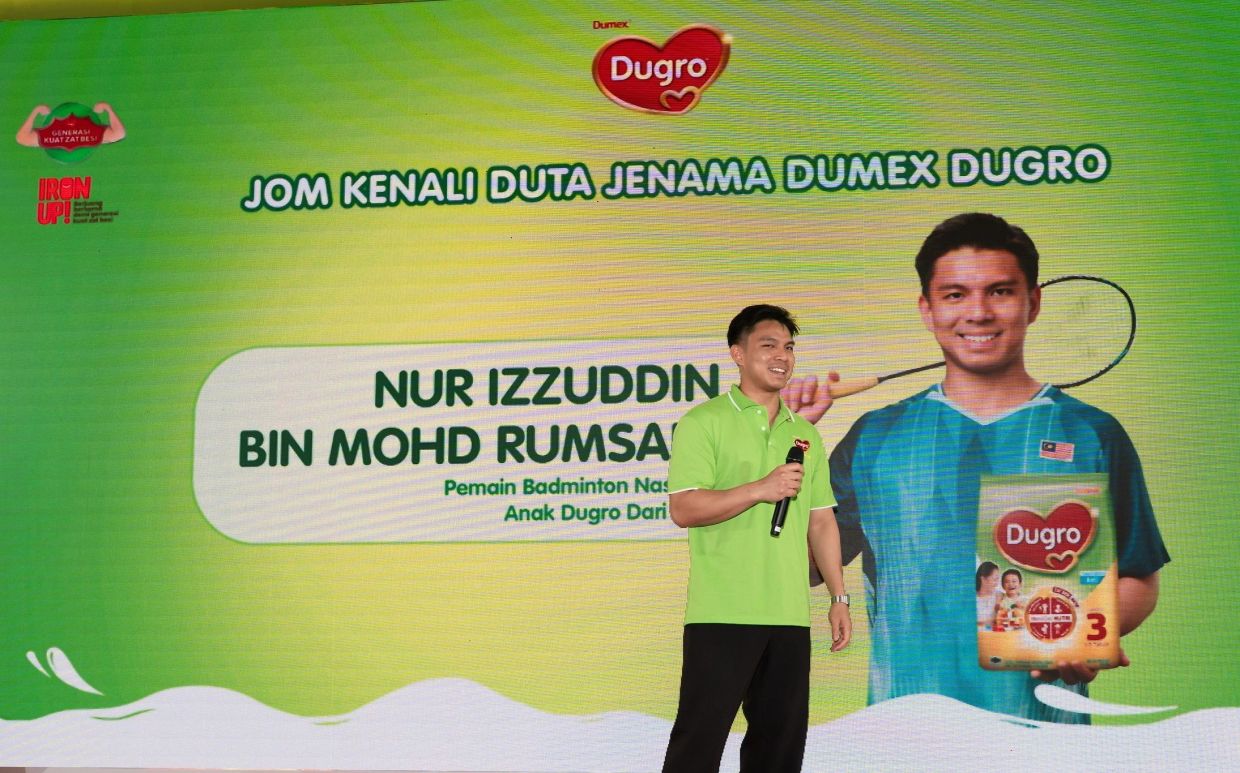
The event also marked the introduction of national men’s doubles shuttler Nur Izzuddin Rumsani as Dumex Dugro’s brand ambassador. Having grown up with the brand since 1999, the 28-year-old father of two said he would champion efforts to increase awareness among Malaysian families.
“When I found out about the impact of IDA on brain development, it really opened my eyes as a father.
“What stood out to me about Dumex Dugro’s Iron Strong Generation initiative is that they are going beyond awareness by making screening more accessible and helping parents understand this issue,” he said.
“That’s why I’m proud to be part of the IDA mission, to encourage more families to take that first step, because early action can make a big difference in our children’s future.”
For Danone, the past four years have been focused on bridging the gap between awareness and action through investments in science-backed solutions, expanded access to screening, and efforts to make IDA easier for parents to address.
Danone Malaysia and Singapore marketing director Yee Pek Kuan said the discussion underscored the fact that no single organisation can drive progress on its own. “When industry, policymakers, healthcare professionals, researchers, media and parents move in the same direction, that’s when real progress becomes possible.
“We will keep building that bridge, turning science into accessible solutions and reaching families earlier, while partnerships with icons like Izzuddin help us connect more meaningfully with Malaysians.”
Formulated with children's nutritional needs in mind, Dumex Dugro's latest range is designed to support iron intake as part of a balanced diet. The range also contains DHA, 21 vitamins and minerals, together with inulin, a natural source of fibre.
IDA is preventable and, when caught early, manageable. The first step is awareness – knowing the risk exists and taking action before developmental windows close.
Continuing the momentum, the Iron Strong Generation movement will extend to five roadshows in selected Lotus’s stores nationwide from July to November 2026.
References:
[1] Jalaludin et al. (2025). A noninvasive approach to assess the prevalence of and factors associated with anemia risk in Malaysian children under three years of age: Cross-Sectional study. JMIR Pediatrics and Parenting, 8, e58586. https://doi.org/10.2196/58586
[2] Zaky et al. (2021). The effect of Iron Deficiency Anemia on Intelligence Quotient in children. https://www.researchgate.net/publication/359147194_The_effect_of_Iron_Deficiency_Anemia_on_Intelligence_Quotient_in_children
[3] Gingoyon et al. (2022). Chronic iron deficiency and cognitive function in early childhood. American Academy of Pediatrics, 150 (6). https://doi.org/10.1542/peds.2021-055926