




For generations, oil palm cultivation has played an important role in many communities across Johor, sustaining families, funding education and anchoring community well-being.
In addition to well-known plantation names, this community of cultivators includes a large number of smallholders who play an equally important role in the industry.
Today, however, as technological innovation and strident stakeholder demands are compelling rapid transformation in the sector, independent smallholders are increasingly left behind.
For many of these family-run concerns, the current winds of change are too swift and strong. Demands on sustainable production have been hard to manage.
The industry’s pronounced sustainability shift has brought not just new requirements, but genuine uncertainty around certification, market expectations, and what it all means for the next harvest and the one after that.
Having worked closely with smallholders for many years, Johor Plantations Group Bhd (JPG) understands the challenges they face and recognises their important role within Johor’s palm oil ecosystem.
While JPG’s business remains anchored in upstream plantation operations, smallholders form part of the broader supply chain, contributing approximately 25% of the total fresh fruit bunches (FFB) processed by JPG in 2025.
This highlights the importance of supporting smallholders in strengthening their plantation practices, improving certification readiness and enabling them to participate more meaningfully in sustainable palm oil supply chains.
Through better adoption of Good Agricultural Practices (GAP), smallholders can boost productivity and potentially improve yields from around 12 tonnes to 18 tonnes per hectare annually.
As demand for certified, traceable, responsibly sourced palm oil continues to grow, Roundtable on Sustainable Palm Oil (RSPO)
certification has become increasingly valuable in helping smallholders remain relevant and connected to evolving market requirements.
In line with this, JPG has continued to support smallholders across the state in improving their yields sustainably.
This led to the Smallholder Inclusion Programme (SIP), which helps independent smallholders adopt improved agricultural practices and sustainable approaches to enhance their profitability, traceability and sustainability.
Supporting smallholders
through sustainable growth
SIP began in 2016 in collaboration with the Wild Asia Group Scheme (WAGS).
Through the programme, smallholders are trained in good agricultural practices (GAP), covering fertiliser application, pest management and the safe use of agrochemicals.
The ultimate objective is to guide independent smallholders towards achieving and maintaining Malaysian Sustainable Palm Oil (MSPO) as well as RSPO certifications by addressing key barriers such as certification costs, technical capacity, compliance requirements and documentation through a group certification approach.
These certifications carrypractical and financial value for smallholders. They demonstrate a commitment to sustainable practices, and serve as a gateway to premium pricing, preferential market access, as well as long-term supply chain relationships.
Once certified, smallholders are seen as more strategic partners to bigger plantations as well as to traders, who act as middlemen between them and the end buyers of their FFB.
To date, SIP has benefited 390 smallholders managing 2,000ha (5,000 acres) of oil palm plantations across Johor and a handful of traders who represent them.
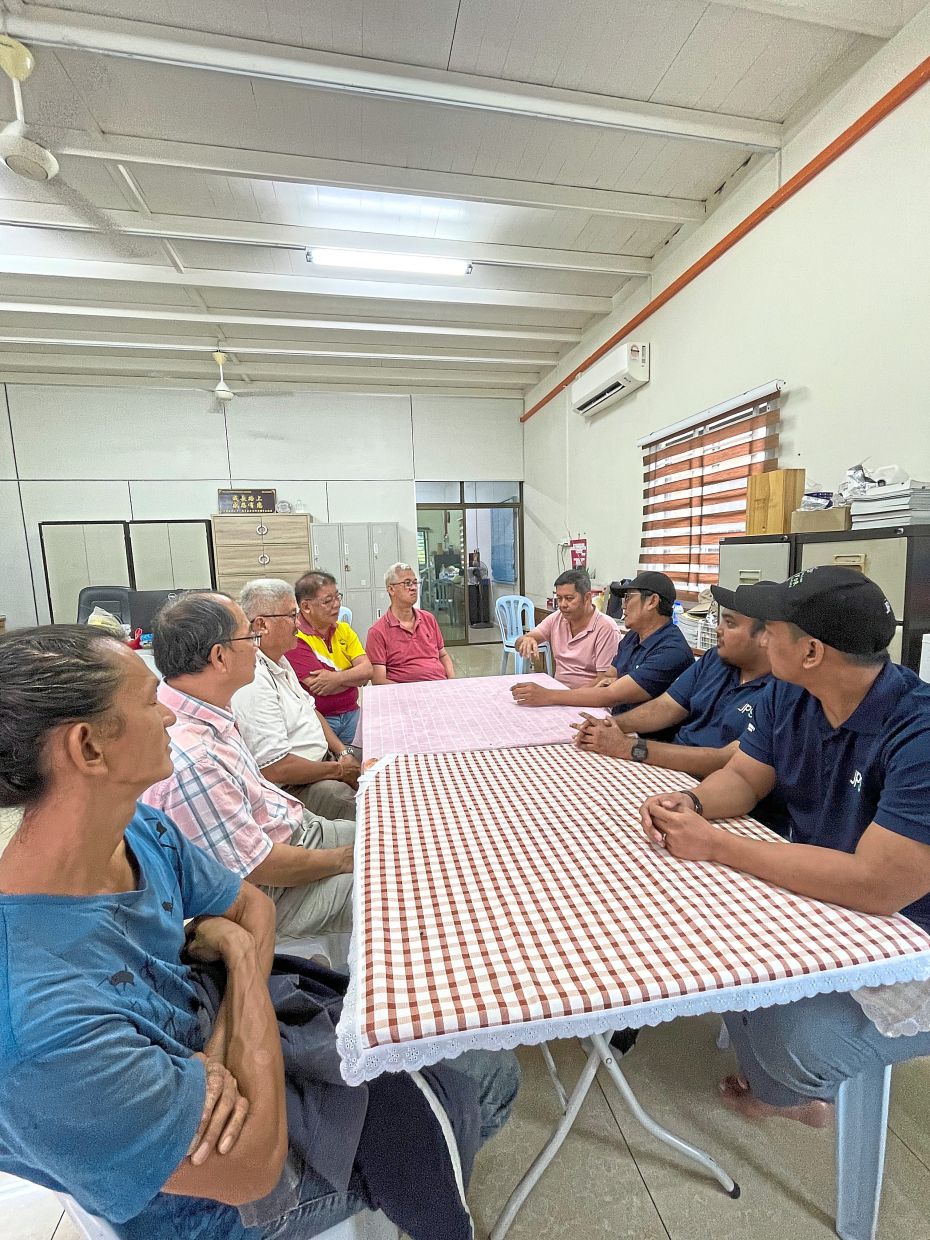
Eng Lee Heng Trading Sdn Bhd is one such trader. Its assistant managing director Eng Poh Wuu said: “I’ve witnessed remarkable progress among independent smallholders over the years.
“Beginning in 2020 with 108 independent smallholders obtaining RSPO certification, we now have 274 certified independent smallholders covering approximately 1,500ha (3,700 acres) of landbank who supply their fresh fruit bunches to JPG through our trader network.”
He believes that more smallholders are joining the programme because they have greater trust and confidence in it.
“In the early days, the certification process felt out of reach for many smallholders. The sheer paperwork alone was enough to discourage them.
“What JPG and WAGS did was stay patient, stay present and make the process work for smallholders, not just for auditors.”
Creating real impact for
families and communities
Lee Yen Bin spent three decades as an engineer in Taiwan before returning home to Kahang, Kluang and taking up oil palm cultivation in retirement.
He joined the SIP in 2018, initially uncertain about what the programme could offer.
“Since joining SIP, I have gained valuable knowledge and practical skills in plantation management, particularly in areas such as fertiliser application, spraying techniques, and other sustainable best practices,” he said.
“More importantly, the programme has improved my income, as traders are able to channel our FFB directly to JPG at better prices, alongside the benefit of premium incentives. SIP has not just helped us to earn more but made us better in managing our plantations sustainably, efficiently, and productively.”
As the supply of certified FFB from smallholders increased, JPG continued to play an active role in supporting sustainable practices through participating traders.
Through SIP, smallholders were able to receive higher premium incentives for certified FFB, bringing direct benefits to them while encouraging wider participation in the programme.
For smallholders supplying consistent FFB volumes, the premium differential can add up significantly over the course of a year.
It certainly is a boon to Lim Lee Kiat, another smallholder who currently manages 6.5ha (16 acres) of land in Kahang, Kluang. He transitioned from rubber cultivation into palm oil about 20 years ago due to declining rubber prices and interest among younger generations in rubber tapping work.
“Oil palm provides better and more stable income opportunities for my family. The income from harvesting FFB has helped me support my children’s education and household expenses,” he said.
With the premiums received, Lim earns a monthly income of approximately RM6,000 to RM7,000.
Building a sustainable
palm oil future together
As the palm oil industry continues to evolve, the future of sustainable palm oil will not be shaped by companies alone.
It will depend on how successfully the industry grows together with the communities and smallholders who form its foundation.
Multistakeholder programmes such as SIP that support and empower smallholders will have an increasingly important role to play in this journey.
For its part, JPG will continue to encourage more smallholders across Johor to adopt sustainable practices by participating in SIP thus strengthening their plantation management, improving their sustainability readiness and unlocking their long-term potential.
Making certification more accessible, the group will contribute to enhanced livelihoods among independent smallholders and rural communities.
In this manner, it will also create better opportunities for future generations, underlining sustainable communities for years to come.
To learn more about SIP and how it supports independent smallholders, contact enquiries@johorplantations.com


