For the past month, KL Festival has sent audiences to wandering through downtown Kuala Lumpur, with discovery and exploration becoming as much a part of the experience as the arts performances and pop-up events themselves. For its final weekend, the festival also shifts from the city's streets and heritage buildings to one of its most beloved green lungs.
Amid the lush surroundings of Perdana Botanical Garden (formerly known as Lake Gardens), a bamboo playhouse has been transformed for this weekend (May 30 and 31). Draped in kelambu nets, illuminated by projection mapping and filled with hypnotic sounds, the structure has taken on a dreamlike new identity.
Visitors to Ruang Antara Mimpi, a multisensory installation by Selangor-based creative outfit Tapir Studio, can step inside this immersive world. Moving through the structure in small groups, they navigate 24 "dream rooms" filled with curious objects, scattered messages and small radios playing recordings of people - from migrant workers to delivery riders, students to office workers - describing their dreams in the big city.
The installation is the result of a collaboration, bringing together creatives from the experimental music, film, theatre, digital art and sound design scenes, including Dhan Illiani Yusof, Bryan Chang, Vasflow (Mohamad Nazrin), Kamal Sabran, Irfan Mustafa, Pouya "Andrei", Ridhwan Saidi and Mohd Naeem.
It is, in effect, an all-star behind-the-scenes line-up. One of the most enduring aspects of KL Festival’s programming is its ability to bring together diverse creative energies to the table.
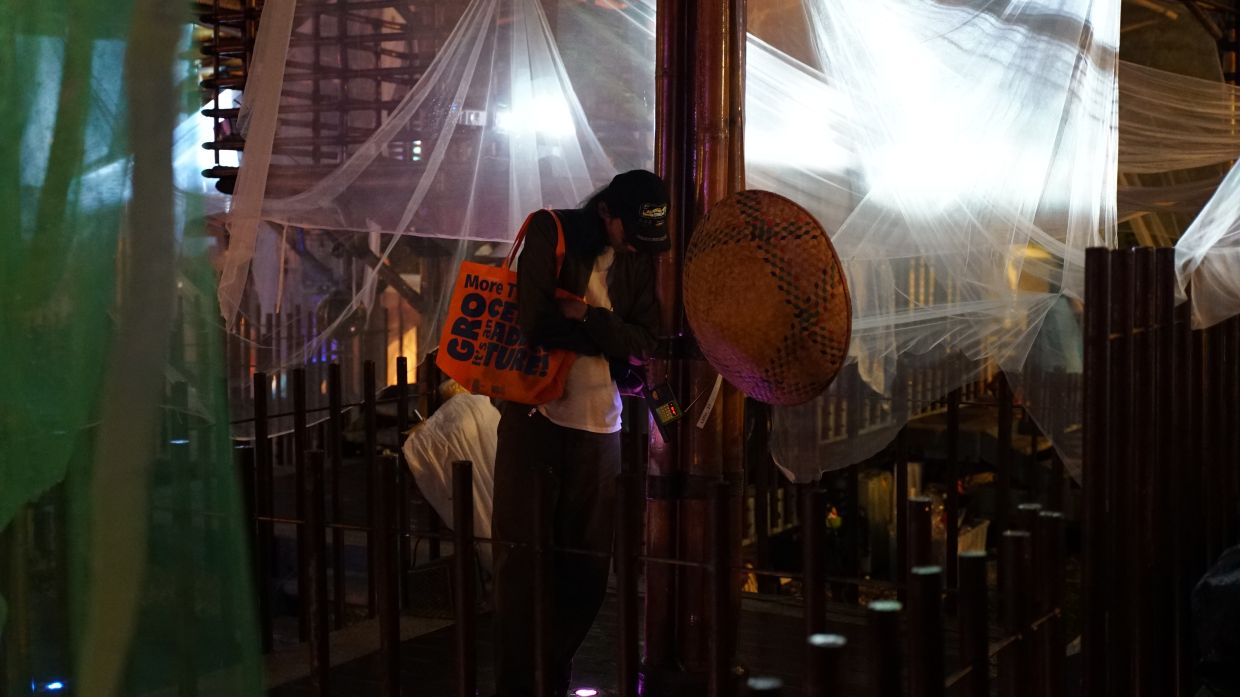
"What stood out to us about Bamboo Playhouse was its contradiction. Designed by Eleena Jamil, the structure was both indoor and outdoor at the same time. Both rigid and playful, natural and yet so so modern. And we felt this spatial tension, was very much what dreaming was like - where you’re neither here nor there. A state of in-between. Life and death," says Taha during a media preview on Friday.
Ruang Antara Mimpi reimagines the team's earlier project, Tidur Lambak, which was inspired by communal sleeping.
Art director Dhan says this latest iteration grew from the idea of a city dreaming alongside the quieter dreams of its inhabitants.
"Having already established the DNA of our recurring kelambu nets as a kind of skin that traps dreams, this iteration, aptly titled Ruang Antara Mimpi, grew organically from Tidur Lambak. Rather than focusing on communal sleeping itself, it shifted towards exploring dreaming in its entirety, something more incorporeal, cerebral, and spirit-like. To me, it raised the question of aspiration: what is the difference between mimpi and impian?," says Dhan.
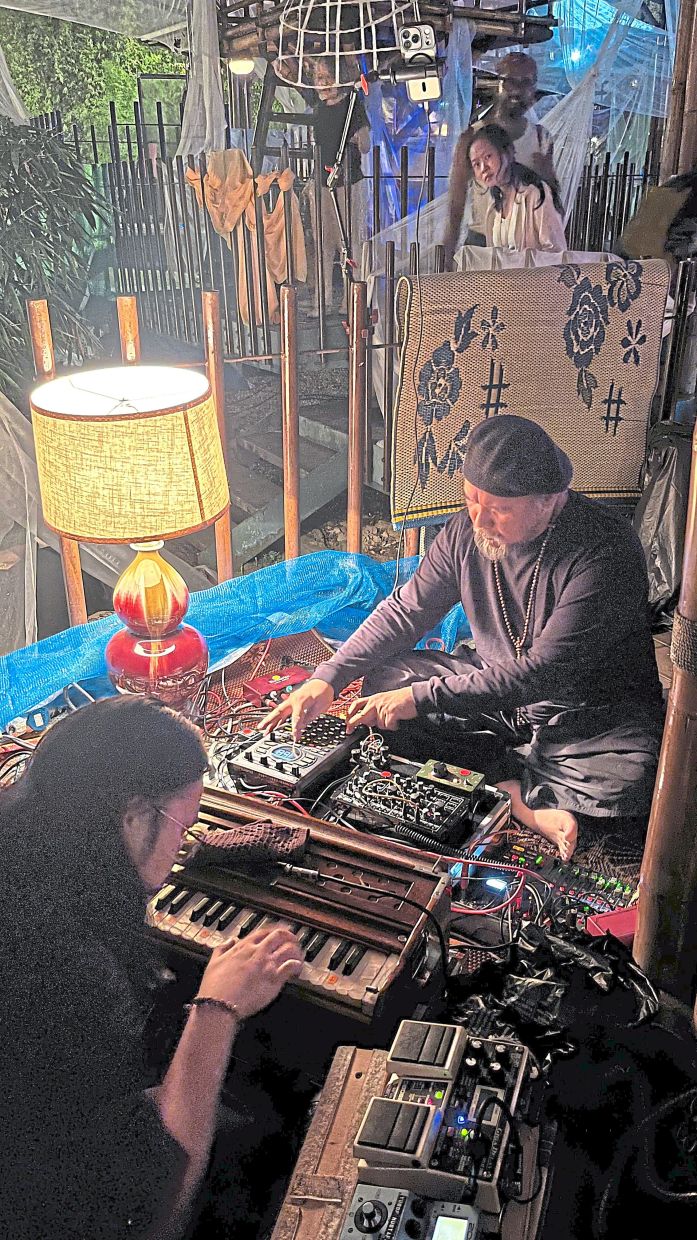
Ruang Antara Mimpi offers a conceptual portrait of Kuala Lumpur, drawing on recorded dreams shaped by fear, hope, desire and inhibition. Like dreams, the city holds these aspirations and anxieties, even as they are often overlooked.
"It felt natural, then, to introduce objects and elements that appeared slightly out of time or out of place, forming a kind of dream junkyard where fragments of memory, desire and imagination could coexist," says Dhan.
The installation, best experienced after sunset (open 7.30pm), is underscored by live organic electronic soundscapes by Kamal Sabran, often described as a sound shaman, and shifting projections by Vasflow, creating a reflective environment within the lush surroundings of Perdana Botanical Garden.
"The software I use (TouchDesigner) tends to lean more toward abstraction, and the concept of the installation being connected to dreams complements that really well," says Vasflow.
"Most projection mapping is usually mapped onto physical or more solid structures, but the nature of cloth and semi-transparent materials makes it feel less rigid and allows for more flexibility. I also often use soft-edge techniques in areas where I want the visuals to fade more naturally or remain subtle," he adds.
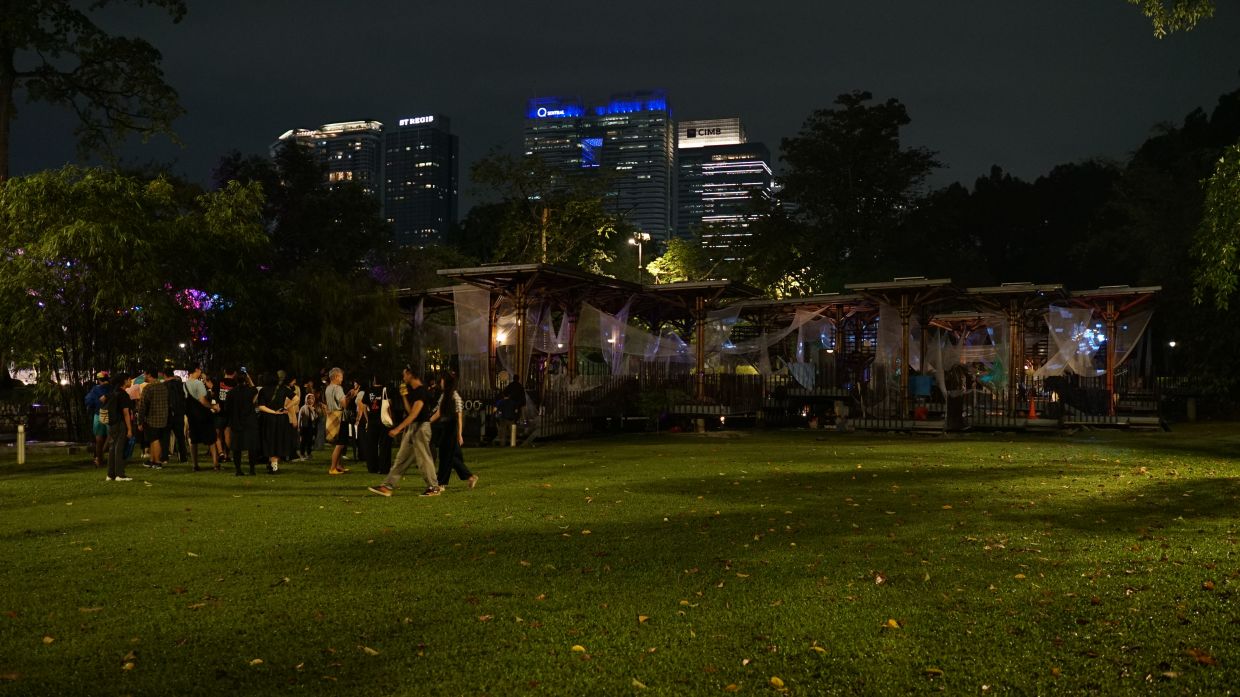
Though the installation is only open for the weekend, it demonstrates how overlooked urban spaces can be transformed through collaboration and imagination. The project also highlights growing opportunities for creatives across disciplines to turn unlikely structures into temporary art playgrounds, joining the expanding ecosystem of new media art venues in the city.
For Hafreez, the Bamboo Playhouse's unusual setting - nestled within a park, beside a lake and framed by the city's skyscrapers - became a recurring point of discussion throughout the creative process.
"I think it’s a good practice among the creatives or people from different industries to come and work synergistically in achieving their shared vision. They get to learn and understand the many different methods and approaches in creating something by working together, as well as build a stronger network that contributes to the industry’s growth," he concludes.
There are three nightly time slots (7.30pm, 8.30pm, 9.15pm) for Ruang Antara Mimpi. While fully booked, organisers will manage crowd flow and accommodate additional visitors in the event of drop-outs.