Set inside the raw, warehouse-like setting of the KongsiKL arts space in Kuala Lumpur, the upcoming show A Journey Through Bardo is a rock-driven immersive performance that explores death and the idea of passage.
The Mandarin language production, running from May 29–31, pulls audiences into a shared experience that goes beyond traditional theatre.
Arguably, A Journey Through Bardo is not an immediately straightforward production. But for its creators and the team at The Razors Experimental Theatre, the intention is not to provoke discomfort for its own sake, but to open up a space for reflection on something most people would rather avoid.
“People don’t usually talk about death, letting go, and our consciousness,” says Sam Koh Eng Keat, the show’s music director, who is also a metal guitarist and effigy artisan. “But these things are a part of life.”
It is an instinct with deep cultural roots. The word “bardo” is most commonly associated with Tibetan Buddhist philosophy, where it refers to the transitional phase between death and rebirth.
In many Chinese traditions, particularly those influenced by Taoist and Buddhist practices, death is understood as a process rather than a single moment.
Funerary rituals such as chanting, offerings and the burning of paper effigies are intended to guide the deceased through transitional states and ensure safe passage into the afterlife.
These practices sit alongside a strong cultural reluctance to speak about death directly. This tension between embedded ritual knowledge and avoidance is part of what makes bardo both intriguing and uncomfortable.
Rituals and reflections
Seen in this light, A Journey Through Bardo does not so much introduce a foreign idea as reframe a familiar one, bringing it into a contemporary artistic context.
Taking place at KongsiKL's experimental space, the show brings together Koh's background in music and traditional paper effigy craft, with direction by veteran theatre practitioner and writer Chin Wai Kong. The production also features actors Tan Tok Yue and Moey Fu Ken.
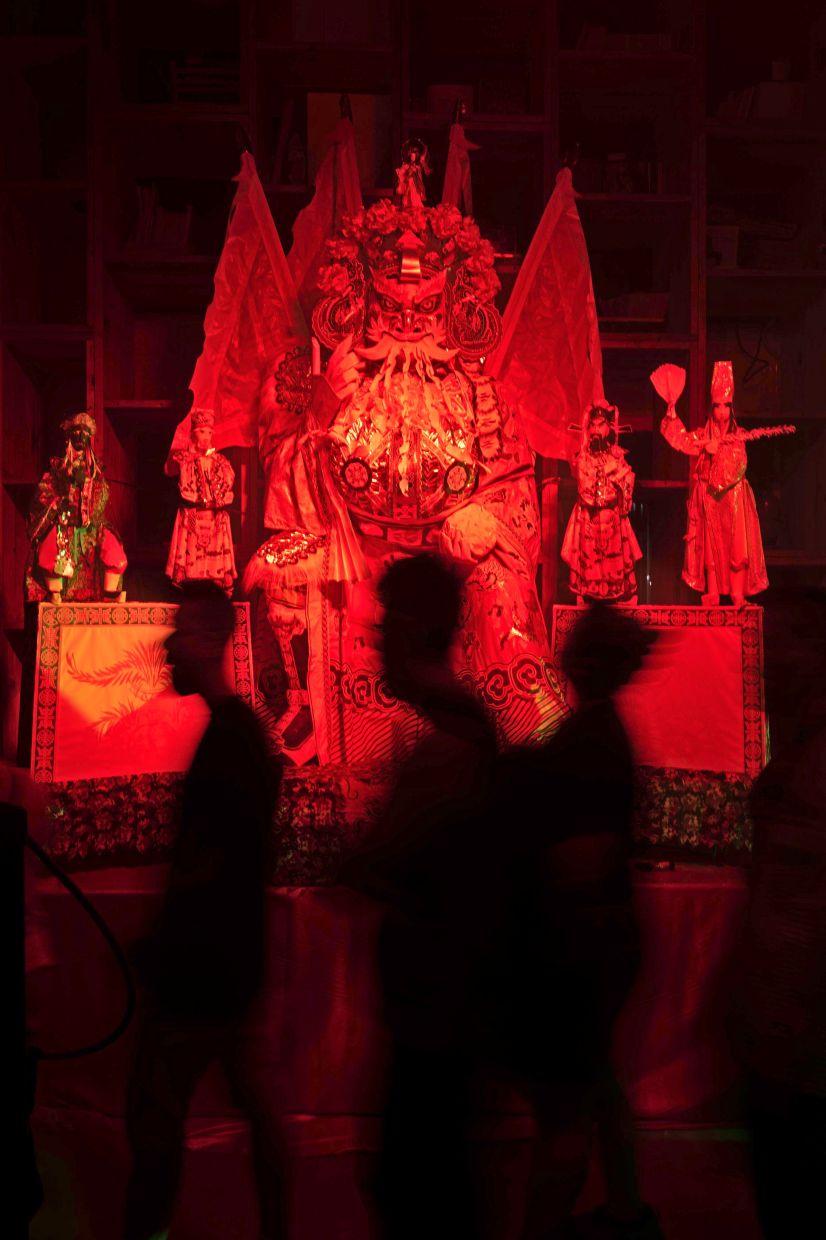
For Koh, the production is not an abstract meditation on death pulled from imagination alone. A fourth-generation craftsman, he has been helping his father make paper effigies since the age of 10, and remains one of the few traditional effigy makers still practising in Penang today.
He speaks candidly about handling coffins, working as a mortician, witnessing funerals, and sitting with death in its most practical and immediate forms. It is an intimate practice that requires patience, ritual and cultural sensitivity and an acceptance of mortality as part of everyday life.
From this deep familiarity emerged a larger question: what does it truly mean to let go? Koh first translated this exploration into an artistic form through Bakawali: An Atypical Journey, which premiered at the George Town Festival in 2023.
Director Chin was drawn to the emotional and atmospheric intensity of the piece.
"I was shocked," he recalls. "I've known Sam for more than 20 years, but I had never seen this side of his work before. I immediately started imagining a theatre version of the piece.”
Over the past two years, Koh and Chin have been in ongoing collaboration, developing the work beyond its origins in music and installation into an immersive performance. Their conversations moved between research into cultural rituals and reflections on their own understandings of consciousness, release and transformation.
“For this show, the idea is about sending away your consciousness,” explains Koh.
“Not your life, but your consciousness. You imagine letting go of everything that is weighing on you.”
For him, consciousness extends beyond the human self.
“Everything has consciousness itself,” he says. “Even the chair, the leaf, everything ... if you want to imagine that way.”
Yet because the idea can become so expansive, the duo narrowed its focus toward the consciousness of living beings, imagining what it might mean to release that consciousness “to an ideal utopia somewhere else.”
That premise shapes the structure of the performance, which unfolds across seven chapters, each corresponding loosely to stages of the bardo.
Structure and surrender
What followed was a collaboration that evolved into something neither party had attempted before.
Musicians are no longer confined to supporting roles, but step into the performative space, actors are not responding to words, but to a live, shifting soundscape and audiences are drawn directly into the work. The result sits somewhere between a rock performance, a ritual procession, and an immersive theatre experience.
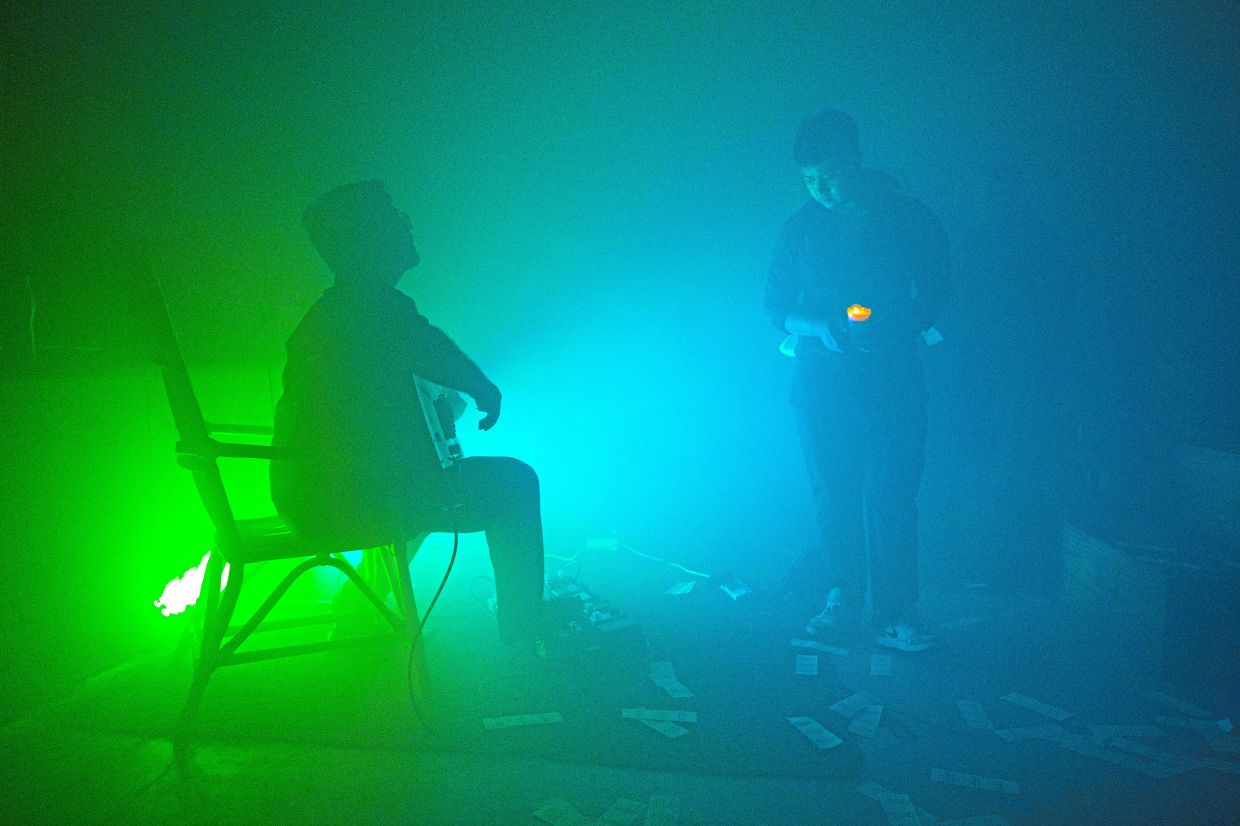
“There is no dialogue,” explains Chin. “Everything is built through energy, through engagement with the music, movement and atmosphere. My role is to connect these elements so the audience can move through it as one continuous experience.”
The performers describe the work less as a play in the traditional sense, and more as a shared encounter that resists full rehearsal and fixed interpretation.
“You just have to break loose,” says actor Tan. “Energy cannot be controlled. Every night is different, and the experience changes depending on the audience.”
Even among the musicians, the process marks unfamiliar territory.
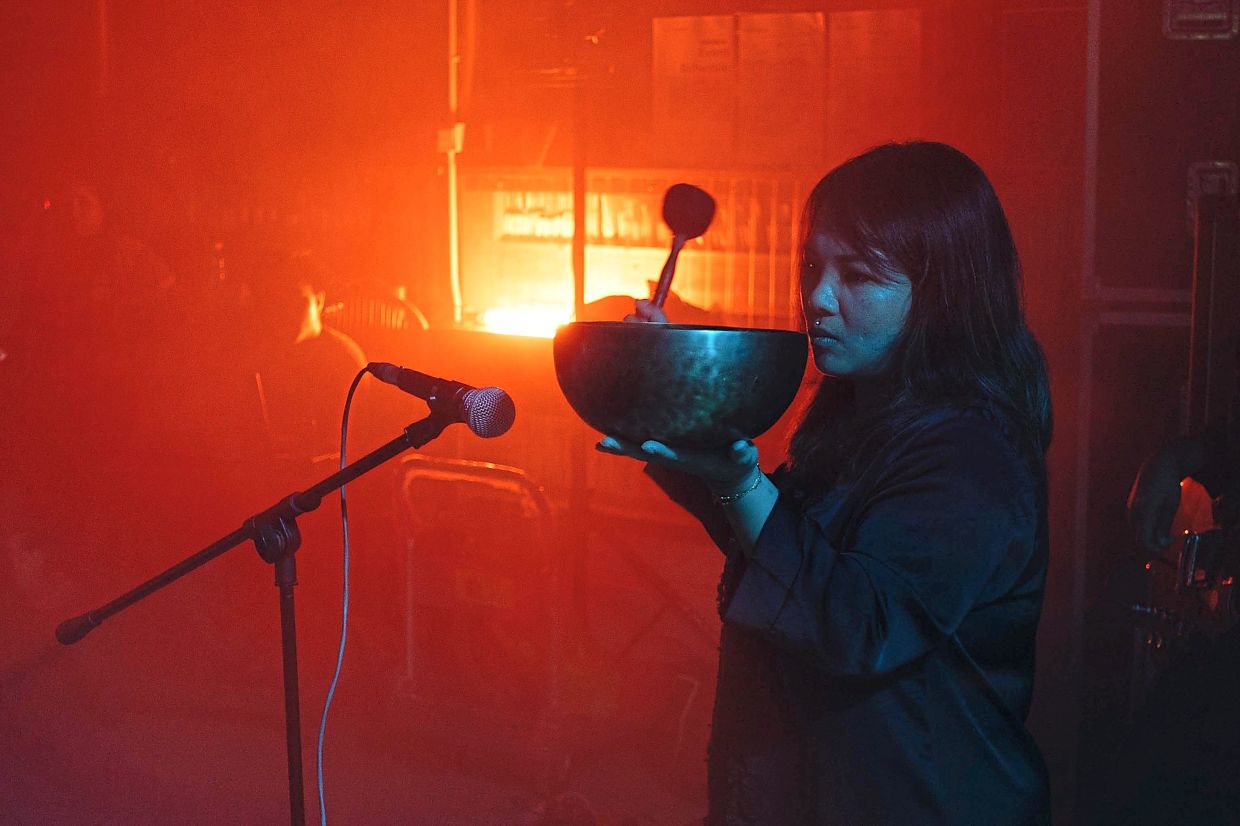
Rock performances, for all its apparent abandon, typically operate with a band on stage, audience watching and the fourth wall intact. What this production dismantles is precisely that safety. The musicians are no longer performing at the audience but alongside them, inside the same experience.
Band frontman Ho Kah Hoong reflects on the shifting dynamics between stage, performer and audience.
“It’s quite a new thing for me,” he says. “We’ve been running a band for more than twenty years, but this is the first time we’re performing with actors. At the same time, we are also becoming part of the performance.”
He pauses on the shifting dynamic between stage and audience.
“The band members, the actors – we are all part of it. And the audience is not separate either. The audience becomes part of the action.”
That blurring of roles reshapes the entire logic of performance.
“That’s the challenge,” he adds. “You cannot hide behind anything anymore.”
The balance between structure and unpredictability, control and surrender, is what gives the work its edge.
“You cannot fully plan this kind of thing,” says Chin. “You prepare, but when it happens, it depends on the energy in the room.”
Beyond the surface
For some, the imagery of effigies, ritual and funerary symbolism may feel unfamiliar, even uncomfortable. The creators are careful to stress that the work is not bound to any single belief system.
"It’s more about creating a space where people can imagine what consciousness is for themselves," says Koh.
The effigies, he adds, are deliberately open-ended.
“They can represent anything. It depends on what you see. It’s your understanding, your experience; you place the meaning onto it.”
The same applies to the idea of the “funeral” at the centre of the piece.
“It’s not about ending your life,” says Koh. “It’s the opposite. It’s about being honest with yourself and asking, if there is something you can let go of, why not do it this way? Why carry everything all the time?”
Despite its heavy symbolism, audience responses have often been unexpectedly emotional.
“We’ve seen people cry,” the performers say. “Not because the show is sad, but because they feel a sense of release.”
That response is worth sitting with. What the show offers is a frame: familiar enough to feel true, strange enough to let you encounter it differently.
For some audiences, that distance is exactly what makes the release possible.
“You come into this world alone,” says Koh. “And you leave alone. So maybe, sometimes, you should also live for yourself.”