A series of fantastical wooden creatures and paintings filled with topical Malay folk tales have given Galeri Puteh in Kuala Lumpur a mythical atmosphere, offering art lovers a welcome break from screen time and a chance to embrace dreamtime.
Titled Inherited Souls (Pusaka Jiwa), the exhibition brings together works by sculptor Tengku Sabri Ibrahim and his wife, painter-educator Mastura Abdul Rahman. It is a glimpse into two artistic worlds shaped by decades of shared life and creative exchange.
Joint exhibitions that bring together different artistic mediums often carry an added sense of dialogue and intimacy, and this show embraces that spirit fully, as colourful sculptures and intricate paintings fill the gallery space in ways that complement one another while retaining their own distinct voices and sensibilities.
“Making art has been a constant ever since our student days, as we built a life together,” says Tengku Sabri Ibrahim, 65, in a recent interview at Galeri Puteh.
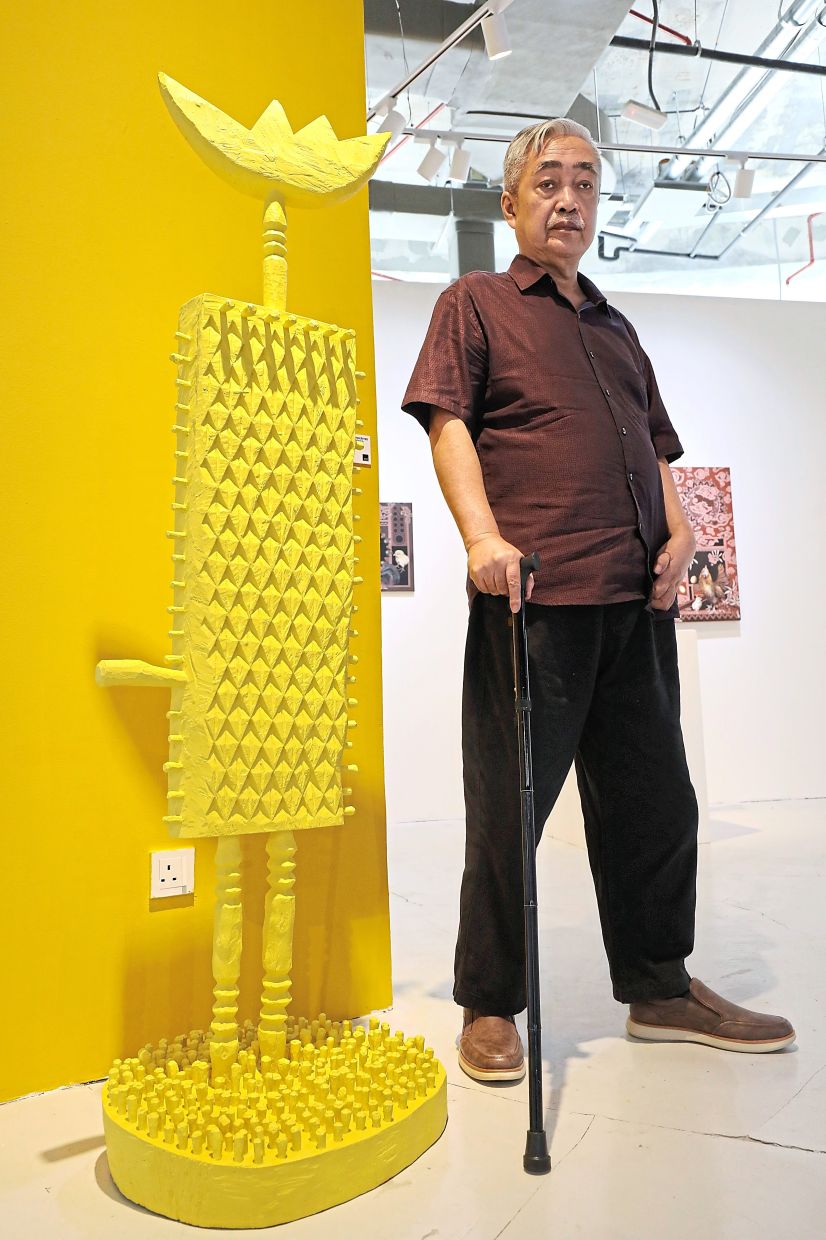
“In presenting this exhibition, we feel we are, in some way, fulfilling the aspirations of those who came before us – continuing a legacy together,” he adds.
The Inherited Souls exhibition, running until May 31, features 27 wall and floor sculptures from Tengku Sabri alongside 20 paintings from Mastura.
It is the latest show to chart a relationship that began in the early 1980s, when both artists were fine art students at the MARA Institute of Technology (now UiTM) in Shah Alam.
Tengku Sabri, who is also a writer-poet, created these sculptures at the duo’s welcoming Studio Pohon Rendang space in Puchong, Selangor, which doubles as a studio-gallery, library and mini publishing office that he shares with Mastura.
“While we have separate spaces to make our art – him at his workshop outside while I paint in the studio – the process involves a lot of discussion, comments and suggestions, becoming part of our daily conversations. We are honest in our feedback and do not let disagreements affect how we want to make art,” says Mastura, 63.
Inherited Souls is also a heartwarming exhibition, especially as Tengku Sabri and Mastura have found a way to balance their roles as grandparents while bringing a grandchild along for the chance to exhibit together.
The show includes 12 drawings by the couple’s eldest grandchild Tengku Yasmin Naraya, affectionately known as Yaya. Born in 2017 in Tangerang, Indonesia, she showed early signs of neurodivergence and was diagnosed in 2025 with ADHD and autism.
“Drawing is her way of staying focused, and she would often ask us to sit still while we are reading. We wanted to nurture her artistic confidence while also raising awareness of ADHD to the public," says Tengku Sabri.
Family, art and resilience
In 2014, Tengku Sabri survived an ischemic stroke that left his left side paralysed. While he could no longer undertake the physical demands of sculpture-making, he kept art at the centre of his life.
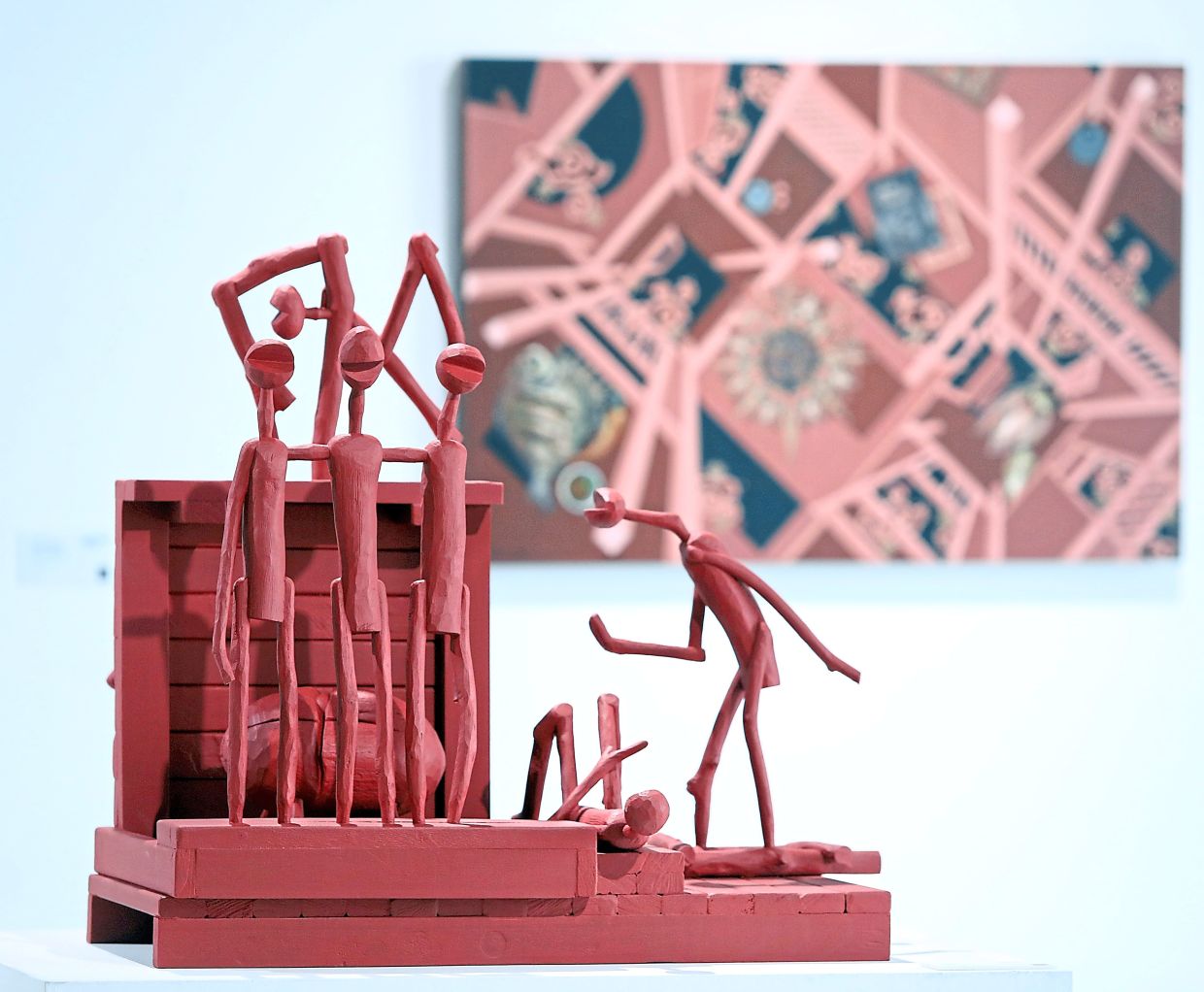
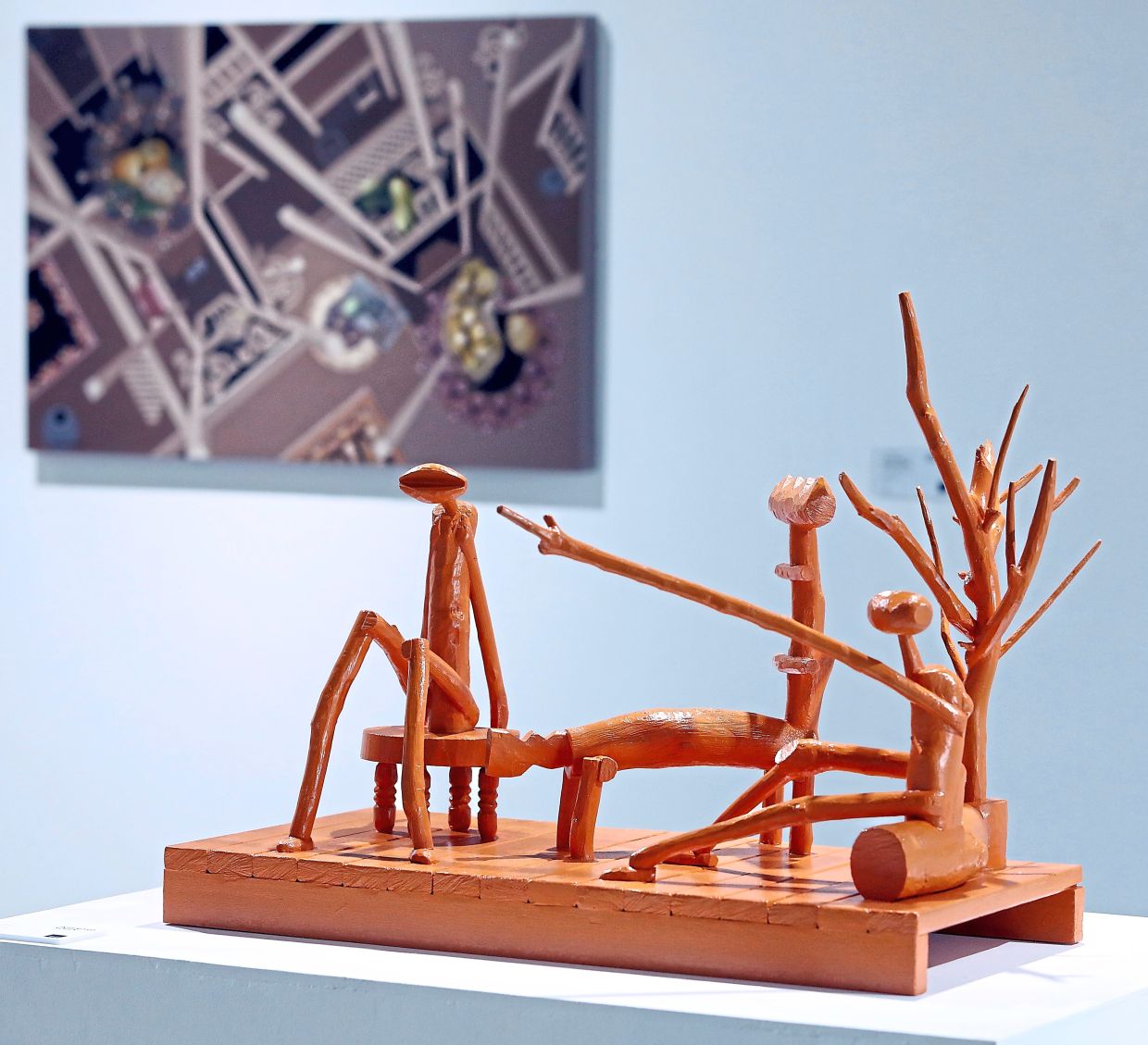
For Inherited Souls, all sculptures were carved by studio assistant Mat Ramli, working from the artist’s sketches and diagrams.
“The eagerness to create sculptures was still there, and I’m still able to do simple tasks like drawing with my right hand, sanding the sculpture and painting. At the start, directing someone else was a bit awkward and there were some misunderstandings, but we eventually got the rhythm,” says Tengku Sabri.
Each sculpture is finished in a single colour – blue, yellow, orange, black or white. Their subjects draw from old world histories and folk stories told by his grandmother, who lived by the sea in Terengganu and collected tales from passing travellers. Works such as Gagak Kapal, Albatross Berduri and Perentas Lautan reflect his familiarity with seafaring life, while allowing imagination to further shape their form.
“Growing up, I heard many stories from my grandmother and other elders about life at sea. For instance, a crow appearing on a mast was said to signal nearby land due to its sharp eyesight.
"There were also superstitions, such as the belief that killing an albatross would bring a curse and misfortune to a ship – a motif also found in Samuel Taylor Coleridge’s late 18th-century Romantic poem The Rime Of The Ancient Mariner. These are the kinds of stories I want to carry forward in my art,” he says.
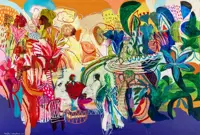
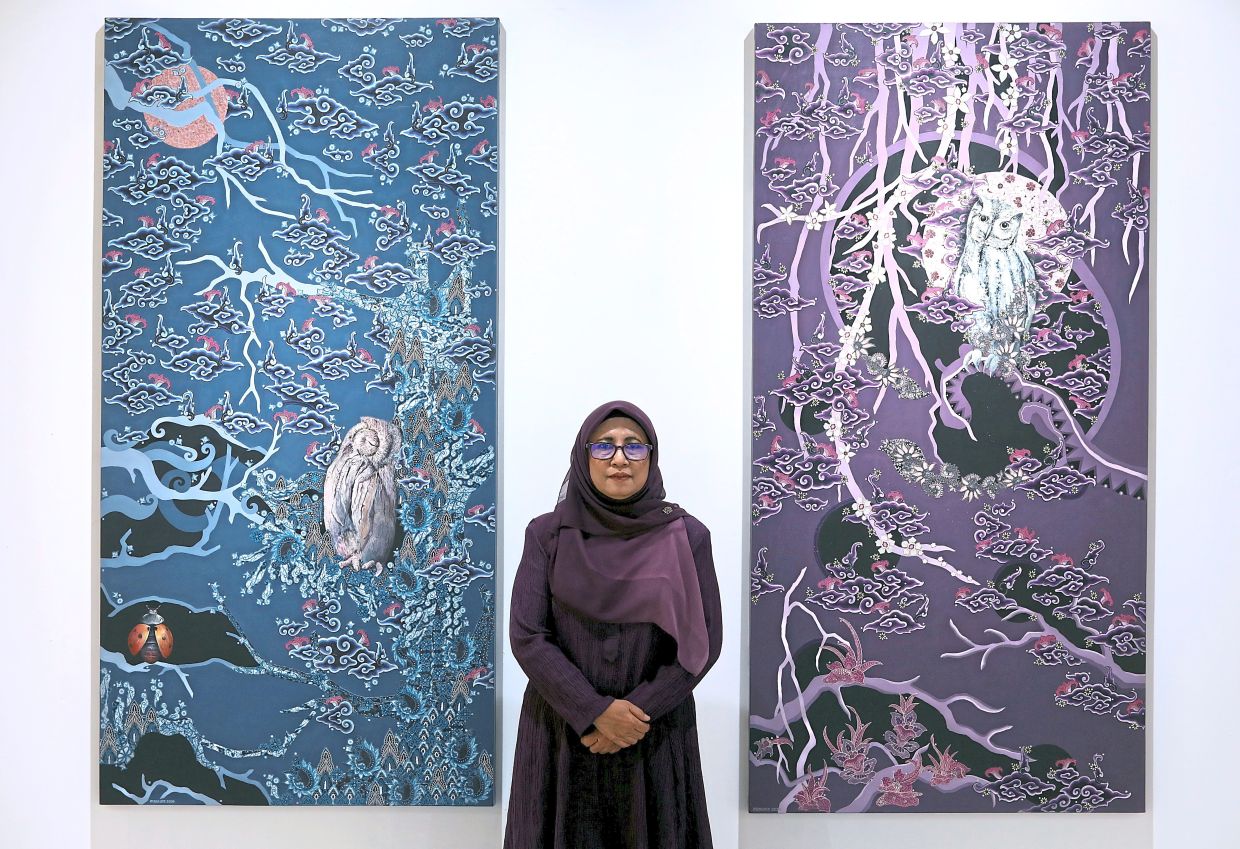
Complementing the sculptures are Mastura’s mixed-media collages, paintings and batik textiles, drawing on the visual language of East Coast folk traditions.
Her works construct narratives through motifs and symbols, interwoven with poetic Malay prose and reflections on familial ties and mother–daughter relationships, as seen in her Pesan Ibu: Alam Dijaga, Petua Diingat exhibition in Kuala Lumpur in 2023.
“In my work, I seek to translate literature into visual form, drawing on Malay culture, which is rich in stories, practices and mysticism. Most importantly, I aim to highlight strong female figures – such as (Kelantanese folklore legend) Putri Sa’dong – emphasising her perseverance and tenacity in governing her kingdom. These women also assert their own forms of integrity, often distinct from their male counterparts,” says Mastura.
At Galeri Puteh, she is showing a series of seven paintings titled Ceritera Putri Sa’dong, which narrate the life of Tuan Puteri Sa’adong, adopted daughter of the 16th-century Kelantan queen Paduka Cik Siti Wan Kembang. The artist traces each element of the works in sequence.
“The series begins with her birth, followed by her adoption by Paduka Cik Siti Wan Kembang to help govern the kingdom. It then depicts her marriage to Raja Abdullah, during which they ruled and prospered together. This continues until the Siamese king takes interest in her and attacks the kingdom, prompting Putri Sa’dong to surrender to protect her people.
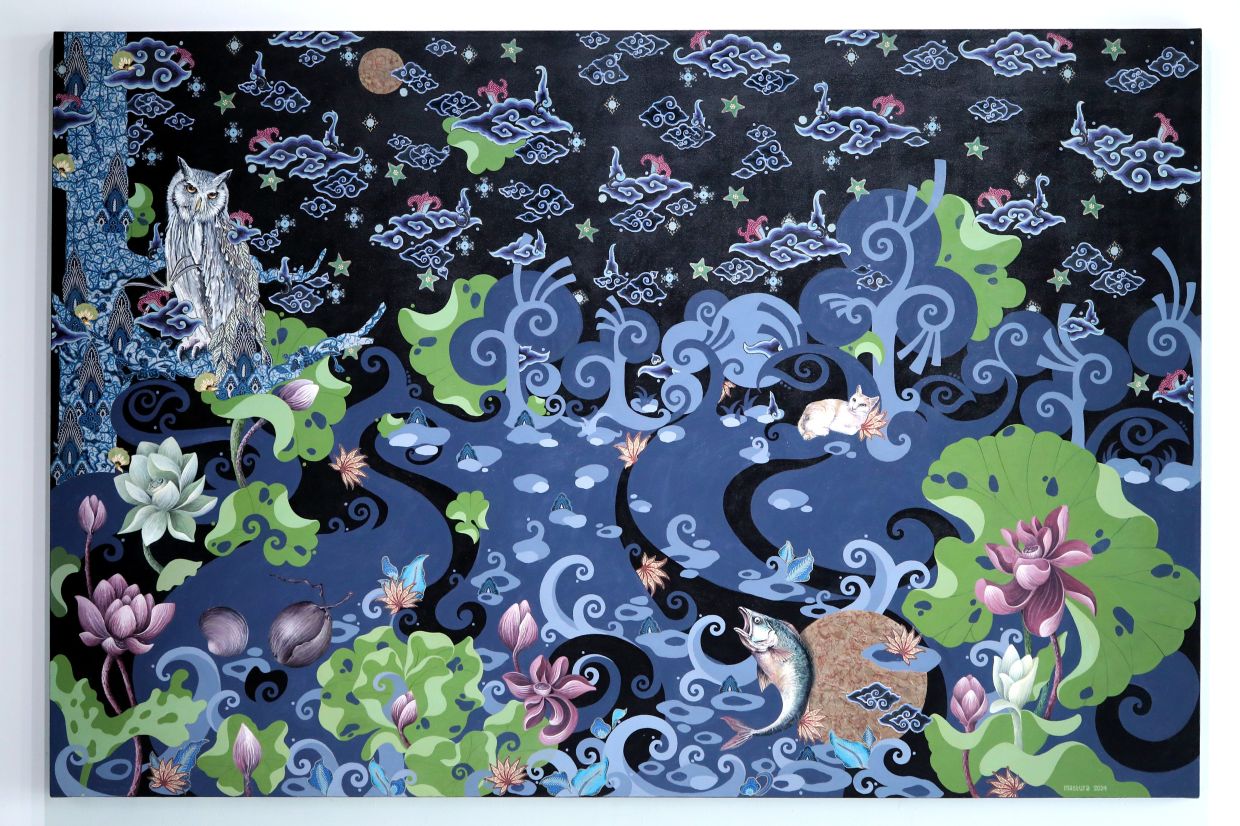
"While held captive, she is said to have poisoned the king using her nails – linked to Mak Yong performance – causing a severe rash. She eventually negotiates her return home, only to discover her husband has remarried. The final painting shows her retreating into the forest,” she explains.
Inherited Souls has drawn both followers and past students of Tengku Sabri and Mastura – long regarded as inspiring mentors – as well as newcomers discovering their practice for the first time.
It is a throwback show that avoids feeling dated, and Galeri Puteh’s programming has been carefully shaped to balance nostalgia with contemporary relevance.
"I think today, audiences, especially the younger generation, also deserve the opportunity to discover and reconnect with artists who may have contributed so much earlier on, but are not always given visibility anymore. Sometimes galleries move too fast chasing trends, but we feel there must also be space for legacy, dialogue and appreciation," says Nizam Rahmat, Galeri Puteh founder and curator.
"For us, it’s important that the gallery becomes a platform where different generations can coexist and speak to one another," he concludes.