AN EXHIBITION exploring the psychology of art and how creative expression can interpret emotions, decode behaviour and support healing has brought together 10 women artists in Ipoh, Perak.
Titled “Seri: Woman Perspective – Voice of Our Time,” the showcase features Perak-based artists examining identity, emotional expression and social reflection through contemporary art.
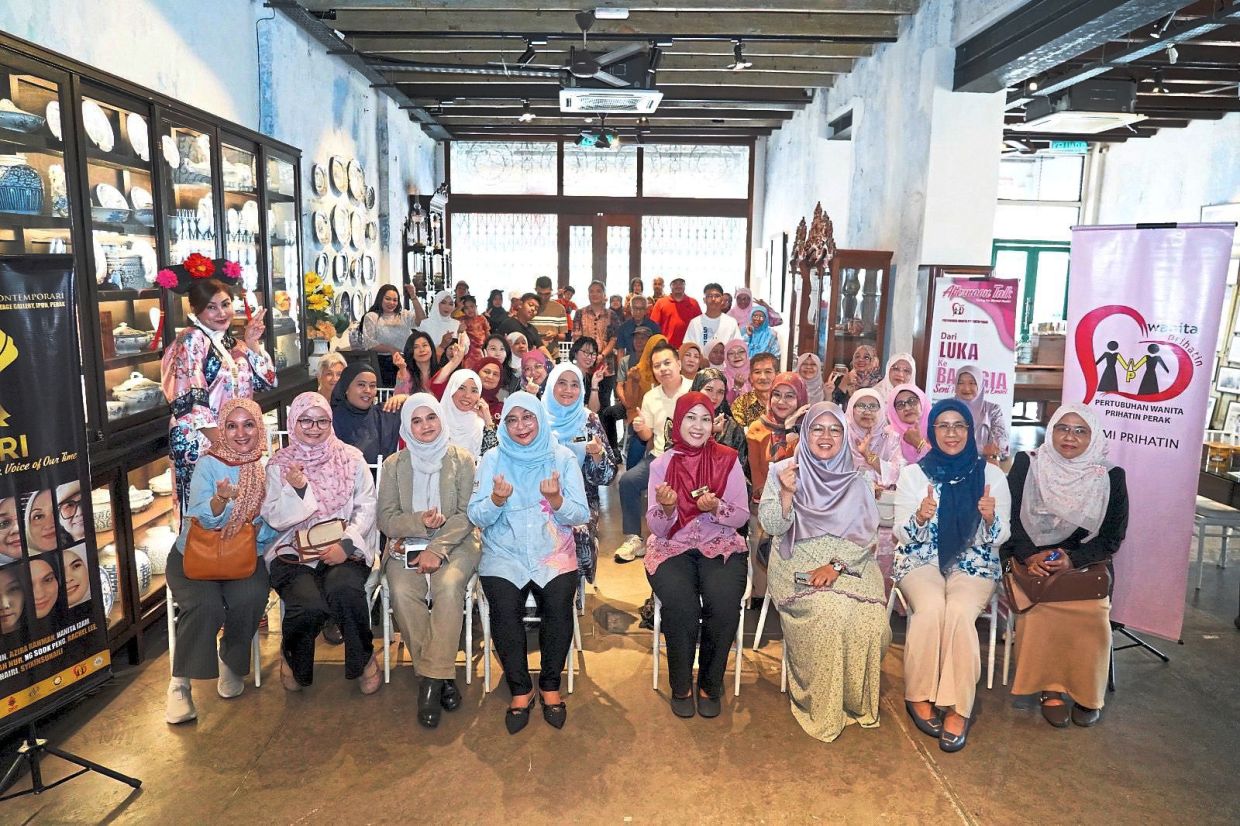
Featured alongside was a talk organised by the non-governmental organisation Pertubuhan Wanita Prihatin Perak.
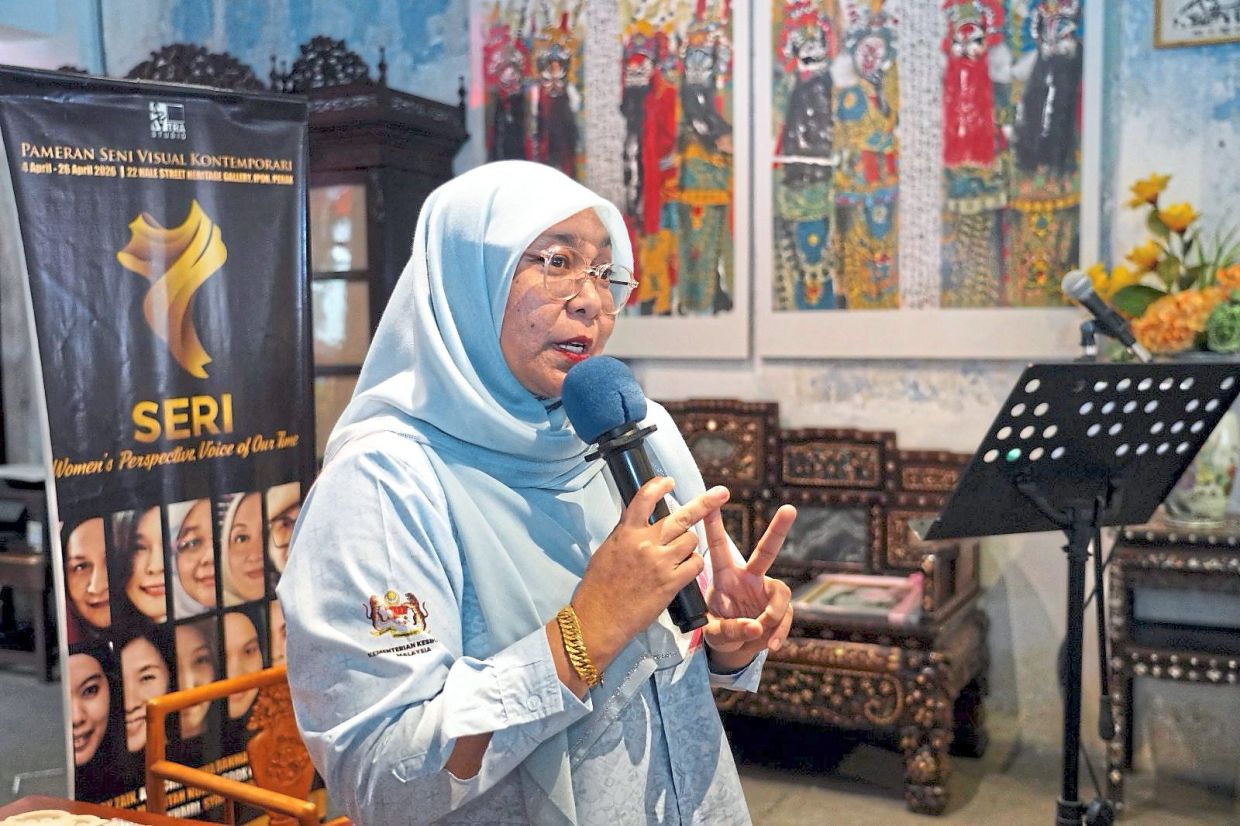
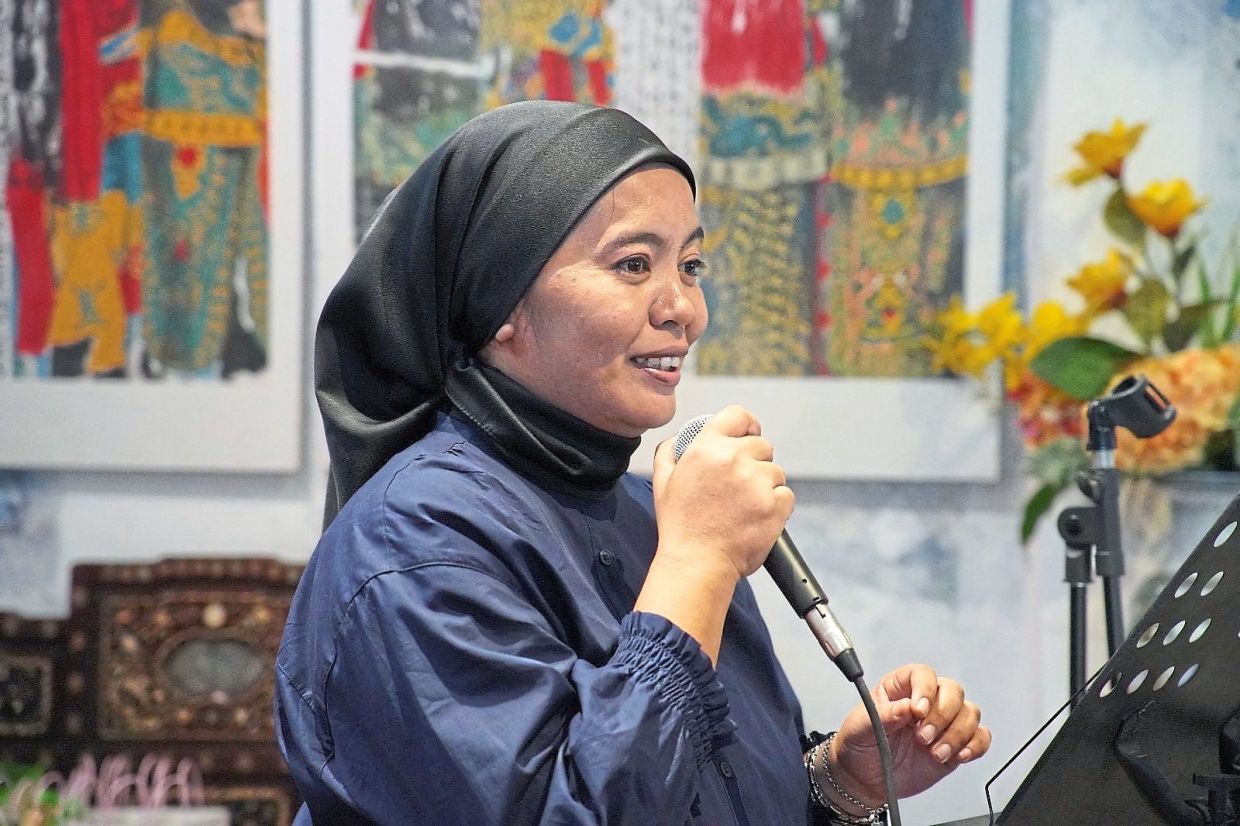
The talk themed “From Pain to Healing: The Art of Emotional Recovery” was presented by Health Ministry’s Sultan Azlan Shah Training Institute psychology officer Rahilah Abdul Rahim.
During the talk, Rahilah told participants how artistic expression could be used as a therapeutic tool to access emotions which were often difficult to articulate verbally.
She introduced the Art Drawing House-Tree-Person (ADHTP) technique where participants were asked to draw a house, a tree and a person as a method of reflecting inner emotional states.
“The ADHTP technique is commonly used in psychological assessments,” she said, explaining that even simple drawing exercises could reveal past emotions and current psychological needs.
Rahilah also highlighted the use of colour-based activities – where participants select colours that resonate with their emotions, allowing for a non-verbal expression of feelings.
She said colour preferences could provide an insight into emotional states and behaviour, helping individuals better understand themselves and those around them in daily life.
Rahilah said some trauma survivors were unable to verbally express their experiences, making conventional questioning methods less effective.
“When asked to share their experiences, some individuals remain silent or respond only with brief ‘yes’ or ‘no’ answers, limiting meaningful communication,” she said.
To address this, she relies on colour-based exercises as a therapeutic entry point.
“I will place several colours in front of them and ask them to choose one and share it with me,” she said.
“From there, we begin exploring their feelings.”
During the session, Rahilah explained the symbolic interpretations of colours.
She said red was associated with energetic and perfectionistic traits; green was linked to emotional sensitivity; blue reflected empathy and compassion and white was associated with individuals who might be easily influenced.
She added that drawings of houses, trees and human figures could also provide psychological insights, including emotional boundaries, family dynamics, and personality traits.
Rahilah said such approaches were particularly useful in sensitive cases, including trauma, where drawing analysis could help professionals better understand emotional experiences.
The exhibition, held at 22
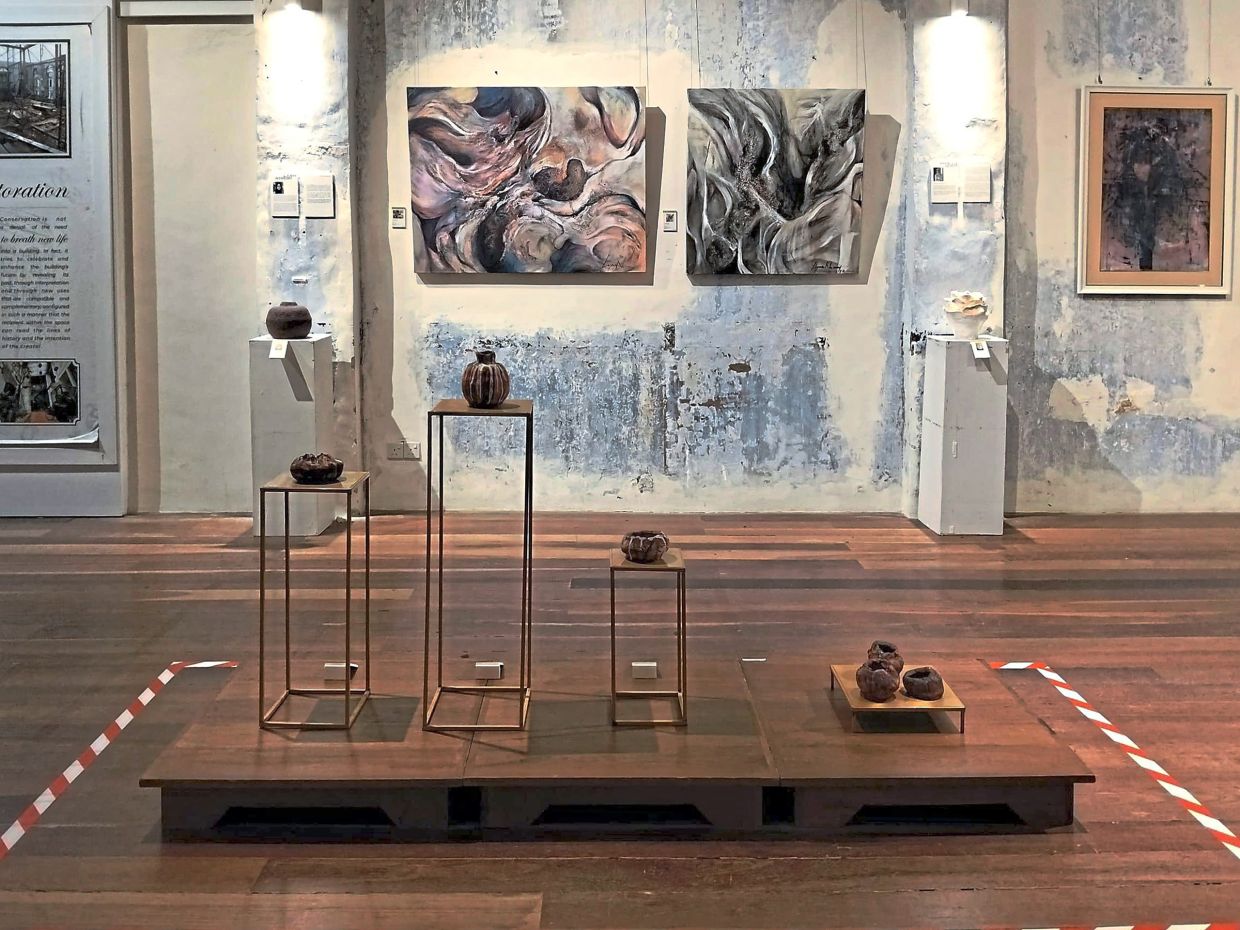
Hale Street Heritage Gallery in Ipoh, showcased 24 paintings and six ceramic- and clay-based sculptural works.
The events was also organised in collaboration with the Perak Artists Association and Malaysian Perak Art Society, with support from the Perak Creative Fund.
Project director and participating artist Mashitah Nur Sabaruddin said the exhibition comprised both full-time practitioners and those pursuing art out of passion.
She said the exhibition not only served as a platform to amplify women’s voices in contemporary visual art, but also highlighted art as a powerful medium for social reflection
and emotional healing – both relevant in today’s society.
Also present was Wanita Prihatin chairman Norzita Rabaai.
Women’s voices in art
Mashitah described her piece, “Cempaka Permaisuri” as a deeply introspective interpretation of femininity, memory and lived experience through contemporary visual art.
She explained the artwork was a reflection of an inner voice shaped by personal
memories, emotions and life experiences.
“The artwork explores the idea that women’s voices do not always need to be bold or explicit to be powerful, but can exist in more subtle, layered forms,” she said.
“In my work, the feminine voice is gentle but resilient. That strength is not defined by force, but by how one carries personal narrative and emotional depth.”
Inspired by the bunga cempaka, Mashitah used the flower to represent femininity, cultural identity and quiet strength.
“In this exhibition, women’s voices are not singular.
“Some are loud, some are quiet, but all are valid and meaningful,” she added.
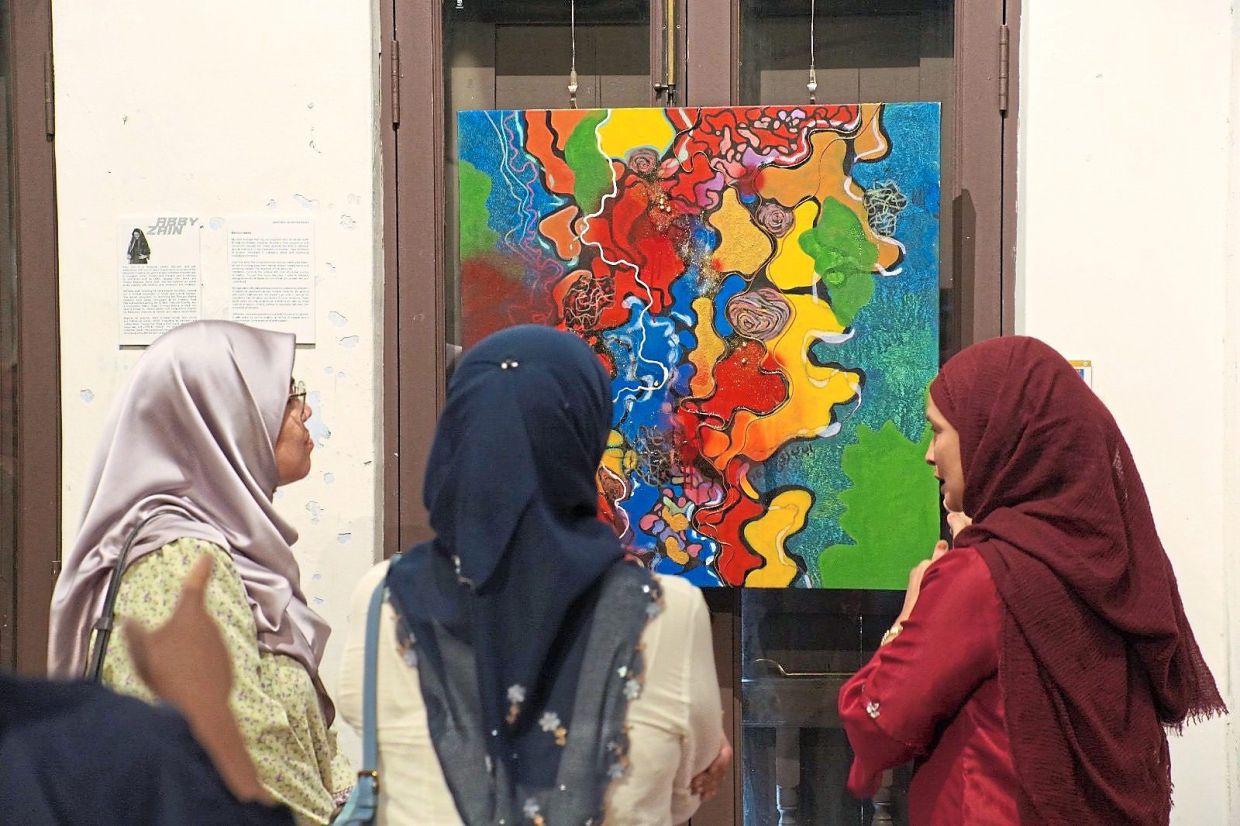
Arbaayah Mohamad Zain, 61, who has two decades of experience as an artist, uses her work to bridge personal expression and community healing –
highlighting how art can serve as a powerful tool for emotional awareness.
Reflecting on her latest exhibition titled “Emotion Series”, she said her creative journey had evolved beyond personal fulfilment into a platform benefitting a wider audience.
“Art is not just for me. It has to benefit everyone,” she said, emphasising that art should be accessible to all, even those without formal training.
Arbaayah’s career is multi-faceted.
She is an artist, writer, illustrator and art entrepreneur, who consistently draws inspiration from her surroundings – including social, political and emotional experiences.
She said artists, regardless of their gender, tend to be deeply sensitive to the world around them.
This awareness often shaped their work, said Arbaayah.
She said art had played a crucial role in helping her navigate difficult periods in her life.
“Art has taken me from very low points to a place where I can now feel proud to survive, to stay persistent and to share messages about emotional connection,” said Arbaayah.
Her latest works were inspired by her involvement in training programmes under the Human Resource Development Fund where she served as a coach and trainer for adults.
“During these sessions, I introduced participants to neurographic art, a technique using free-flowing lines and colours to help individuals process emotions,” she said.
“The method has proven particularly effective among participants dealing with anxiety and emotional distress,” she added.
Lydia Chew, 54, uses her artworks to explore themes of freedom, emotion and self-expression.
She draws inspiration from both personal experiences and historical influences.
She said her piece entitled “Freedom” symbolised liberation, likening it to birds which had long represented humanity’s desire to live unrestrained.
She deliberately designed the piece with an aged aesthetic to reflect how the concept of freedom has long been embedded in human expression, dating back to ancient times when early communities depicted birds on cave walls, mountains and rocks.
“From the past until today, people have valued freedom. Everyone wants the freedom to live without being controlled,” she said.
Beyond acrylic painting, Chew also experiments with unconventional mediums such as
coffee art, where she creates her own pigment using specially prepared coffee paste.
She said while coffee art was typically done using strong brewed coffee, she has developed her own formulation to achieve unique tones and textures.
Ceramic artist Ng Sook Peng, 59, said as a single mother, her days were filled with work, her children and household chores.
She said when her children were younger, they needed even more of her time for homework, guidance and attention.
“By the time they slept, I was tired, but my passion for art kept me going,” she said.
“From midnight to 2am, I paint my ceramic sculpture in the quiet of the night,” said Ng.
“No matter how busy life gets, my love for art never fades.
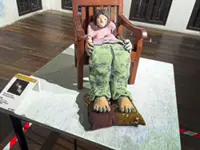
“In the exhibition is one of my works, depicting tired mothers titled ‘The Exhausted Mother’,” she pointed out.
She said the ceramic figure portrayed a woman worn down by constant care, her melting form reflecting both physical and emotional fatigue.
“Perched on a chair, she exists in a fragile pause between rest and continuation, and the distortion of her body speaks not of failure, but of endurance making visible the quiet resilience of motherhood,” said Ng.
Healing art therapy
Perak Women and Community Development Secretariat director Jamilah Zakaria referred to Rahilah’s art therapy concept and said that it played an important role in emotional healing and mental well-being, especially for women and vulnerable groups.
She said that artworks often expressed both personal emotions and broader social experiences.
“Meanwhile, rising stress and depression − particularly among women − remain a growing concern as many focus heavily on work and financial survival at the expense of their emotional well-being.
“Art therapy is widely recognised as effective psychological support, including in government and community programmes under Perak Sejahtera 2030,” she said in her speech when closing the art exhibition.
“It is also used by psychologists and counsellors to understand emotional states, especially in children.
“This is important in sensitive cases such as child protection and sexual abuse, where drawings can help reveal trauma and provide key psychological insights for professionals,” said Jamilah.
Norzita, in her speech, said art was not just about aesthetics but also an expression of emotion.
She said even simple doodling during work meetings served as a natural outlet for stress and boredom before individuals returned to their daily responsibilities.
“It is important to address mental health challenges amid increasingly busy and stressful lifestyles, so such programmes can help individuals better understand and manage their emotions.
“I hope more of such programmes are held regularly as a community-based approach to mental well-being and empowerment,” Norzita added.
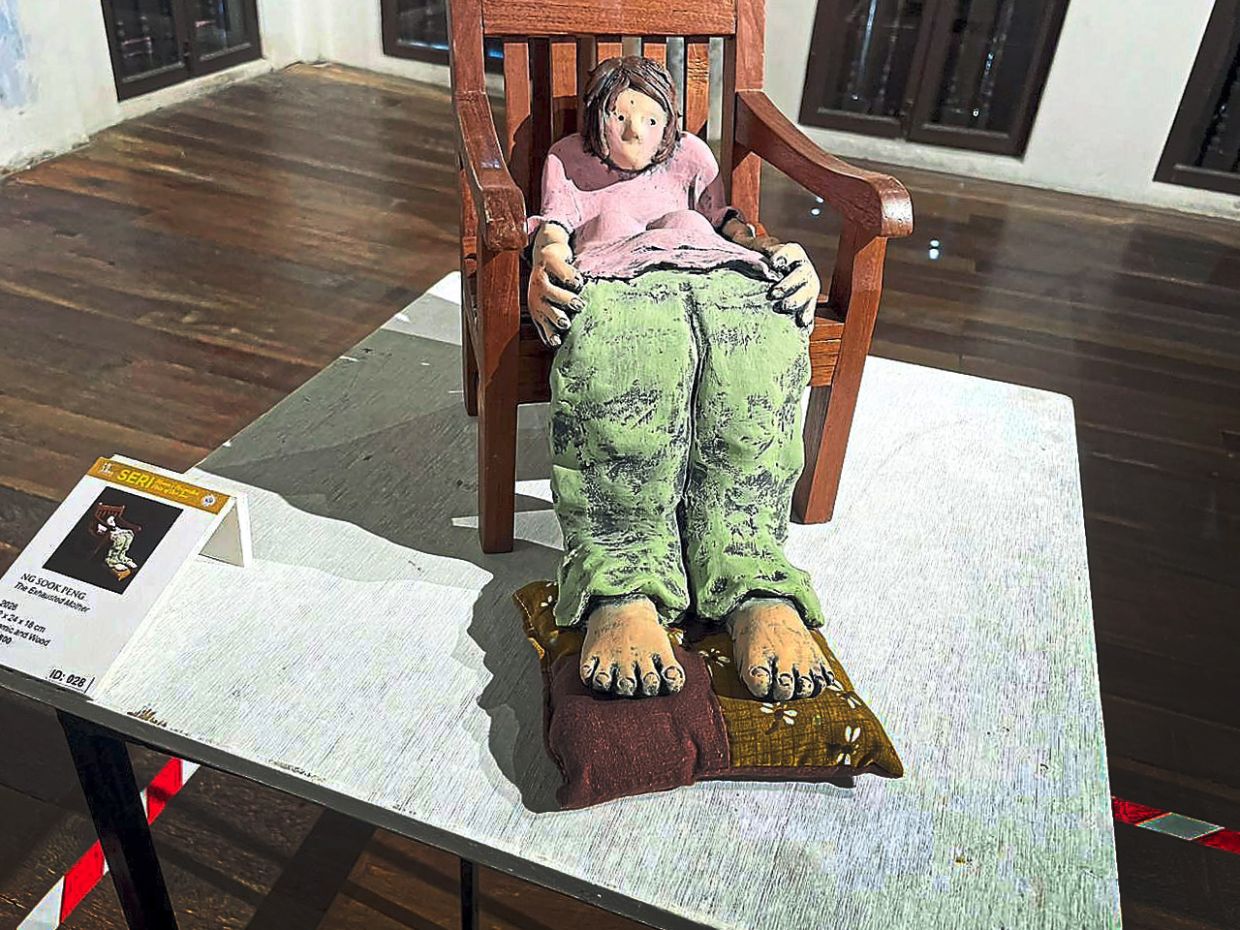
Ng’s depiction of tired mothers in her vision of ‘The Exhausted Mother’.
Participants at the ‘Caring for Mental Health’ talk, held alongside the ‘Seri: Woman Perspective – Voice of Our Time’ art exhibition. — Handout
Arbaayah (right) explaining her painting to Jamilah (left) and Rabaai. — Handout
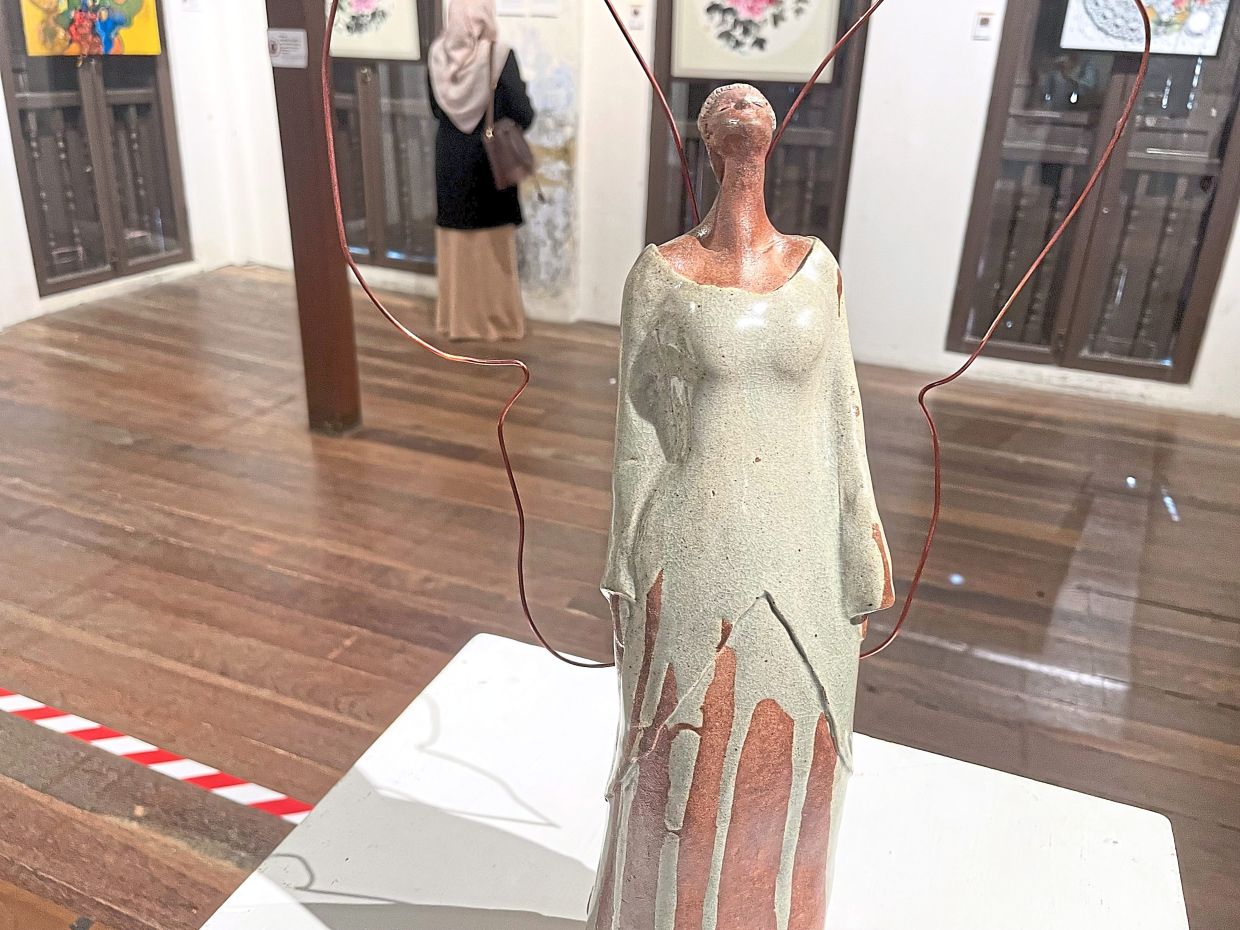
Ng’s ceramic creation titled ‘Wings in Waiting’ is one of the exhibits.
Rahilah talking about the role of art therapy in understanding emotions and behaviour.
Mashitah says women’s voices are gentle but resilient.
Some of the artistic works on display at the exhibition. — Handout