The audience fell silent, their attention captivated as Orang Asli performer Ndang Seliman blew a wistful melody into the nose flute, known as the pensol.
Ndang, 24, of the Semai people, then recited her Bahasa Malaysia poem Tanpa Alam, Siapa Kita (Without Nature, Who Are We) at Cipta Seni Incubator's 2026 celebration event, held recently at Five Arts Centre in GMBB in Kuala Lumpur.
Powerful and evocative, the poem explores the Orang Asli's close ties to the forest and how it forms a core part of their culture.
During the poetry and musical performance, Ndang, together with her sister Suriza, played a variety of traditional instruments, including the genggong (jaw harp), tabeg (frog-shaped wooden rasp), cep (bird flute), manik (rainstick), kalimba and sape.
As a member of Luheiw Renaweij, an Orang Asli arts troupe, Ndang was no stranger to performing music. Through Cipta Seni, however, she was encouraged to try her hand at poetry as another form of artistic expression.
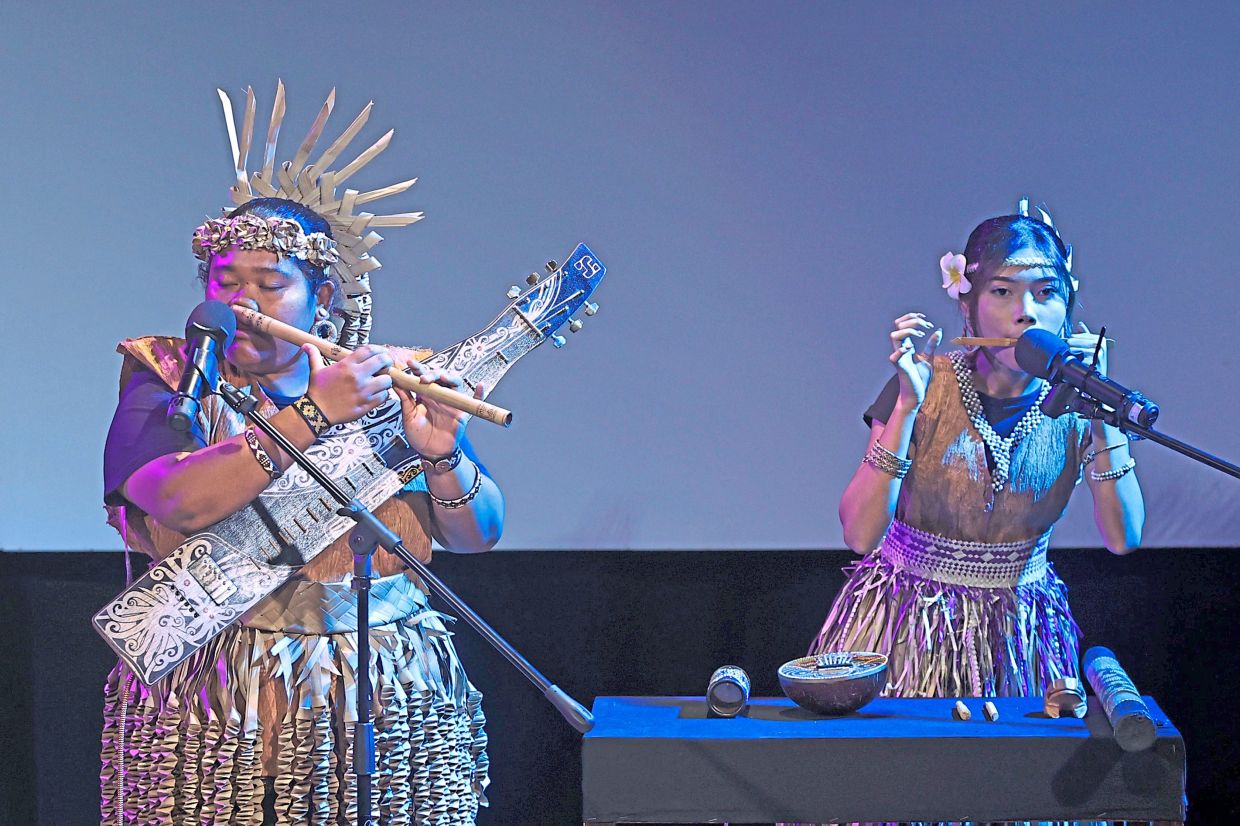
"This was my first time writing a poem, so I decided to accompany it with traditional music to evoke more emotion. I'm glad I can now add poetry to my repertoire," she says.
Hailing from Kampung Tumbuh Hangat in Bota Kanan, Perak, Ndang was one of four artists selected for Cipta Seni's second cohort.
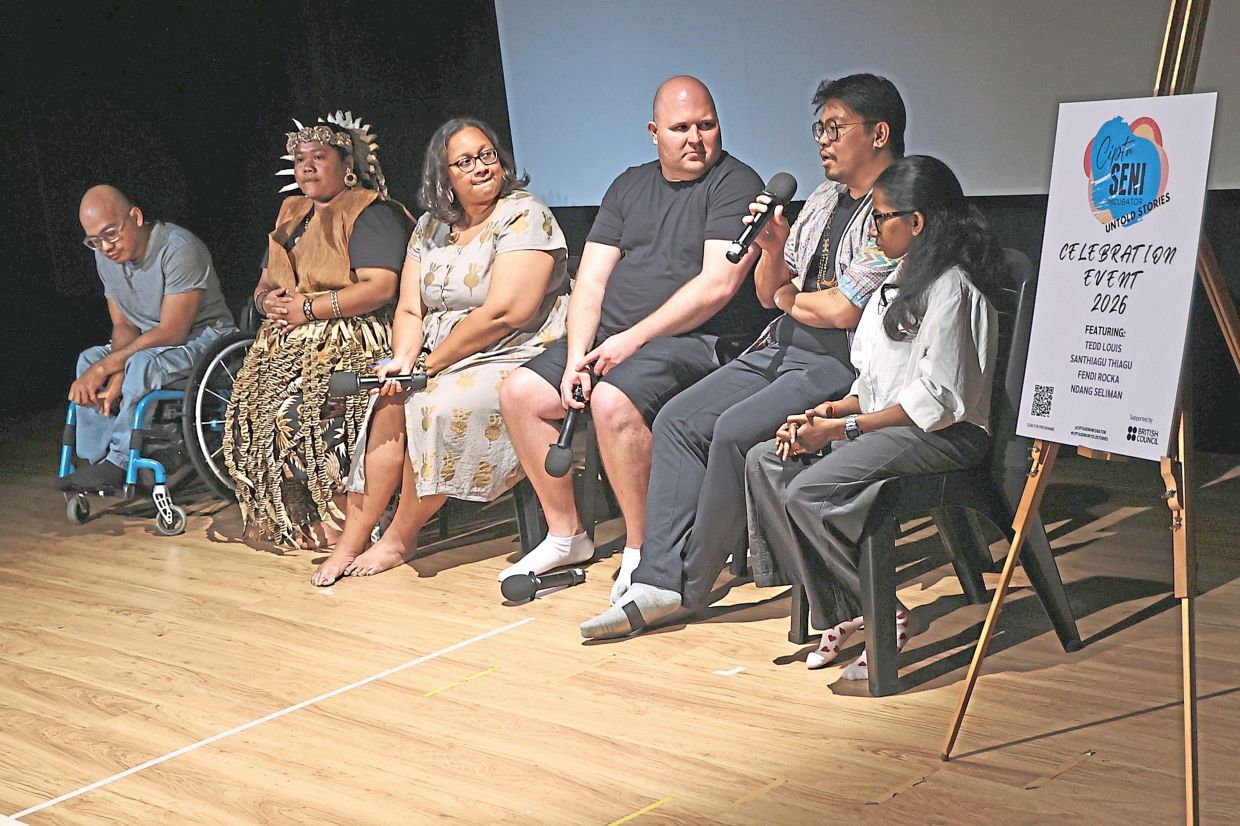
Together, they presented works-in-progress, or excerpts of them, at the celebration event.
Community champions
This year's Cipta Seni participants shared similar themes despite their diverse practices, say founders Sharmilla Ganesan and Tom Curteis.
"Even though each artist's performance was unique to their own practice and story, there was a shared focus on identity, community and a call to action," says Sharmilla.
"This really made me see the value of this year's focus on 'untold stories', because each artist brought forward issues and narratives that don't often get enough space within the arts," she adds.
Curteis says the programme again highlighted the challenges of sustaining an independent artistic practice.
"It takes a lot of energy to bring an idea into being and maintain the focus and momentum while balancing life and other work. It reminded me how vital incubator programmes like this are, especially if we want our storytellers to continue telling their stories," he says.
To broaden its reach beyond mainstream arts circles, Cipta Seni enlisted "community champions" – practitioners who work closely with diverse communities – to nominate artists for this year's programme.
"The Community Champions approach showed me that people are far more likely to feel welcomed and valued when someone champions them. It also reminded me that there are so many people within Malaysia's arts community who are quietly uplifting others in their own spaces," says Sharmilla.
Over the four-month programme, participants were mentored through online sessions with Kuala Lumpur-based Sharmilla and London-based Curteis.
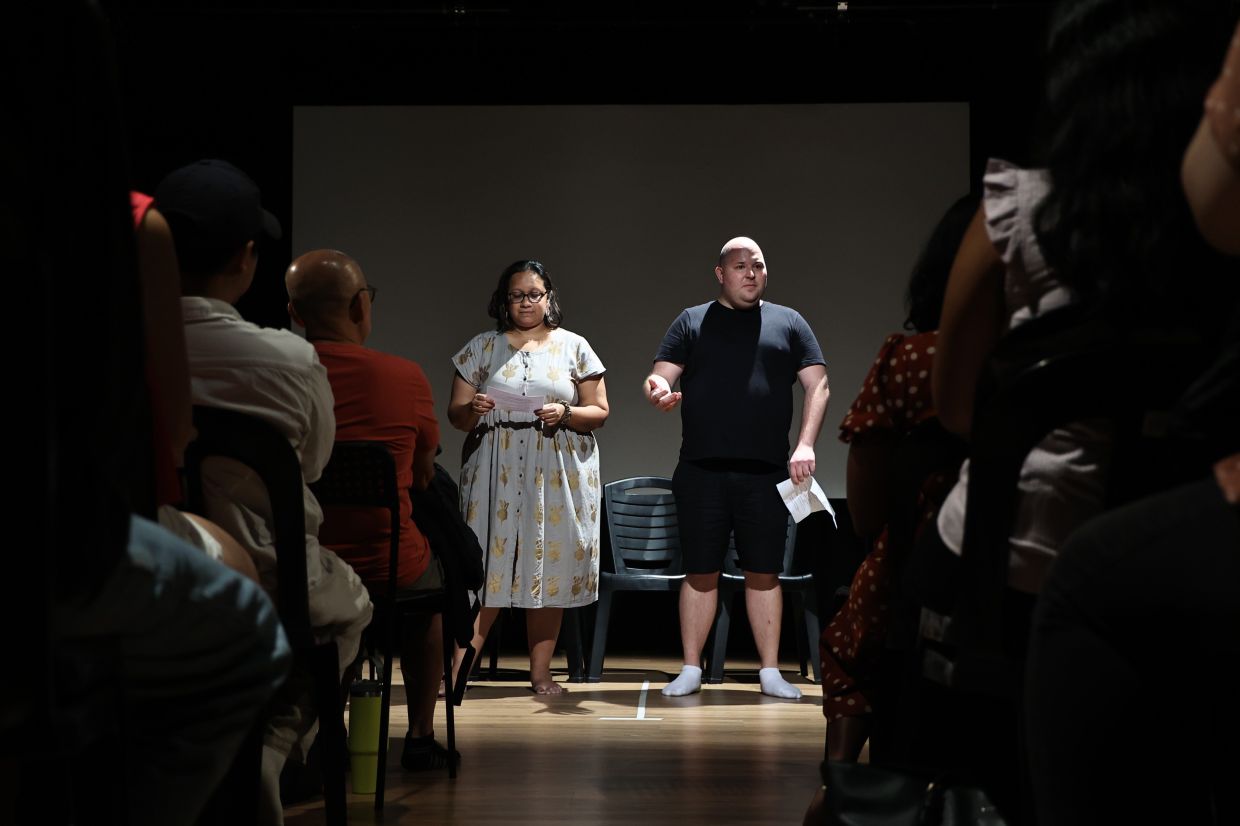
They also gained insights from guest speakers, including creative producer Kevin Bathman, a participant from Cipta Seni 2024 cohort, Alia Alzougbi, artistic director and CEO of Shubbak Festival, Howl Cheng-Po Yuan, artistic director and co-CEO of Kakilang and contemporary artist Yee I-Lann.
Familiar faces
Those familiar with Malaysia's performing arts scene may have recognised several faces among this year's cohort.
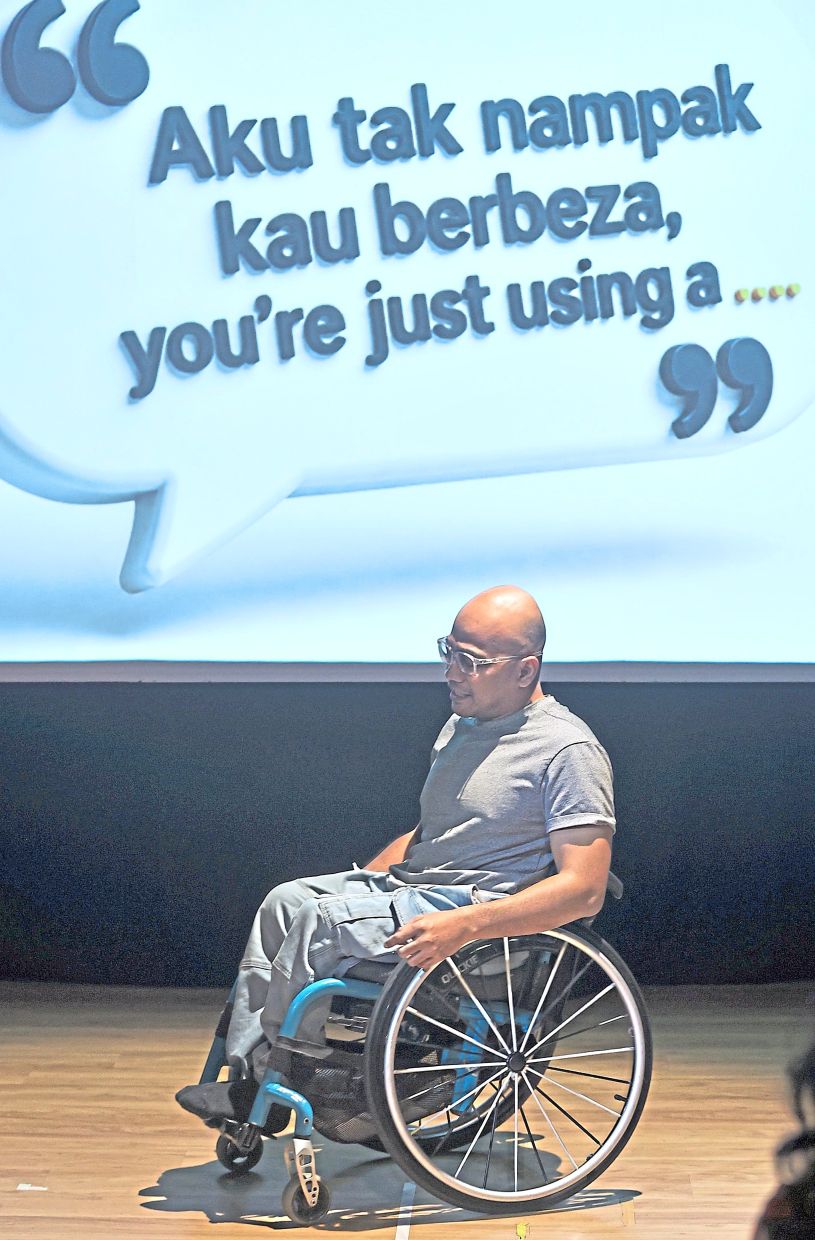
Fendi Rocka – who appeared in last year's theatre show Siapa Cacat?, staged by cross-disability ensemble Teater Untuk Semua – presented excerpts from his one-man monodrama Moving In-Progress, which explores his experiences navigating the world as a wheelchair user.
The 39-year-old finance professional says the work combines storytelling, acting, voice and wheelchair movement.
"Through this work, I want to show that a wheelchair is not just an assistive device, but can also be a medium of expression and storytelling," explains Fendi.
Coming from a non-arts background, Fendi says he first turned to writing because he found it easier to express himself on paper than in front of an audience.
"In fact, I used to avoid the stage because I was too afraid to face an audience," he admits.
His involvement in Siapa Cacat? and now Cipta Seni has gradually helped him build his confidence.
"Personally, the biggest challenge was learning to trust my own story. Taking part in Cipta Seni has allowed me to delve deeper into my experiences and explore them through an artistic lens," he says.
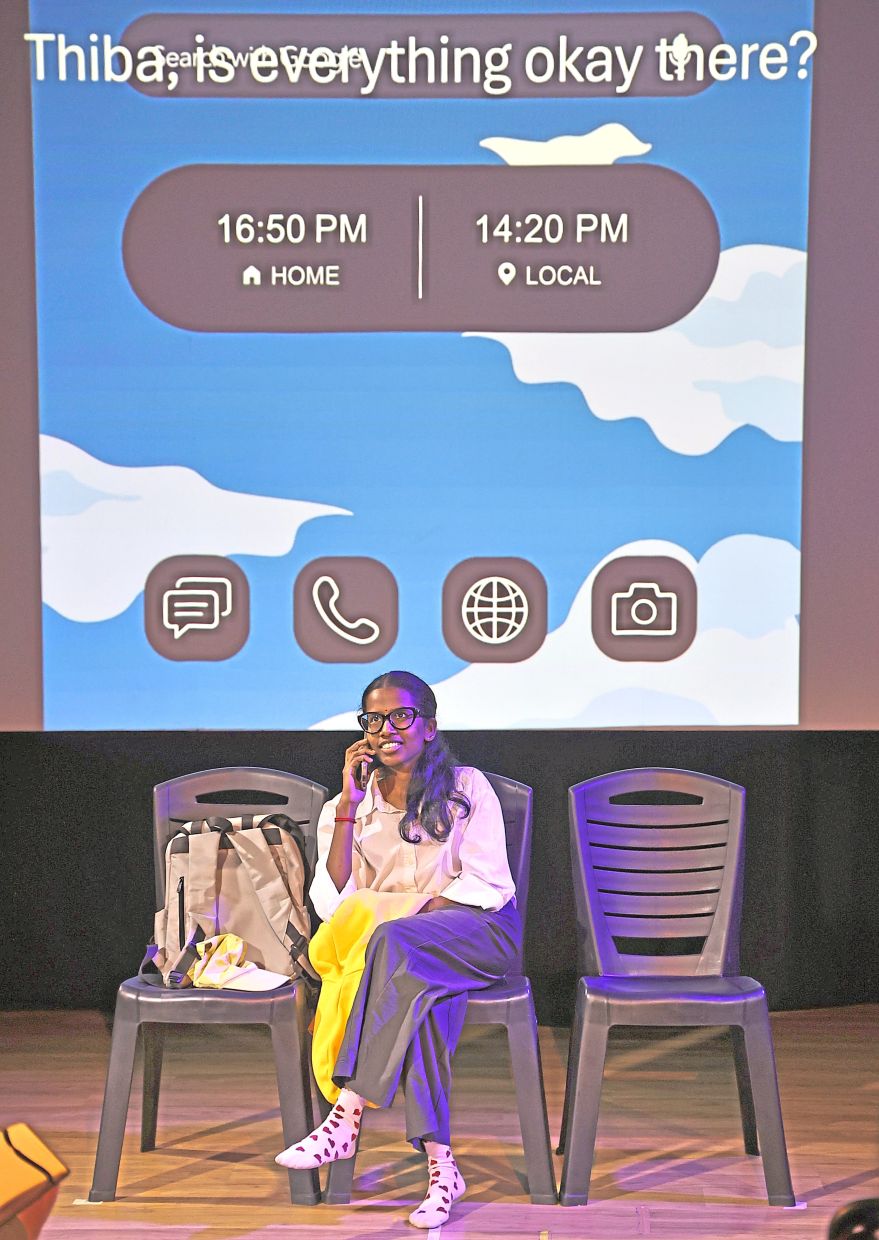
Theatre practitioner Santhiagu Thiagu, 29, recently staged the monologue I'm OKay, yoU? at the KL Festival. It tells the story of a young woman with a physical disability reflecting on her schooldays, when she was routinely asked to sit out marathons "for her safety."
For Cipta Seni, Santhiagu – who also founded Namme Medai, a platform dedicated to creating and championing original Tamil theatre – initially planned to develop a work based on her lived experience with scoliosis. Instead, she chose to pursue a new Tamil-language play, Balik.
The play follows a Malaysian Indian woman stranded in an airport transit lounge for more than 20 hours as she confronts painful questions about home, identity and belonging.
Inspired by an incident from Santhiagu's own life, the work gradually evolved into something far more layered through the programme's mentoring process.
"Tom and Sharmilla gave me the confidence to push through my writer's block and navigate the challenges of writing about such a traumatic experience.
"They encouraged me to move beyond simply retelling what happened and instead explore its deeper emotional and conceptual dimensions," she says.
Who we are
Sabahan theatre-maker Tedd Louis, 34, entered the programme with an existing draft of Bosou, Hinava & Bambangan. An excerpt was presented at the celebration event by Virtuoes Romana Maruning, Ervina Liasoi Lumandan and Ameenol Suhri.
The trilingual play – performed in Bahasa Malaysia, Kadazan-Dusun and English – follows Lumias, who returns to his late mother's kampung home in Penampang, Sabah on the eve of the Kaamatan harvest festival.
Over the course of a day, Lumias prepares the three Kadazan-Dusun dishes his mother taught him to cook as a child, each symbolising a different point in time. Bambangan – made from pickled wild mango – represents the past. Hinava, a raw fish salad dressed with lime juice, represents the present. Bosou, a fermented condiment with a salty, tangy flavour, embodies the future.
The play, inspired by Louis' own life, began as a letter to his late mother on the anniversary of her passing.
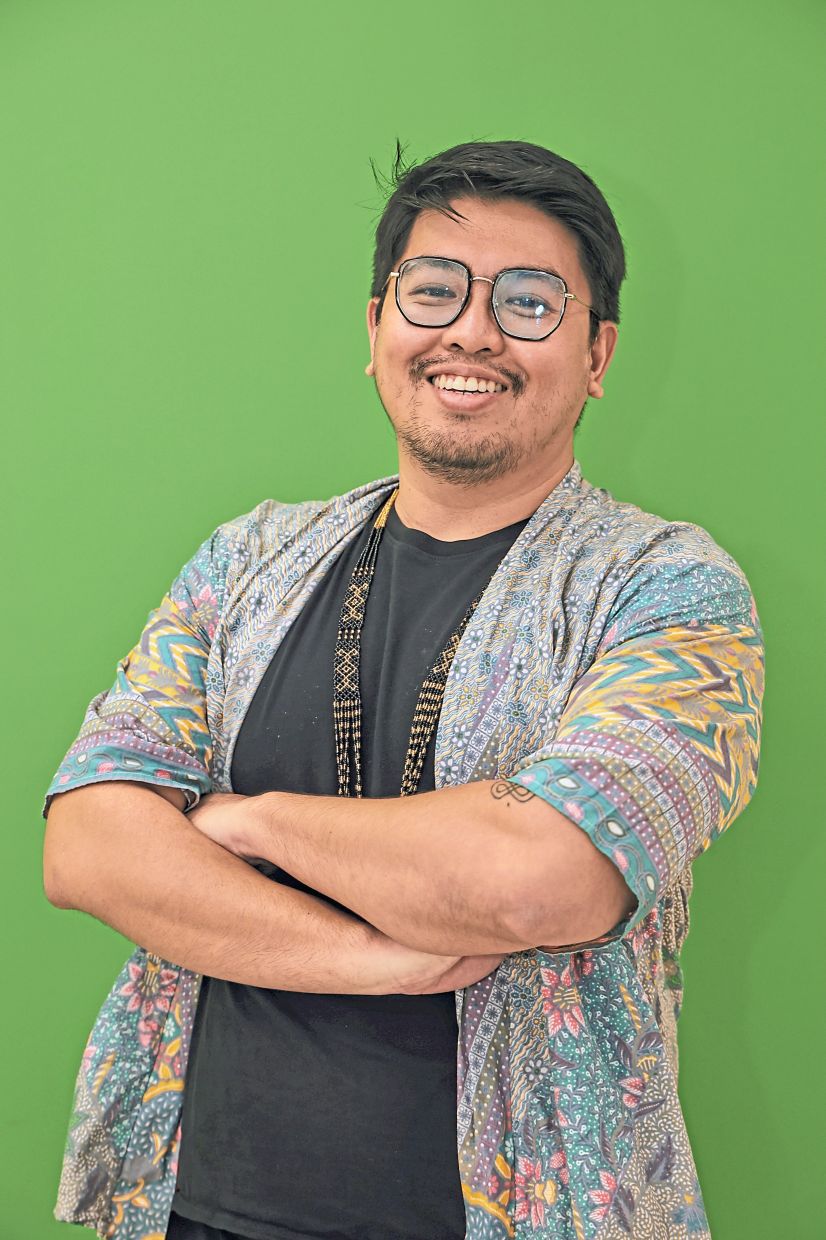
"I sat down and wrote to her about how much I missed cooking with her. I wasn't trying to write a play. But once the letter was finished, I couldn't stop thinking about what she had passed on to me – and what she hadn't. What was still with me, and what was already gone.
"Around that time, I was reconnecting with Dusun culture as an adult and realised something painful: I have peers who are exactly like me. We no longer speak our native language, or we speak very little of it. So much has been lost in translation – not just words, but our understanding of who we are.
"My parents' generation may be one of the last to be truly immersed in the culture. So I kept asking myself: if we don't preserve it, and they're gone, what becomes of us?"
Now a clinical psychology trainee, Louis says most stories about the Dusun community tend to focus on folklore.
"So I wanted to tell a story about the present – about us today – while making it something anyone could recognise as their own," he says.
The four artists will continue refining their works before presenting them publicly and are currently open to collaboration opportunities.
Cipta Seni Incubator: Untold Stories was supported by the British Council's Connections Through Culture grant.