For senior cartoonist Rosidi Semail, the sight of Tunku Abdul Rahman leading the historic chant of “Merdeka” was more than a declaration of victory - it was a powerful symbol of the people’s struggle and sacrifices in the fight for independence.
Better known as Rossem, he has dedicated his art to documenting the nation’s journey, using canvas and paper to preserve memories and experiences from both the colonial and post-independence eras, ensuring that they endure for future generations.
Rossem, 79, said the image of Tunku Abdul Rahman declaring independence on Aug 31, 1957, has always remained close to his heart, evoking vivid memories of the historic occasion.
"When we talk about independence, we can never forget Tunku Abdul Rahman because he is our Bapa Kemerdekaan (Father of Independence).
"I feel the story of independence would be incomplete if there were no images or visuals of Tunku Abdul Rahman,” he said recently in an interview in Kota Baru, Kelantan.
Through his drawings and caricatures, Rossem has captured the nation’s journey before and after independence, preserving stories of the people’s lives, struggles and efforts to safeguard peace that hold historical significance and memories.
Among the scenes of life before independence captured by Rossem is the ferry service, which once served as a vital link for the people before roads and bridges were built.
"Back then, the only way to get across the river was by ferry. Cars took the ferry, and buses did too. After independence, things started to change as the roads and facilities improved,” he said.
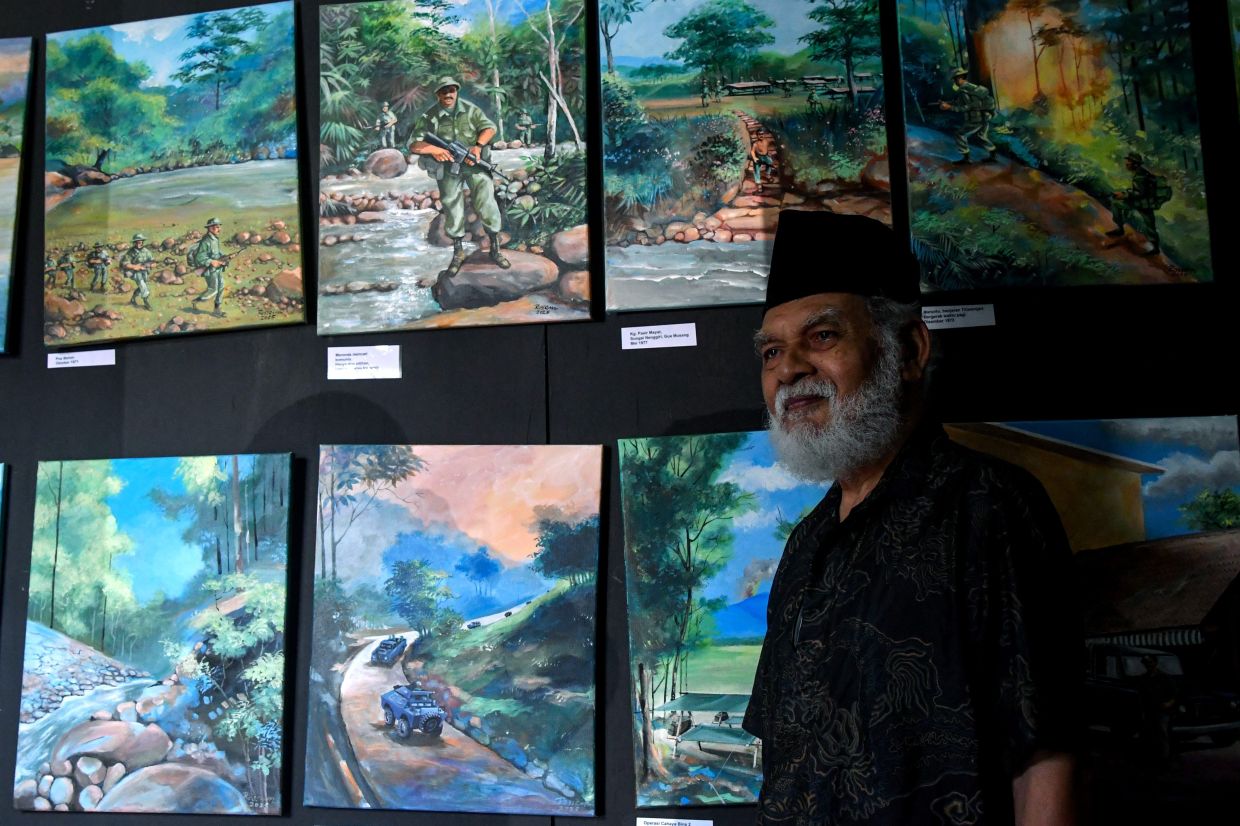
Born in 1948, Rossem also drew inspiration from his experience defending the country, having joined the police force in 1969 and served for about eight years in the Police Field Force, now known as the General Operations Force.
He said his experiences in the jungle, including taking part in operations to track down communist insurgents, later found expression in his works.
"I put my experiences in the jungle, tracking the enemy and living under the threat of danger onto canvas. So, my works are not simply from imagination, but from what I actually went through.
"After independence, we still had to fight to defend the country. The security forces were still dealing with the communist threat, and the people were still in danger. I put those experiences into my drawings. Let the visuals tell the story,” he said.
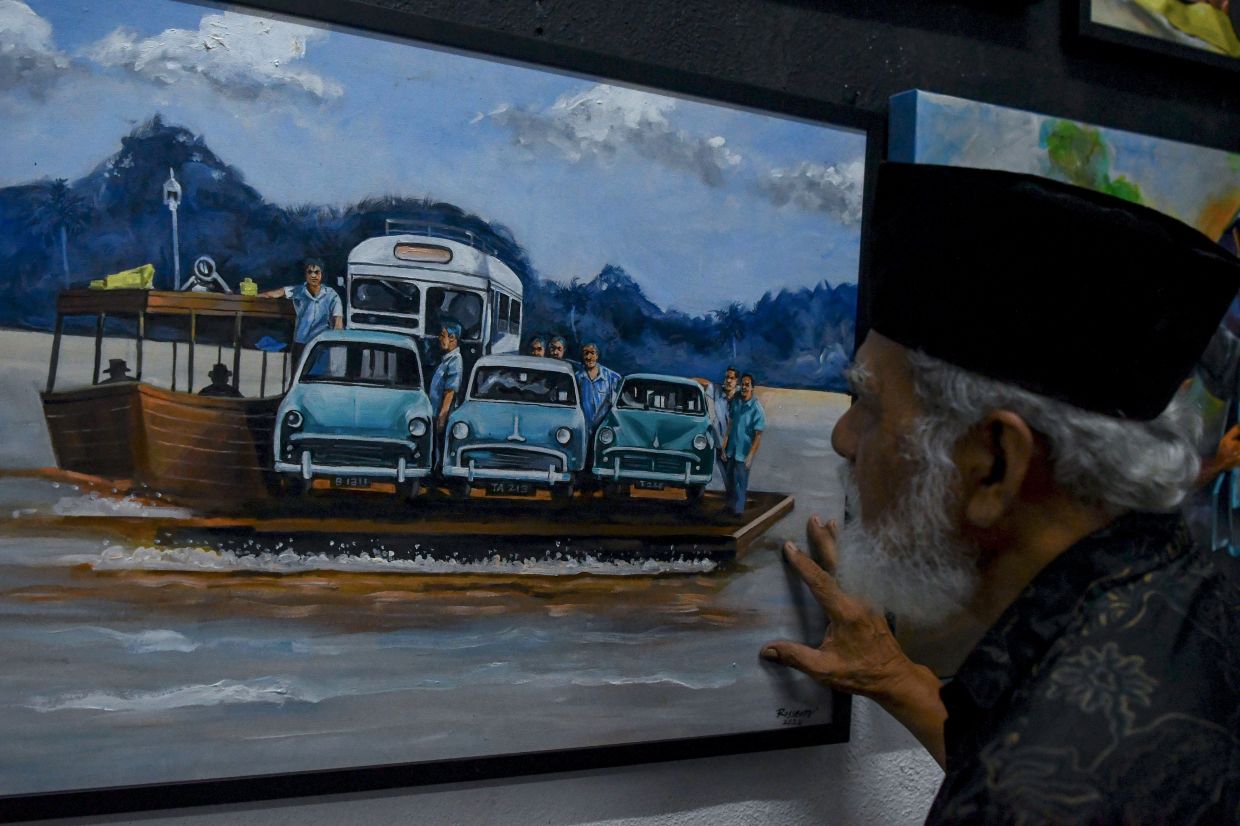
More than 700 works are now housed in the Rossem Cartoon Gallery (BKR), which was launched in October 2014, covering themes such as independence, history and culture, alongside portraits and caricatures of Malaysian Prime Ministers from Tunku Abdul Rahman onwards.
Rossem, who produced forensic and courtroom sketches, as well as the famous Malaysian satirical comic character "Constable Jabit” for a newspaper between 1978 and 1993, said his works were not merely drawings, but snapshots of an era that could help younger generations see and understand the past.
He said each sketch carried its own story, particularly those that captured the lives of the people and the sacrifices of the security forces in defending the country.
Now in his senior years, Rossem’s drawings have become more than works of art, serving as a bridge between those who lived through the nation’s history and younger generations who know it mainly through books and screens.
"For me, independence is more than just a date or a cry of ‘Merdeka’. It is a long journey, from the hardships of the people before 1957 and the sacrifices made to safeguard peace, to the progress we enjoy today,” he said. - Bernama