There are times when you can’t even remember what you did last weekend, but the moment a song from your youth starts playing, you can immediately recall its lyrics and sometimes even the choreography, like an instinct or reflex.
British indie-folk musician and writer Emma-Lee Moss, formerly known as Emmy the Great, explores the enduring impact of the music we grew up with in her memoir My Cantopop Nights, published by Jonathan Cape.
Born and raised in Hong Kong until the age of 11 to a British father and Hongkonger mother, Moss grew up with these songs as the soundtrack to her formative years. Even after moving to England with her family, her fascination with Cantopop never waned; on quiet nights when she needed solace, she returned to these songs as a balm for the soul.
In My Cantopop Nights, Moss traces her search for identity and belonging as she longs for a home and past long gone, progressing from a rebellious teenager to Emmy The Great, her musical alter ego.
As she toured the world, lived in London, Los Angeles and New York, and eventually returned to Hong Kong, Moss weaves her memories with Cantopop’s evolution, offering readers unfamiliar with the genre and its legends a glimpse into its world.
In the book, she writes about Cantopop classics mainly from the 1980s and 1990s, such as Aaron Kwok’s Love You Endlessly, rock band Beyond’s Boundless Ocean, Vast Skies (its last release before the tragic loss of frontman Wong Ka Kui) and Bad Girl by the late Anita Mui, widely regarded as the Queen of Cantopop.
Faye Wong is also on heavy rotation in Moss’s playlist, including her cover of Irish band The Cranberries’ Dreams and collaborations with Scottish post-punk group Cocteau Twins.
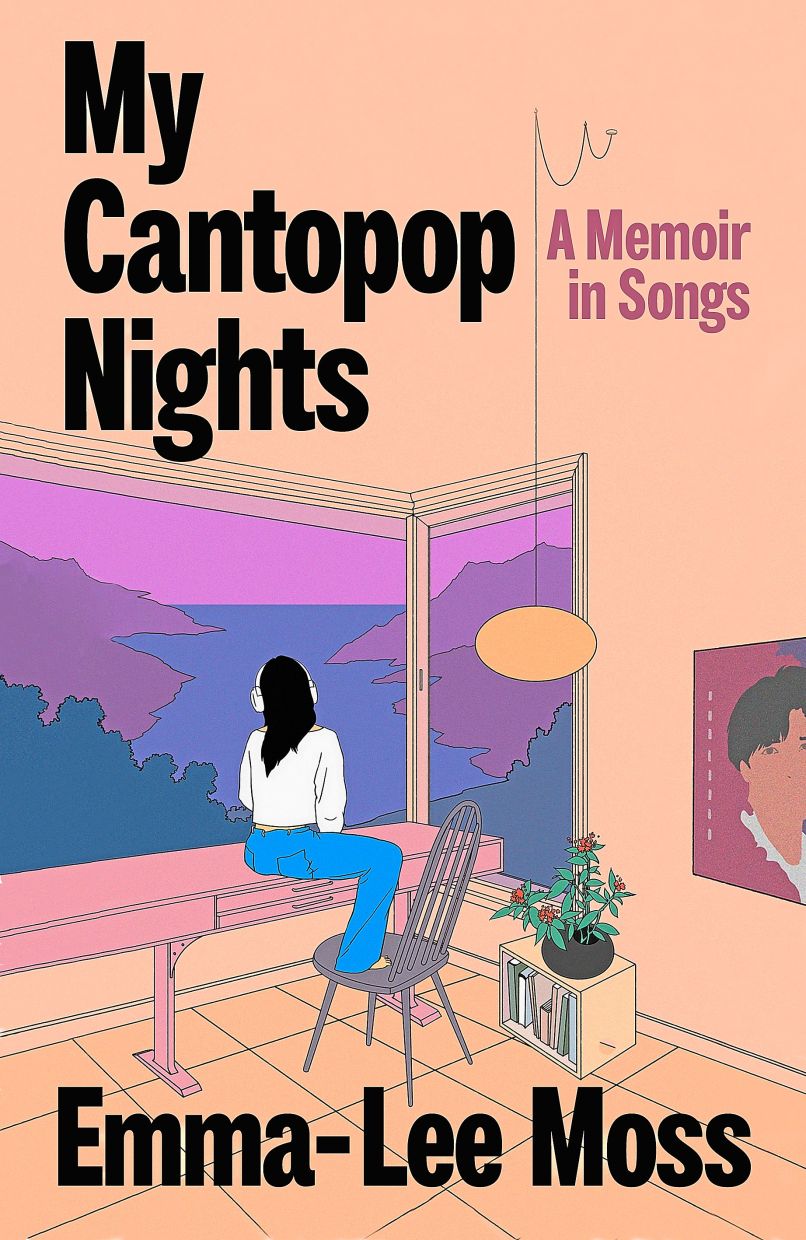
Beyond that, Moss traces how the Hong Kong of her childhood has changed – from the uncertainty surrounding the 1997 handover from Britain to China, to the cosmopolitan city she rediscovered as an adult, and later, the protests and turmoil of the Umbrella Movement.
Now based in East Sussex, England, the 42-year-old Moss spoke over the phone about the book and the memories behind it. This interview has been edited for clarity and brevity.
What inspired you to write My Cantopop Nights, and how did the idea for the memoir take shape?
At first, I was trying to write a novel, something fictional, but as I was working on it, I noticed that a lot of what I was writing was coming from my life. Because you have to write from authenticity, right? Then I found an old draft from when I was 25, 26 and even then I was trying to write the exact same book, so I realised that this is the story I’ve been wanting to tell.
Something I’ve realised is that over time, we all become archives – we play a role in remembering and documenting the worlds we once knew. Every time I go back to Hong Kong, it changes just a little bit, so that fleeting quality makes it all the more important to share the world that I’ve lived in with others.
With your exposure to diverse music scenes, what does Cantopop mean to you?
I think Cantopop is a link to my family. I struggle to explain to people why I cry listening to a really upbeat 1980s song, but I’m basically crying for myself. I lost my extended family in Hong Kong so abruptly – it went from them being a part of my everyday life to no longer being there, and later on, some of them passed. I also lost my ability to communicate with them as my ability to speak Cantonese went away.
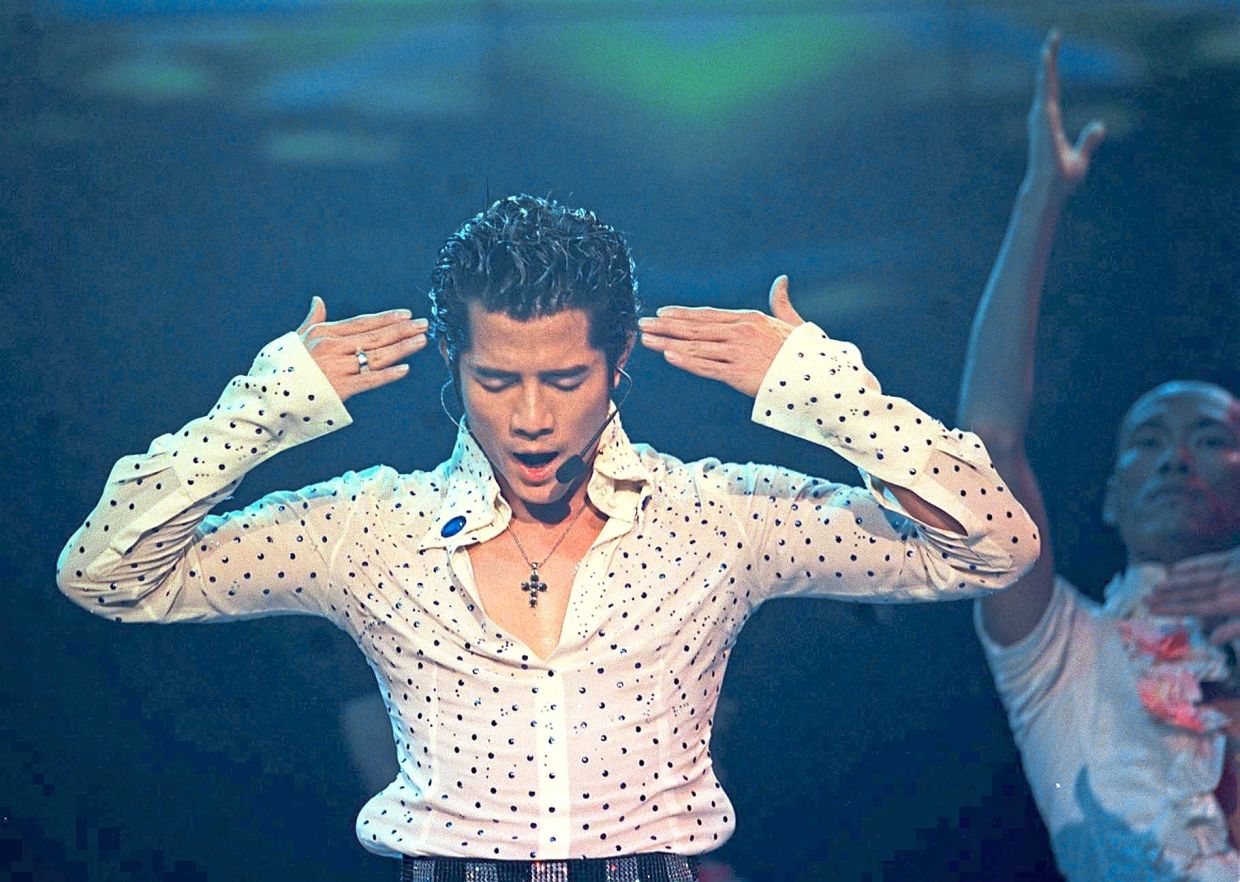
So for me, Cantopop is my way of staying connected with that part of me – I might not be able to speak great Cantonese, but I do speak pop music. So if I can’t belong in Hong Kong itself, I can belong through Cantopop. And I think there are a lot of people out there who can relate to this.
The title reflects your preference for listening to Cantopop in private, at night. Why does this setting hold particular significance for you?
I have these vivid memories of being in my 20s and rediscovering Cantopop. I was in university and after coming home from a late night out, I would just search random Cantopop artistes like Jackie Cheung or Leon Lai and lie in bed, feeling my feelings while the songs played in the background.
It was a very private ritual for me, because for the longest time, I didn’t think I could share this with anyone in my music circles. So this whole book is about taking it out from the shadows of my memories and bringing it into the light.
Did writing the book deepen your connection to Hong Kong and its culture?
Hong Kong has always been close to my heart. Whenever people ask me whether I miss it, it’s difficult for me to answer, because in my mind, I’m always there, walking around the city’s streets, immersing myself in the sights and sounds from my memories. Working on the book just sort of formalised this process.
Besides Cantopop, I’m also always watching Hong Kong films and nowadays I’m going through old recipe books and trying to cook more Chinese dishes. I can make turnip cake and glass noodle salad. Next Lunar New Year, I’m going to try to make tong yuen (traditional Chinese sweet glutinous rice balls).
What, if anything, surprised you most while writing the book?
One of the more surprising things I discovered was that my dad was a Cantopop songwriter who had written songs for the Wynners, the popular 1980s group. He didn’t even know who Cantopop’s “Four Heavenly Kings” were, yet he had, in his own way, left his mark on the genre.

Another surprise was how, while researching the parallel history of Hong Kong’s indie music scene, my dad’s friend Peter Suart – whom I knew as Uncle Pete growing up – kept turning up. It turns out that Uncle Pete was a member of a band called The Box and one of the earliest indie artists to make a name for himself in Hong Kong.
Discovering this about Uncle Pete was kind of like slotting in a missing puzzle piece for me, because I’ve always had this staunchly anti-corporate, anti-commercial mentality when it came to my music, and I’ve wondered where that came from.
Then when I read up about Uncle Pete’s ties to the indie music scene, it all started to make sense, because he’s been a huge part of my life and was among the first people who taught me what an artiste is.
You explore the concept of ‘yuanfen’, or fateful coincidence, in the book. Do you believe we can have yuanfen with a place, and do you feel you have that kind of connection with Hong Kong?
I definitely feel karmically entangled with Hong Kong. I don’t know why – every time I’ve tried to leave, it keeps drawing me back. My parents live there, I met my partner there, and my daughter was born there, which was a curveball I wasn’t expecting.
My relationship with Hong Kong is something I’ve had to grapple with. But what I’ve learned is that, when it comes to things like yuanfen, sometimes what you need is acceptance, even surrender. I can’t run away from Hong Kong, so I’ll just have to sit here, wallow in my Cantopop and see where it takes me.
My Cantopop Nights is available at all good bookstores. A playlist featuring songs mentioned in the book is available here.