At the fringes of the Night Market in Langkawi Down Below – not the Langkawi island we are familiar with – stands a brightly lit warung, where weary travellers and adventurers find refuge and sustenance.
This, of course, is no ordinary warung.
In Hanna Alkaf’s latest work, The Warung Between Worlds, the titular warung, with its scratched plastic chairs, twinkling fairy lights, and well-worn plates and cutlery, serves as a liminal space, a threshold to other worlds.
Run by three mysterious “Aunties” – Mak Long, Mak Ngah and Mak Su – the moment you step inside the warung, they already know just what you need. But rather than cash, they accept payment in the form of a memento, a memory, or a moment in time.
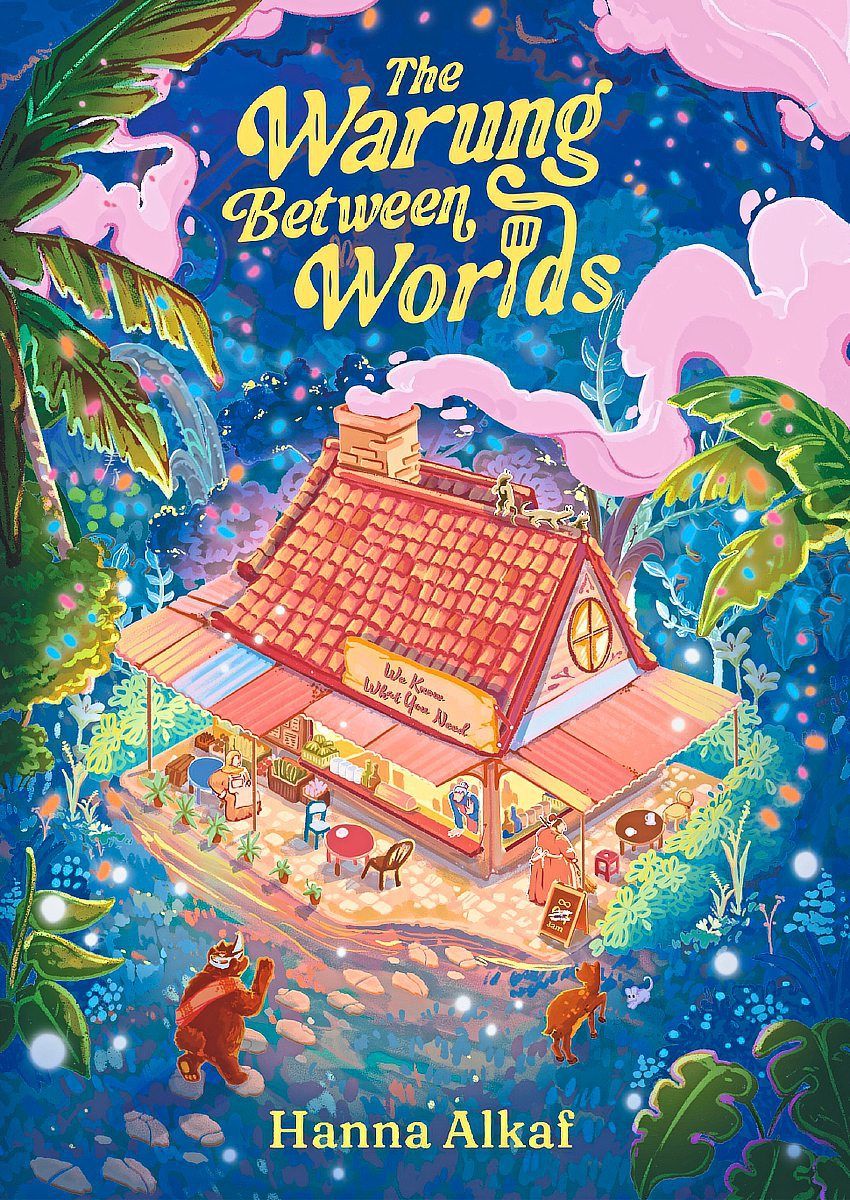
This isn’t the first time the warung makes its appearance in one of Hanna’s books. If you’ve read Hamra And The Jungle Of Memories (2023), this is the very same warung that Hamra comes across.
In The Warung Between Worlds, the story follows Arya Razali, who arrives in search of one of her father’s belongings – an item he once entrusted to the Aunties in exchange for a meal. They agree to return it only if Arya can cook a dish that impresses them.
While the lean 184-page novella is likely to leave you wanting more, it’s still full of the heart, adventure and humour many have come to expect from a Hanna Alkaf story ... with plenty of mouth-watering descriptions of food.
The homegrown feels
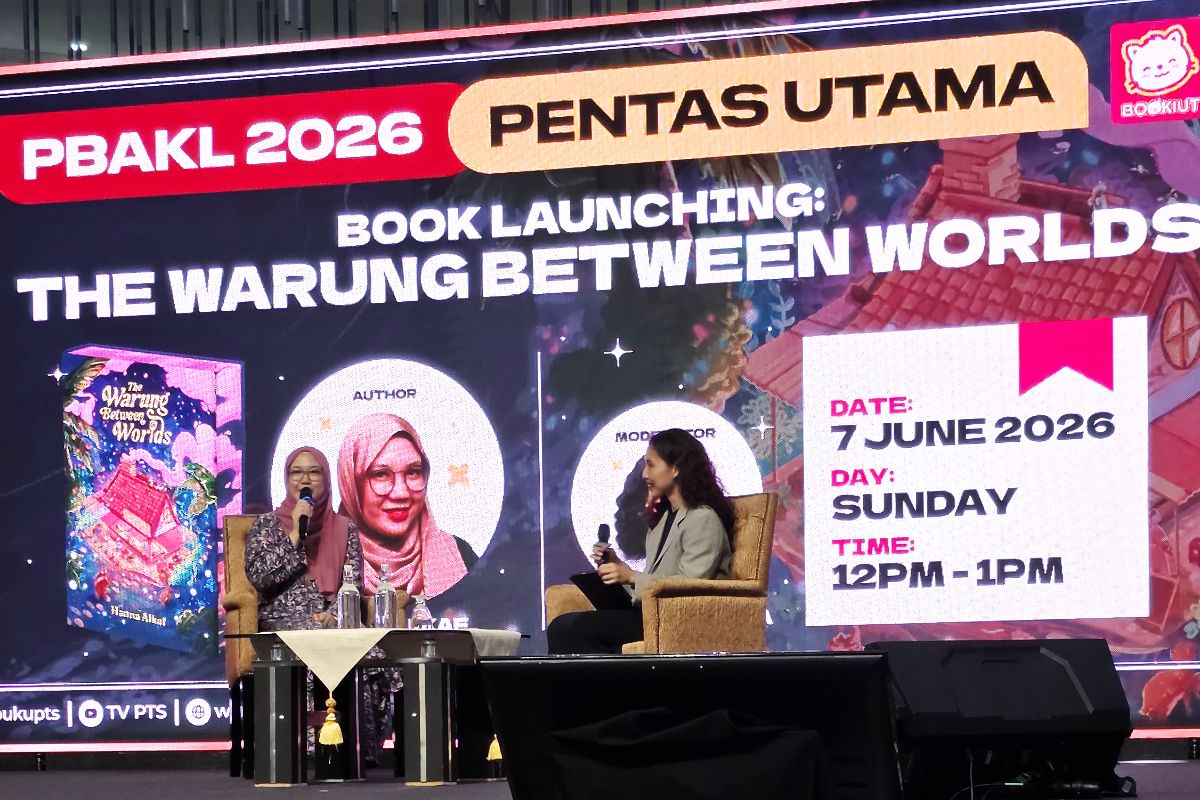
Published by Bookiut, an imprint of local publisher PTS, The Warung Between Worlds is Hanna’s first book with a Malaysian publisher.
“I’ve actually wanted to publish something that was purely created for Malaysian readers for some time, because I know reading my work can often be hard. It can be inaccessible for a lot of local readers due to cost and sometimes even finding my books can be difficult if you’re in certain states,” says Hanna in a recent interview in Petaling Jaya.
The 41-year-old author is no stranger to international publishers, with her works and co- creations published by Simon & Schuster, HarperCollins, and Penguin Random House, among others.
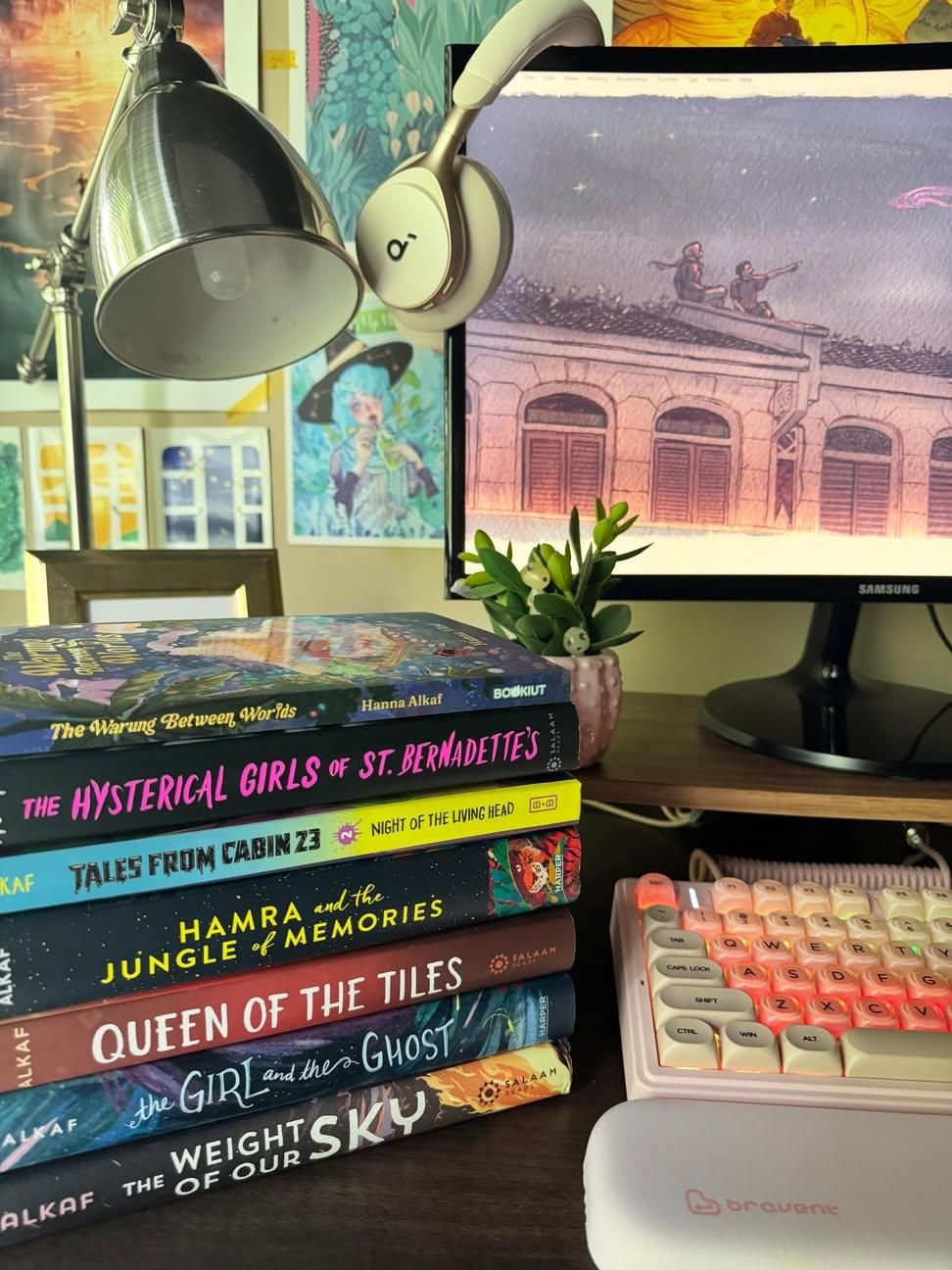
“I’ve received a lot of support from Malaysian readers since I published my first book (The Weight Of Our Sky) in 2019. They always come for my events, buy my books, talk about them and recommend them to their friends. So I wanted to write something just for them, to show my appreciation. This is probably the most Malaysian of my books in that very little has been explained because they don’t need to be,” she adds.
Since writing about it in Hamra And The Jungle Of Memories, Hanna has long wanted to return to the warung. So when Bookiut approached her in 2024 to write a novella, she saw it as the perfect opportunity to place the warung at the centre of the story.
“I like the idea of learning more about the places that heroes stop at during their journey, like the warung, and imagining all the different types of people or creatures that would come by. There are so many stories to explore.
“And then there are the Aunties. I love writing aunties into my stories, because aunties are such an integral part of our lives, whether or not they’re actually related to you. They form the backbone of our communities – bringing people together, nourishing people, guiding people, taking care of people. So it was natural that the warung would be run by aunties,” she explains.
The hero within
In the book, Arya has only three chances to whip up a worthy dish for the Aunties. Luckily for her, she has plenty of experience in cooking, as she grew up under the gentle and patient mentorship of her father, who ran his own warung.
With every dish she cooks, Arya reminisces about growing up with her father, who loved telling her stories, especially the myths and legends of Langkawi, such as Mahsuri and the giants Mat Cincang and Mat Raya.
While many of us also grew up hearing these stories, Hanna says they’re not as familiar to younger generations.
“The kids are starting to lose touch with the local mythology. Many of us grow up with such familiarity with Western mythologies and fairytales, like my son, who had a big Greek mythology phase because of the Percy Jackson series.
“As a Malaysian writer, I think it’s really important to centre our local folklore in our narratives, even if the story isn’t necessarily about folklore, and to have our kids know about them,” she shares.
With a son and a daughter, she also has school-going children to bounce ideas off of.
Speaking of narratives, the protagonist Arya firmly believes that she is not a hero, as she does not fit the “criteria” for being a hero, even if from our perspective as the reader, this is her story.
“I wanted to explore several ideas through this story, the first of them being the idea that the hero of the story can come in many shapes and sizes. The second one is the idea that you don’t have to consider yourself a hero in order to do heroic things.
“And the third is that acts of heroism don’t have to be these huge, flashy things – sometimes it can just be finding the courage to do what needs to be done, even if – especially if – it’s hard, but you do it anyway,” says Hanna.
For her, small acts of heroism can be just as meaningful as world-saving feats, because, in reality, most of us are unlikely to be the kind of people who save the world.
“But small acts of heroism are in a way saving patches of the world that are important to you. If all of us work on saving the patches that are important to us, then we all end up saving the world together, which is kind of a beautiful way to think,” explains Hanna, who was an integral part of the #kitajagakita initiative in Malaysia during the pandemic years.
“So Arya doesn’t think of herself as a hero because most people, when they think of heroes, they think big, flashy acts of heroism. But the story’s main idea is about reframing what heroism is and what it means to be a hero, because anyone can be a hero, even if you don’t feel like one.”
Food for the soul
In the book, Arya cooks three dishes for the Aunties, and while we won’t spoil you as to what they are, be warned: don’t read the book while hungry.
Hanna tells us that there’s a deeper meaning attached to the dishes Arya decides to make.
“To the Aunties, what makes a dish good is what makes it personal to the person making it, which is, in a way, how I feel about stories – what makes a story good is how much of yourself you imbue into it,” she says.
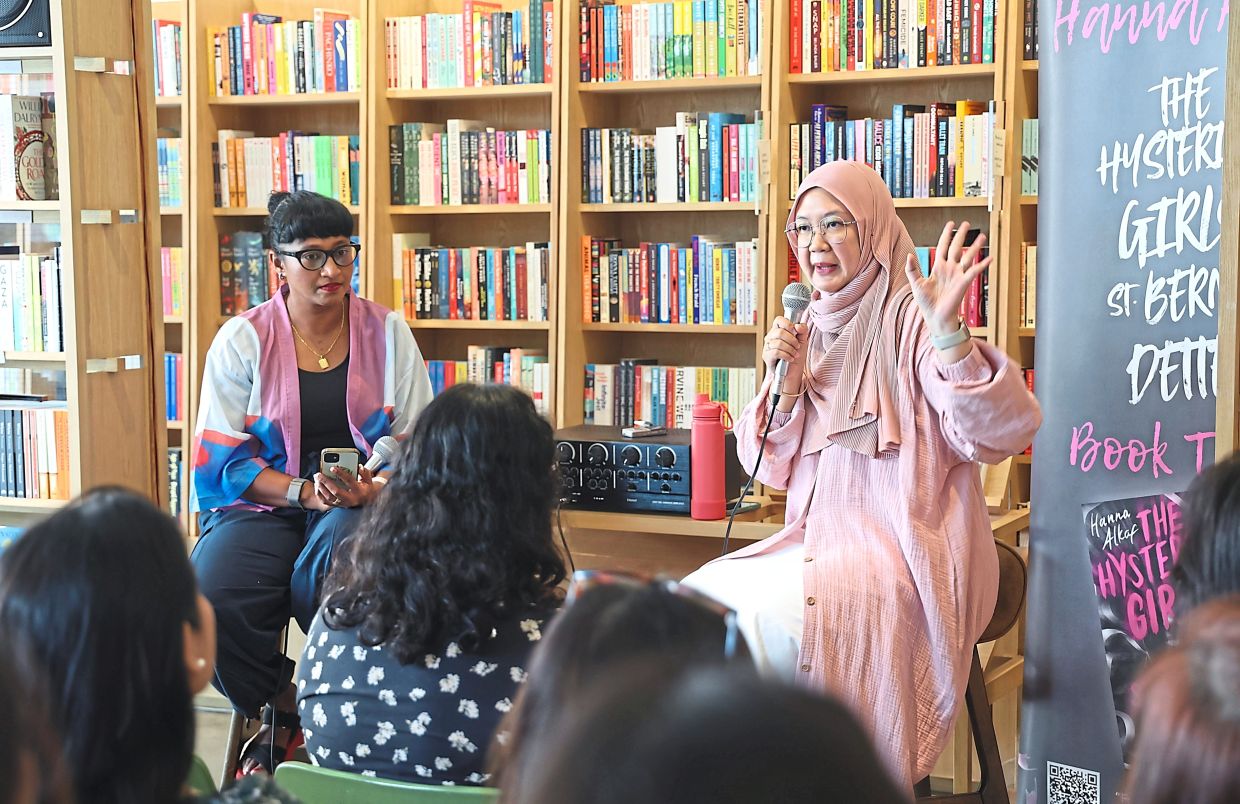
“If you think about that in parallel to the stories that we tell, the story you tell that resonates most with your audience isn’t necessarily the one that is most technically brilliant – it’s the one that makes people feel something. That’s the story that resonates most with the audience.”
While Hanna does indeed weave much of herself into the stories she writes, she’s often reluctant to reveal which parts of the story ring true.
“I would say Arya’s dad is a combination of bits and pieces from both of my parents. There are specific memories that she has with him which mirror the memories that I have with my dad. It is very personal in a lot of ways,” she admits.
Readers are already hungry for more, with many asking whether she will return to the same world. Hanna responds with a coy smile: “Never say never.”
For now, her plate remains full with other projects.
When asked about upcoming releases, she adds: “I can’t share specifics, but next year there will be another middle-grade novel, and my first book for adults. So you’ll be seeing more of me.”
Hanna Alkaf’s The Warung Between Worlds is available in all good bookstores. More info: pts.com.my.