For the Orang Asli of the Semai tribe, dreams are more than a liminal state between sleep and waking – they serve as a form of guidance, shaping decisions, ethics and relationships between people, nature and the unseen.
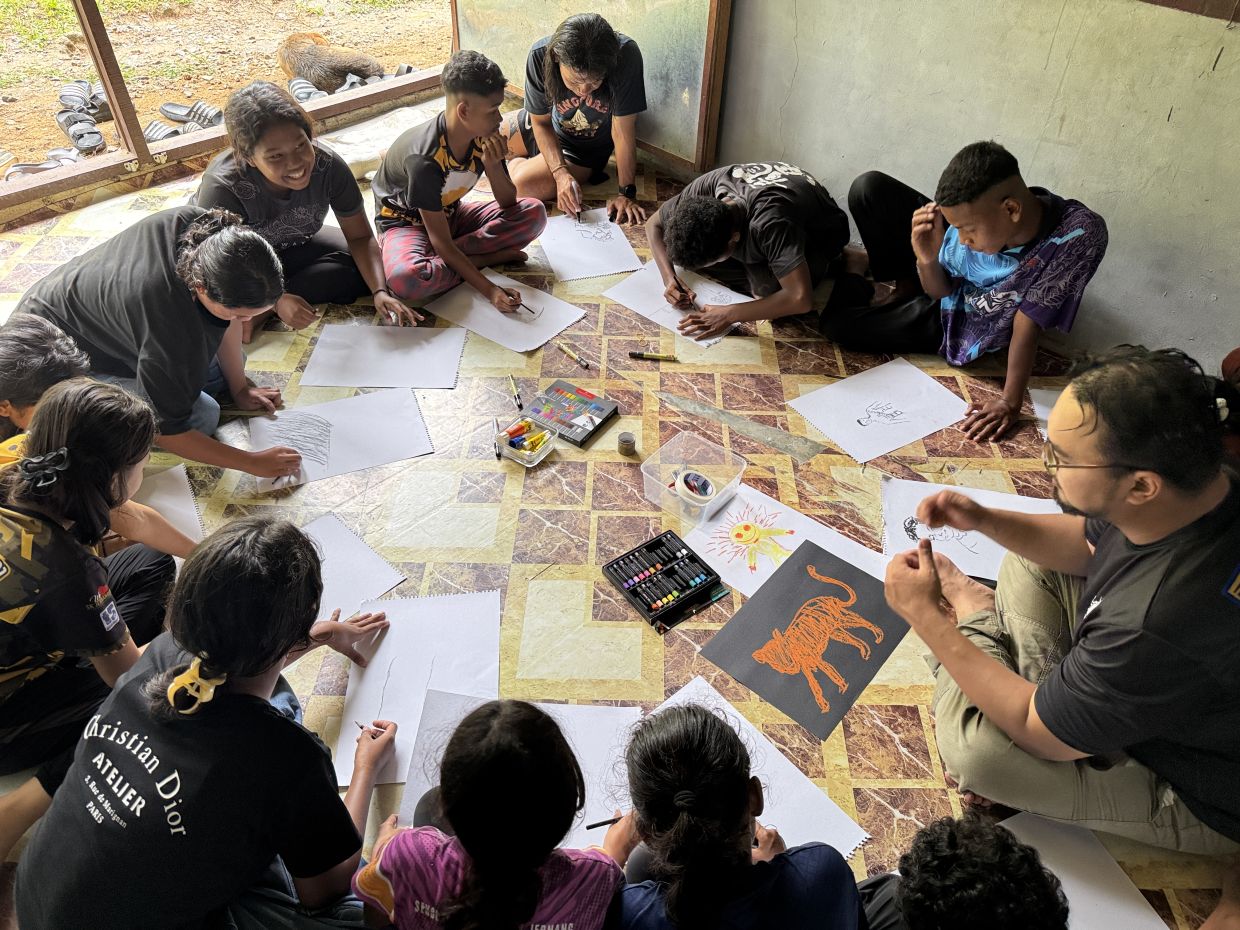
Seeking to understand the Semai perspective on dreams, a group of art and media practitioners made several visits earlier this year to Pos Jernang in Sungkai, Perak, engaging with communities in Kampung Sat, Kampung Kejau and Kampung Ras to develop works collaboratively.
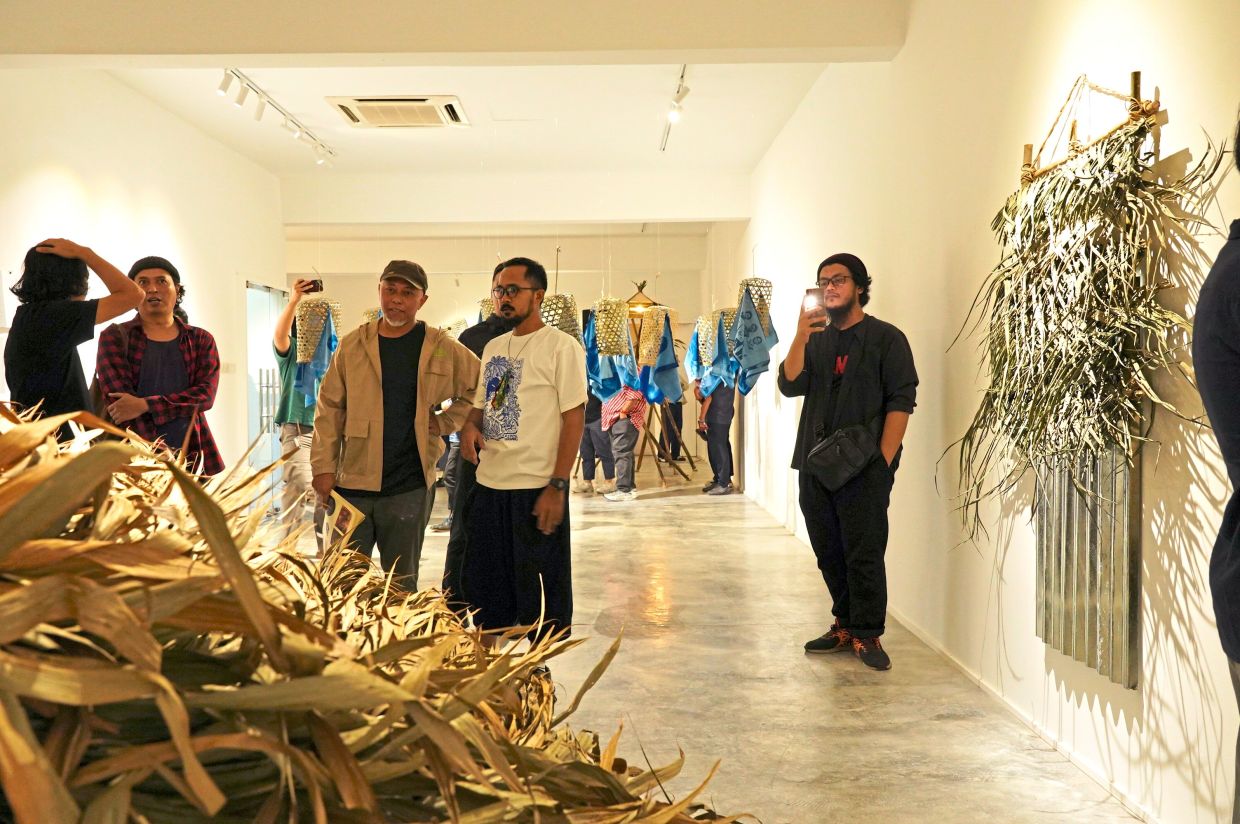
The project culminated in Mimpi Jernang, a multimedia exhibition at Rissim Contemporary in Bangsar, Kuala Lumpur, running until Aug 31.
The exhibition will travel to South Korea next month for the Gwangju Biennale 2026, where it will be presented as part of the Stateless Mind Pavilion. Before its international debut, audiences in the Klang Valley can experience the project closer to home.
The works – inspired by Semai activist Yahya Torek’s research and community stories – explore dreams rooted in Semai cosmology and local knowledge, as well as dreams as hope amid a rapidly changing social and economic landscape.
“My work is based on community research. I’m not art-trained, so it helps to have collaborators who can develop the work to a standard that allows it to reach audiences beyond Malaysia. The Gwangju Biennale will be another opportunity to tell the story of Malaysia’s Orang Asli,” says Yahya, 33, from Kampung Ras.
He previously participated in the 2022 Venice Biennale collateral event Pera + Flora + Fauna, which explored Indigenous identity and the ownership of history. He also contributed to a video work developed by Ipoh-based Projek Rabak.
Yahya says art provides an important platform to express Orang Asli issues in a more nuanced and accessible way.
“It can be quite keras if all people know about the Orang Asli is protests and government letters. The media can be manipulated. We also need to approach these issues in a more halus way. Art has a way of telling our stories that can reach people differently,” he says.
The gallery, as Yahya points out, is filled with installations featuring hanging Semai carry baskets and a hut, alongside video and field recordings that provide a basic journey into Semai life.
“It may only offer a glimpse into our everyday lives, but it is a start,” he says, adding, “... but the realities are much deeper and more complex.”
The exhibition, curated by Azzad Diah and produced by Saiful Razman, brings together a creative team including Low Pey Sien, Faizal Wahab, Edroger Rosili, Zulfadly Helmy, Mrizalmustbedestroyed, Aiman Anaqi, Rashid Nor and Nizar Sulaiman, with support from Ebrahim Harris, Puah Chin Kok and Ahmad Kamal Abu Bakar.
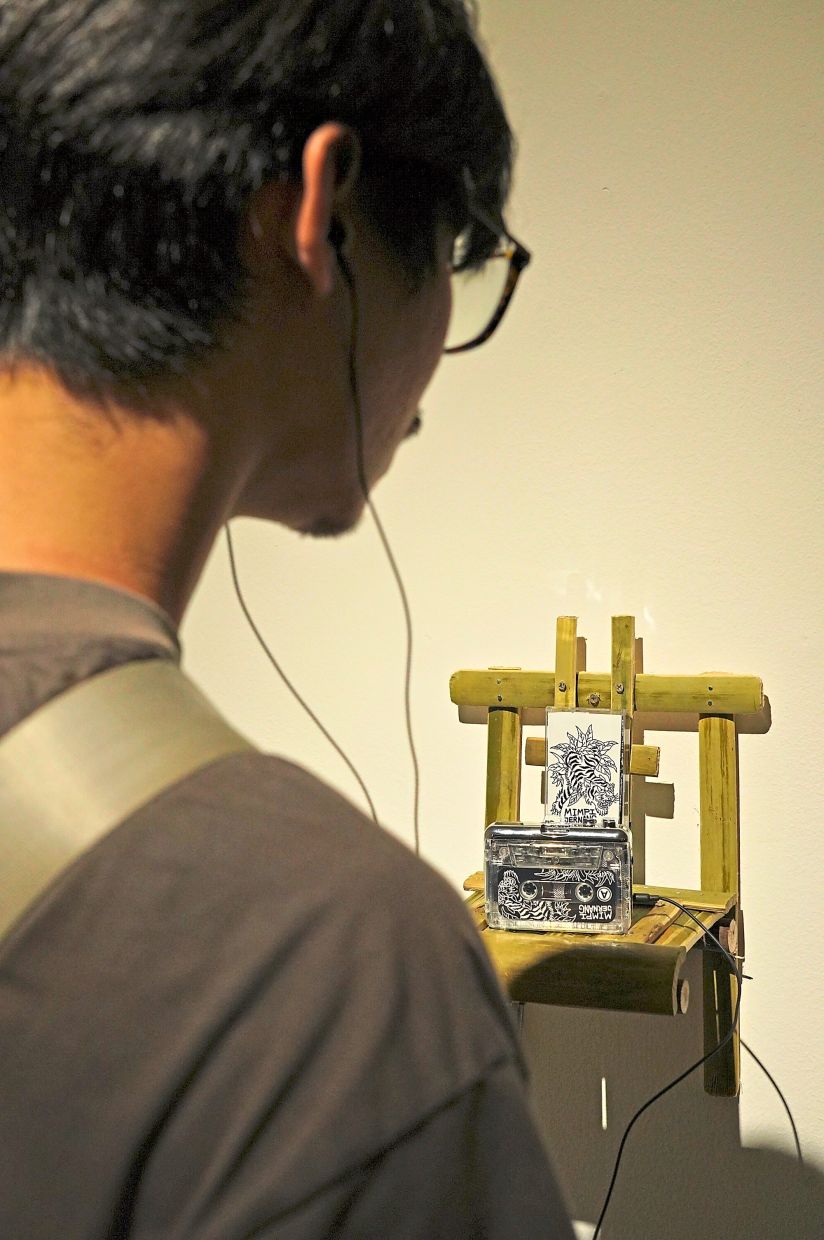
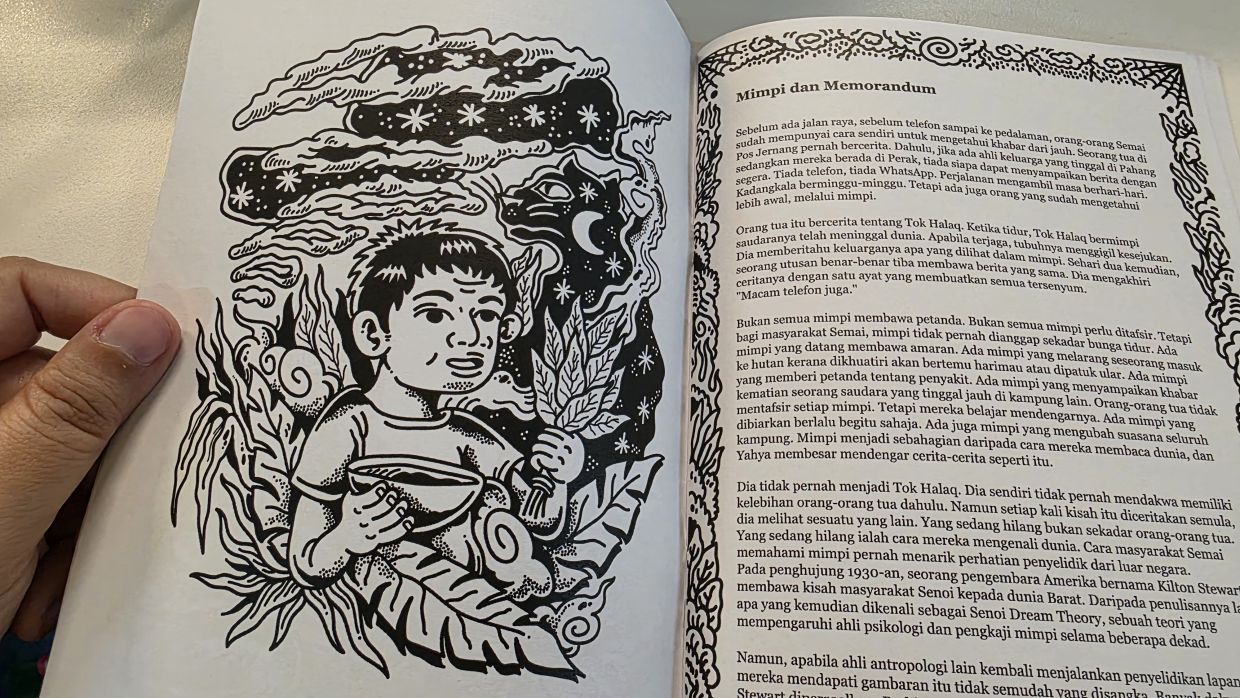
The works were developed in collaboration with the Semai communities of Pos Jernang and include a mini-documentary featuring villager interviews, a fanzine based on stories shared by residents, and an original soundtrack – on cassette – with interviews.
Together, these materials form a counter-archive that preserves Semai narratives beyond ethnographic record or illustration.
A point of reference
For Yahya, the documents featured in the exhibition represent only a small part of his and his father Yok Perukas’ life’s work. Much of the material is handwritten or typed on a typewriter borrowed from the nearby school, accompanied by photographs they took themselves.
The work mostly focuses on Kampung Ras, home to more than 300 people across 84 families.
“There are five Semai villages in Pos Jernang, each with its own customs, knowledge, history and beliefs, traditionally passed down orally. My father began documenting them in 2007 after recognising the need to preserve our culture in a more permanent, physical form,” says Yahya.
“I’m continuing his work because I’ve seen our traditions slowly disappear. I want future generations of Semai to have a point of reference, while also helping those outside our community better understand our culture and way of life,” he adds.
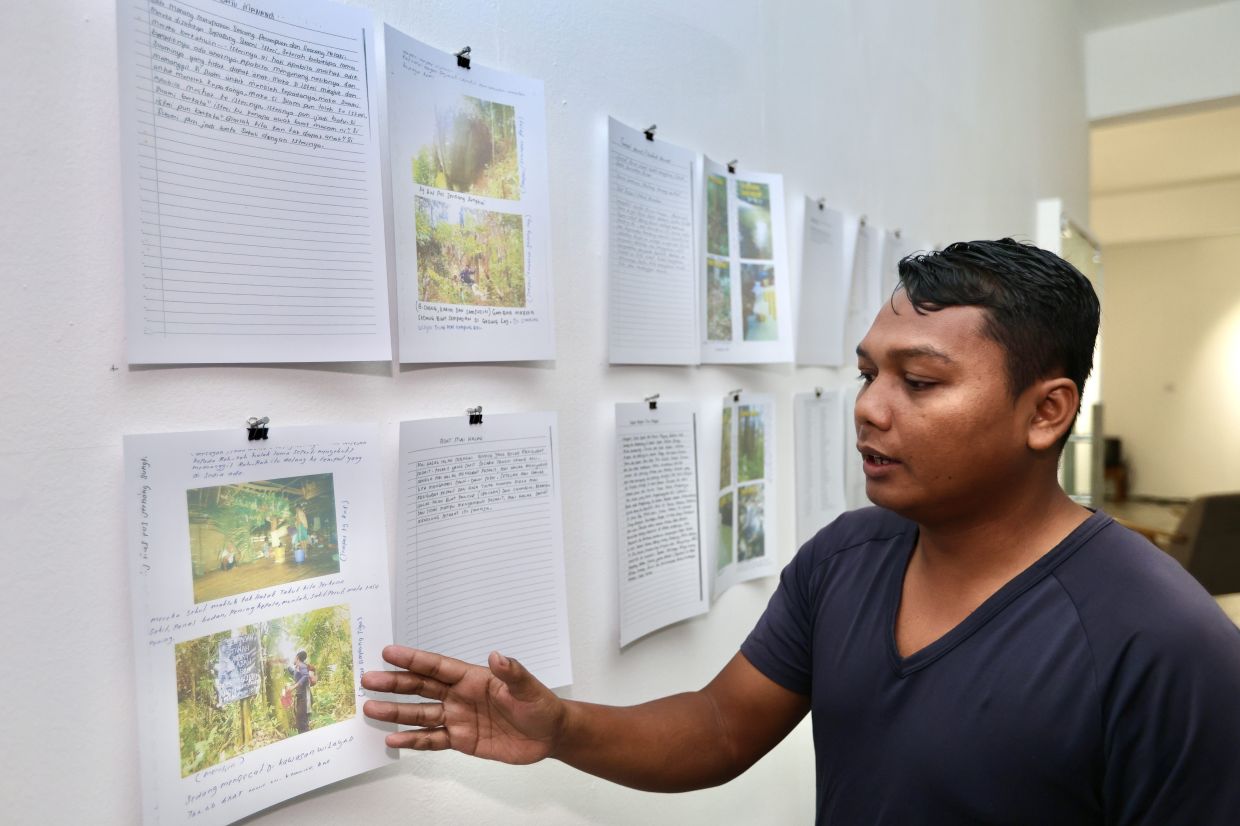
The topics span a wide range, from folk tales to local flora and fauna.
According to Yahya, Semai youth are often divided into two groups: “Those who live in the city are educated but disconnected from our culture, while those in the village remain deeply connected to Semai culture but lack formal education.
“My dream is to find a balance between the two – for future generations of Semai to navigate modern society without losing their connection to their culture and identity.”
Community spirit
While the artists approached the project from different backgrounds and areas of expertise, the experience fostered a shared respect and admiration for the Semai community.
“Every time we visited, we were welcomed with such generosity and kindness,” says Saiful, 46, an award-winning artist, who is no stranger to collaborative projects and community documentation.
In late 2022, he exhibited Tugu Atas Bukit, an audio drama and installation at the National Art Gallery, bringing together diverse collaborators to explore ancient folklore alongside the social and economic realities of his hometown, Kampung Changkat Jong, Teluk Intan in Perak.
Mimpi Jernang sees him return to his home state, this time collaborating with the Semai community in Pos Jernang.
“The villagers would go into the forest to gather food for us, including fruits and cassava, and were incredibly open in sharing their culture and stories. Our responsibility was to carry those stories forward with care and trust,” says Saiful.
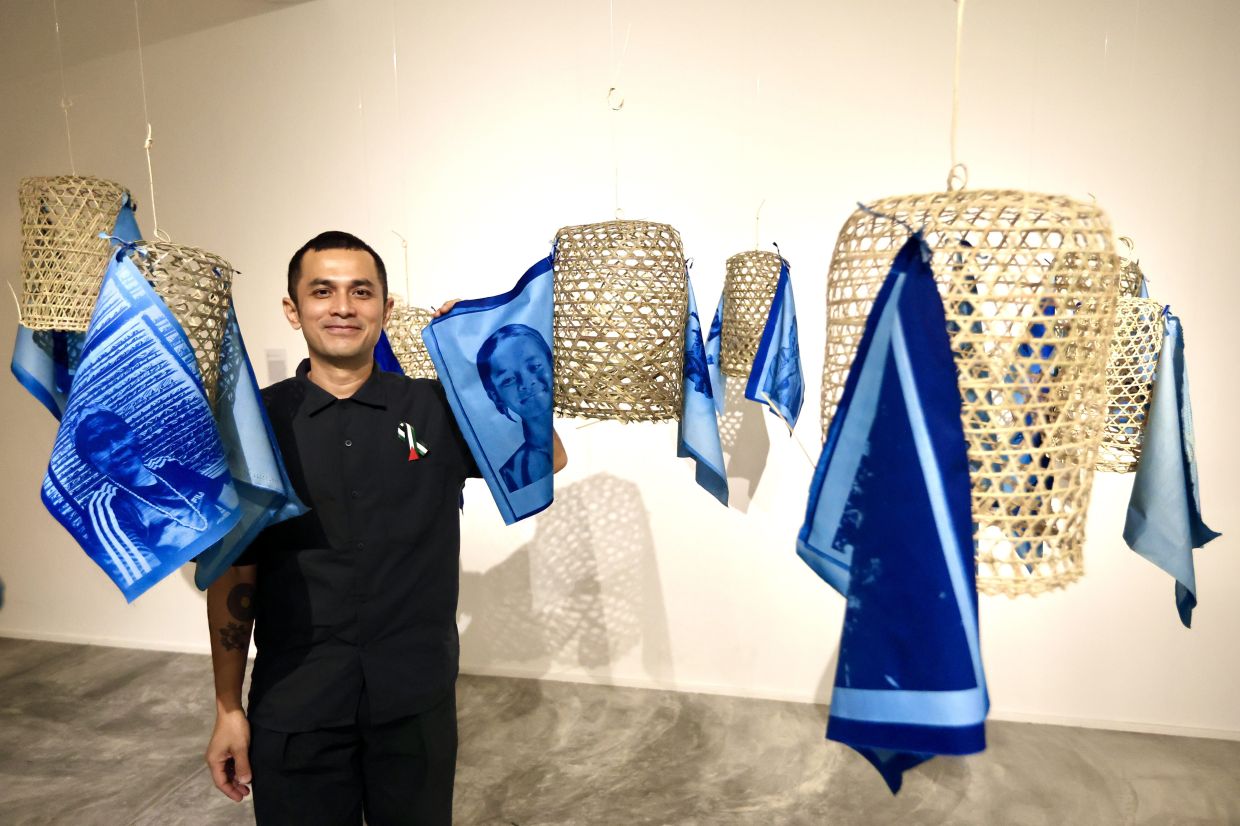
This spirit of community is reflected in Jiwa Raga, an installation comprising 21 custom-made rattan and bamboo baskets crafted by villagers.
Suspended in the air, each basket features “wings” made from cyanotype-printed portraits of villagers, symbolising their aspirations and dreams.
The collective spirit also extends to the exhibition’s presentation. Most works are displayed without individual artist credits, a deliberate decision by the group, says curator Azzad.
“Each work was created in collaboration with residents of the Semai villages, so we wanted to preserve the sense that these pieces were made collectively rather than by individuals.
“Our aim was to give the artists space to express themselves creatively while maintaining an authentic representation of the Semai community,” he says.
Threads of connection
Mimpi Jernang grew from the connection between Saiful and Yahya, who first met at the 2022 Venice Biennale. It is fitting, then, that the project will return to an international platform next month, as part of the Stateless Mind Pavilion at the 16th Gwangju Biennale.
Stateless Mind Pavilion curator Amir Zainorin, who also worked with them in Venice, was drawn to the project’s collaborative, dialogue-driven approach.
“The people involved discuss and agree on what they are going to do before anything is made. That way of working is close to the thinking behind Stateless Mind – it is not only about what is exhibited, but about relationships, listening, exchange and how we work with one another,” says Amir, a Malaysia-born artist based in Denmark.
He stresses that presenting Mimpi Jernang internationally does not require making its experience universal.
“Mimpi Jernang is deeply rooted in a particular place and in Semai knowledge, especially the relationship between dreams, memory, nature and lived experience. International audiences do not necessarily have to understand it in exactly the same way as the community it comes from,” says Amir.
The curator sees the work as a catalyst for conversation, whether in a Bangsar gallery with Malaysian audiences or at the Gwangju Biennale. People may recognise familiar elements, encounter what is unfamiliar or become curious enough to ask questions, he says.
“For me, that encounter is important. This is central to Stateless Mind: the local does not have to lose its specificity to connect internationally,” he concludes.
Mimpi Jernang is showing at Rissim Contemporary in Bangsar, Kuala Lumpur until Aug 31. Free admission. Open: weekends, noon to 6pm; weekdays, by appointment. Instagram: @mimpi_jernang.