The soaring lines of baroque music will soon fill the concert hall, but not in the way audiences might expect.
Breaking free from the intimacy of its usual performances, early music ensemble Wicked Music People (WMP) is set to unveil a bolder, more expansive side of the genre in a new show that features collaborators from diverse artistic disciplines.
Unbound takes the stage at Pentas 2, KLPac on Aug 15 and 16, bringing together WMP, the Kenny Shim Dance Collective, the Ottophony vocal ensemble, digital scenographer Zen Lin Tan and lighting designer Lim Ang Swee.
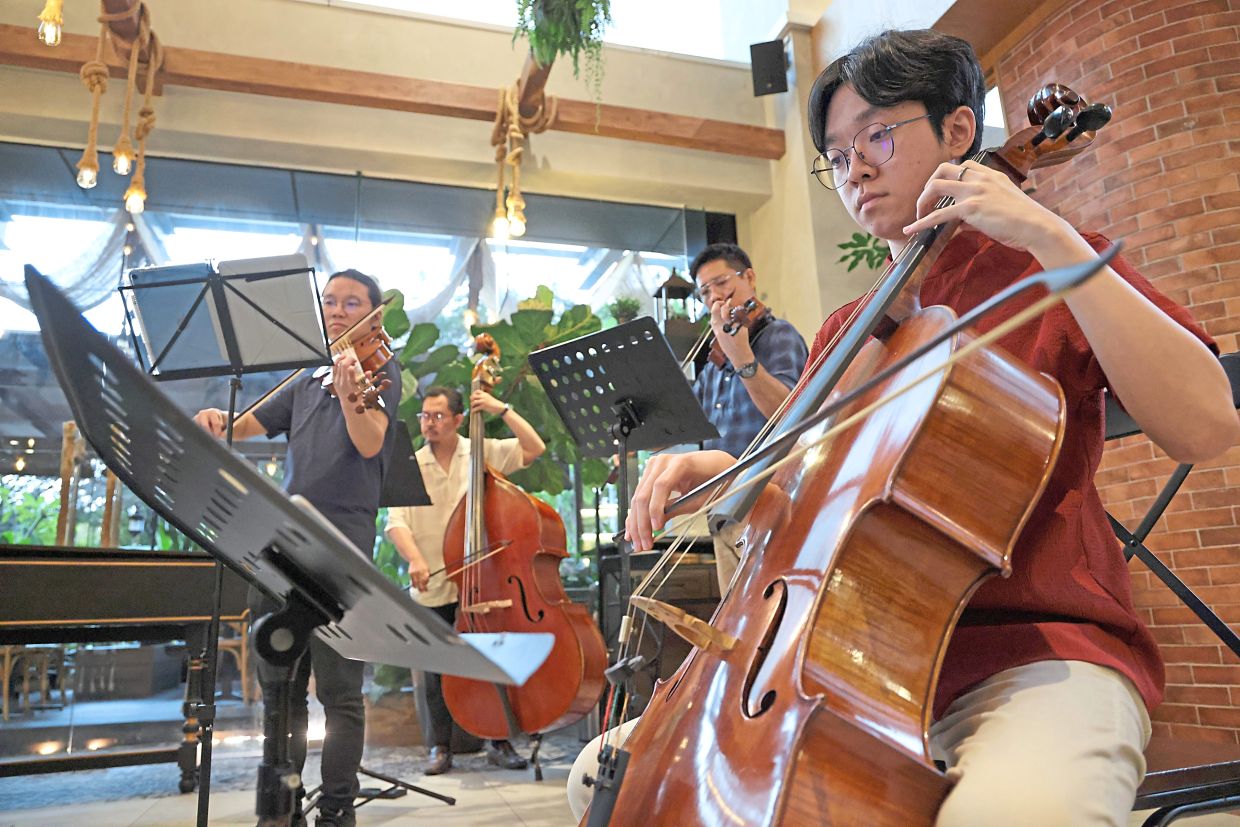
The programme features vocal and instrumental works by renowned baroque composers, including Johann Sebastian Bach, Antonio Vivaldi, Claudio Monteverdi and Henry Purcell, performed on period instruments such as the harpsichord, baroque violin and viola da gamba.
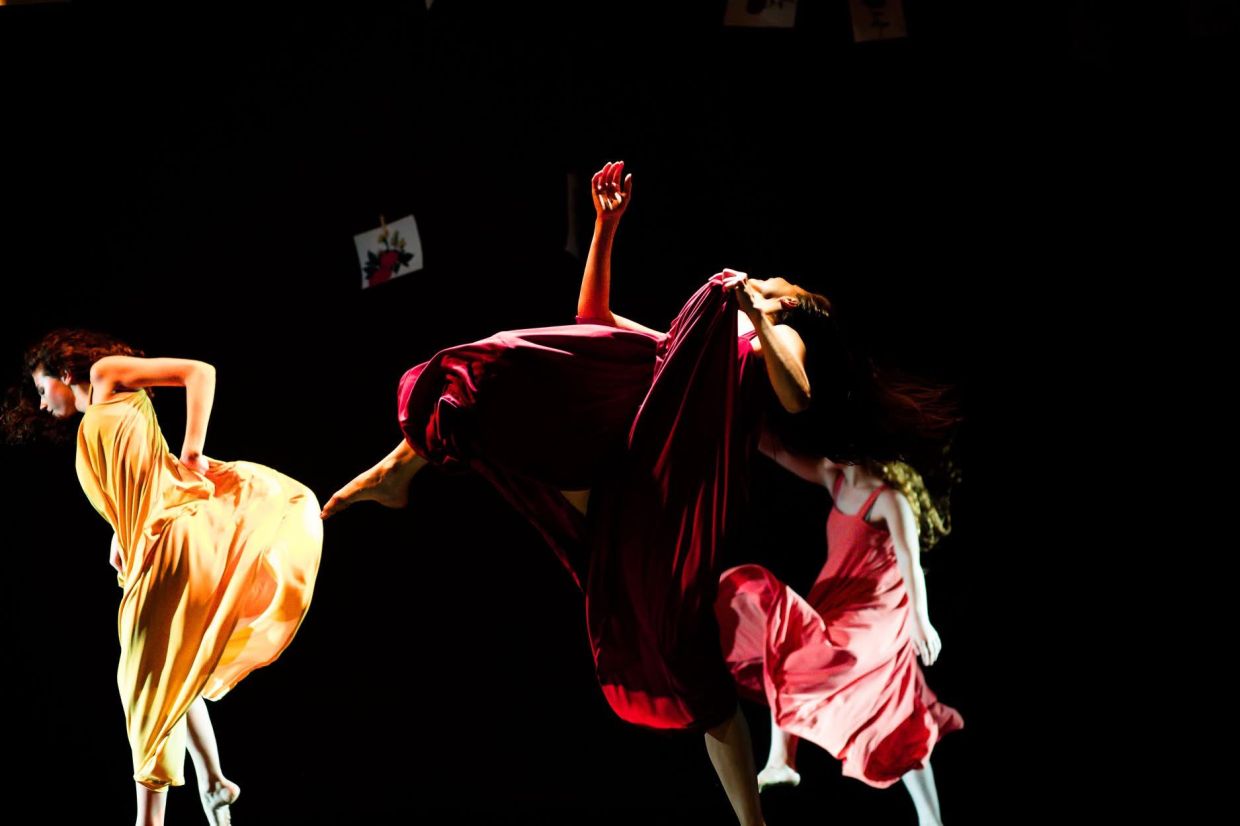
In a convergence of classical and contemporary art forms, the music is reinterpreted through contemporary dance, digital scenography and live dramatic performance, weaving these elements into a cohesive narrative exploring themes of human freedom and liberty.
A full performance of Vivaldi’s Concerto For Two Cellos In G Minor, which is rarely performed in Malaysia, as well as narrative- driven works such as Purcell’s famous bass aria What Power Art Thou and Monteverdi’s Lamento della Ninfa are on the setlist.
The concert will also mark the local period-instrument premieres of selected baroque works, including compositions by Tomaso Albinoni and Girolamo Frescobaldi.
The immersive itch
In an interview, WMP co-founder and Unbound co-producer Lee Hai Lin said the ensemble, which specialises in early music from the late Renaissance and baroque periods, had long sought to create a production that challenges convention.
“It’s such an exciting idea to bring baroque period performance – old music played on old instruments – together with avant garde contemporary dance and digital projections, and all in a context that speaks to Malaysian audiences today.
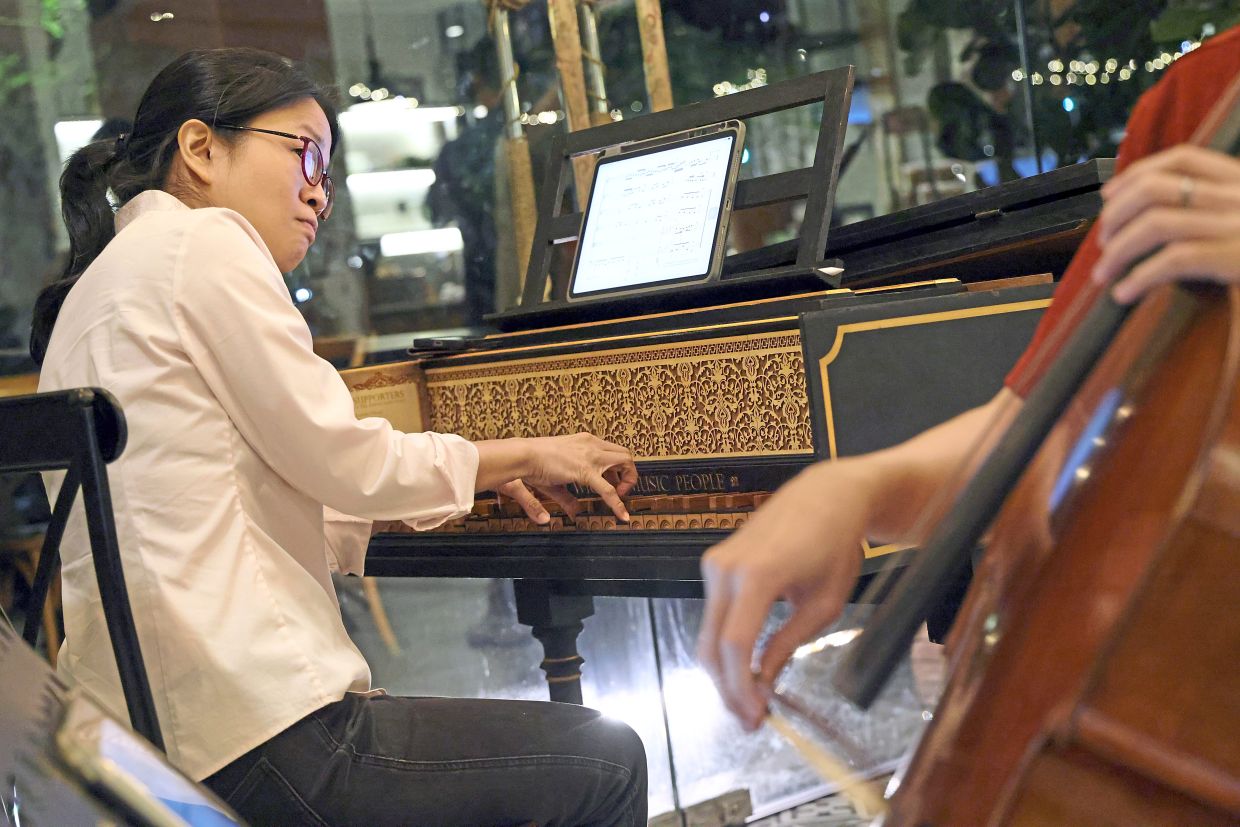
“We’re all united by a shared passion to engage the audience in a really immersive and unique way to tell a story,” says Lee, who plays the baroque violin.
Founded in 2016, the group began with intimate performances at a pancake parlour in KL before expanding to diverse venues, including cafes, temples, churches and heritage warehouses.
In 2018, it became the first baroque ensemble in the region to perform at Dewan Filharmonik PETRONAS.
Unbound reflects WMP’s vision of a more collaborative, multidisciplinary approach, bringing baroque music into dialogue with contemporary dance.
Kenny Shim, the show’s choreographer, drew inspiration from the collaboration with WMP. A contemporary dance piece will accompany the music on stage, adding an extra layer of theatricality and giving theatregoers a more immersive experience.
"Freedom is not something we possess alone. It grows whenever we make space for another person’s story, another person’s truth, another person’s humanity," says Shim.
"Perhaps that is why we continue to create: not simply to entertain, but to remind ourselves that we are never truly unbound until others are free to be themselves as well," he adds.
The ambitious Unbound project, however, was years in the making – a slow-burning idea that gradually took shape.
WMP co-founder and concert co-producer Ng U-En adds that the show began with a narrative brief, which each collaborator then took and interpreted through their own creative lens before bringing it all together.
“Perhaps the best way to describe the process is that we’ve been working as a collective team of individuals, each with his or her own expression, and we’re all taking part in a conversation with one another, and with the audience,” he says.
As for the story behind Unbound, Ng, who wrote the performance’s monologues, says it was inspired by the idea of freedom and the human desire – internal and external – to be “unbound”.
“The baroque movement, at the time of its birth in the late 1500s, was also a movement towards being unbound by the musical conventions of the past. This took place at the same time as the great scientific revolutions.
“For example, Galileo Galilei’s father Vincenzo was one of the ‘founders’ of the baroque period, so there is a direct narrative and historical link,” says Ng, who plays the viola da gamba (a historic bowed string instrument).
“We then crafted a new set of monologues to explore these stories, and I’ve been drawing on my past life as a stage actor for inspiration.
“However, I credit Lin for the difficult job of making me see a much truer picture of the world – one that has its share of darkness, but one that also holds great hope, life and beauty. After many revisions, the story is one that I am actually very proud of and happy with.”
On the same level
Today, baroque period instruments are increasingly rare, making opportunities to hear them performed live equally uncommon.
Members of WMP have gone to considerable lengths to acquire their instruments, including building their own harpsichord, as sourcing one commercially would have incurred significant costs.
For those curious to experience the music, Unbound presents a special opportunity to encounter these instruments in a theatrical performance.
“Back in 2019, we were using an electric keyboard and we really wanted to work with the actual sound of a real harpsichord.
“It would have cost more than the price of a small house to import a good instrument from overseas, so we decided to build one using parts supplied by a harpsichord maker in Paris,” says Ng.
“This was probably not as sane an idea as we thought at the time, but the result has been amazing, and it makes us very happy to be able to share this instrument and bring it out all over the country to universities, schools and unconventional performance spaces like converted warehouses where people can get up close, see and touch it, as well as hear it,” he adds.
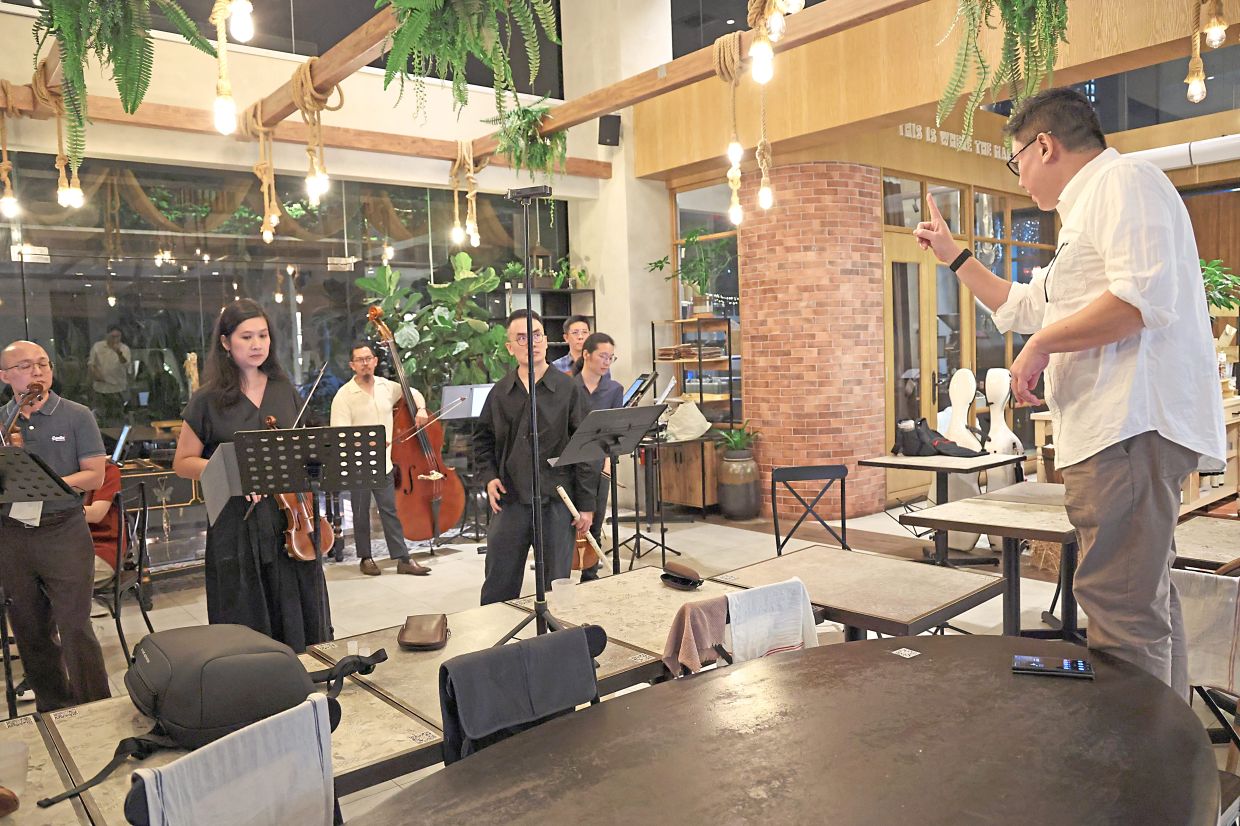
While maintaining these instruments is neither easy nor inexpensive, WMP’s passion for early music and its commitment to sharing it with others make the challenges worthwhile.
“From the start, WMP’s mission has been to take performances out of formal concert halls in order to bridge the gap between audience and musician, because baroque music is very much alive – it’s like jazz in many ways and relies on a lot of improvisation and ornamentation,” says Lee.
Pausing to reflect, she describes it vividly: every performance is a conversation between a composer from 300 years ago, the performer of today and the audience, brought together through music.
“Unlike the formal classical music of later periods, like big symphonies, baroque music was played in smaller settings, from taverns to the palace galleries of kings and queens, and even in the street.
“The musicians are on the same level, physically, as the audience, and they are all in it together. That’s what makes this music not just relevant, but vital even today, with an emotional appeal that can reach across time, language, culture and geography,” concludes Lee.
Unbound plays at Pentas 2, KLPac, Sentul Park, KL on Aug 15 and 16. More info here.