Beyond the familiar batik and songket lies a wider world of Malay textiles, shaped by generations of craftsmanship, cultural exchange and tradition.
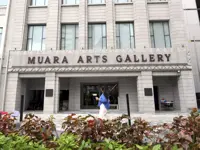
The newly opened Merdeka Textile Museum (MTM), located in the Look At 118 building within the Merdeka 118 Precinct in Kuala Lumpur, is dedicated to preserving and sharing the textile heritage of the Malay world.
The museum’s main draw is the personal collection of the late Azah Aziz (1928-2012), a cultural figure who devoted her life to preserving Malaysia’s textile traditions. Donated by her daughter, former Bank Negara Malaysia governor Tan Sri Dr Zeti Akhtar Aziz, the collection comprises about 450 costumes, textiles and jewellery from across the Malay world, including Palembang, Sumatra and Pattani.

In the museum, some 240 garments and 69 pieces of traditional jewellery, featuring exquisite examples of sarung songket, baju kurung limar and tekat emas are currently on display, with plans to change up the exhibits from time to time.
The museum also draws inspiration from Azah’s publication, Rupa & Gaya: Busana Melayu (2006), an enduring work that explores Malay textiles as living expressions of identity, history, culture and society.
In 2025, an English language edition was published, further widening its reach.
Guided by the theme The Malay World In Threads And Tales, the museum is designed around eight thematic galleries inspired by the Bunga Pecah Lapan motif.
The museum traces the evolution of Malay world textiles through craftsmanship, symbolism, spirituality, politics, literature and material culture, combining authentic artefacts with interactive technology and multi-sensory experiences.
Textile connections
During a recent curatorial tour, museum director Suryani Senja Alias said MTM’s approach was shaped by Azah’s distinctive perspective on Malay textiles, as reflected in her book.
“Azah was actually one of the first to write about how textiles connect to literature. We’ve been able to learn so much about the crafting and wearing of textiles, as well as their cultural significance in the past, through the detailed accounts in Malay classical literature,” says Suryani.
“Throughout the museum, visitors will encounter lines from epics and poems describing the attire and styles of people from centuries ago,” she adds.
The first gallery touches on the links between Malay material culture and nature.
“Azah’s book has one whole chapter dedicated to colours. For example, she highlighted how Malays love red so much that there’s more than 40 shades of red named in the Malay language, and they all come from nature. There’s the red of the saga seed, pomegranate red and many more,” says Suryani.
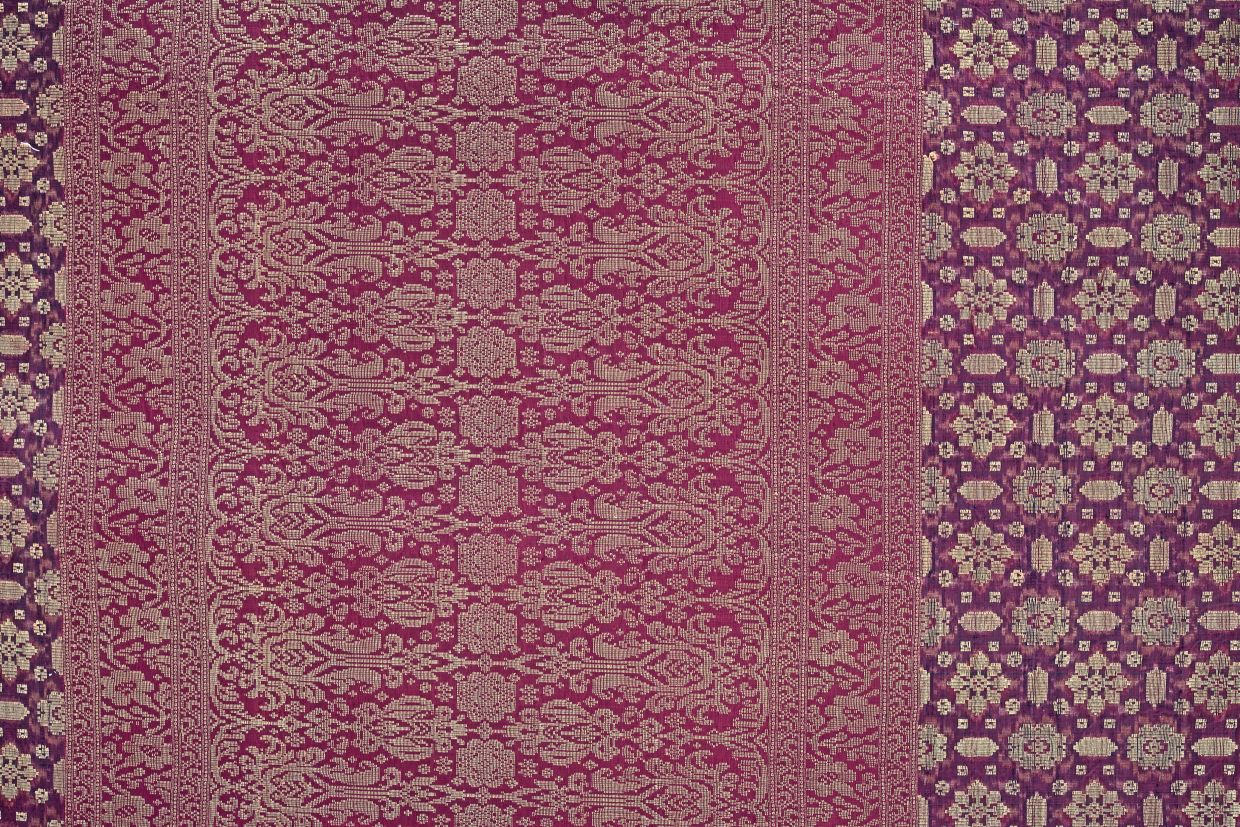
The second gallery explores the region’s role in the Maritime Silk Road and its history of global trade and cultural exchange.
“The Malay people loved patola, which is a traditional Indian textile created using a tie and dye method on silk threads. But back then, it was difficult to get and very expensive. So they developed limar,” says Suryani.
If you look closely, you may notice some textiles that appear similar to the kind you’d find locally, and yet strangely dissimilar.
“These were made for the Malay market, but were actually produced in other countries, like France, Japan and the Netherlands. Previously, the Malay market was considered a luxury market. Our wealthy royal families could afford to wear very expensive and exquisite textiles,” says Suryani.
The craftsmanship
In the third gallery, you get to learn about the various motifs employed in Malay textiles, many of which came from nature.
Suryani says that in the past, textile patterns were actually called “awan”.
“The awan larat pattern has nothing to do with clouds, but instead refers to a seamlessly repeating pattern. So here at the museum, you’ll learn how the language back then was heavily influenced by crafts that were widely being practised in our daily lives,” she adds.
In this gallery, there’s even an interactive display that allows visitors to pick out certain patterns from a digital screen to learn more about their names and origins.
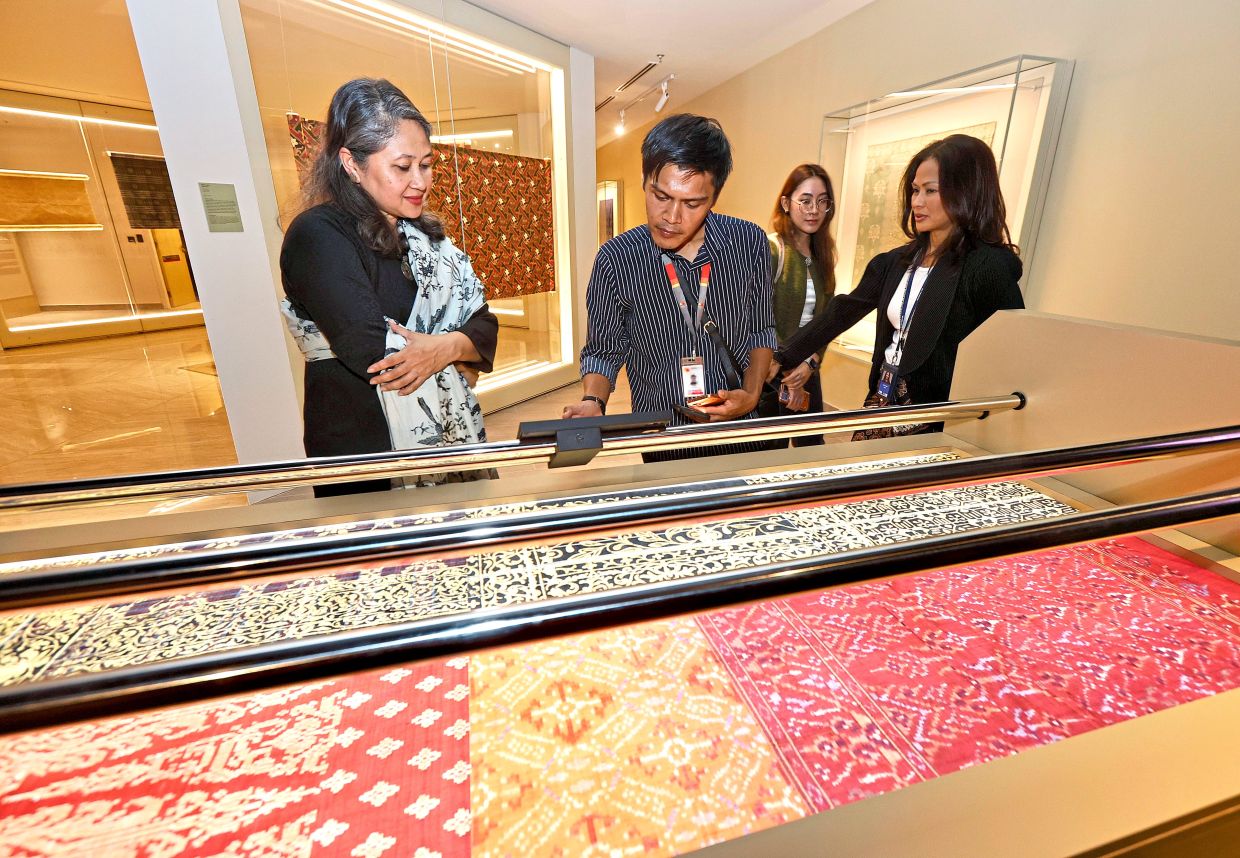
The fourth gallery showcases the techniques that can be found in the making of Malay textiles.
There are over a dozen examples from the Puan Azah Aziz Collection, such as ikat loseng, pelangi, telepuk, tekat, keringkang and limar – all of which have been well preserved and displayed in such a way that you can view them from all angles.
“The techniques from back then are not as advanced as the ones we have now, but they were made to last. Some of the oldest ones we have here were made in the late 1800s,” says Suryani.
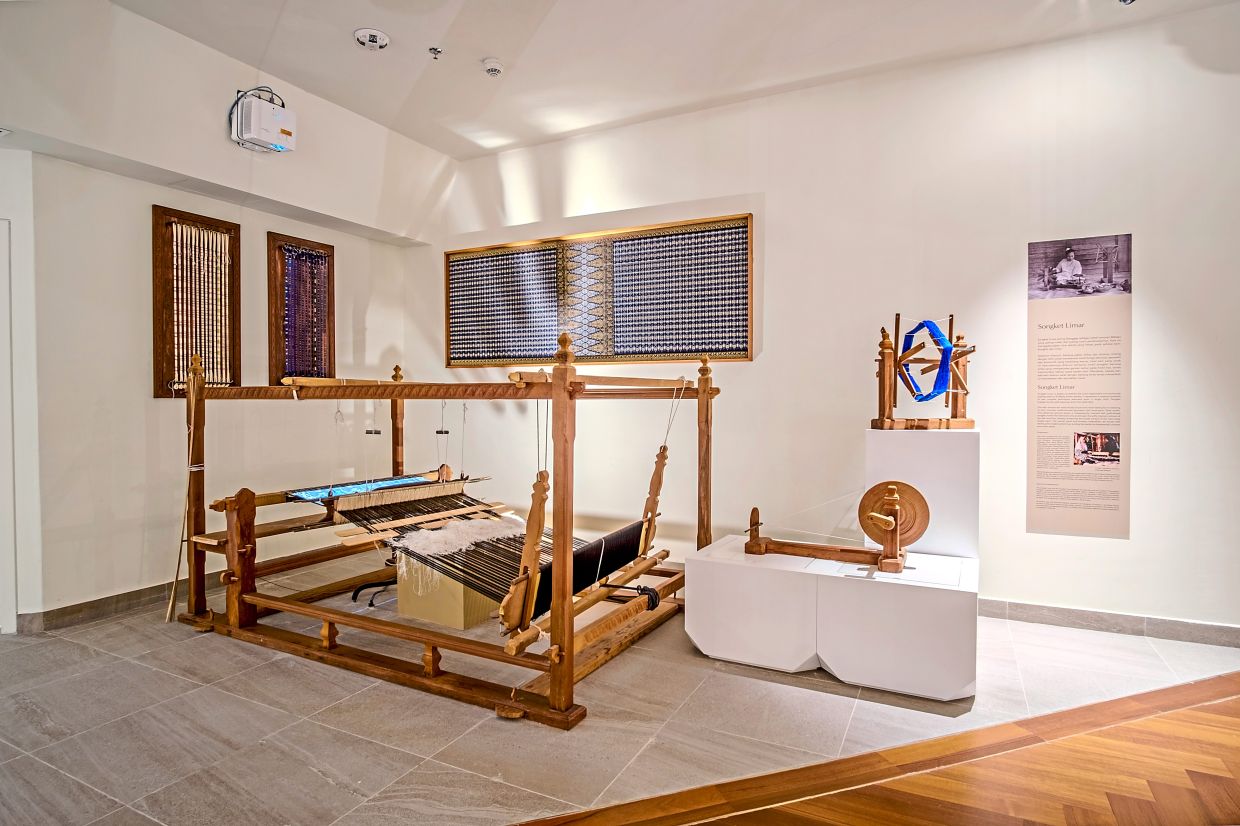
A multimedia display featuring sound and projections demonstrates the painstaking process of crafting limar songket.
“We wanted to show people how it’s made because it’s one of the most complicated techniques in Malay textiles, combining both songket, which involves hand-weaving supplementary gold or silver thread into the fabric, and limar, which is an intricate weft-ikat weaving technique. Both are challenging on their own, so to put them together is a very complex process,” explains Suryani.
The fifth gallery presents the ceremonial costumes and accessories worn by Malay royal families, where you’ll find the finest examples of telepuk, songket tenun and songket limar with the highest workmanship.
The way forward
The final two galleries, featuring contemporary takes on Malay fashion and artwork inspired by material culture, will be rotating galleries.
“We want to change things up every quarter so that people don’t get bored of looking at the same thing,” says Suryani.
“Textiles are very much a living tradition. Until now, there are still designers who use handcrafted fabrics or traditional motifs, but in unconventional ways, so we wanted to give them a platform,” she adds.
In the final gallery, there are experimental takes on textiles, such as “fabric” made from industrial waste metal and a fully 3D-printed dress. There are also artworks from familiar Malaysian artists and collectives, such as Yee I-Lann, Marcos Kueh and Pangrok Sulap.
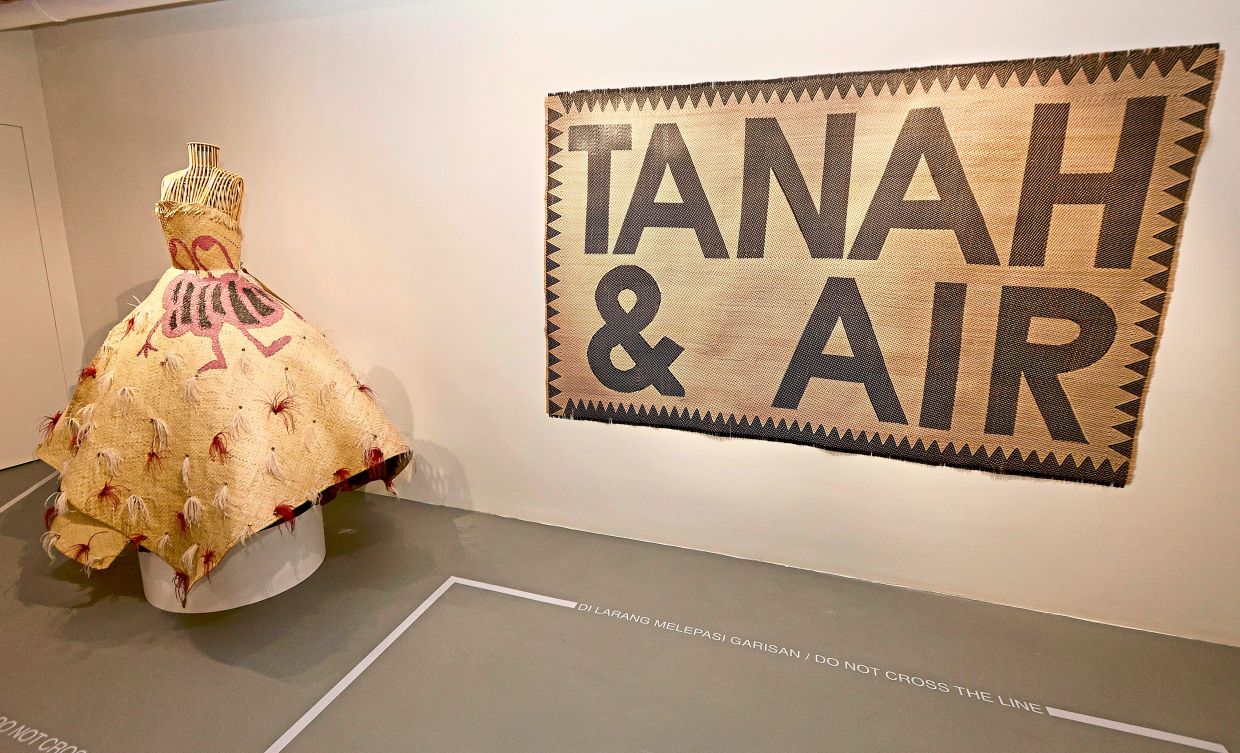
“As you can see inside the museum, textile has its own language. So you have to learn a whole new language when you step into the world of textiles.
“It’s not just a physical object, but there’s a deep system of meaning that has its own vocabulary and symbolisms,” says Suryani.
“Our hope is that when visitors leave the museum, they perceive the world differently, even if it’s simply paying closer attention to the natural world to find the inspirations behind the motifs,” she concludes.
Merdeka Textile Museum in Kuala Lumpur is open for walk-ins, though advance booking is recommended. Open: Tuesday-Sunday, 10am-6pm. Admission: RM50 (standard adult), RM20 (adult with MyKad). More info: merdekatextile.com.