If there is an artist who continues to draw gallery-goers into his world, it is Rafiee Ghani, whose art is fuelled by wanderlust and whose paintings bring together the colours and textures of the places he explores, allowing viewers to experience them through his eyes.
The veteran abstract artist’s repeated visits to Indonesia often last for weeks or months, taking him beyond the usual tourist routes.
Over the past year, he has explored Pantai Trenggole, Bukit Pengilon and Gunung Kidul in Yogyakarta, as well as Bromo Lumajang in East Java, among other destinations.
Having returned from his latest trip in June, Rafiee presents the fruits of his journeys in his show Dusun Laut at Galeri Puteh in Kuala Lumpur.
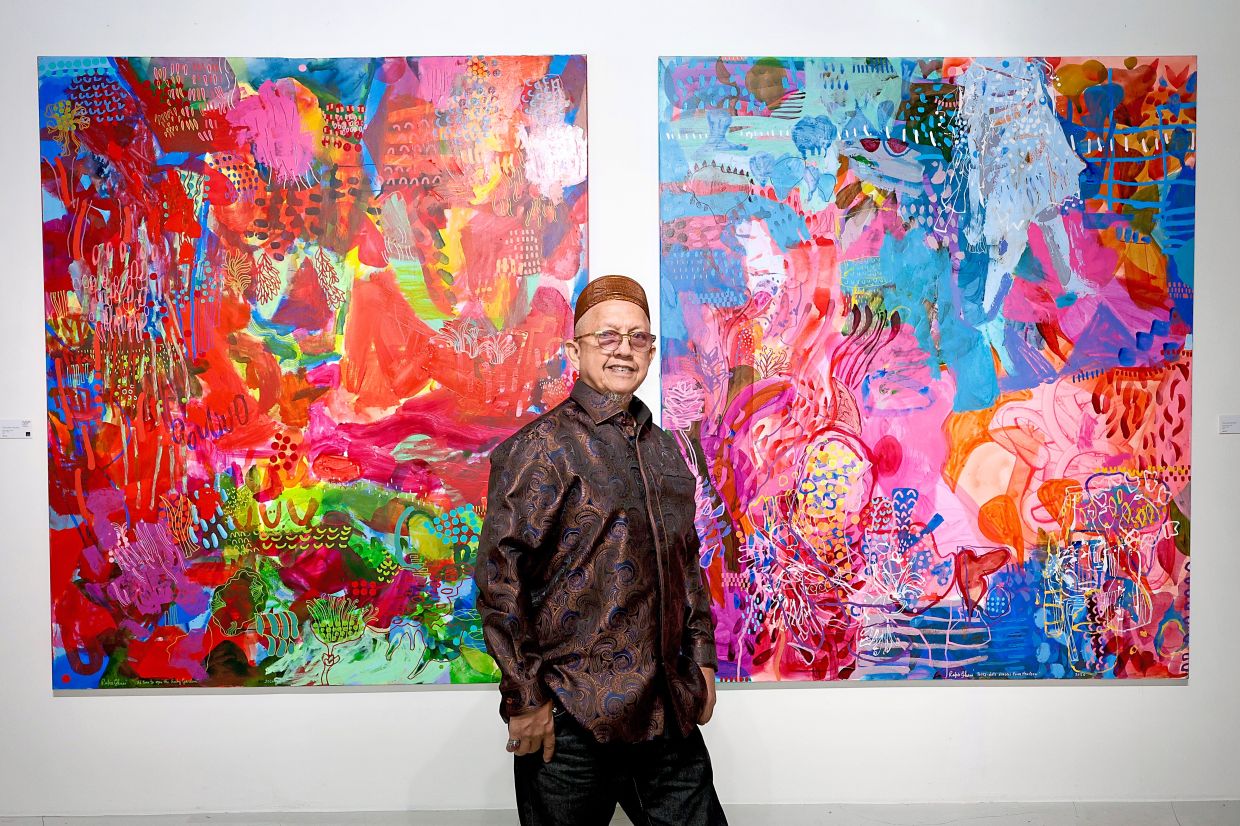
The exhibition, running through Nov 7, brings together more than 40 new works, their Nusantara palette extending across mixed media paintings on canvas and charcoal drawings on paper.
As large solo exhibitions devoted primarily to painting become less frequent, Dusun Laut is a reminder of the value of taking time to look.
“I try to avoid tourist areas whenever I travel, spending more time exploring villages, understanding their culture. I’ve even reached some islands via boat. I will sketch and take photographs of a particular scene, but observations can capture things beyond the lens, and I usually feel the urge to paint once I’ve returned from a trip,” says Rafiee, 63, in an interview at the gallery.
The artist returns to more familiar territory after two previous solo exhibitions: Arca Samudera at Galeri Puteh in 2024, which saw him experiment with wood carving and sculptural forms, and Rafiee Ghani In Morocco at G13 Gallery in 2025, a dreamy watercolour study.
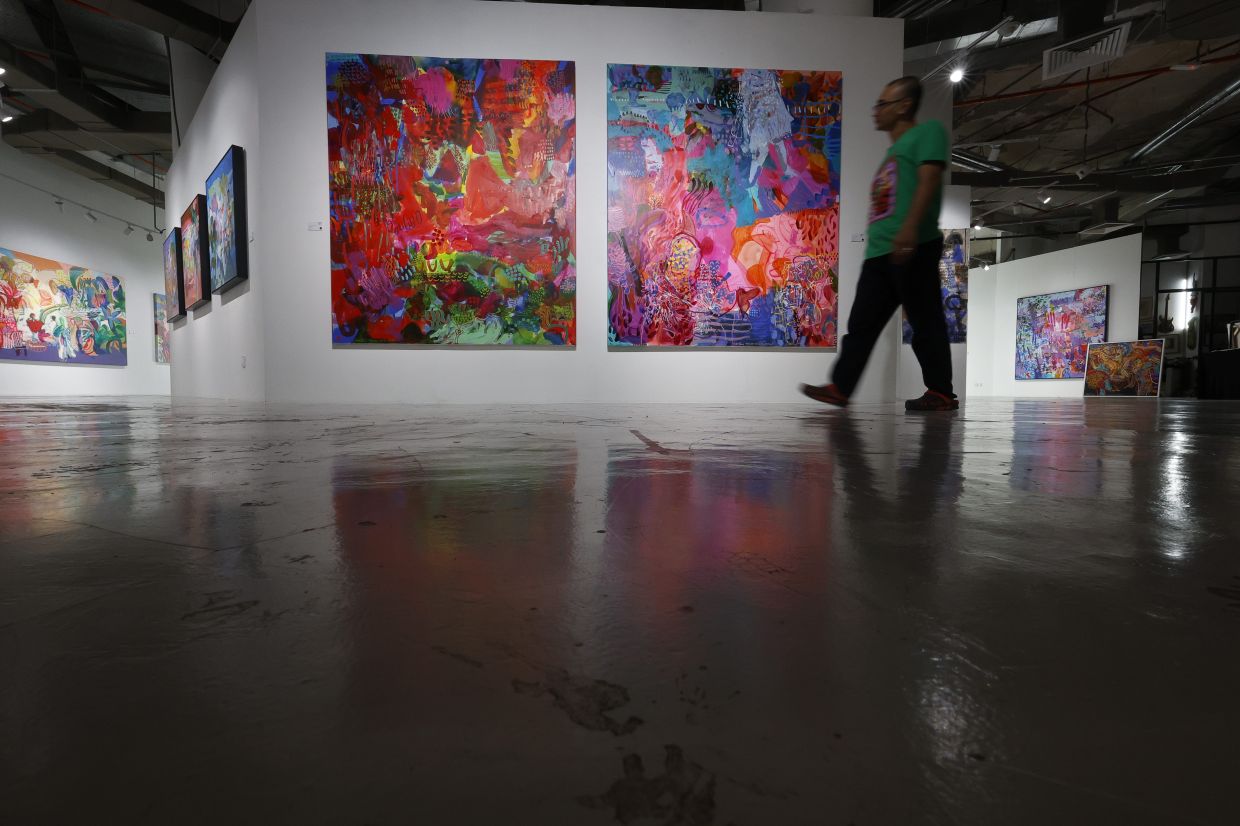
In Dusun Laut, the canvas becomes Rafiee’s means of translating his experiences into colour and form, with acrylic and oil lending a fluidity that recalls the region’s environments.
With titles in both English and Bahasa Malaysia, the works include Setaman Kantan,Taman Orang Merantau, Semangat Gunung Kidul, Tanah Melangit, Daerah Kemuning and Kedai Kopi Sejuta Impian, reflecting the regional cultural and geographical references that inform the exhibition.
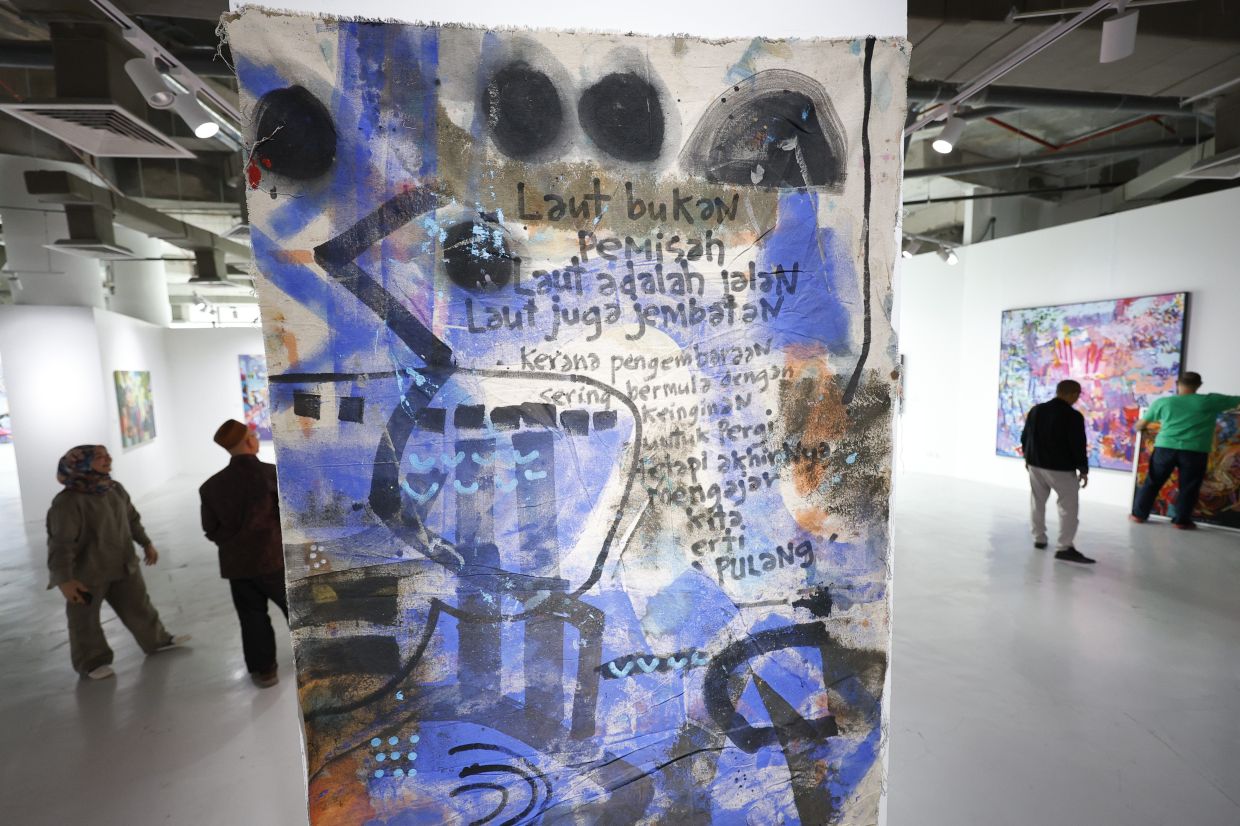
“In this exhibition, the term dusun can mean the fruits (reward) of labour from a plantation – planted, cultivated and preserved – but in travel terms, one harvests stories and experiences. The sea is a metaphor for a bridge that connects rather than separates. Maritime culture is an important aspect in Nusantara,” says Rafiee.
At a time when the haze crisis dominates public discourse, Rafiee’s paintings take us back to another era.
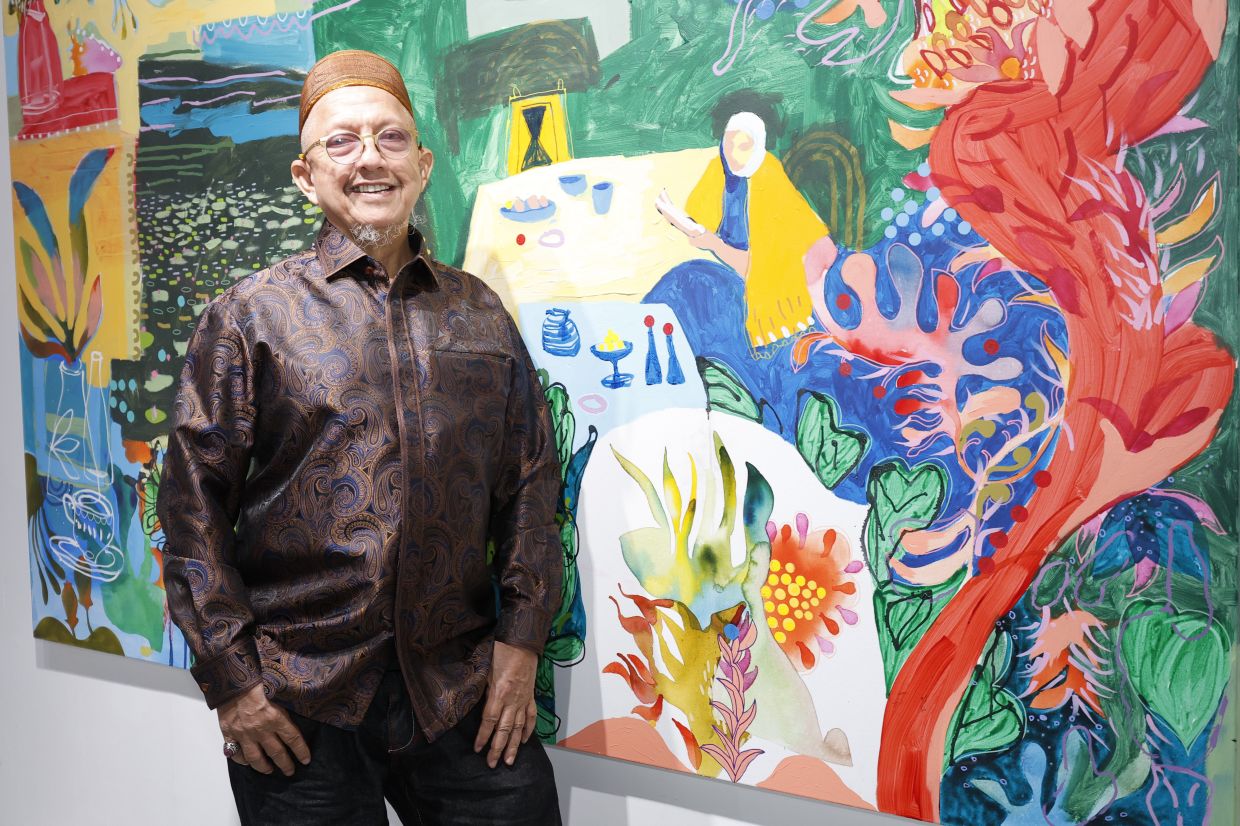
Recurring motifs of gulfs, bays, rivers, ponds, corals, flowers and leaves form a distinctive visual vocabulary of land and water, evoking South-East Asia’s longstanding cultural connections.
On his far-flung travels across Indonesia, it was the people he encountered who left the strongest impression, informing his understanding of the region’s cultural ties and traditions.
“I’ve met with many weavers there, who pass down folklore, myths and legends through textiles, so I adapted them into a visual archive. I don’t get into discussions about who ‘owns’ what, but we must remember that we shared many things among us (South-East Asian countries) before geographical boundaries were introduced. Batik existed before Indonesia existed, rendang existed before Melaka existed, so it goes beyond borders,” he explains.
Rafiee’s approach is informed by reading as much as by exploration.
As a constant source of inspiration, Rafiee returns to Paul Theroux’s The Great Railway Bazaar (1975), which chronicles the US author’s four-month railway journey across Europe, West Asia, the Indian subcontinent and South-East Asia, before returning via the Trans-Siberian Railway.
“Before I decide to travel anywhere, I read a lot of travelogues and history books. I don’t plan around things like climate or season, something from my research would feel like it’s calling out to me – something that makes me want to learn more about a country, its people and its way of life,” says Rafiee.
This unhurried approach gives the Kedah-born Rafiee time to absorb the myths, symbols and cultural references that inform his paintings.
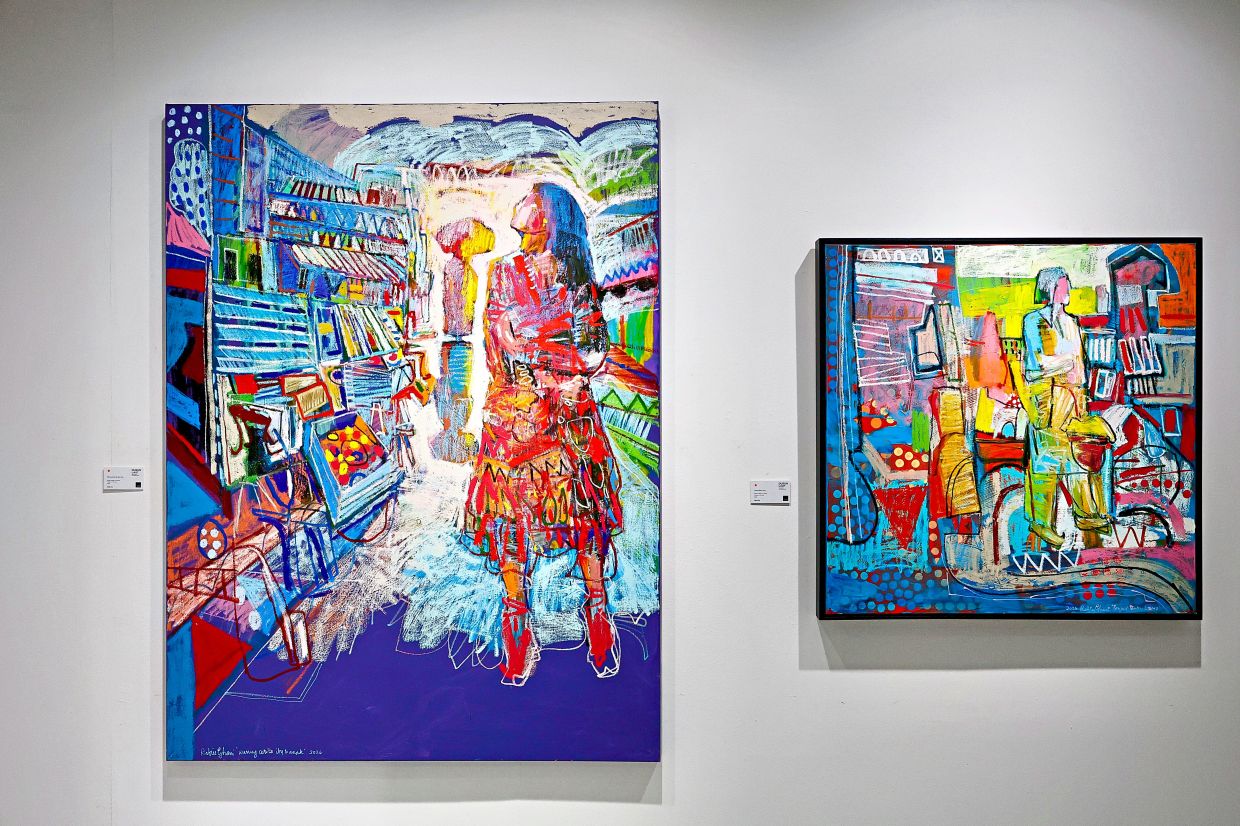
Two works that reflect the discoveries such journeys yield are Warung Cerita Ibu Dan Anak and the charcoal pairing of Taman Kuda Lari and Kuda Ku Menari Gagah Berlari.
“In one of the more isolated islands I visited, I discovered a small second hand bookstore where residents, even children come to read. They cannot afford to go beyond the islands so these kids dream of the world across the ocean. With books, they travel through the imagination,” says Rafiee.
“In contrast, there is an island called Pulau Sumba where herds wild horses run free, no one owns them. There may come a time where these types of scenes no longer exist, so I felt compelled to capture them,” he adds.
Back home in Puncak Alam, Selangor, Rafiee channels his experiences into painting, producing a substantial body of work for Dusun Laut. His family, too, provides a source of inspiration.
A father of 10 children – four boys and six girls, ranging in age from 14 to 40 – he relishes sharing stories of his journeys with them.
In Ayah Kami Pengembara, Rafiee depicts himself as an indistinct figure, shaped by a multitude of experiences. Three of his youngest daughters listen to his adventures, imagining their own journeys and the stories they might one day bring home.
“Before you travel, there is always that yearning for adventure, to explore, to move forward. But then when you are out, the feeling shifts. The story of this painting is of homecoming.
“Part of travelling is appreciating the ability to return and knowing that there are people who are excited to listen to your stories,” concludes Rafiee.
Rafiee Ghani's Dusun Laut is showing at Galeri Puteh, KL Eco City, Jalan Bangsar in KL until Nov 7. This Saturday (Oct 31) at 2pm, Rafiee will share insights into his travels and artistic practice at an art talk hosted by Galeri Puteh, alongside artist and educator Dr Jalaini Abu Hasan. Admission is free.