
What defines the Malaysian experience? In a country shaped by many cultures, shared stories often transcend differences. Some reinforce stereotypes, others capture familiar rites of passage, but together they form the rich tapestry of growing up in Malaysia.
Premiering tonight, Bebenang explores stories of identity, belonging and everyday life, examining the connections that bind us. In the production's notes, it asks us "to look at the paths we inherit, the rules we challenge, and the beautiful, messy ways we find our place."
Bebenang, staged at the Black Box, DPAC in Petaling Jaya, runs for 10 performances from Aug 6-16. The 80-minute production, presented without an intermission, is a collaboration between Perempuan Productions and JDev Studios, featuring Anitha Abdul Hamid, Amelia Tan, Jeremy Ang, Han Zalini, Nephi Shaine, Perassath, Sidhart Joe Dev, Sukania Venugopal and Yon Lynn.
The cast brings together a mix of seasoned practitioners and emerging talents.The production also marks actor Farah Rani's first major directing role.
Best known to comedy audiences as a quick-witted performer with improv troupe AIIA, she steps away from the stage this time, bringing her reflections on finding our place in multicultural Malaysia to the production.
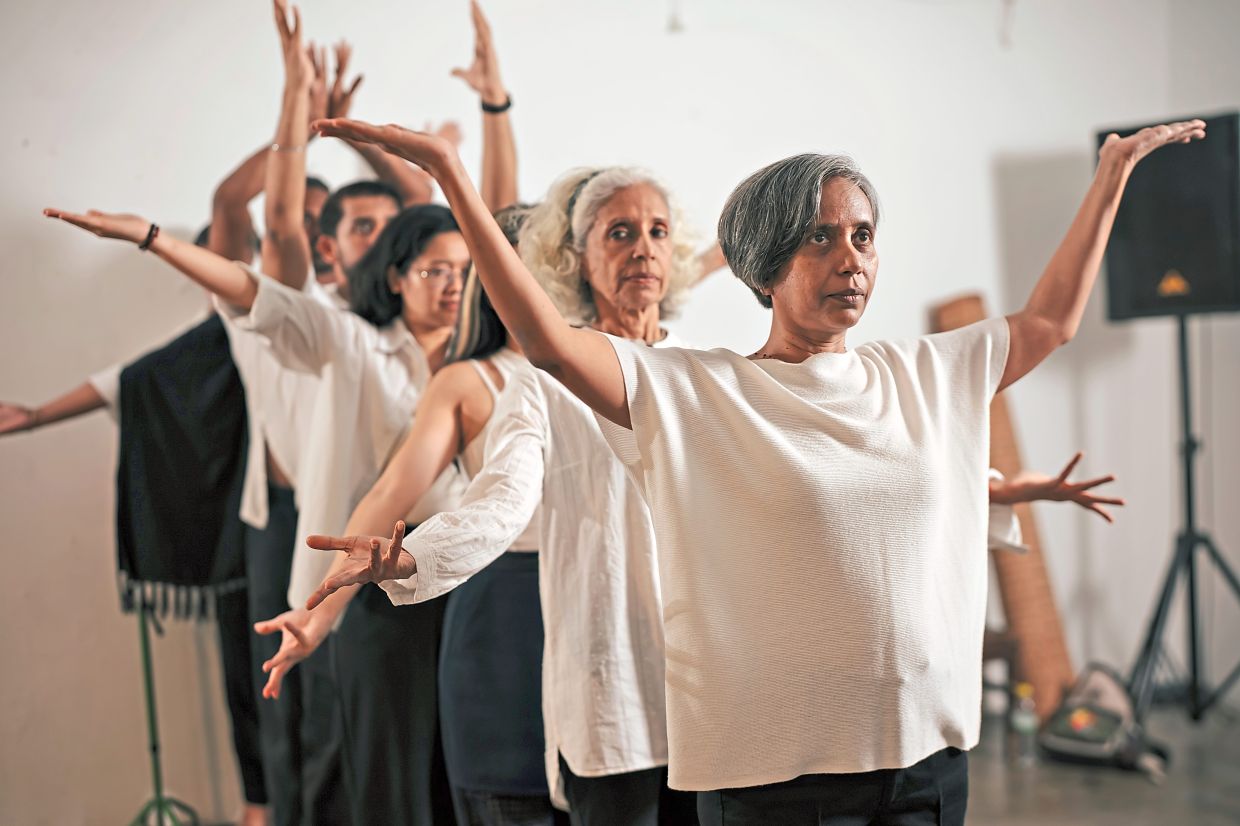
“I’ve performed improv for 18 years and it’s an important mechanism of how I stay informed, express, perform, and now direct. We wanted to honour each story as best as possible, so it’s quite hard to summarise the plot of Bebenang. But essentially it is a collection of true Malaysian stories that deal with identity, our connections with each other, with our ancestry, with systems and circumstances,” says Farah, who leads Perempuan Productions, in a recent interview in Petaling Jaya.
Bebenang is also a verbatim theatre production, with its script built from the actual words of people gathered through interviews, testimonies and conversations. It is among the projects supported by Yayasan Hasanah's Arts for All Seasons (ArtFAS 2026) grant.
“There’s quite a range of generations and social backgrounds from the interviewees. We weren’t searching for opinions, but personal stories, something that shaped their identity as a Malaysian,” says Farah.
An open call was held earlier this year to gather stories for Bebenang ahead of its directorial development.
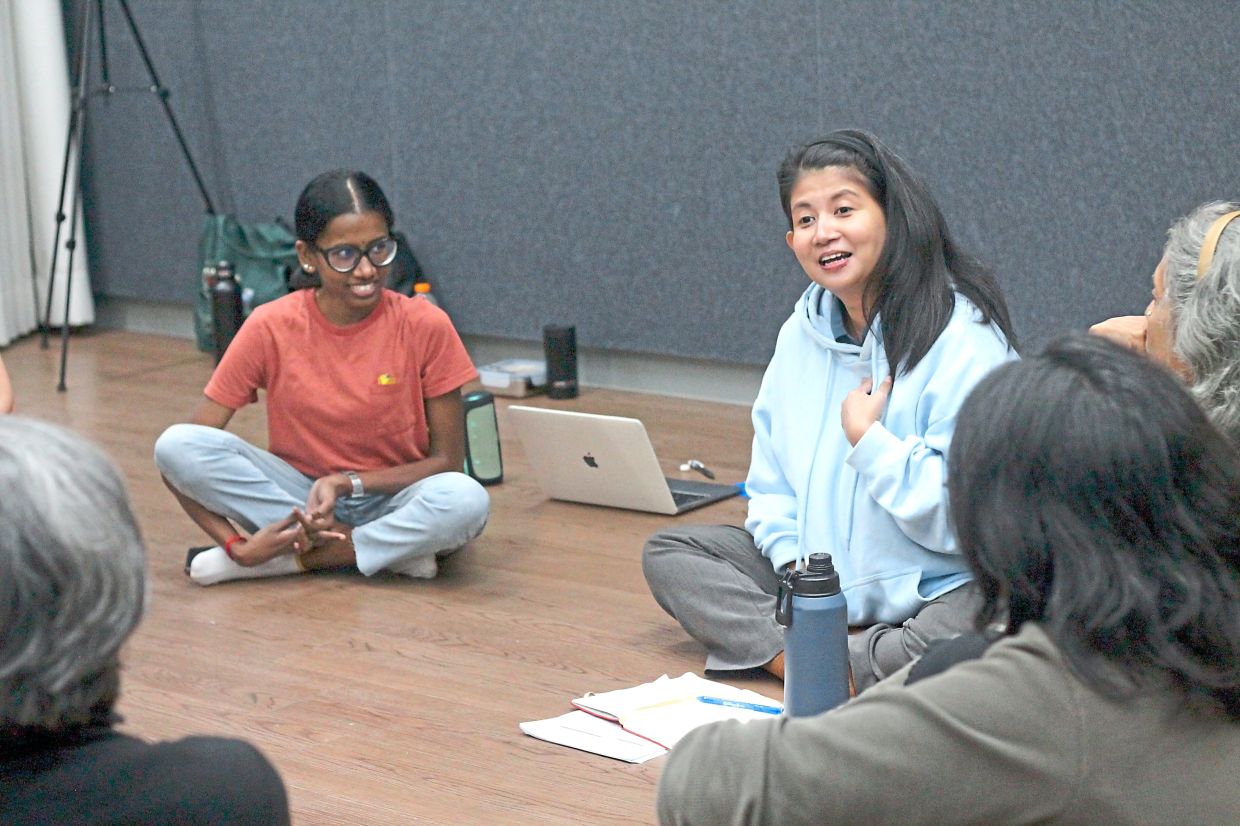
A hands-on theatremaker, Farah has challenged the cast to navigate multiple roles across 26 “scenes”, blending choreography, code-switching between local dialects and Malaysian Sign Language (Bahasa Isyarat Malaysia). The production is further textured by Santosh Logandran’s soundscapes and Bryan Chang’s lighting and projection design, which heighten the emotional impact of the stories on stage.
“Someone we interviewed was a feng shui master, who shared that he went to school that had a majority of Indian students. So while the Malaysian public school experience is quite universal, these distinct stories are what can surprise audiences, and could even trigger a memory of someone that they know,” says Farah.
Nurses, teachers and an ustaz (religious teacher) are among the characters featured in the production, but they are not defined solely by their roles. The show seeks to expand our understanding of these familiar archetypes, revealing the personal stories and experiences that often remain unseen.
“I really wanted to create a sense of resonance in Bebenang – a feeling that audiences can recognise in every character. The show moves across different moments in time and specific events, without following a linear narrative; it does not tie everything up neatly at the end, much like real life. Instead, as each thread is pulled, more complex stories emerge, intersect and overlap, eventually weaving into something much bigger,” concludes Farah.
'Bebenang' plays at Black Box, DPAC in Petaling Jaya from Aug 6-16. More info here.