Stickers are miniature artworks that can be found almost anywhere, if you know where to look. From adorning laptops, cafe walls and trash cans to deejay flight cases and traffic lights, they bring a touch of personality to otherwise ordinary things and surroundings.
For many, the love of stickers begins in childhood, when earning one from a teacher for acing a spelling test felt like a small reward worth collecting. Trading stickers with friends became a way of sharing tastes, discovering new designs and building connections.
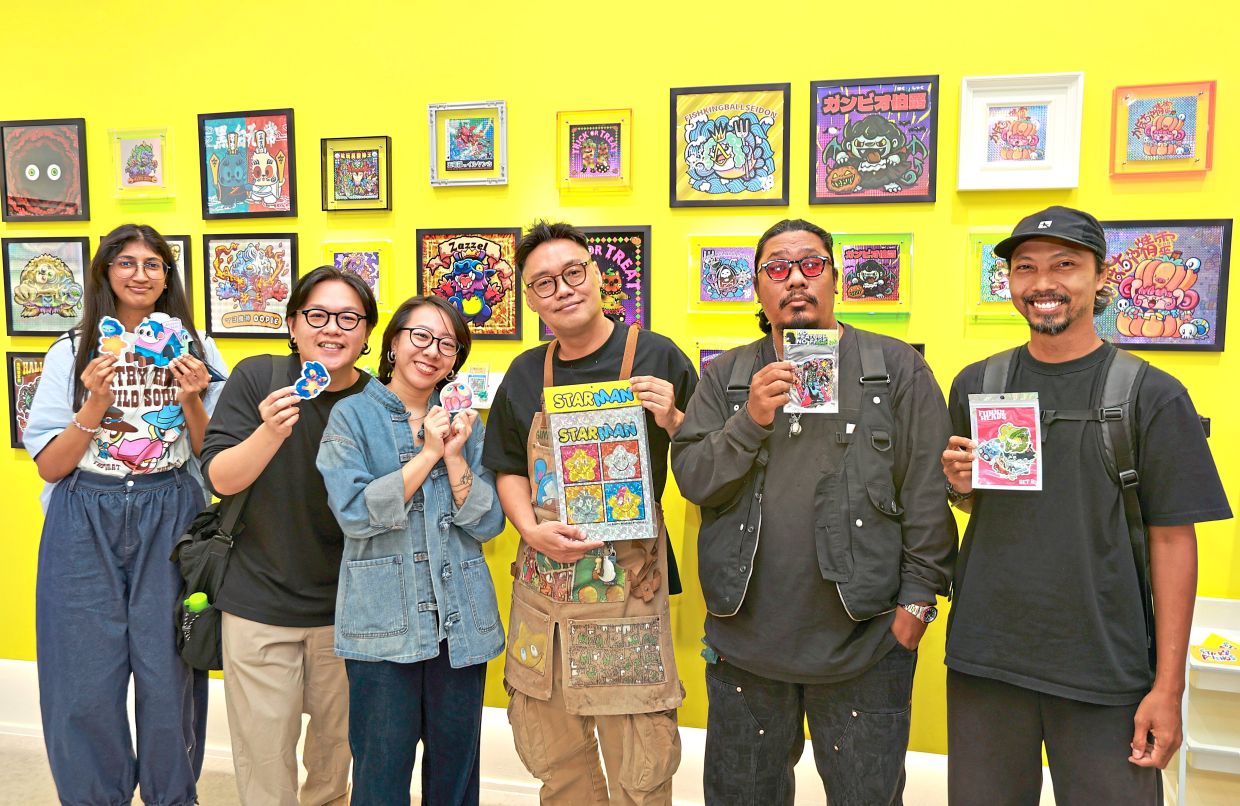
That same spirit of exchange and community is at the heart of Sticky Friends, the current exhibition at A4 Art Gallery, GMBB mall in Kuala Lumpur, which explores stickers and other forms of street art culture.
Running through Aug 23, the exhibition has drawn audiences beyond the usual gallery circuit, highlighting the potential of KL’s increasingly diverse art communities and alternative spaces.
Much of the exhibition’s publicity has taken place online, particularly through TikTok, reflecting how art venues are increasingly engaging new audiences through social media.
Sticky Friends is among the first international sticker art movements dedicated to celebrating one of the most accessible forms of visual expression: the sticker.
This marks another distinctive exhibition for A4 Art Gallery, which has continued to explore art-adjacent niches and integrate them into the gallery experience through recent showcases such as Supertoy Fest, Art In Motion and Ride For Art.
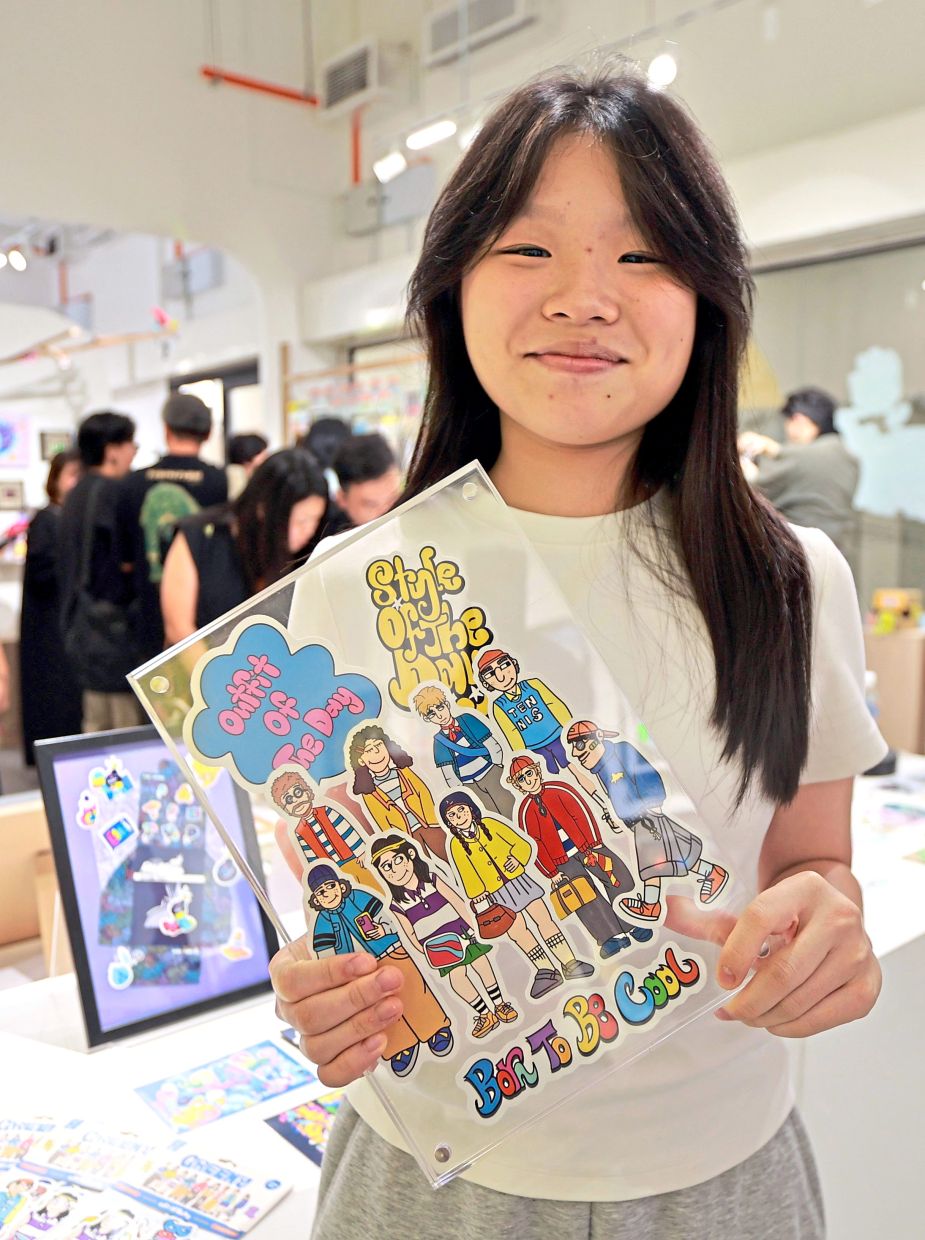
These exhibitions create a meeting point between pop culture and contemporary art, while encouraging broader engagement by offering works at accessible price points ranging between RM10 and RM2,000.
“Every exhibition concept at A4 Art Gallery is planned well in advance. I believe each event should be built around a clear theme or collectible category, rather than attempting to bring together too many different elements at once," says Ng Si Juan, co-founder of A4 Art Gallery, in a recent interview.
“While I value feedback from artists and visitors, the overall direction and long-term vision of each exhibition are carefully curated to ensure that every event has its own identity and purpose,” he adds.
From art on skateboard decks in previous exhibitions to hundreds of stickers serving as canvases in this latest showcase, A4A Gallery has found a creative balance. Through these unconventional mediums, the gallery continues to broaden the conversation around what can be considered art, while creating accessible entry points for new audiences.
A gallery without limits
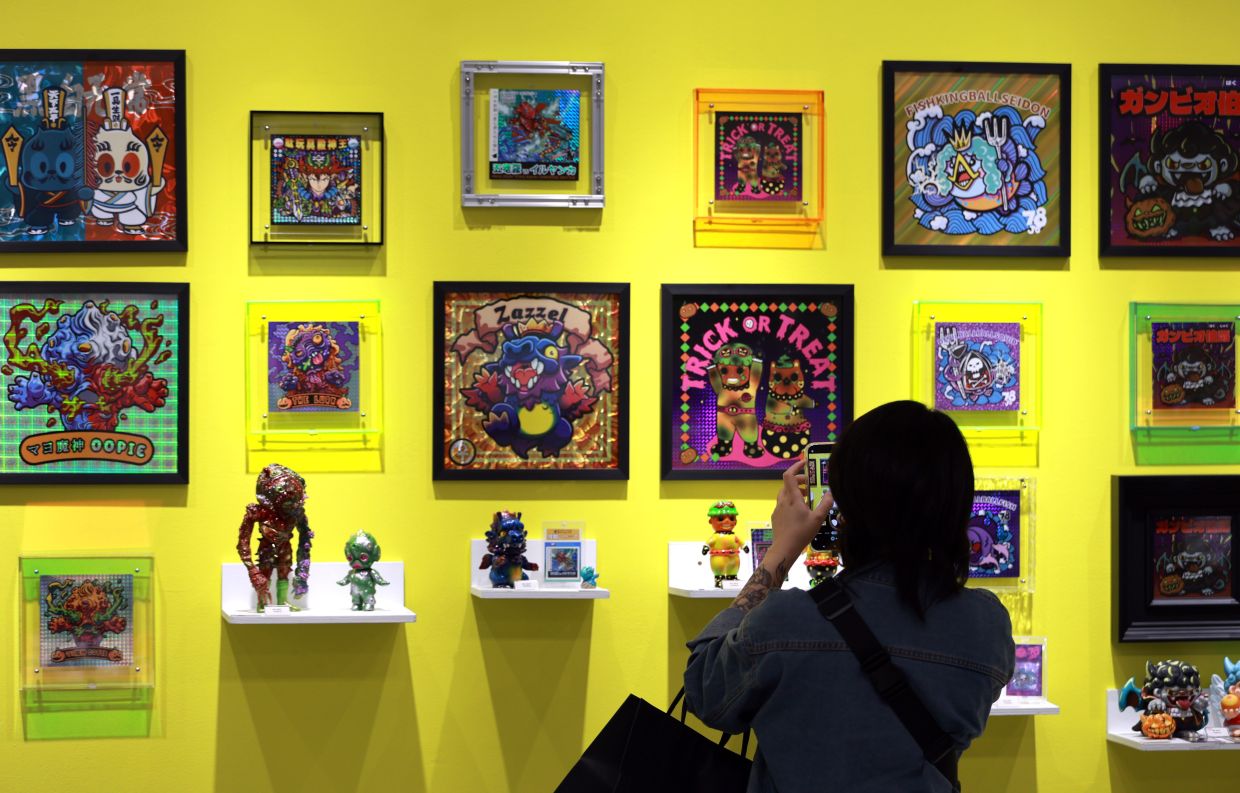
As an exhibition, Sticky Friends has cultivated its own audience since its opening late last month, drawing curious culture seekers and collectors to the gallery. It also features wall-based artworks, limited-edition toys, prints and other collectible creations.
The interest in these works points to an emerging collector demographic, particularly among younger audiences engaging with art in new and accessible ways.
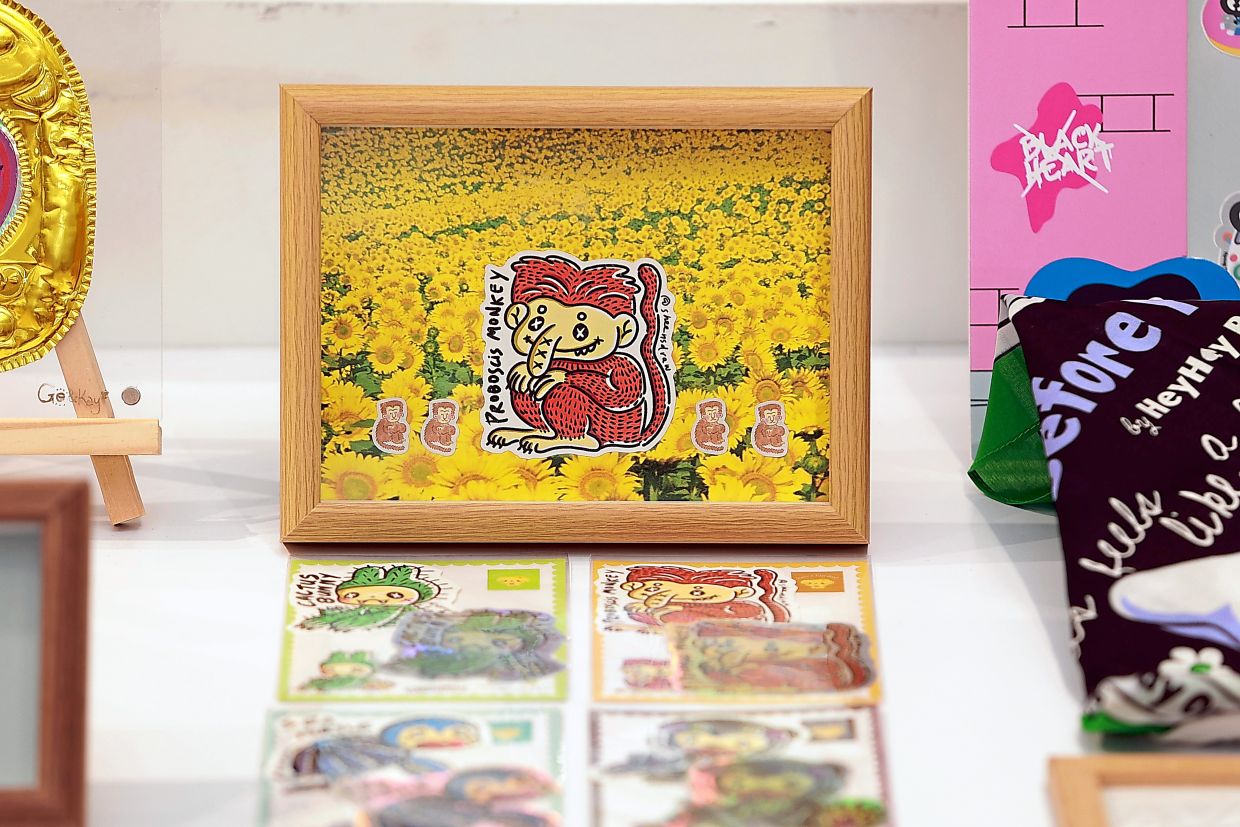
Featuring more than 60 artists and illustrators from Malaysia, Thailand, Indonesia, South Korea, Peru, Japan, Argentina, Germany and Australia, Sticky Friends presents a selection of original sticker artworks, collectible sticker merchandise and specially created pieces.
“My focus is always on the artwork itself and the unique culture surrounding it. Whether it is designer toys, stickers, live painting or illustration, each deserves its own dedicated platform where visitors can fully appreciate its aesthetic qualities and stories," says Ng.
“When too many elements are combined within a single event, the focus can become diluted, and the individuality of each art form may be overlooked,” he adds.
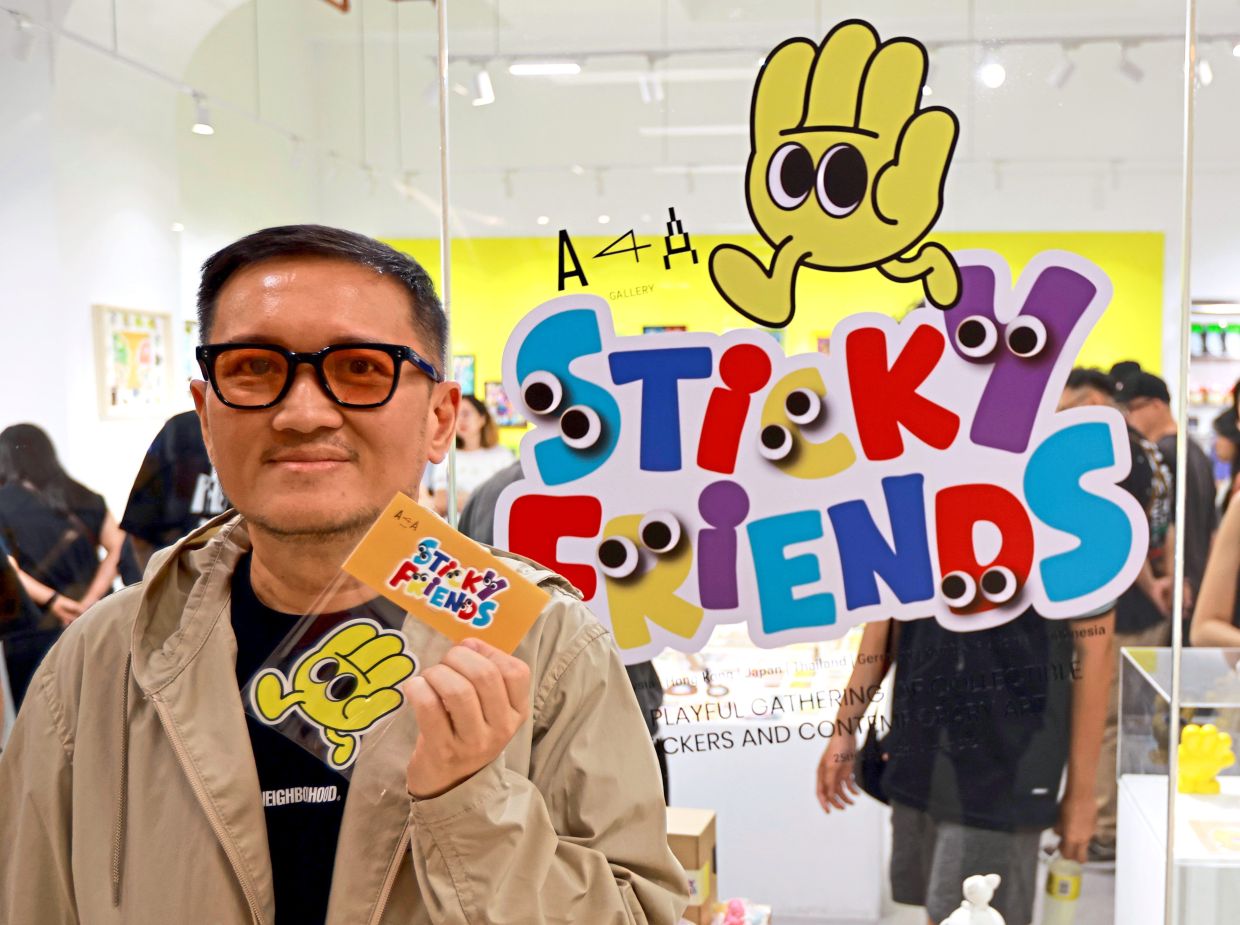
For the gallery founder, who grew up collecting stickers, the exhibition represents a full-circle moment – transforming a childhood interest into a platform that connects creative communities worldwide.
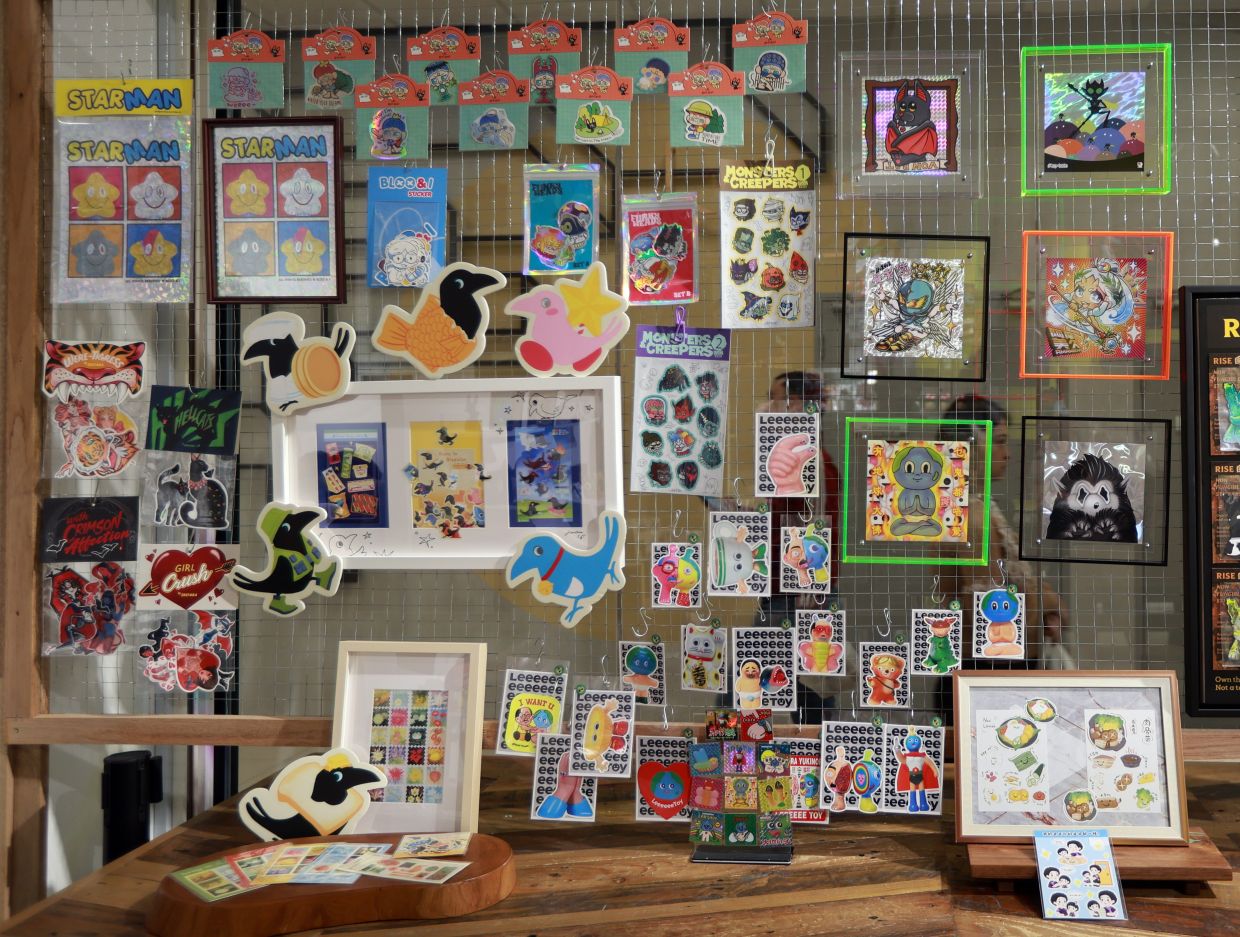
If anything, the process of curating and setting up the exhibition has been a source of enjoyment for him, turning A4 Art Gallery into a giant sticker playground anchored by a large-scale “Sticky” installation that celebrates every artist, sticker and creative voice.
An exhibition format
For some artists in the exhibition, it is a chance to take existing creations or series in new directions.
Expanding beyond individual stickers into a collage-like artwork, illustrator Siti Amirah uses the medium to further develop the story of her spirit boy character, Morwyth.
While the character has taken on various forms – including toys, keychains, cards and other collectibles – the layered sticker composition, presented like a framed painting, offers visitors a more intimate way to engage with his world.
“The character is about companionship and navigating complex emotions. For example, grief is personified, and Morwyth holds on to it for you until you are ready to move forward,” says Amirah.
“The concept behind this series of artworks is ‘big emotions, small world’, allowing audiences to better understand and embrace feelings they may usually struggle to process. Sharing the work in an exhibition format creates a different experience, while giving artists the opportunity to explore beyond their usual creative boundaries,” she adds.
For illustrators, comic creators and emerging artists, stickers offer one of the most accessible ways to bring their work into the physical world.
Take Stikki and Dango, for instance – the magical duo from the fictional world created by illustrator Julia Wee, better known as Zpinktuna.
While their adventures may already be familiar to audiences through social media, the exhibition presents the characters across multiple physical forms, offering collectors a rare opportunity to experience and acquire these works beyond the digital realm.
“I believe what Si Juan is trying to do with this exhibition is bridge new and traditional approaches to art collecting. While conventional galleries often focus on larger-scale works, many illustrators operate through event-based or project-based platforms, where a series is created and then moves on within a limited timeframe,” says Wee.
“Here, there is more space for audiences to discover and engage with the lore behind the IPs we create. It is the first time I have experienced this type of format, and it is also a great way to connect with and draw inspiration from other artists,” she concludes.