Ilham Alshahab's cycling routes rarely extend beyond the streets of her neighbourhood in Rawang, Selangor. With the surrounding roads leading to a highway, her rides are confined to the same familiar loops. What began as a simple form of escapism, rather than a way to run errands or exercise, has gradually evolved into a wellspring of artistic inspiration.
Through these repeated journeys, the 28-year-old artist has found meaning in life's rhythms, shaping them into the body of work presented in her second solo exhibition, A Path Carved By My Returning.
Her works are on display at The Dia Space, a loft above KLCG in Medan Pasar, Kuala Lumpur which doubles as a boutique store and community hub. The pop-up exhibition, featuring seven paintings, runs through July 31 (open Wednesday to Sunday, 10am to 6pm).
"I can't leave the neighbourhood since it leads to a highway, so I end up cycling 30 to 40 rounds. I genuinely enjoy those two hours because time passes quickly when I'm constantly asking myself, 'How can I make this path more interesting than it is?'" says Ilham in a recent interview.
"This exhibition reflects the imaginative space I've created in my mind, where I find ways to appreciate the ordinary things around me. Each ride, I look for something new or make a mental note of what has changed.
"I also chose the word 'carved' in the title because, like a desire trail, it speaks to the repeated movements of people and animals over time, gradually eroding the soil until a path is formed," she adds.
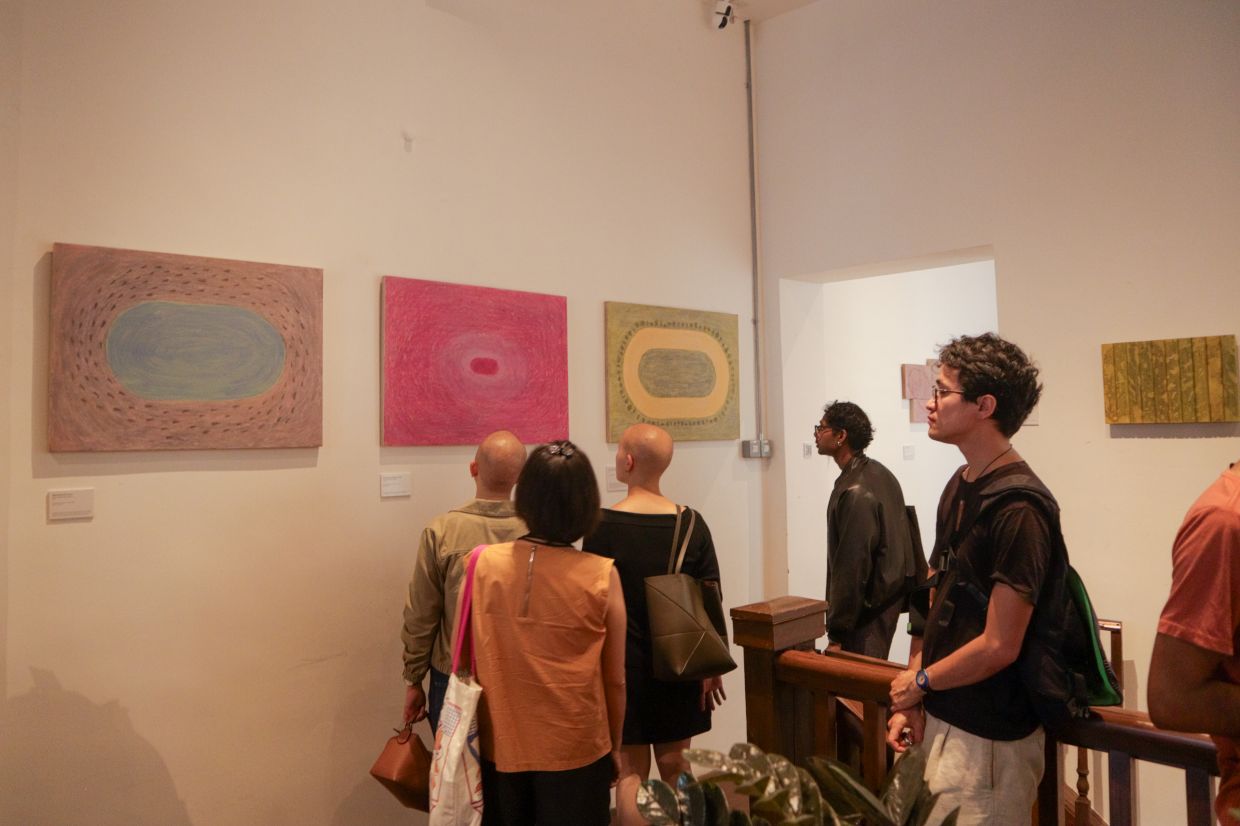
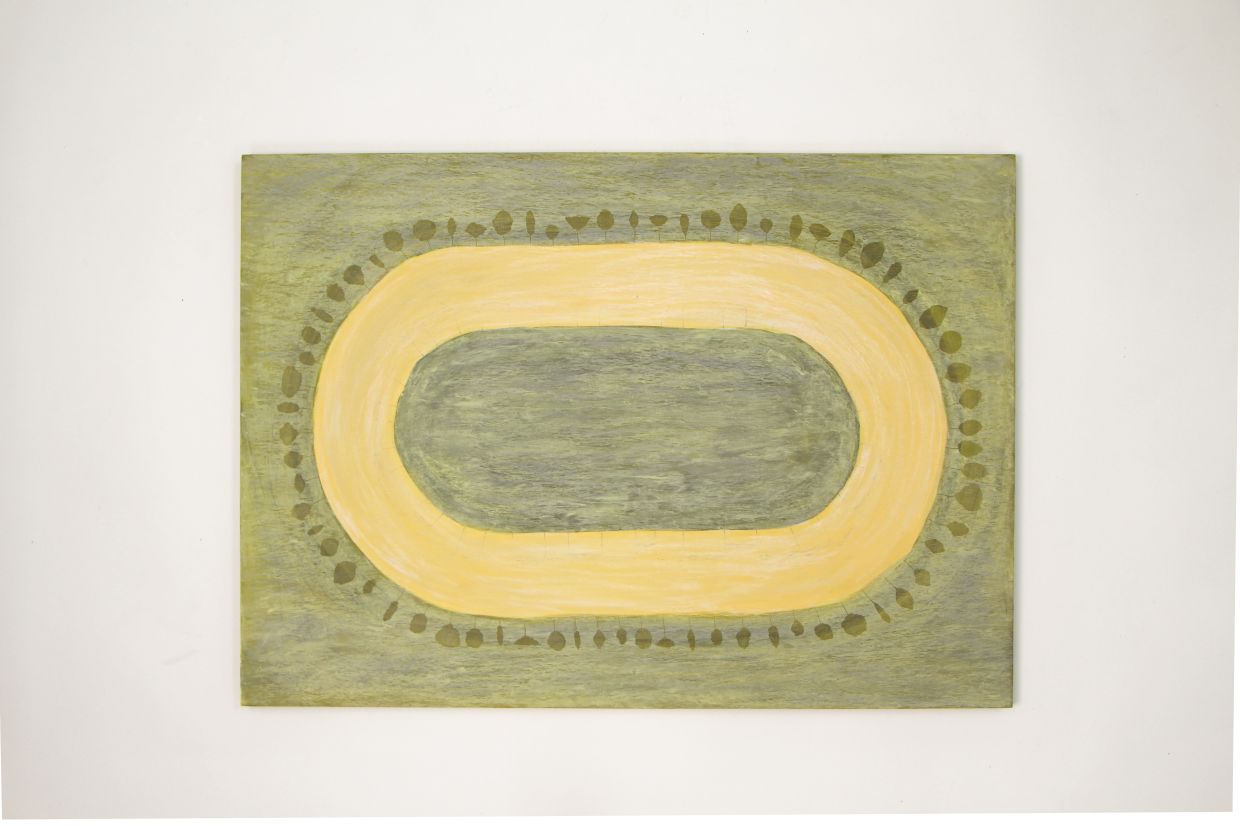
For a self-taught artist whose earlier works were primarily digital, Ilham shifts to acrylic and oil pastel on wood panels in this exhibition. Works such as A Tree At The Edge Of My Attention and What Does Not Hurry reflect a patient, methodical process that mirrors the exhibition's central theme of repetition.
Each artwork is accompanied by a short description, with notes that playfully document recurring encounters with the same trees, puddles and cycling paths along her routes.
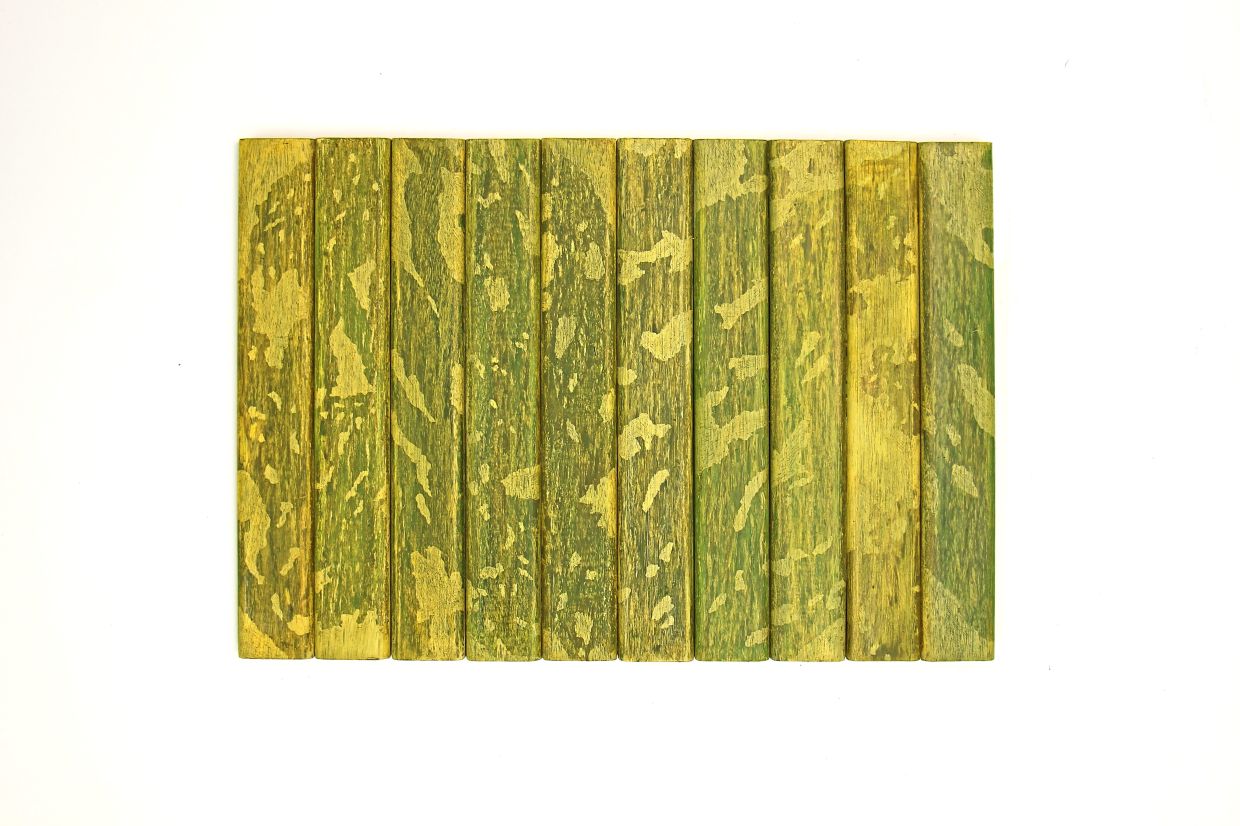
"I worked on wood panels for all these pieces, using acrylic paint and oil pastels, while details such as trees, ants and birds were carved with a ceramic needle.
"I used to share my art online before producing prints and setting up my studio website, so creating tactile works that people can physically engage with and respond to has been especially fulfilling," says Ilham, who has used her graphic design background as a springboard into art.
Accessible entry point
Multi-purpose venues like The Dia Space reflect a growing trend of third spaces, joining venues such as Awegallery in Petaling Jaya, A.Pop in Taman Melawati and Tannin Hill in Sentul, where art is one of several elements that bring communities together.
For emerging artists like Selangor-born Ilham, these spaces offer a more accessible entry point for artists and visitors alike, while helping connect them with collectors and future collaborators.
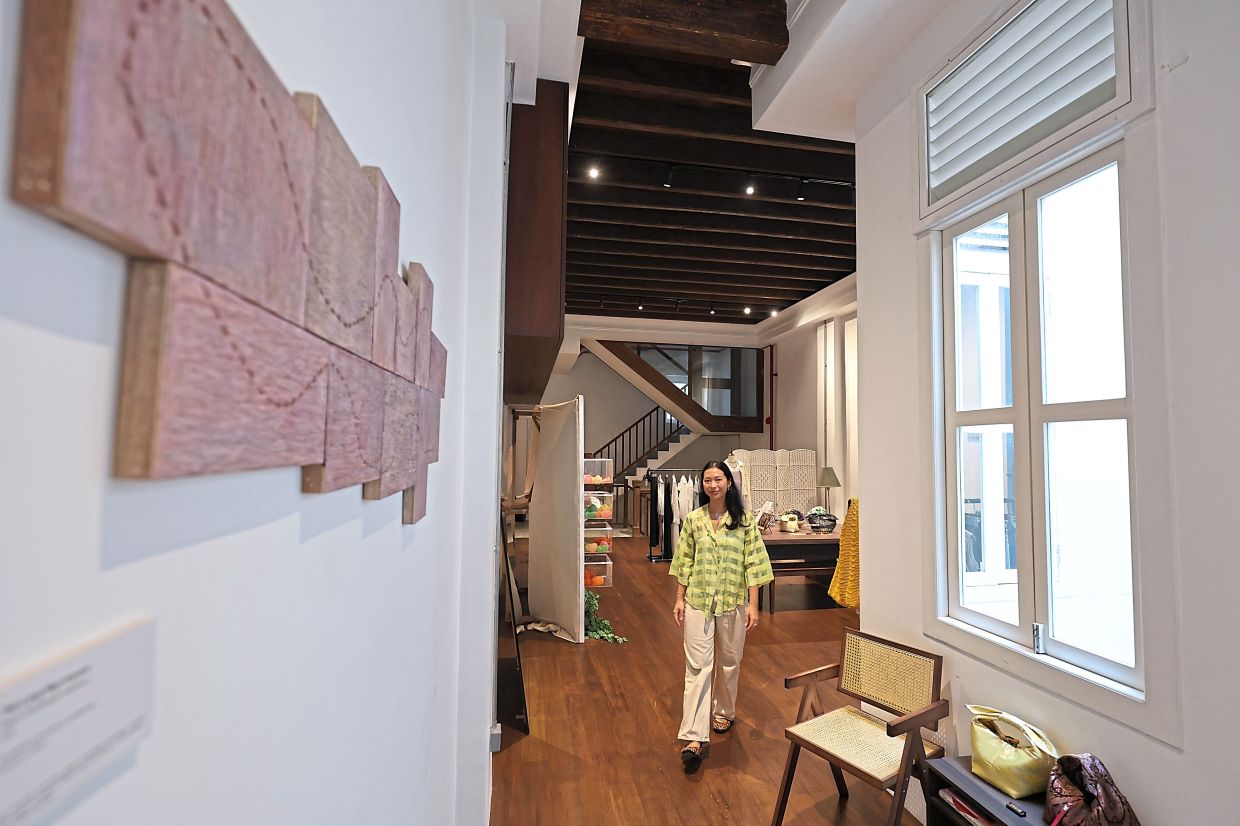
"Even my previous solo exhibition, Do The Lamp Posts Speak To The Trees? at FabCafe last year, was held in a third space with fabrication machines. It's inspiring to be in a place where creation is constantly happening.
"Because passers-by naturally wander in, I also get to meet people who respond to the works in different ways, and those encounters often shape how I see things on my next cycle around the neighbourhood," she says.
Aisha Hassan, co-founder of The Dia Space, says the heritage building in downtown KL, which opened in January, allows for a more relaxed and flexible curatorial approach.
Alongside clothing and accessories by artisanal South-East Asian brands, the space hosts community events such as book clubs and journalling workshops, drawing visitors with overlapping creative interests who may also become art buyers.
"Before Ilham's exhibition, we featured works by Mulaika Nordin and Ajim Juxta. We're also collaborating with Wei-Ling Gallery on a residency programme, where artists from its incubator will exhibit here.
"Contemporary art can feel inaccessible, especially for those unfamiliar with the local scene and unsure how to interpret the works. But in third spaces like this, where people often discover art by chance, they have the time and space to sit with it," concludes Aisha.