WHILE higher education institutions worldwide scramble to police the use of artificial intelligence (AI) in classrooms, Taylor’s University is taking a different approach by embracing the technology head-on.
The global shift toward AI has forced many universities into a defensive posture.
According to a 2026 research brief by the US-based College Board, nearly 74% of college faculty report widespread student reliance on AI for writing tasks and essays.
A separate study published in the journal Science, which surveyed over 95,000 students across 20 major public research universities, revealed that roughly one-third of all undergraduates now regularly use generative AI tools for their coursework.
However, rather than trapping itself in a cycle of detection and restriction, Taylor’s is championing a human-led, AI-enabled approach to education.
The University was recently ranked 272nd globally in the QS World University Rankings 2027, placing it firmly within the top 1% of universities worldwide and securing its position as the highest-ranked non-government-linked private university in Southeast Asia.
According to the university, the achievement reflects academic prestige as well as a deep commitment to purposeful, globally connected education.
Its ultimate goal is to arm students with the agility and distinctly human capabilities needed to work confidently alongside any emerging technologies.
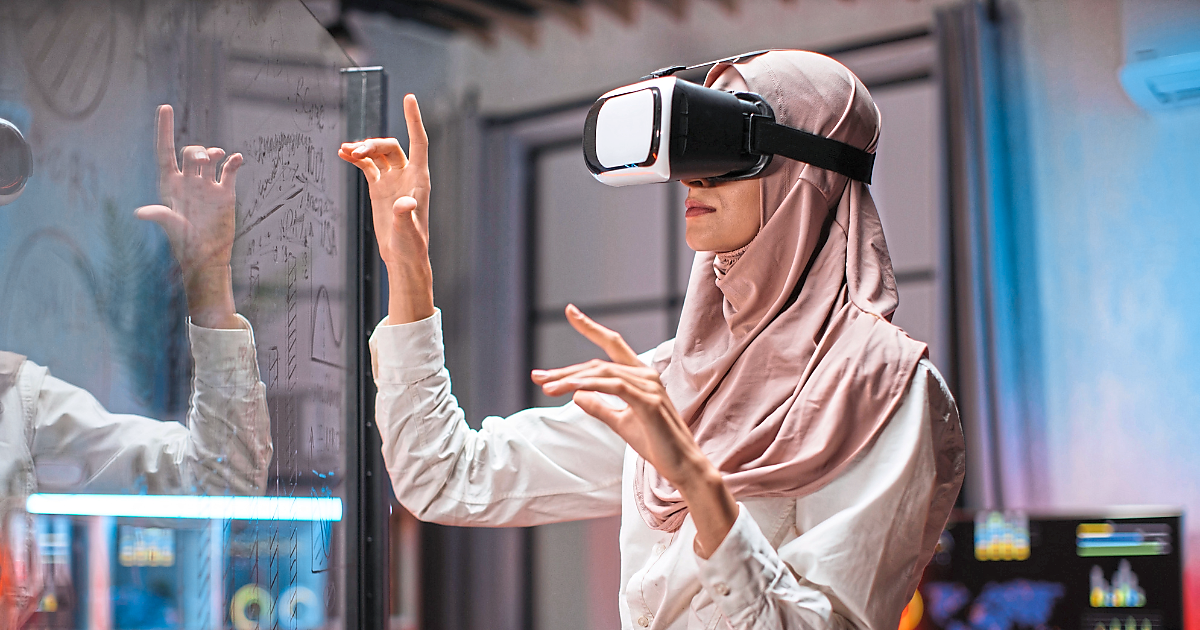
The future of student success
In the past, education was a deeply human experience.
Learning happened face-to-face within classroom walls and it was all about the personal relationships between students and teachers.
Currently, AI has made its way into the crevices of this space, extending its reach across geographies, languages and industries in ways unimaginable decades ago.
According to the OECD’s Digital Education Outlook 2026, students generally turn to AI tools for two primary reasons: “cognitive support”, such as seeking information, explanations, and summaries, or “production support”, such as idea generation and drafting.
However, the report highlights a more troublesome trend, which is the rise of solution generation.
As a result, employers today are seeking graduates who can think critically, communicate and collaborate effectively, adapt to change and work confidently with technology.
With universities globally challenged to rethink what preparing students for the future means, Taylor’s has placed this question at the centre of its educational approach.
The institution operates on the core philosophy that while AI continues to transform industries and professions, distinctly human capabilities remain the defining edge.

An AI-enabled learning experience
Encapsulating this belief is Taylor’s Hybrid Flexible (HyFlex) learning framework, an approach which combines physical, virtual and self-directed learning into a connected experience.
Students learn their disciplines at their own pace, access AI-supported learning resources and participate in collaborative as well as applied learning experiences.
Rather than viewing AI as a replacement for teaching and learning, the university integrates technology in ways that enhance student learning, strengthen engagement and support personalisation.
The framework allows classroom time to focus on discussion, problem-solving, collaboration and real-world application, while technology supports preparation, reinforcement and continuous learning.
In this way, AI complements rather than replaces the learning experience, enabling students to focus on higher-order thinking and human skills that remain essential in an AI-driven world.
In 2026 alone, more than 11,600 students participated in HyFlex learning, with 84.8% reporting strong engagement and 86% reporting satisfaction with their learning experience.

Taylor’s University vice-chancellor and president Prof Barry Winn said strong graduate outcomes reflect how effectively students learn, adapt and create value in a rapidly changing world.
“As technology transforms the way knowledge is accessed and applied, Taylor’s is committed to a human-led, AI-enabled education that combines personalised learning and real-world application.
“We are preparing graduates with the curiosity, agility and human capabilities needed to thrive in an evolving future,” said Prof Winn.
The university remains committed to crafting personalised, industry-connected and purpose-driven learning experiences while preparing graduates with the distinctly human capabilities that will remain essential in an AI-enabled future.
For more information about Taylor’s University and its programmes, visit https://university.taylors.edu.my/en.html.