
If you are in Berlin, a newly unveiled portrait of former German chancellor Angela Merkel is fuelling a massive rise in visitors to the Bode Museum, part of the city's impressive Museum Island.
The portrait was painted by the Franco-German artist Jeremie Queyras. The 28-year-old comes from a family of musicians in Freiburg and had submitted a handwritten application to Merkel in 2022.
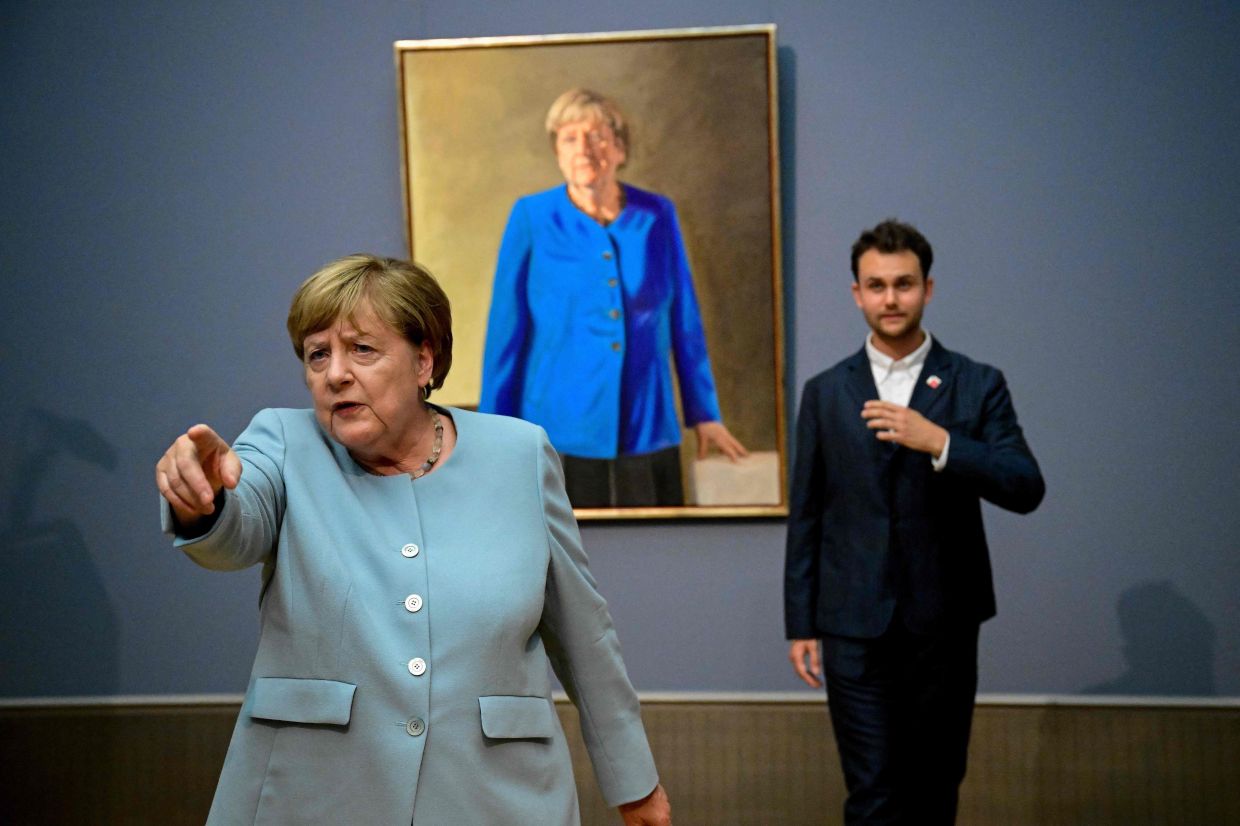
The painting depicts Merkel wearing a bright blue blazer against a golden-brown background.
Merkel said she chose the blue blazer because the colour has something strong and commanding about it. Strong light falls on her face, intended to bring out the "traces of power," as the work's description states.
Merkel, who led Germany for 16 years until December 2021, took her time to decide on an artist after she left office.
"I needed distance," she said at the work's unveiling at the end of June.
The portrait was not meant to be just another item on a to-do list. "I wanted to take pleasure in such a process," the former conservative chancellor said.
Since the painting went on display on July 1, visitor numbers have risen sharply, said a spokesman for the complex housing the museum, which is best known for its collections of sculptures, Byzantine art, coins and medals.
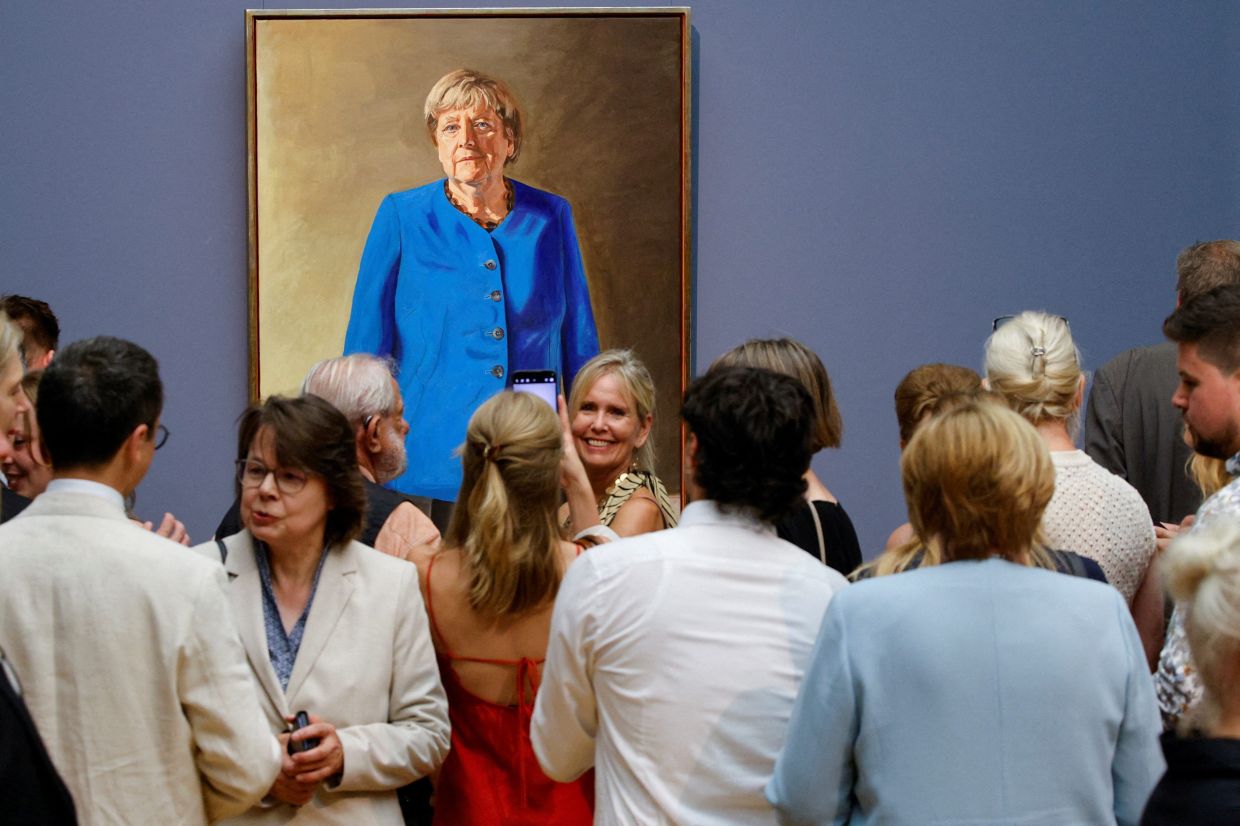
"The daily visitor count is, on average, 85% higher than in June," the spokesman said. He said there are currently around 900 visits a day, although it is not yet possible to say whether this trend will continue.
In the first days after the exhibition opened, many people specifically wanted to see the painting and asked the security staff for directions.
Visitors can see it on display until October 4 at the Bode Museum, which is just a few metres from Merkel's home in the capital. After that, it will be loaned to the Chancellery.
More at the Bode Museum
Other popular and impressive works at the Bode Museum include masterpieces such as Donatello’s Pazzi Madonna and Antonio Canova’s Dancer.
Fans of German art can see several important sculptural works by Tilman Riemenschneider and Ignaz Günther, in the museum's collection of ancient sculpture which is one of the largest in the world, the museum says.
That is thanks to the efforts of collectors working for the Brandenburg-Prussian royal cabinet of art. Gustav Friedrich Waagen and especially Wilhelm von Bode developed the collection in the 19th and early 20th century by acquiring mainly Italian and German sculptures.
The museum also offers visitors a chance to see first-class holdings of late-antique and Byzantine works of art ranging, from the 3rd to 15th century.
Nearly all the works are from the ancient Mediterranean region. You can mainly see pre-Christian and Christian sarcophagi from Rome, figurative and ornamental sculpture from the Eastern Roman Empire, ivory carvings and mosaic icons, plus daily and religious objects from post-pharaonic Egypt.
If you are interested in coins, the museum also boasts more than half a million objects, in one of the most important numismatic collections in the world.
Alongside coins and medals, visitors can also see non-numismatic forms of money, seals, tokens, and jetons plus minting tools. A jeton is a historical coin-like token that people used from the Middle Ages through the 19th century, the museum says.
You can see a history of humankind in metal, dating back to the beginnings of coinage in the 7th century.
Bode Museum and beyond
Head to the building that rises up from the city's Spree River like a moated palace.
The Bode Museum is one of the city's five historic museums in the heart of the oldest part of the city.
The area is well worth visiting as a unique ensemble of buildings on an island in centeal Berlin, of major museums built under Prussian rulers.
Designated a Unesco World Heritage Site in 1999, you can also visit the Altes Museum, the Neues Museum and the Alte Nationalgalerie.
The Pergamon Museum is currently closed for renovation but is due to reopen in 2027. - dpa