There was a time when Kuala Lumpur's club scene had a particular pulse, driven by adventurous deejays, enterprising promoters and a generation of clubbers finding their own spaces after dark. In the late 1990s and early 2000s, this growing culture was inventive, restless and often operating against the clock.
Much of that chapter has since slipped from public memory.
A new exhibition, Night Shift, revisits this formative period, tracing the city's clubbing scene between 1997 and 2003. Presented in partnership with Urbanscapes, it opens this Saturday (Nov 7) at Bookmark @ APW, Bangsar in Kuala Lumpur.
Curated by Roshan Menon (Saturday Selects) and Callen Tham (Excessive Records, Ohrwurm, Tempo, Pervert Designs), who come from different generations of the club and deejay scene, Night Shift looks back at how KL's dance culture took shape, grew out of underground circles and found its footing in a changing city.
If anything, a precedent for revisiting the city's subcultures through art, theatre and social history was set by Ilham Gallery's Boom Boom Bang: Play & Parody In 1990s KL exhibition in 2024, which included a section on Kuala Lumpur's punk and underground music scene.
For the small team behind Night Shift, there are many more such stories waiting to be documented. Their exhibition takes up one of these overlooked chapters, bringing together the people, places and ephemera of KL's clubbing culture before those memories become harder to recover.
Part of this year's Urbanscapes' programme (the festival is back after a seven-year hiatus), the exhibition also reflects the event's general theme "Made Different", which celebrates people with distinct perspectives and creative approaches in KL.
“It’s been almost 30 years since KL’s club culture started taking shape, it began around 1996. I was fortunate to experience it from several sides – as a deejay, promoter and record store owner. I was part of those nights, the music, the people and the conversations that happened around them," says Tham about the exhibition.
"At the time, we were simply doing what we loved and creating something that felt exciting and new. We probably didn’t realise we were part of a moment that would become such an important chapter in KL’s nightlife history. Night Shift is a chance to bring some of those memories back – and to tell the stories of the people and places that made that era what it was.”
For a compact exhibition, Night Shift draws on material gathered through a crowdsourcing call that saw members of the clubbing public lend personal memorabilia and documents.
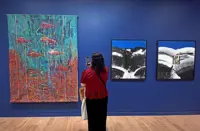
Its industrial-style display stands lend the presentation a raw, makeshift character, recalling something of the scene's early DIY spirit.
The exhibition is organised around four pillars: The Art (flyers, posters, photography and design); The People (promoters, DJs, owners, performers and clubbers); The Spaces (venues and the improvised sites the curfew pushed the scene into); and The Economics (sponsorship, licensing and how a scene under pressure survived and grew).
Rather than relying solely on retrospective accounts, the exhibition brings together primary material: club and promoter flyers, dancefloor and door photographs, newspaper coverage, objects from venues that no longer exist, and new interviews recorded specifically for the project with the promoters, deejays, owners and performers who helped build the scene. Much of this material is being collected and shown publicly for the first time.
“If this generation doesn't hear this history from the people who lived it, it disappears – and then the next promoter, the next DJ, the next passionate kid who wants to organise an event has to figure it all out alone. We'd rather hand it down," says Roshan.
The exhibition also opens up a wider conversation about the state of KL's club culture today.
With the scene considerably diminished and many of its former spaces gone, Night Shift serves as a reminder of what the city once supported, while documenting the social and creative networks that made it possible.
“Before anyone's going to take KL's night economy seriously at a policy level, someone has to show the receipts – the venues, the money, the culture, the people. You can't advocate for something you can't prove mattered. That's what this exhibition is. It's step one of a much bigger job,“ says Roshan.
"We didn't set out to build an archive. We set out to remember what it felt like – the curfew, the panic, the parties that happened anyway. Night Shift is as much about that feeling as it is about the facts," he adds.
The exhibition opens on the same day as Long Time No See, Urbanscapes' celebration of late-2000s KL, also at APW Bangsar, bringing two eras of the city's nightlife under one roof.
Night Shift runs from Nov 7–15 at Bookmark @ APW, Bangsar. More info here.