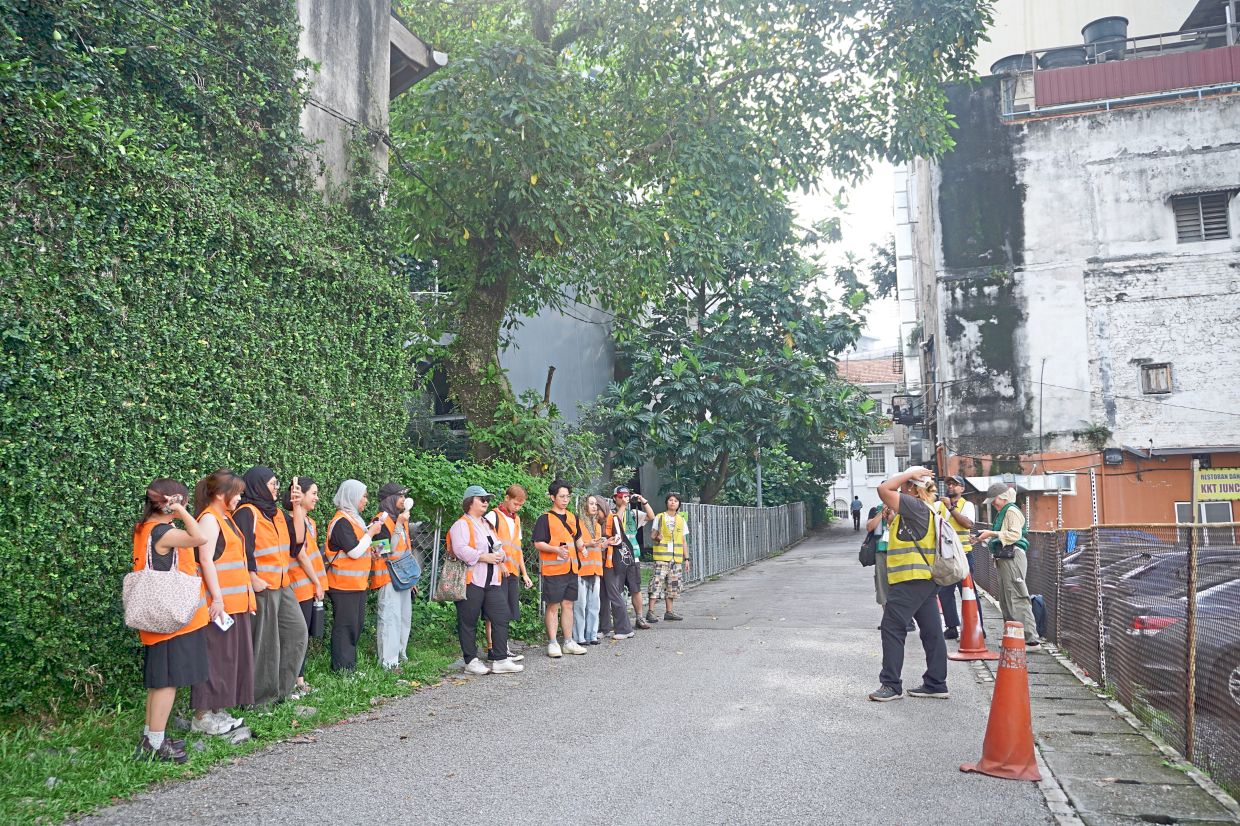
Last Friday, participants in the Jalan Tikus urban tour series took to some of Kuala Lumpur’s less-explored streets, beginning with the “Kayuh Terus Tour” led by Velo Express KL, a rider- owned courier service.
Starting in Bangsar, the cycling group travelled through Brickfields, River of Life at Jalan Tebing, Lorong Petaling, Kampung Attap and the River of Life’s South Mid Valley stretch, before ending near the Bangsar LRT station.
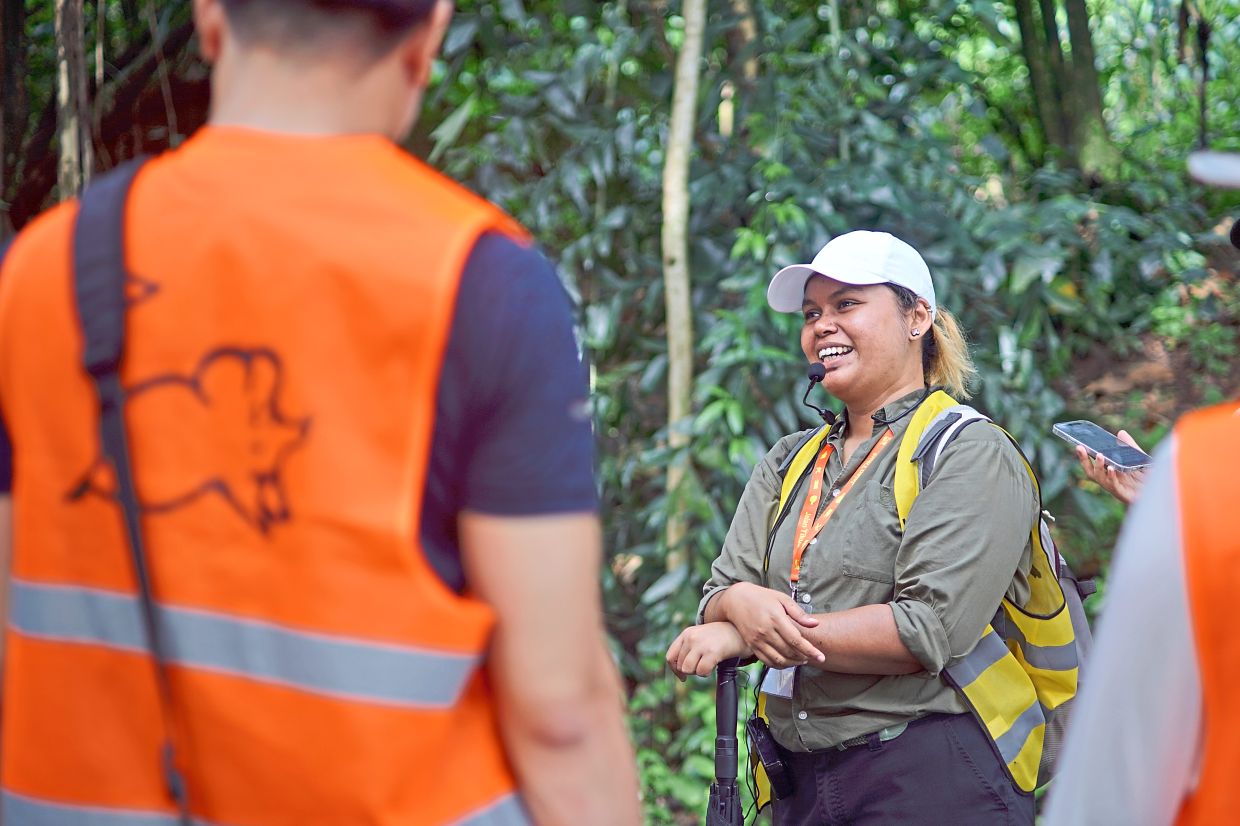
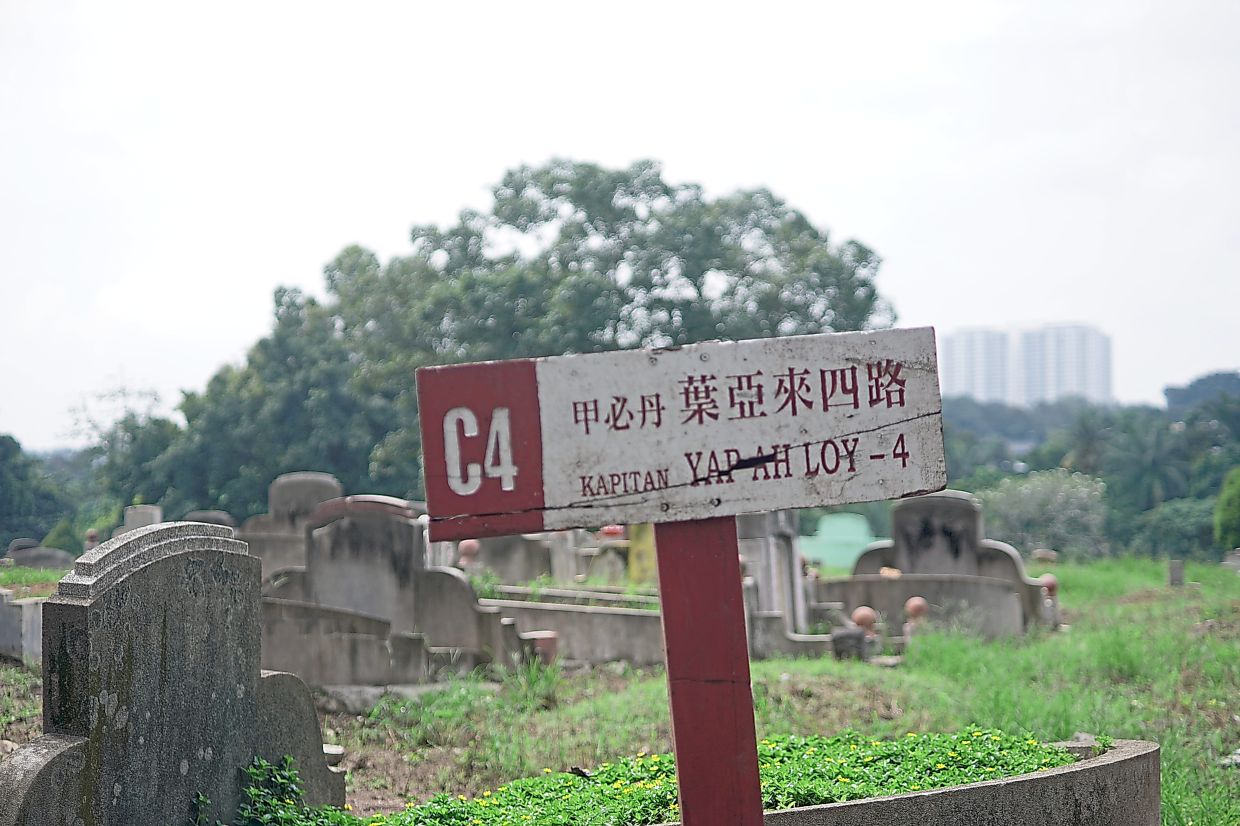
That same weekend, naturalist and ecologist Syuhada Sapno led a fully booked guided tour called “Alam dan Manusia” through The Godown Arts Centre in KL, and Kwong Tong Cemetery in Seputeh. Along the way, participants observed roots spreading across old buildings, plants emerging through cracks, and birds and insects making homes in some of the city’s busiest corners.
These were among 10 guided tours in the Jalan Tikus series, with more ticketed sessions scheduled over the coming weekends until Dec 6.
Organised and curated by local art scene practitioners Azzad Diah, Low Pey Sien and Sarah Amer, Jalan Tikus takes a format commonly associated with museums and galleries – where objects are selected and arranged to tell a particular story – and brings it into the urban environment.
Here, the material is found on building facades, in disused spaces and in the memories of people who live nearby.
Jalan Tikus is also a satellite programme of the Malaysia Art Ecosystem Fair 2026 this month, organised by the National Art Gallery.
“Jalan Tikus comes from curiosity about the spaces where actual narratives take place. On the ground, walking the routes where most stories are kept only between locals and people who have dedicated themselves to working through these fringes,” says Azzad in a recent interview.
In everyday Malay, “jalan tikus” refers to a back lane or hidden shortcut – a narrow passage people find for themselves when the main road is slow or out of the way.
“KL emerges from layers of history, social interaction, political manoeuvring, cultural synthesis, and utopian imagination. It has been developing since its early settlement in 1857, and many people find pockets of livelihood within this ever-growing concrete jungle, including us,” says Azzad.
“Contrary to most guided walks, Jalan Tikus is not a narrative-building scheme, but a way of slowing down in the city that moves beyond our capacity to notice. A chance to rediscover the place we call home,” he adds.
The five artists and collectives leading the tours are central to this approach. Project manager Sarah, who was also involved in this year’s Wayang Women shows and tour, says Jalan Tikus differs from conventional art and festival programming, with a stronger emphasis on public engagement and reaching audiences suited to each tour.
“We collaborated with artists based on the representation of their work, and we believe the city is always powered by collective work. Each offers an alternative take on the city that goes beyond what we see through tinted glass.
“Velo Express KL, Syuhada Sapno, Paul Atia, Alvin Lau and notime towaste come from different backgrounds and disciplines, and their work reflects strong views of the city,” says Sarah.
“We went on individual mini prep tours and understood challenges of executing of each artist tour based on their respective needs – as we are dealing with alternative ways of seeing in a busy city safety and preparation is paramount to ensure a smooth experience for all,” she explains.
Each tour draws on its guide’s own practice and offers a different perspective on the city, covering pedestrian routes, urban cycling, upcycled waste, urban nature and architecture.
“Each artist represents a different area of KL based on zones and locations such as Sentul, Seputeh, Brickfield, River of Life, and TTDI. Each zone tackles themes pertinent to urban well-being – accessibility, safety, mobility, nature, spatiality, and waste management,” says Sarah.
Guided walks have long offered the public ways to explore the city, from independent initiatives such as Kerja Jalan to larger programmes such as the Klang River Festival.
Jalan Tikus, however, places artists at the centre of these encounters, allowing them to share the personal stories and observations that inform their relationship with particular places.
The first weekend offered an early indication of how the programme could benefit both participants and the artists leading the tours.
This weekend, artist and educator Paul Atia leads "A Narrative That Is Never Complete," a guided tour (sold out) through the River of Life district and the Masjid Jamek surrounds. The walk explores how Kuala Lumpur continues to change, and how its evolving urban landscape shapes the stories we tell about the city.
Curator Low observed that people are more likely to engage with a place when they have an emotional connection to it, something artists can draw out through their work.
“We realised the impact of transboundary haze during our planning, and now that the sky is blue again, it makes us want to go out and explore again. Each artist has specific knowledge, and a way of interpreting the place,” says Low.
“The guided tour offers an opportunity for the artists to dig deeper at their place of interest, and share with the public their inquiry and thoughts. So joining a session like this is like an informal classroom where meaningful encounters and discussions can unfold naturally, if we choose to spend time looking around where we live,” she concludes.