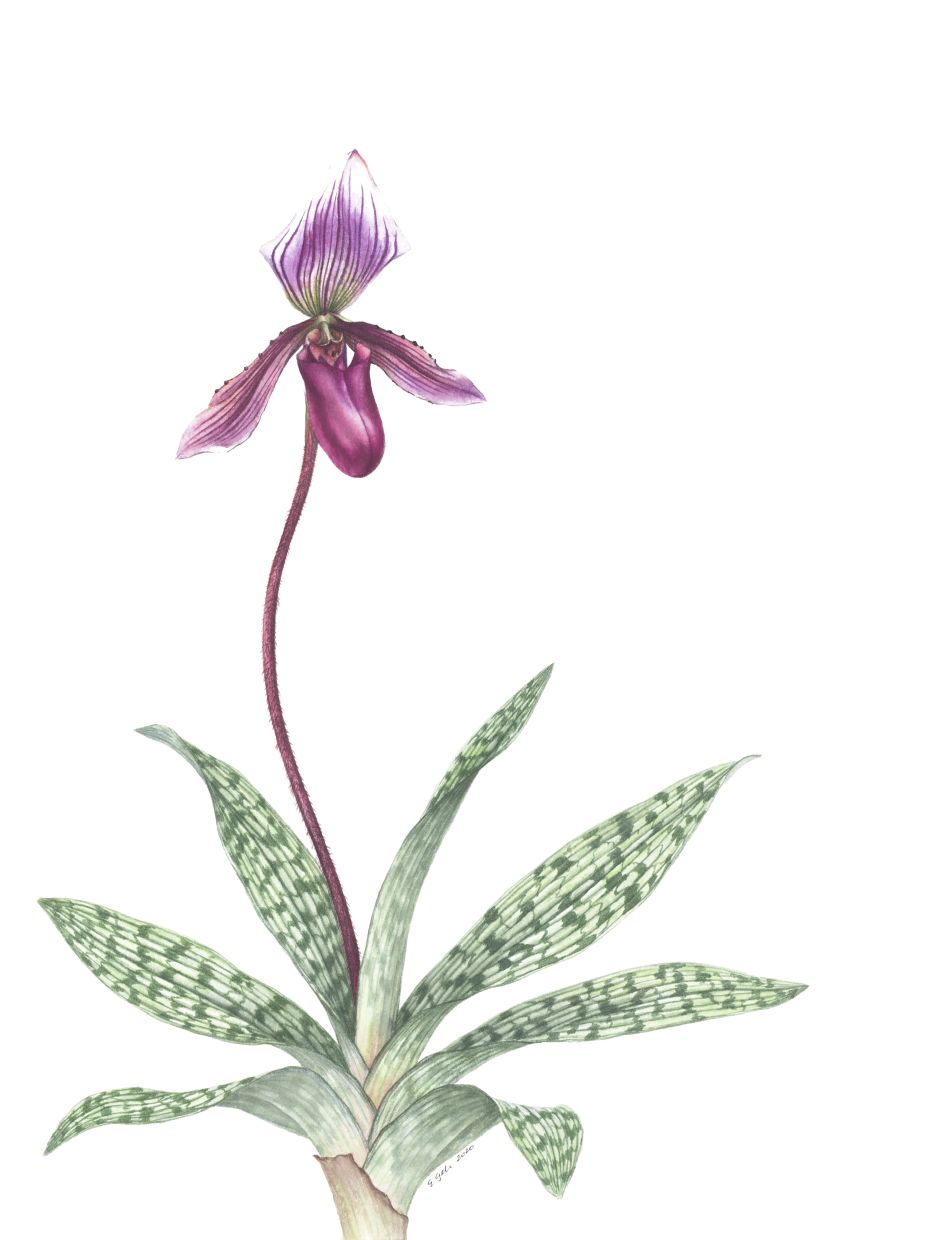
Botanical illustrations were once essential for documenting forest flora, supporting research, archiving and preservation. The practice demands a unique blend of artistic and scientific skills, along with the physical endurance to explore unfamiliar forests and the knowledge to identify and name countless plant species.
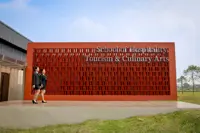
If you are interested in seeing these illustrations up close, the Forest Learning Centre (FLC), located at the Perdana Botanical Gardens in Kuala Lumpur is hosting an exhibition titled Botany Of Belonging: Forests Of South-East Asia.
The free-admission show, supported by Forest House Conservation, opened yesterday, and runs until Nov 30, from Fridays to Sundays, 10am to 4pm.
Curated by Siti Syuhada Sapno, manager of FLC with a background in ecology and biodiversity, this exhibition brings her passion for using art to support conservation. She sees art as a more accessible way to raise awareness of environmental issues.
“Whenever we host talks or workshops, the big science words and subject matter can be intimidating for the general public. But through exhibitions like this, we see crowds from different backgrounds come through, usually curious, and we get to introduce them to many wonders of forest species,” says Syuhada, 31, in a recent interview at FLC.
In Botany Of Belonging, 45 botanical artists from Malaysia, Singapore, Indonesia, Vietnam, the Philippines, Thailand, Brunei and Japan showcase prints of their illustrations.
Malaysian artists featured in the exhibition include Esther Geh, Naylisa Asmadi, Paridah Mokhsin, Richard Sebastian, Syarifah Nadhirah and Sharmini Markandu.
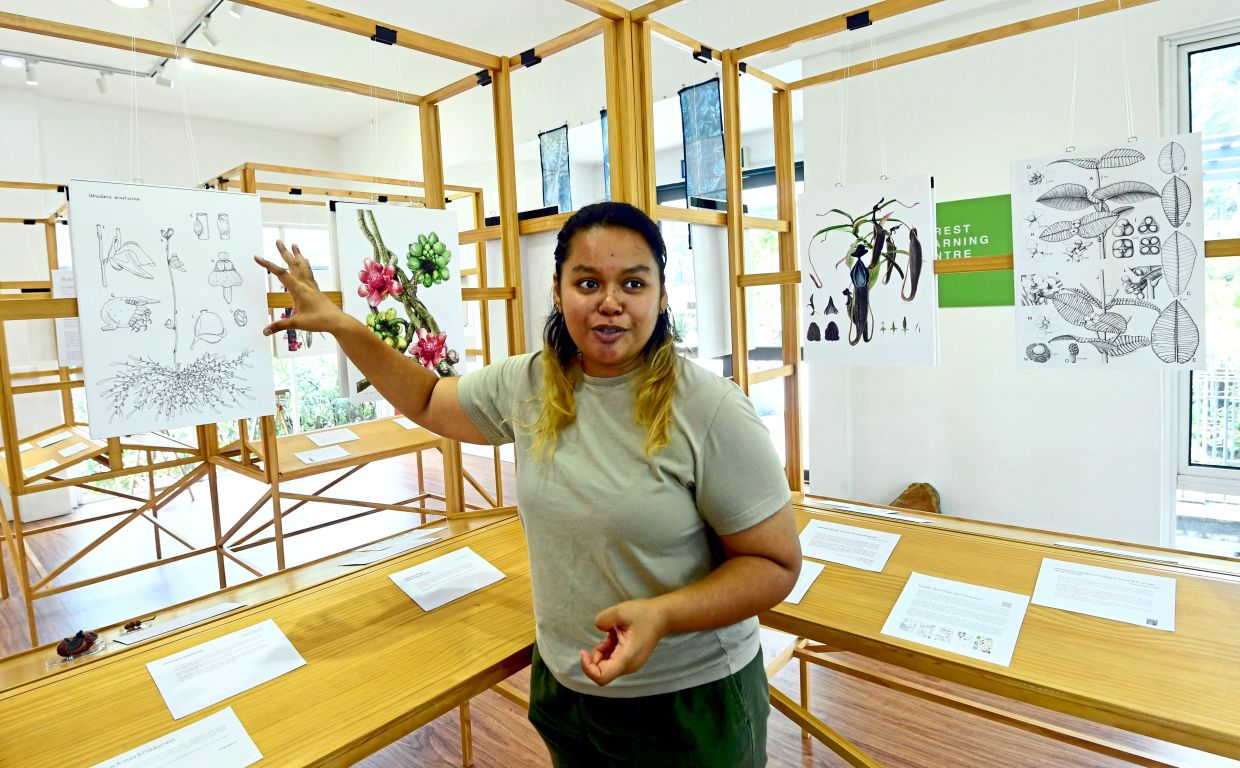
“Since FLC was established only a few years ago (in July 2024), we are still learning as we go – about our forest ecosystem and how visitors respond to our programmes. Many of the exhibiting artists are fellow colleagues or members of botanical art societies across the region. It’s a growing community of artists interested in botany, as well as researchers who use illustration,” says Syuhada.
Visitors can also participate in workshops, journalling tours and other activities held throughout the exhibition.
Eye for detail
So, what does a botanical artist’s work involve?
Syuhada says artists may collect leaves, flowers or plant specimens to illustrate in the studio, or venture into the forest to paint them on site. While cameras can help document their subjects, the human touch gives botanical illustrations their distinctive connection to nature.
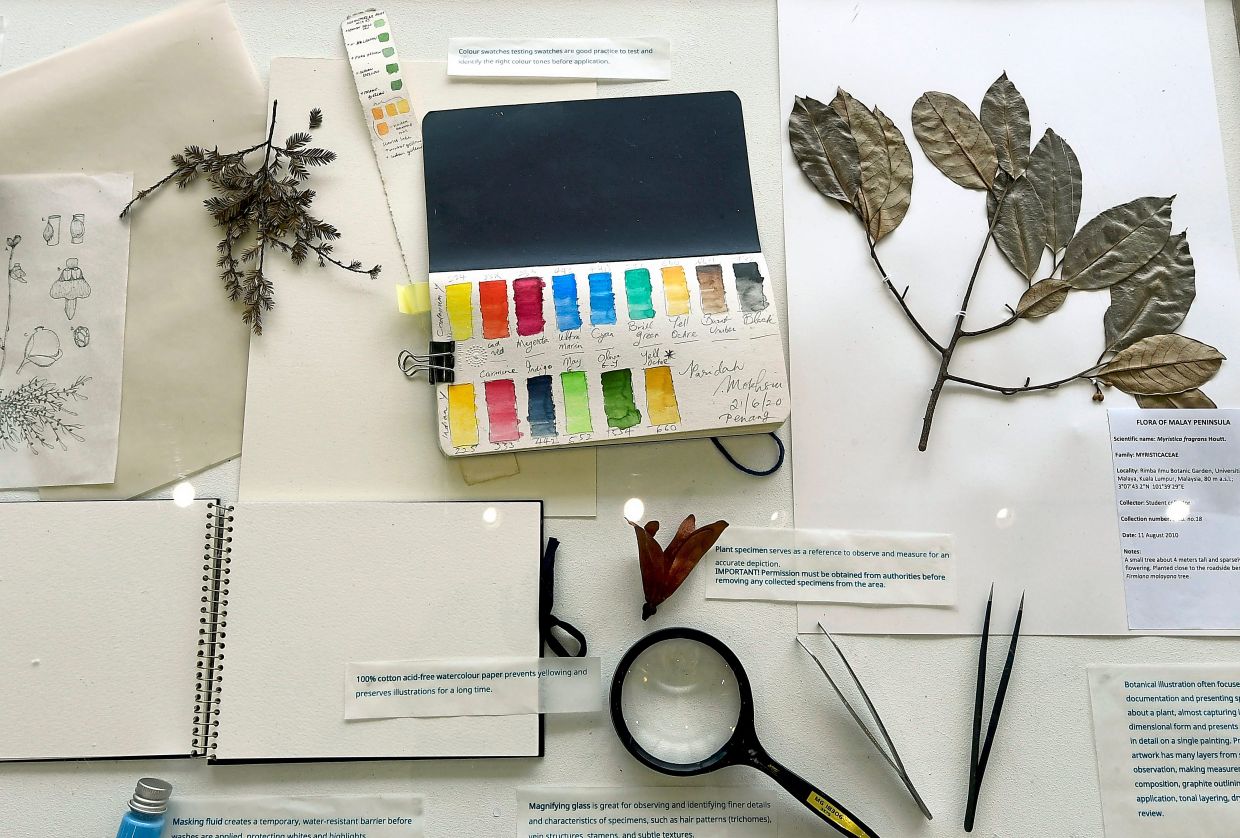
“The human eye remains the most powerful observational tool. Even the finest details, such as a protruding vein or a subtle difference in a flower petal’s colour, can indicate that a specimen belongs to a different plant species. Artists can spend weeks completing a single illustration, dissecting the specimen, measuring and labelling its anatomy, and verifying their findings with a botanist,” she says.
Featured artist Syarifah Nadhirah’s exploration of the botanical world led to her illustrated book, Recalling Forgotten Tastes: Of Illustrated Edible Plants, Food And Memories in 2020.
She was also the Forest House’s first creative director and continues to maintain close ties with the organisation.
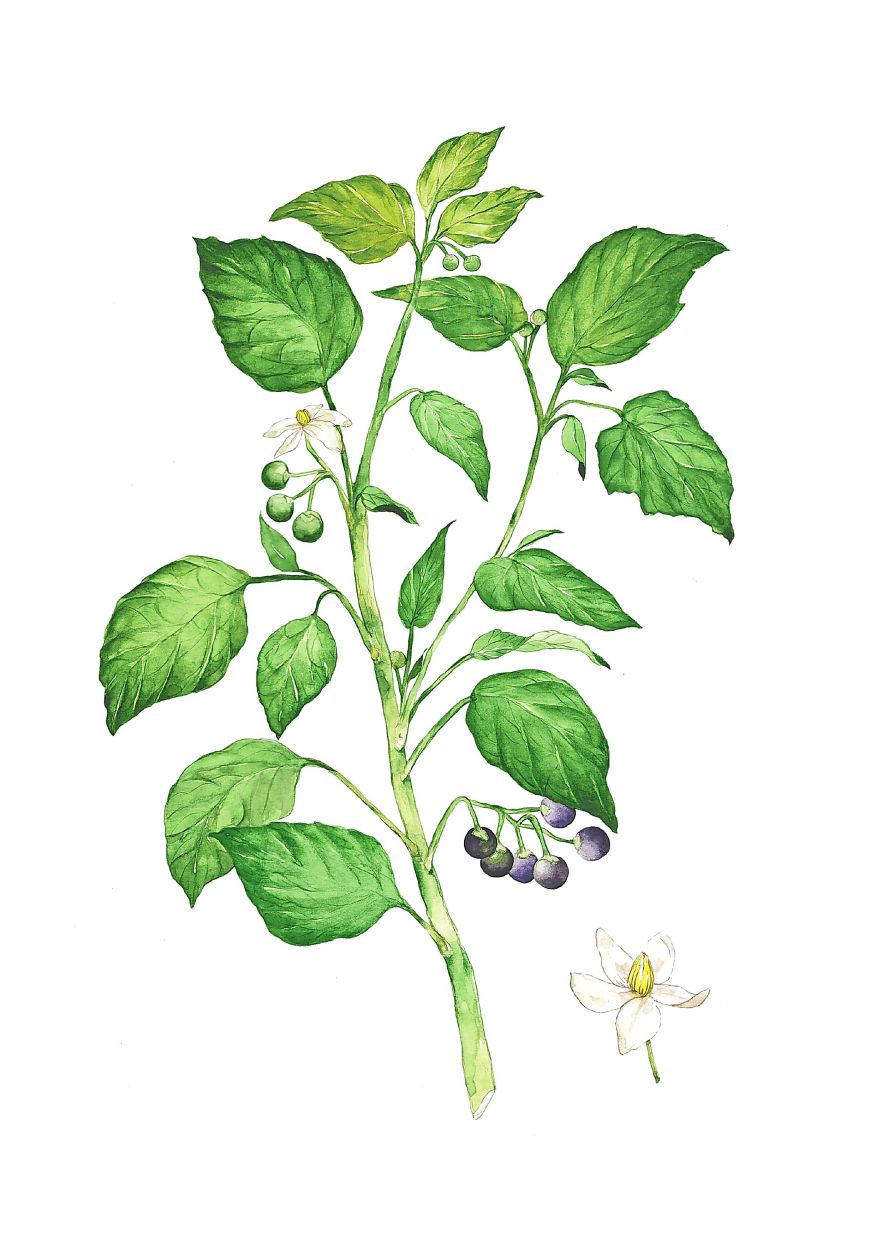
“Syarifah is one of the few artists in Malaysia to pursue ecology and botany, with a Master’s in Anthropology of Environment and Sustainability from SOAS, University of London. Her book documents edible plants through illustrations informed by the knowledge of Orang Asli Semai and Temuan communities," says Syuhada.
"Conservation researcher Richard Sebastian, another featured artist, taught himself to sketch and produces hyperrealistic pencil drawings of plant species. While botanical illustration requires accuracy in depicting specimens, there is still room for diverse interpretations and styles,” she adds.
However, she believes the skill is accessible to anyone willing to learn. Syuhada cites the example of Paridah Mokhsin, a regular visitor to Perdana Botanical Gardens who sketches trees and flowers.
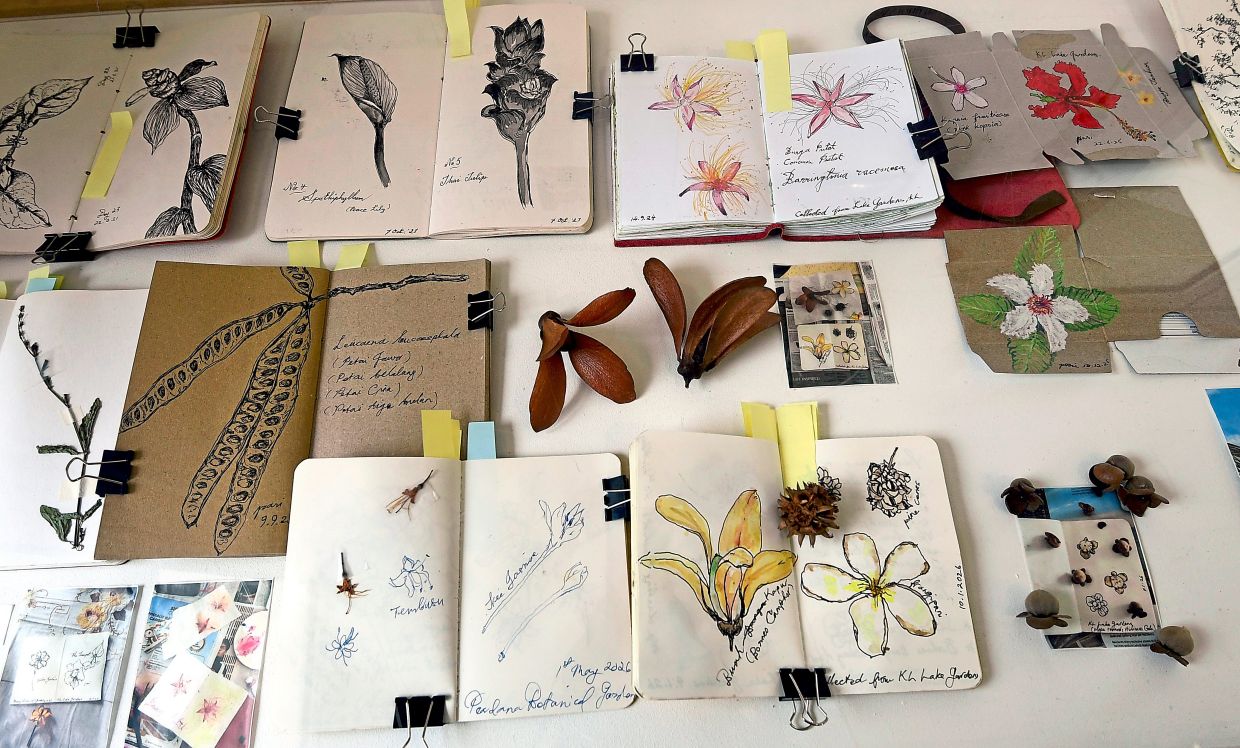
“She is a self-taught botanical artist who ‘accidentally’ documented a native plant from Laos.
"During this season of storms and strong winds, she has also sketched trees at Perdana Botanical Gardens before they fell. I don’t think anyone else is documenting the plants here, so I find her passion very inspiring,” she says.
With Malaysia’s rich tropical landscape, there is still much to discover and research. The exhibition is therefore also an invitation to collectives, artists and enthusiasts to take a closer look at the plants around us.
“Botany Of Belonging showcases the diversity of forest species across South-East Asia, highlighting plants that are endemic to the region as well as those widely distributed across it. Through art and education, we hope to show the importance of documenting these species, which could be lost before they are even discovered,” concludes Syuhada.
More info here.