GEORGE TOWN: With little schooling and few job opportunities available to her, Toh Ai Hwa joined a puppetry troupe at the age of 12 to earn a living.
What began as a means of survival has since grown into a lifelong passion, with the 76-year-old determined to keep the traditional art alive for generations to come.
After 64 years of practising Teochew iron-rod puppetry, she hopes to pass on the centuries-old art to her great-grandchildren so it will continue long after she is gone.
“During those times, girls didn’t go to school and there were hardly any jobs, so I joined a puppetry troupe and started learning from a master in mainland Penang before going on stage to perform in Teochew opera shows,” she said.
Teochew iron-rod puppetry is a performance in which puppets are manipulated using three rods rather than strings.
Originating from the Chaoshan region of China’s Guangdong province, it was brought to Malaysia by Teochew immigrants in the 19th century and was widely performed during religious celebrations.
Toh said mastering the art required years of practice, while performances lasting up to four hours demanded immense patience and discipline.
“Young people today may find it difficult to develop an interest in puppetry but I hope they will give this art a chance because it is part of our cultural heritage and should not be allowed to disappear,” she said.
Toh was among this year’s Living National Heritage Award (Wakoh) recipients, alongside Penang traditional performing arts master Che Mat Jusoh.
Both were honoured at the launch of the 2026 International Performing Arts Symposium and Puppetry Spectacular at Penang Institute on Saturday.
State tourism committee chairman Wong Hon Wai said Toh’s recognition was a source of pride for Penang and Malaysia.
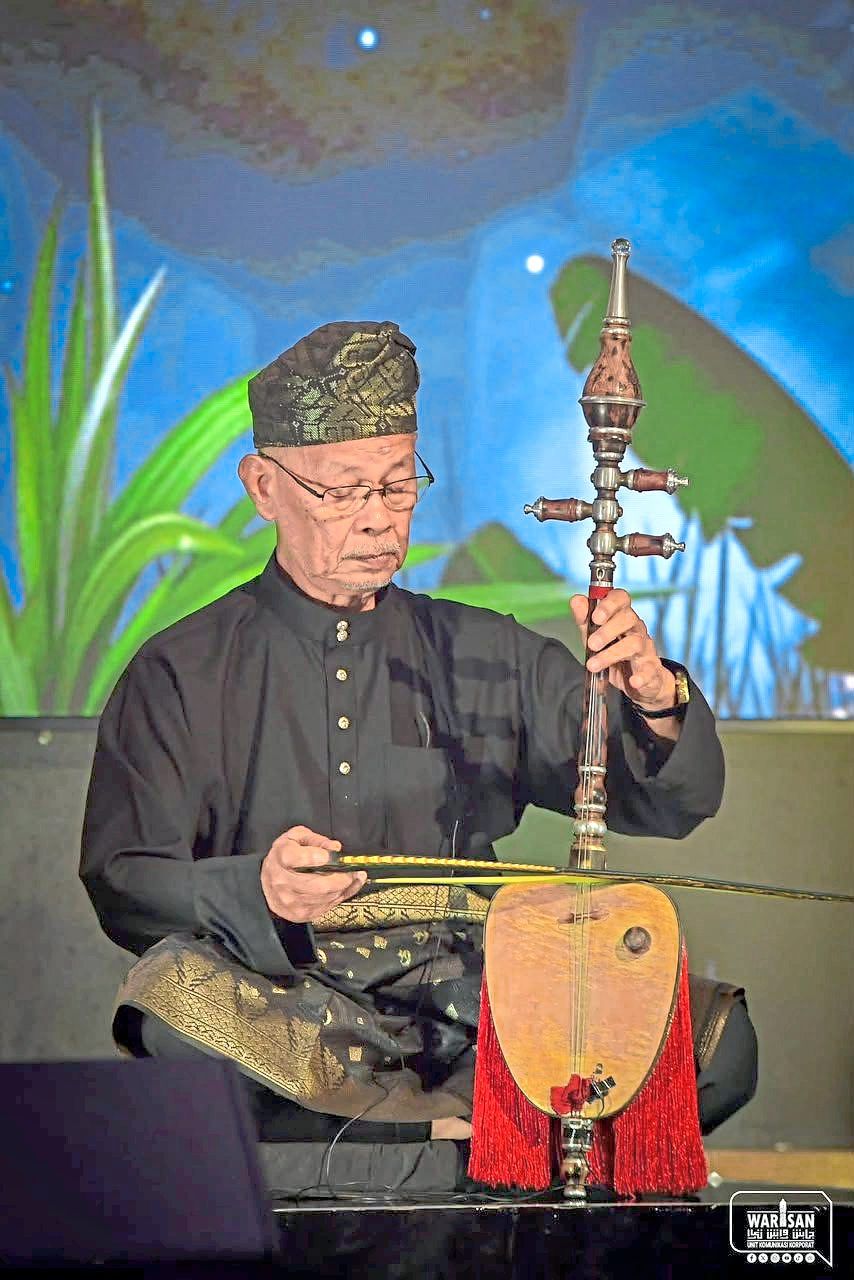
Che Mat, one of the few remaining practitioners able to perform old Mak Yong musical compositions, said he was encouraged by growing interest in the traditional art among younger people.
However, he said traditional knowledge could not be passed down overnight.
“It must be taught gradually, with patience and commitment, just as I went through the learning process myself,” he said.
He also hoped younger generations would appreciate that traditional arts extended beyond singing, acting and dancing to include documenting and writing about traditional culture.
“Heritage should not merely become a memory or a relic of the past, but must continue to be practised and strengthened,” he said.
Another puppeteer also awarded, Azhar Roslan, 44, said his family had kept the Wayang Gedek tradition alive for five generations.
Azhar, who runs a food business in Jelempok, Perlis, said he began learning the art at 10 from a master known as Tok Wi, who taught his grandfather.
His family continues to perform through their troupe, Kumpulan Wayang Kulit Warisan Enam Saudara.
Wayang Gedek, which is traditionally associated with Kedah and northern Peninsular Malaysia, is heavily influenced by Nang Talung, a form of shadow-puppet theatre from southern Thailand.