Upon entering Harta Space, an art gallery in Ampang, Selangor, visitors are greeted by an artwork resembling seed pods, each adorned with a distinctive painted pattern.
Arranged in a wave-like formation within a 232cm by 20cm frame, the objects resemble butterflies in flight when viewed from a distance.
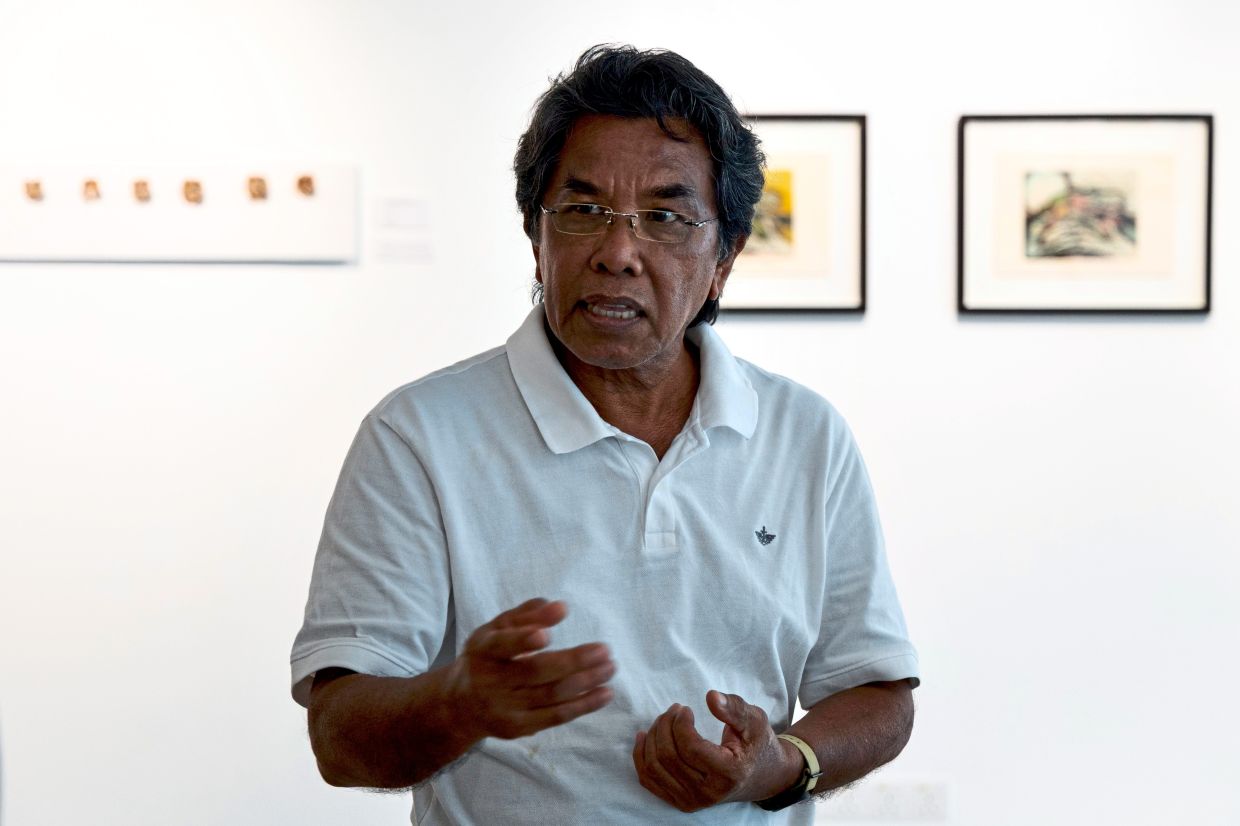
Nearby, the artist is explaining the work to visitors. He is Juhari Said, a bespectacled, grey-haired 65-year-old artist and woodcarver whose practice draws inspiration from nature.
Titled 21, the piece was made using 21 rubber seeds.
"These are actually rubber seeds,” he said, adding, "I am the son of a rubber tapper from Gopeng (Perak). The work reflects my childhood growing up with my parents on a rubber plantation.
"Rubber seeds are unique because when the fruit ripens, its outer shell splits open and bursts, scattering the seeds.”
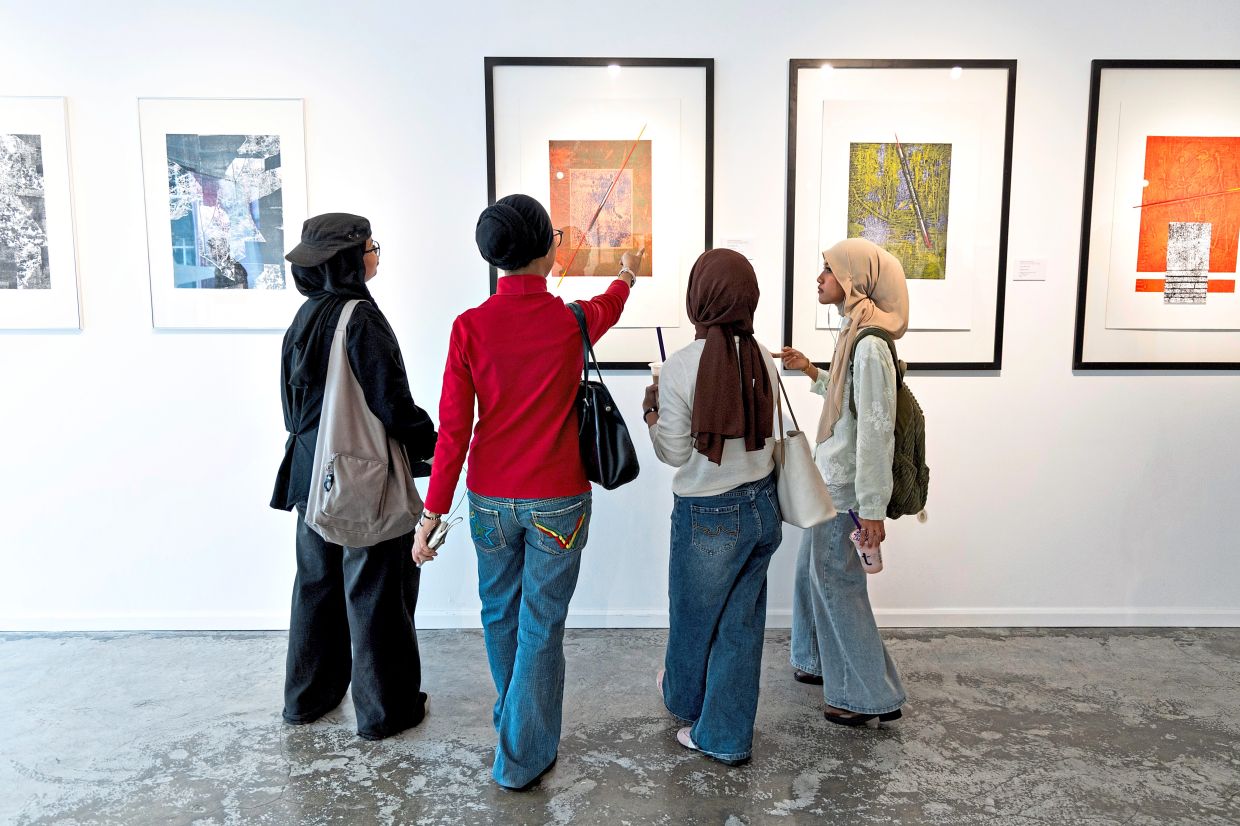
His work is among 36 pieces in the Barehands Residency 2026: Jejak Alami, Jiwa Membumi - Bridging Art Across Asia exhibition, running at Harta Space until Nov 29.
Bringing together 22 artists from Malaysia, Indonesia, Japan, the Philippines and Timor-Leste, the exhibition explores the relationship between humans and nature, cultural identity and the artists' connections to their roots and surroundings.
Return to nature
Juhari, who founded the Barehands Residency programme in 2010, said the exhibition goes beyond showcasing artworks, demonstrating how art can transcend cultural and national boundaries.
"Although each artist has a different approach and technique in producing their work, our shared experiences of interacting with nature and navigating everyday life serve as common ground that connects us across countries and cultures.
"When we undertake projects such as this (exhibition), we are constantly drawn back to our respective backgrounds and roots.
"No matter how far we venture, we must always reconnect with and understand where we come from,” he said.
His connection with nature also extends into his daily routine.
After dawn prayers, he enjoys the morning sunlight, walking barefoot and feeding his pet chickens and fish – practices associated with ‘grounding’, or reconnecting with nature and one's surroundings.
"We all come from nature. No matter how far humanity progresses, we must eventually return to understanding our roots,” he said.
Friendship and teamwork
Juhari said the idea for Barehands Residency first emerged in 2002 after several years of exploring artistic collaborations. It took shape in 2010 through partnerships with artists from Jordan, Indonesia and Japan.
"The word ‘barehands’ means coming empty-handed, symbolising an approach rooted in good intentions, sincerity and an open heart. This is because friendship is the most important foundation, paving the way for greater, far-reaching and more meaningful possibilities.
"Unlike conventional artist residency programmes, which typically follow formal schedules and structured work arrangements, we emphasise communal living in a family-like environment, where participants live, work and carry out activities together under one roof,” he said.
Juhari's residencies are usually held at Akaldiulu, a 1.5ha property in Hulu Langat, Selangor. For the 2026 programme, artists developed their works at three locations: Akaldiulu, Pantai Iraga in Sijangkang (in Selangor) and the Chetak 17 studio in Kuala Lumpur.
"This approach allows (participating) artists to understand one another’s personalities, strengths and weaknesses, fostering more meaningful relationships that ultimately contribute to the creation of better-quality artworks,” he said.
As project director, Juhari considers each participant's background, personality and ability to work with others, noting that artistic talent alone does not guarantee good teamwork.
"A wrong choice could affect the entire group because creating artworks and putting together an exhibition are not merely individual efforts but also require teamwork,” he said.
The residency also brings together three generations of artists: established practitioners aged 65 and above who serve as mentors, mid-career artists aged 40 and above, and young artists aged 30 and below.
Juhari said the arrangement encourages knowledge-sharing through daily interactions, discussions and the creative process.
"We organise a month-long retreat to achieve this. Besides taking participants on visits to museums, galleries and several art studios around the Klang Valley, we also arrange group discussions and artwork critique sessions with the mentors,” he said.
Such exchanges are particularly valuable for young artists, who often work independently and have limited opportunities to receive feedback from experienced practitioners.
Wisdom and humility
For Timor-Leste artist Inu Bere, nature is both an artistic inspiration and a means of sharing his country's cultural heritage and identity.
Originally from Aileu, a mountainous region about two hours from the capital Dili, Inu said nature and local culture have always informed his practice.
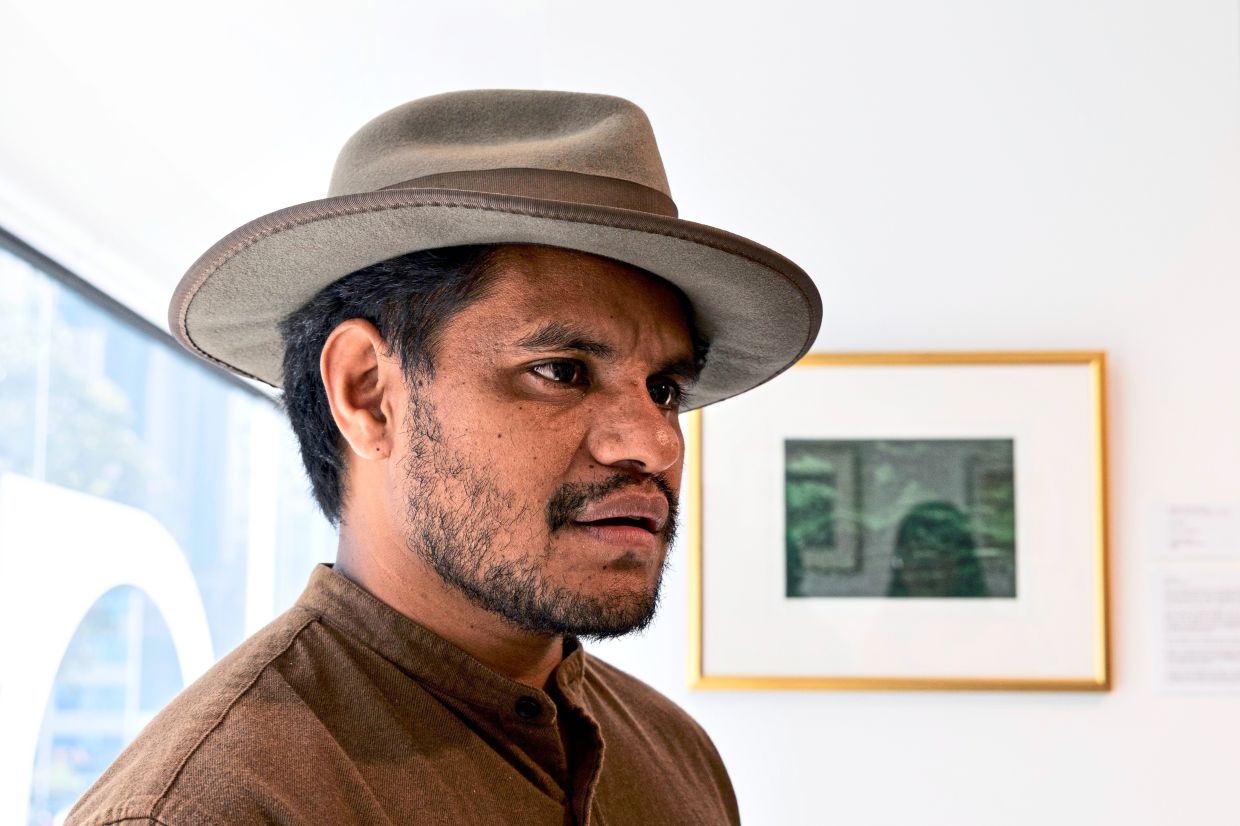
One of his exhibition pieces is a print depicting bamboo, which symbolises wisdom and humility in Timor-Leste's traditional culture.
"In my hometown, bamboo, which bends as it grows taller, symbolises the importance of remaining humble regardless of how much knowledge or experience one has gained," said Inu.
"The more we know and understand, the more we realise that there are still many things we need to learn.
"A wise person is like bamboo; the higher it grows, the more it bows. The more we learn, the more humble we become,” he added.
The philosophy echoes traditional values in other South-East Asian countries, including Malaysia, showing how art can connect different cultures.
Inu also addresses environmental challenges in Timor-Leste, including deforestation, forest burning for agriculture and economic pressures that drive communities to cut down trees for a living.
He said environmental degradation is closely linked to wider social issues such as poverty, employment and access to education.
Through his art, he hopes to introduce Timor-Leste to international audiences through not only its cultural traditions but also the human values and historical experiences that have shaped its identity.
"I'm more interested in our traditional knowledge, our culture and the way we use nature as a metaphor to talk about life and education.
"These are things that I want to translate into my art and share with the public because they are not just about Timor-Leste, they are values that go across cultures,” said Inu.
A tribute to a friend
For Malaysian artist Haslin Ismail, art documents human tragedies while preserving memories of people who have shaped his life.
Through drypoint prints, he explores organic forms inspired by the human body, including hands, feet and the abdomen, to convey the suffering and destruction caused by violence.
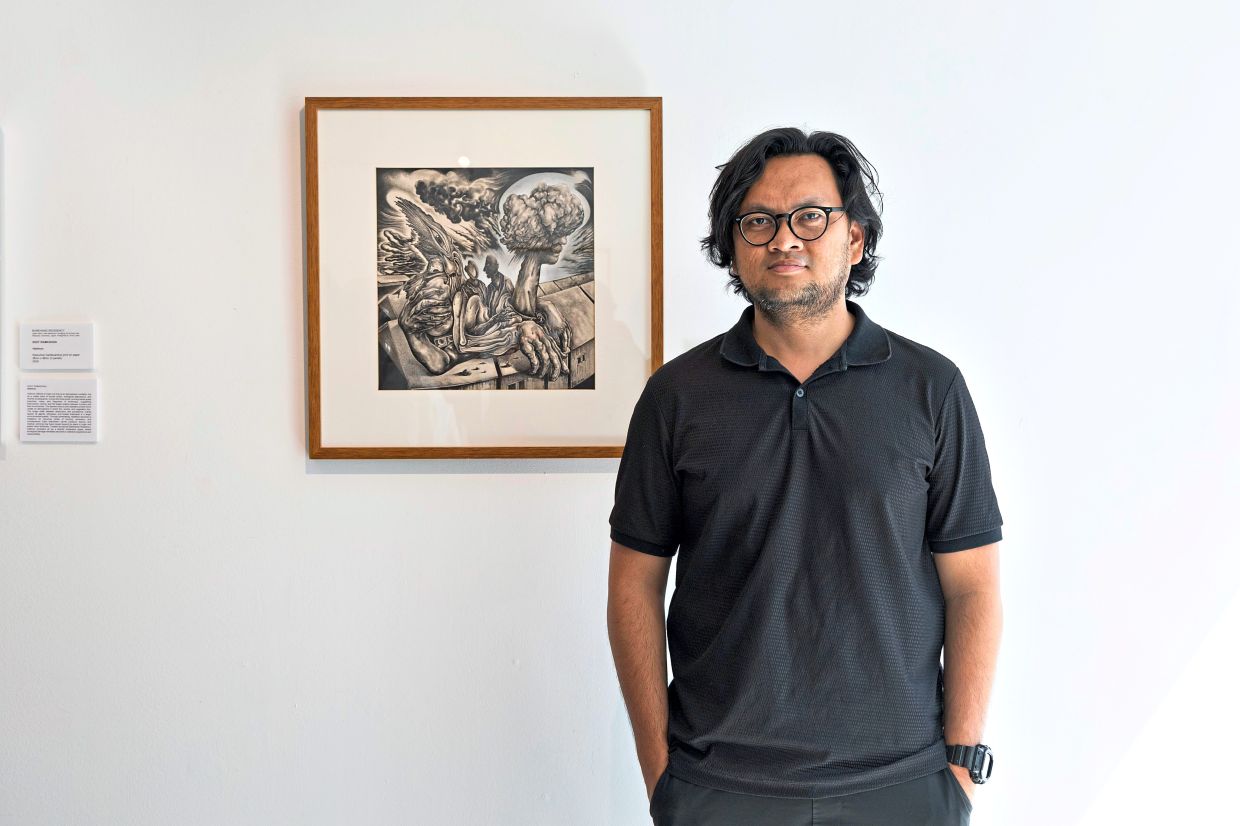
Some works draw on the humanitarian tragedy in Gaza, using images of bodies and homes to depict the impact of conflict on civilians.
Others carry a more personal significance, particularly a piece dedicated to his friend and fellow artist Samsudin Wahab, who died of cancer early this year.
Haslin began the work while accompanying Samsudin for treatment at the National Cancer Institute in KL, later completing it as a tribute to their friendship and the late artist's contributions to the art world.
He described Samsudin's death as a great loss, as they had shared a passion for printmaking and extensive experience in the field.
Memories of his friend continue to surface whenever Haslin returns to their former studio.
"Whenever I return to the studio, everything reminds me of him ... it is difficult because every corner holds a memory, but at the same time, his spirit is still strongly felt,” he said. – Bernama