SABAH and Sarawak stand as living mosaics of culture, shaped by centuries of migration, intermarriage, trade and adaptation.

However, what is most endangered today is not the visible festival culture of Kaamatan or Gawai, but the everyday oral knowledge that sustains identity – languages, oral histories, environmental wisdom and customary laws.
These intangible traditions are weakened by urbanisation, migration, education systems and the dominance of national and global languages. Language itself is central; it carries collective memory and unique ways of interpreting the world, and its erosion threatens the very core of cultural identity.
Experts say preserving heritage therefore requires more than museums or staged performances. It must be lived and transmitted by younger generations through schools, community-led initiatives and recognition of elders as knowledge keepers.
ALSO READ: The many faces of Malaysia
Digital tools and creative industries can play a role, but authenticity depends on continuity within families, villages and everyday life. Without this, the cultural mosaic risks becoming a static display rather than a living reality.
“Protecting the heritage of Sabah and Sarawak is not only the concern of communities in those regions. It is a national concern because it challenges the notion that building national identity must be based on cultural uniformity,” says Prof Datuk Dr Awang Azman Awang Pawi, a Sarawakian who is the Academy of Malay Studies dean at Universiti Malaya.
Profound heritage and values
When asked, Awang Azman says the cultural diversity in Sabah and Sarawak is profound because the communities in both regions differ not only in terms of ethnicity, but also in language, locality, ecology, livelihood, family systems, ritual practices and historical experiences.
He points out that the Kadazan-Dusun, Bajau, Murut, Rungus and many other communities in Sabah, and the Iban, Bidayuh, Melanau, Orang Ulu, Malay and various smaller groups in Sarawak, cannot be seen as homogeneous cultural blocs.
“Even within the same ethnic group, traditions can differ significantly between one river basin, highland area, or district and another.
"Historically, coastal communities developed differently from highland farming communities or river settlements because their relationships with trade, land, forests, and neighbouring communities were also different.
“Thus, Sabah and Sarawak are better understood as cultural mosaics, not merely static and separate ethnic groupings. This diversity was formed through long processes of migration, intermarriage, trade, adaptation and interaction among communities over centuries.”
Institute for Development Studies Sabah research associate Ariff Adi Putera Anwar says numerous factors distinguish the cultural mix of Sabah and Sarawak from that of other Malaysian states. He says that in Sarawak, a strong state identity has been cultivated through more than a century of relatively continuous political and institutional development.
“This has helped produce a particularly pronounced Sarawakian consciousness, whereby ethnic and religious differences coexist with a strong identification with Sarawak itself.”
As for Sabah, it arrived at a similar sense of belonging through a rather different historical trajectory.
“Unlike Sarawak, Sabah was historically less a consolidated polity than a constellation of communities, trading networks and local societies that experienced different and often overlapping forms of external authority.
“Yet from this fragmentation emerged a strong territorial consciousness. Kadazan-Dusun, Bajau, Murut, Chinese, Bruneian Malay and numerous other communities may retain distinct cultural identities, but they are also acutely conscious of themselves as Sabahans.”
Culture, traditions at risk?
Awang Azman says the elements most exposed to extinction are often not the spectacular cultural displays showcased at festivals, but the everyday knowledge passed down orally from one generation to the next.
“This includes community languages, oral histories, family genealogies, environmental knowledge, customary laws, ritual vocabulary, traditional farming practices, medical knowledge, songs, folktales and knowledge related to forests and rivers.”
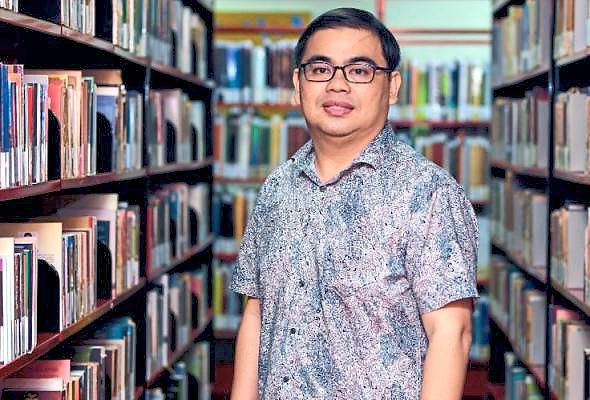
He says there must be a distinction between preserving the appearance of culture and preserving its meaning.
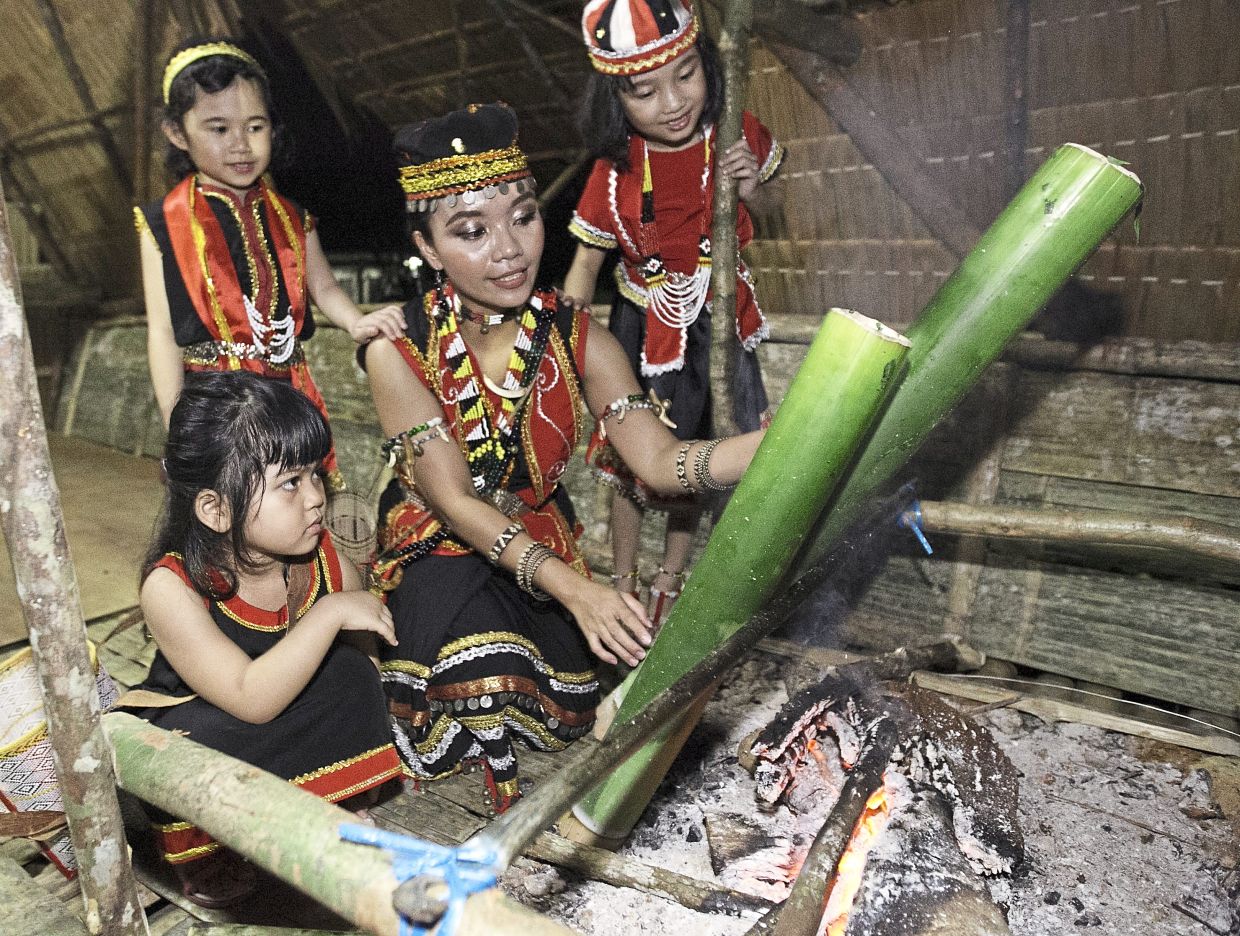
“Traditional clothing may continue to be worn at official events or cultural festivals, but the language, worldview, and knowledge systems that gave rise to those clothes and symbols may be increasingly lost.
“This situation can result in what may be called ‘cultural museumisation’ or ‘festivalisation of culture’, where culture remains visible physically and symbolically, but becomes increasingly detached from the real social life that once gave it meaning.”
ALSO READ: Passing them on to the future
Awang Azman highlights that the reasons some traditions and cultural practices in Sabah and Sarawak are less practised today cannot simply be explained by saying the younger generation is “no longer interested”.
“Cultural change is closely tied to broader social transformations such as urbanisation, migration, formal education, changing work patterns, digital media, intermarriage and weakened cultural transmission networks in villages or longhouses.
“When young people move from longhouses, villages, or rural areas to Kota Kinabalu, Kuching, Kuala Lumpur, or abroad, they enter new environments where much traditional knowledge is no longer needed in daily life.”
At the same time, Awang says dominant national and global languages become more important because they carry value in education, employment and social mobility.
“Here lies a major paradox – communities often ask the younger generation to preserve traditions, but at the same time the economic and social system rewards them more when they leave the social environments where those traditions were once transmitted and practised.”
How do communities in Sabah and Sarawak balance modern changes with their cultural roots?
Ariff Adi says one way of understanding this balance is through the continued importance of the family and wider community in everyday life; modernisation and urbanisation have undoubtedly transformed Sabah and Sarawak, but the degree of social atomisation often associated with these processes remains incomplete.
“Extended families, hometowns, kampung networks and communal obligations continue to occupy an important place in the lives of many Sabahans and Sarawakians.
“As a result, cultural continuity does not necessarily take the form of consciously ‘preserving tradition’. Much of it is reproduced organically through family gatherings, food, language, customary practices, religious life and communal celebrations.
“A Sabahan or Sarawakian may participate fully in a modern, urban and professional environment while still remaining deeply embedded within family and community networks.”

He also says migration has added another dimension, as seen in the large numbers of Sabahans and Sarawakians studying and working outside their home states. Geographical distance can paradoxically strengthen consciousness of home.
“Practices that may once have been taken for granted – local food, language, festivals, family gatherings and even particular ways of speaking – can become much more significant when one is away. The considerable effort involved in returning home for occasions such as Kaamatan, Gawai, Christmas, Hari Raya or major family gatherings also gives these moments particular significance.”
Ariff Adi agrees that among younger generations of Sabahans and Sarawakians living elsewhere, this has helped cultivate diasporic communities that are often quite willing to reaffirm, rather than abandon, their regional and cultural identities.
“The balance, therefore, is not necessarily between choosing modernity or choosing tradition. Sabah and Sarawak demonstrate how modern lifestyles can be absorbed into existing networks of family, community and belonging. Cultural roots survive because they continue to provide people with a social anchor even as the circumstances of everyday life change.”
These stories are part of Media in Arms’ Wajah Malaysia special in conjunction with Malaysia Day. Media in Arms is a media alliance comprising five mainstream media outlets – Chinese newspaper Sin Chew Daily, Malay daily Sinar Harian, local news broadcaster Astro Awani, Tamil newspaper Malaysia Nanban and The Star – which formed this initiative in February 2022 to collaborate on diversified news content.