



THE ancient city of Tyre has come to embody the rhythms and brutality of conflict in southern Lebanon.
The city has been shaken by relentless Israeli bombardment, broken neighbourhoods and endless funerals.
People have been driven from their homes to hospitals, shelters and, often, out of the city.
During lulls in the fighting, life seems to return to something close to normal, only for it to be shattered by renewed attacks.
Since early March, Tyre, located about 80km south of the capital, Beirut, has lived in the shadow of the conflict between Hezbollah, the Iran-backed armed group in Lebanon, and Israel. The conflict began days after the first US-Israeli strikes on Iran in February.
For more than two months, reporters from The New York Times repeatedly returned to Tyre as the city and its people endured a seemingly endless cycle of deadly strikes and tenuous ceasefires.
Services, including water and electricity, were frequently interrupted. People slept on the streets and along the beach, convinced that they would be safer in the open air than in their homes.
The city’s Christian quarter, largely spared in previous conflicts, was drawn into the fighting. In July, Unesco added some of the city’s archaeological sites to its list of World Heritage sites in danger.
The conflict, though tempered by a precarious truce that was first signed in mid-April, has broadly devastated Lebanon, killing more than 4,380 people and displacing over a million, with Israel occupying large parts of the country’s south and destroying entire villages and neighbourhoods.
Israel has said that it wants to dismantle Hezbollah’s military infrastructure and prevent further attacks on Israeli communities near the Lebanese border.
For Rida Hijazi al-Dahab, the fighting in Tyre has exacted a devastating toll on his home, his business and nearly everything he owns.
Minutes before the first ceasefire was set to go into effect, Israeli airstrikes flattened buildings in the residential block where his coffee shop was located.
Israel said shortly afterward, without offering evidence, that its strikes over the previous 24 hours had targeted Hezbollah sites and personnel.
Al-Dahab said he had been standing inside the cafe when the strikes hurled him against a wall and knocked him unconscious. He woke up to find that people were pulling him out of the debris from the building, which his grandfather had built decades ago.
“What did we do wrong to deserve this?” he asked in an interview in May.
On a recent evening, as the sun cast a golden glow over Tyre’s Mediterranean waterfront, water dripped from the cracked concrete where al-Dahab’s cafe once stood.
Power lines hung low overhead and dust clung to the shattered walls as he looked over the scene of destruction.
He said he had invested thousands of dollars into the business, money now lost.
“The candle of life has been switched off from this neighbourhood,” al-Dahab said.
His neighbourhood was not the only place that was shadowed by grief.
Across Tyre, death became part of the city’s daily rhythm. For weeks, the city was full of funerals, sometimes several in a single day.
For Lebanese Civil Defence emergency workers, who were hunkered down across the city and surrounding region, the toll was especially acute.
Some were killed in so-called double-tap strikes, hit by the Israeli military as they rushed to treat or evacuate those killed or wounded from an initial strike, according to Lebanese health officials and human rights groups.
In many of those cases, Israel has said that its strikes were aimed at militants, without providing evidence. In some instances, it has said it is investigating the attacks.
More than 130 medical workers have been killed since the conflict began, according to Lebanon’s Health Ministry.
In Tyre, their funerals became scenes of collective mourning, with relatives leaning over coffins, scattering flowers and sharing memories of those they lost, sometimes as Israeli warplanes and drones roared overhead.
But as suddenly as the violence came, it would subside, and the city would find ways to slowly stitch itself back together.
Restaurants and cafes were always the first to reopen. They served shawarmas, matcha lattes and shisha as people looked out over the calm seafront, trying – if only for an afternoon – to pretend the conflict had paused.
Fishermen returned to mend their boats and prepare for the next catch. Clothing stores reopened. The ice cream truck rolled back into town. Families came back, carrying little more than the bags they had fled with.
But not everyone could return.
For many displaced residents, Tyre has become a place remembered rather than one to which they can return.
Zakia al-Or, 87, fled Tyre at the onset of the conflict in March. She is now staying with several family members in an old courthouse-turned-shelter in Sidon, a coastal city farther north.
She spoke about following the man she loved to Tyre, raising her children there and perfecting generations-old family recipes.
She stayed even after her children left for other parts of Lebanon and moved abroad, chasing work and escaping crisis.
Much of that life is gone. Her home was hit in the 2024 conflict between Hezbollah and Israel, she said, and then struck and damaged again in the most recent conflict.
Al-Or described the emotional pain of losing pieces of her life over and over, and how, in old age, she had hoped for just a few peaceful years.
She was in physical pain, too; her medications were running out, and she could barely sit up in bed.
She said she was ready to go anywhere – Beirut, Canada, the United States.
“The wars and the desperation never end,” she said. “This whole country is sad.”
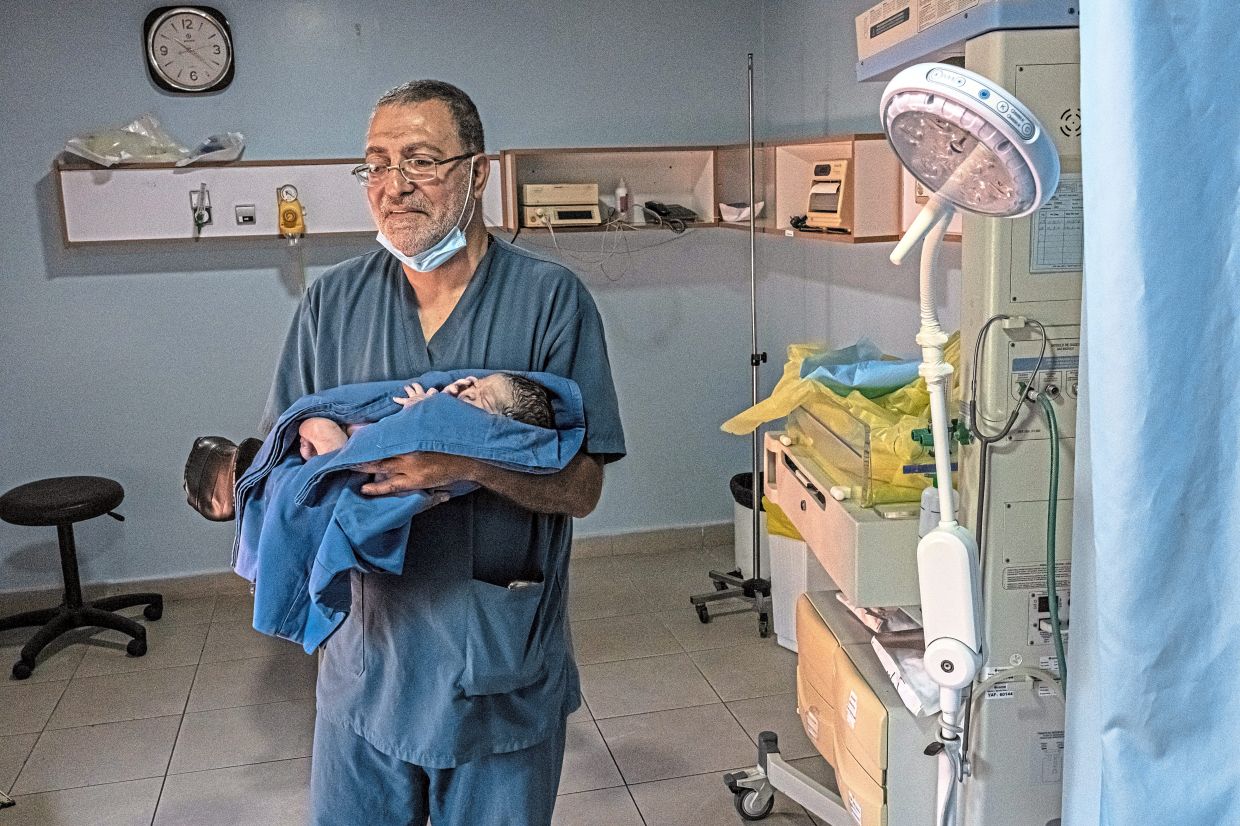
That sadness is perhaps most visible in Tyre’s hospitals, where every strike has brought yet another patient, another family, another emergency.
For months, medical workers carried on with dwindling supplies as their own facilities came under attack.
Inside, there was the child, wailing in pain from the shrapnel wounds that covered her body. The farmworker, who had lost both her legs, her husband and several other family members in Israeli strikes.
The nurses and doctors, sitting stunned amid shattered wards and offices, trying to make sense of what was left.
For now, the rhythm of life is back in Tyre. It began to come back slowly, gingerly, after another fragile truce between Hezbollah and Israel was reached in June.
Along the shore, the Mediterranean rolls against the city.
Some families have been reclaiming the pleasures of summer, gathering under colourful umbrellas, sharing meals and playing volleyball by the water. In the centre of town, traders are slowly returning, rebuilding and repairing.
Shelling in the city’s outskirts – and across southern Lebanon – is still rattling the ground as drones hum overhead.
For residents like al-Dahab, a semblance of ordinary life means reckoning with what happened while trying to find a way through the uncertainty ahead.
“I lost everything,” he said. But, he added, “it’s also a miracle that I am still alive.” — ©2026 The New York Times Company
This article originally appeared in The New York Times
Already a subscriber? Log in
Get 20% OFF The Star Digital Access
Cancel anytime. Ad-free. Unlimited access with perks.
