



THIS time, the rupture feels real.
US President Donald Trump has long made no secret of his disdain for President Volodymyr Zelenskyy of Ukraine and his affinity with President Vladimir Putin of Russia.
But Zelenskyy has always managed to hold on to some form of American support against Russia, going along with fruitless US-led peace talks and heaping thanks and flattery on Trump for his “strong leadership”.
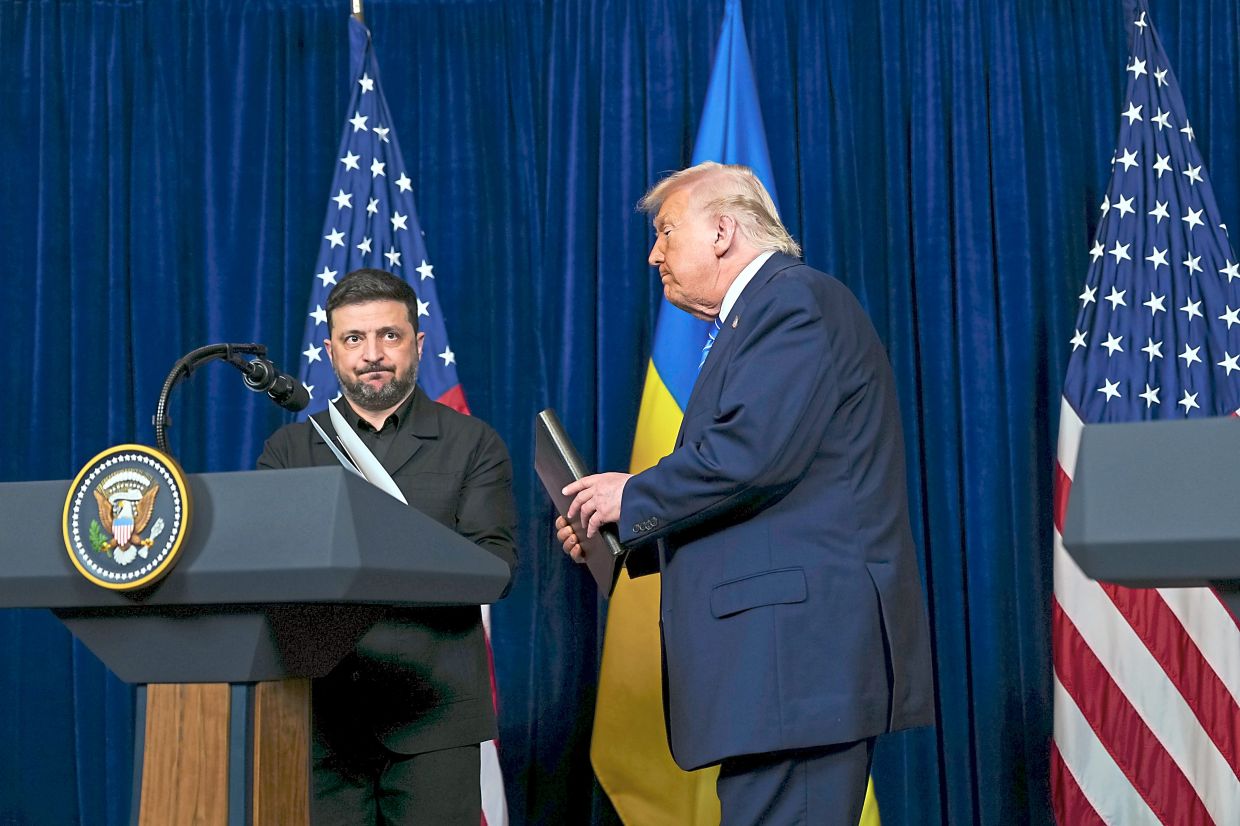
Now, in the run-up to midterm elections seen as a referendum on Trump’s presidency, their relationship seems close to a breaking point.
The split poses risks to the Trump administration but more critically to Ukraine, whose military still gets crucial operational help from the United States.
For Kyiv, the blows came one after the next in just one very bad week.
Trump blamed the war launched by Russia against Ukraine almost five years ago for rising diesel prices, instead of what energy experts call the real cause: the war that Trump launched against Iran.
He temporarily lifted US sanctions on Russian diesel sales in what is likely to be a failed attempt to lower those prices.
He unilaterally declared an “energy ceasefire” in the war that only helped Russia and hurt Ukraine. And he called for a new Ukrainian president.
By then, the Ukrainian military was reporting sudden unexplained restrictions on its use of Starshield, a military version of the satellite Internet system Starlink that is crucial to Ukraine’s battlefield communications.
Elon Musk, the on-again, off-again good friend of Trump and the CEO of SpaceX, which operates Starlink, suggested that only the US military and ultimately Trump could limit Starshield’s usage. He also called for a new Ukrainian president.
After initially holding back, a visibly angry Zelenskyy said he felt betrayed as Trump openly sided with a Russian leader who is killing Ukrainian civilians by the dozen.
Defying Trump’s ceasefire declaration, Zelenskyy said Ukraine would restart its attacks on Russian oil refineries.
Asked by journalist Piers Morgan to clarify whether he believed Ukraine was “losing” the United States, Zelenskyy replied simply: “Yes.”
Trump then told Newsmax that “Zelenskyy is not a good guy for us to deal with”.
Zelenskyy seemed to go further at a meeting with EU leaders.
When asked if he was being treated as a scapegoat for Trump’s problems, the former comedian with excellent comic timing, gave a sideways smile and paused at length. Everyone laughed. Then he leaned into the microphone and said: “This is my answer.”
Where the war of words will end is anybody’s guess. But if it continues, it will help Russia and hurt the Trump administration, Ukraine and Kyiv’s European allies, according to analysts.
“It is a lose-lose situation,” said Balazs Jarabik, a former European Union diplomat in Kyiv who now works at R. Politik, a political analysis firm. “It’s bad for Trump, I think. It’s bad for Zelenskyy, obviously. It’s bad for the Europeans.”
The worst case for Ukraine would be if Trump and his Defence Department were to suspend aid to the Ukrainian military.
Kyiv is hoping that such a step would be too politically damaging for Trump, as he faces criticism from some in his own party over his treatment of Ukraine.
Kyiv relies on the Pentagon for military intelligence that alerts the country to incoming missile strikes and helps it with targeting for its own midrange strikes.
Ukraine also relies on the United States for weapons that it purchases with the help of allies, such as spare F-16 parts, radiation-seeking missiles and Patriot interceptor missiles, the only weapon Ukraine can access that can knock down Russian ballistic missiles.
A loss of this assistance would hurt the Ukrainian military just as it has been performing well against the Russians on the front line.
It would also hurt Ukrainian cities that are under constant missile and drone attack and cause more Ukrainian civilians to die, analysts said.
The United States used to be Ukraine’s number one ally in this war.
But then Trump came into office. He said the days of isolating Russia were over, blamed Ukraine for being invaded and upended generations of US foreign policy.
Then came a disastrous meeting between Zelenskyy and Trump at the White House, when Zelenskyy was berated for not wearing a suit and not being grateful enough for American help.
While Zelenskyy repaired that rift, the United States stopped donating weapons to Ukraine, instead requiring Kyiv and its Western allies to pay for them.
Since then, Ukraine has significantly built up its own defence production, softening the blow as the United States has pulled back – and giving Zelenskyy more room to speak out.
“The leverage that Trump has with not giving Ukraine things anymore is very limited,” said Nico Lange, a former German Defence Ministry official who is now a senior fellow at the Munich Security Conference.
The next couple of weeks could give a sign of what might happen next in the Trump-Zelenskyy relationship, analysts said.
“We have to see what’s going to happen up to the midterms,” said Harry Nedelcu, a senior director at Rasmussen Global, a European political advisory firm.
“We have to see how Trump will play this out. On one hand, he wants to show he’s bringing gas prices down. On the other, he’s facing criticism from his own ranks. Geopolitically, however, of course it’s a stab in the back. A geopolitical betrayal.” — ©2026 The New York Times Company
This article originally appeared in The New York Times
Already a subscriber? Log in
Get 20% OFF The Star Digital Access
Cancel anytime. Ad-free. Unlimited access with perks.
