



THE conflict in Iran has rippled through the global economy, pushing up prices for oil, fertiliser and other products.
It has also created challenges for America’s most popular fruit: bananas.
The banana business is an underappreciated feat of logistics, transporting a fragile fruit thousands of kilometres from the tropics to be sold for less than a quarter each.
Now, rising fuel and material costs are putting even more pressure on producers, who operate on thin margins and have little power to raise prices.
The industry also faces threats from disease, climate change, tariffs and an exceptionally severe El Nino expected this year.
Americans eat about 80 bananas per person annually, making the fruit a staple of smoothies and school cafeterias.
But bananas generate little profit for grocery stores or growers. Retailers often sell them cheaply to draw shoppers in, and the average US price – about 65 cents a pound in August – has changed little over the past decade despite rising costs.
“Everything is costing more money,” said Danny Dumas, a senior vice-president at Del Monte North America. “If you ask me, it is a crisis.”
Even so, Del Monte and other major producers continue shipping enormous quantities to the US.
This summer, cranes and trucks unloaded hundreds of refrigerated containers from the Del Monte Spirit at a port outside Philadelphia.
The ship had travelled more than 3,200km from Central America carrying millions of bananas from Guatemala and Costa Rica.
The crew had just 40 hours to unload its cargo before the ship sailed back for the next week’s pickup.
The shipment was part of a finely tuned supply chain stretching from tropical plantations to American supermarket shelves.
Some of the bananas were grown in Tiquisate, a farm-dotted flood plain on Guatemala’s Pacific coast.
After being carefully packed to prevent bruising, they travelled more than 400km by refrigerated truck to a Caribbean port, then crossed the sea to New Jersey.
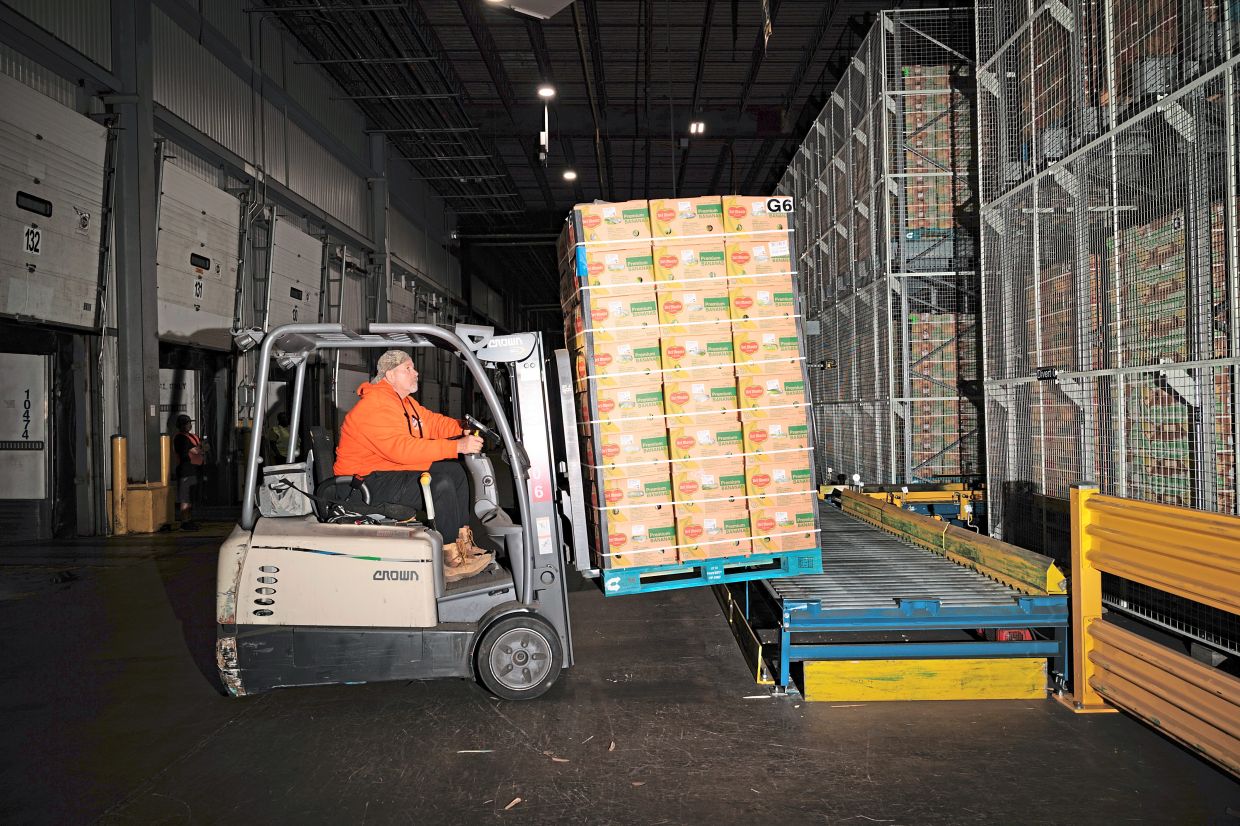
There, Del Monte unloads up to 300,000 boxes of bananas a week. The fruit is shipped to retailers or sent to ripening facilities, where rising temperatures and ethylene gas turn the bananas yellow.
Mounting costs
Bananas have been hit particularly hard by the war because they travel long distances and require careful refrigeration.
US diesel prices, which power Del Monte’s refrigerated trucks, have risen about 70% since the conflict began seven months ago, peaking above US$6 a gallon.
Fuel for ships and irrigation systems in Central and South America has also become more expensive.
Fertiliser costs have climbed, too, because much of it is made using natural gas from the Middle East.
Higher shipping costs have also affected cardboard and plastic packaging, as well as chemicals used to protect bananas against disease.
Del Monte grows some bananas itself and buys others from farmers.
Producers worry that rising costs could prompt farmers to cut back on fertiliser and disease treatments, reducing next year’s harvest. Some Central American farmers are already switching to pineapples.
Higher costs could also leave the industry with less money to invest in disease-resistant varieties.
The threat is particularly serious because the banana Americans know best, the Cavendish, is vulnerable to fungi and viruses spreading through South America.
Although hundreds of banana varieties exist, most Americans encounter only the Cavendish.
Before the 1950s, they ate the Gros Michel, a plumper, sweeter variety whose flavour survives in banana-flavoured sweets.
But Panama disease, a fungal infection, devastated Gros Michel plantations, prompting farmers to switch to Cavendish.
Virtually all bananas consumed in the United States descend from that single variety.
Now, another strain of Panama disease is attacking Cavendish plants in Southeast Asia and South America. The fungus can survive in soil for decades, permanently wiping out farms.
Banana-nomics
For banana executives, one of the industry’s enduring frustrations is how little the effort required to produce and transport the fruit is reflected in its price.
For decades, grocery stores have treated bananas as “loss leaders”, selling them cheaply to draw customers to their shops.
Competition among companies selling a largely identical product leaves producers with little room to raise prices.
The industry has also built highly efficient supply chains to cut costs from farm to store, a strategy perfected by the United Fruit Company, which turned large parts of Central America into company-run territory in the early 1900s.
The result is that bananas, despite their fragility and long journeys, can sell for as little as 15 cents each.
Adjusted for inflation, the average US price of a pound of bananas has fallen by roughly half over the past 40 years. In the second quarter, Del Monte’s profit margin on bananas was just 2.3%. — ©2026 The New York Times Company
This article originally appeared in The New York Times
Already a subscriber? Log in
Get 20% OFF The Star Digital Access
Cancel anytime. Ad-free. Unlimited access with perks.

