IN South Korea and Taiwan, the world’s hunger for artificial intelligence (AI) has unleashed a boom unlike anything seen in years.
The two economies are home to the small cluster of companies that produce the coveted chips AI cannot run without.
As exports climb to record highs and stock markets soar, the rush to cash in has reached a fever pitch.
Seniors are opening brokerage accounts to funnel their savings into semiconductor stocks. On social media, young people question the point of their jobs, saying they could earn as much – or more – trading stocks.
Yet the windfall is masking a far bleaker picture across much of the rest of the economy.
Industries outside chipmaking are struggling to navigate a turbulent landscape upended by energy and tariff shocks.
Household debt and real estate prices continue to rise. Both currencies remain weak despite repeated government interventions to prop them up.
For both places, the skyrocketing growth springs from a narrow, highly specialised sector that employs only a sliver of the population. Everybody else is left scrambling to find a way in.
As investors pour money into chip stocks, chasing a share of the AI bonanza, they are amplifying the market’s wild swings.
Economists describe the phenomenon as a “K-shaped” divide, in which some industries and socioeconomic groups thrive while others stall or fall behind.
Around the world, including in the United States, that divide has widened since the Covid-19 pandemic. Now, the AI boom threatens to make it even more expansive.
The enormous AI demand, Taiwan’s central bank cautioned in a statement in June, risks creating an economy in which “different groups or industries experience drastically different economic outcomes”.
“The wealthy thrive,” the bank said. “The low-income group struggles.”
Few places illustrate that split more clearly than the homelands of the world’s semiconductor giants, where companies including Samsung, SK Hynix and Taiwan Semiconductor Manufacturing Co are reaping record profits while much of the rest struggles.
“Because semiconductors now account for such an outsized share of Korea’s export value, the headline numbers look strong,” said Sang-ha Yoon, executive director of the Korea Institute for International Economic Policy, a government-funded think-tank.
But those figures conceal a growing divergence. Non-semiconductor exports – petrochemicals, steel, batteries, auto parts – are struggling with weak demand and intense competition from China.
“The same headline that reads ‘Korea is doing well’ also reads: ‘Korea is doing well in a very narrow way,’” Yoon said.
For workers outside the AI sector, Yoon continued, “the lived experience can be one of higher costs and stagnant real wages”.
As the benefits of the boom become increasingly concentrated, many South Koreans have started looking to the stock market to share in the gains.
Stockbrokers reported in May that South Korean seniors were cashing in life insurance policies and retirement savings to buy chip stocks.
The enthusiasm extends to Taiwan, which overtook India in May to become the world’s fifth-largest equity market.
TSMC, which manufactures the world’s most advanced AI chips, accounts for more than 40% of the value of Taiwan’s benchmark index and carries a market capitalisation approaching US$2 trillion.
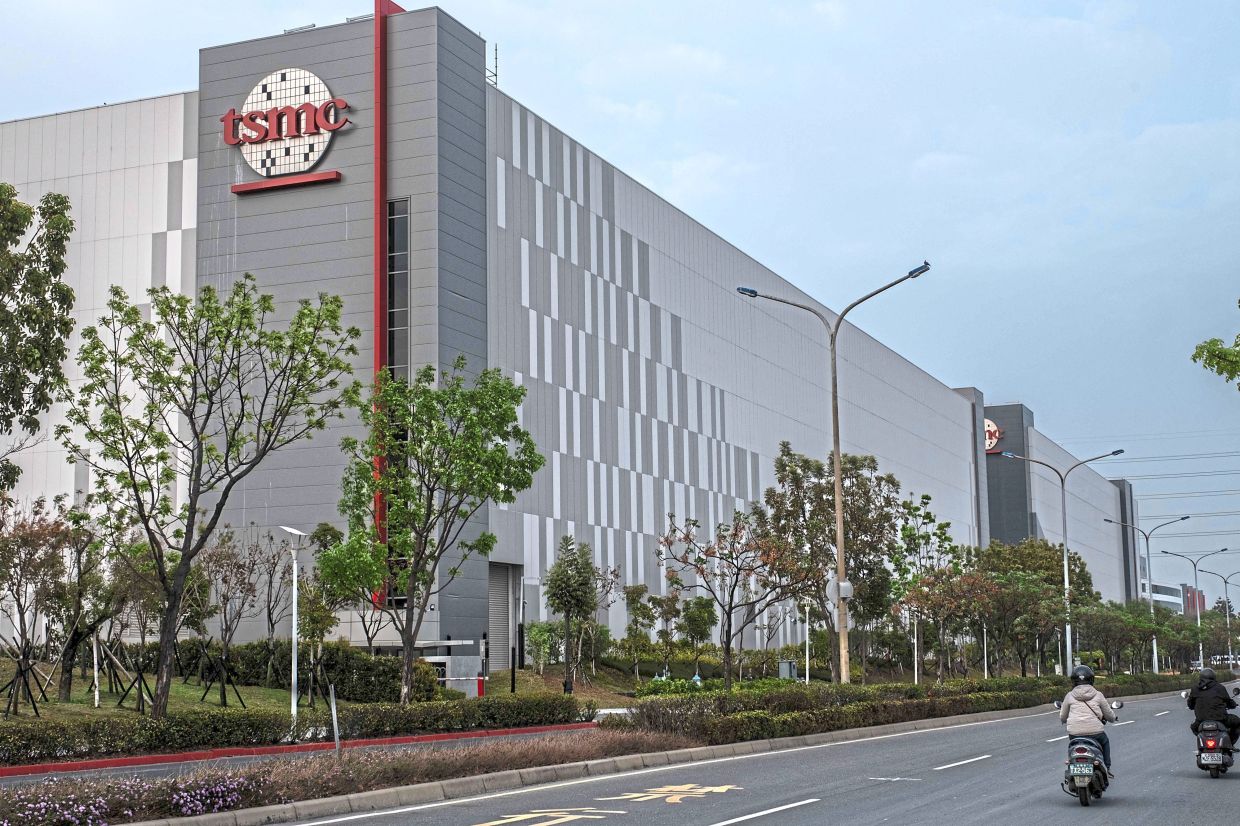
The chip frenzy has helped propel Taiwan to some of the fastest growth rates in the world. The economy expanded nearly 13% in the fourth quarter of 2025 and almost 15% in the first three months of this year.
But that has not translated into broader wage gains, said Dachrahn Wu, executive director of an economic research centre at National Central University in Taoyuan.
Most Taiwanese workers are employed outside the tech sector and earn less than US$1,500 a month, Wu said.
The small group of high earners can save and invest. Most cannot.
Taiwan’s economic growth accrues mostly for the wealthy, such as TSMC shareholders, Wu said.
“But the salaries of ordinary people haven’t grown much.”
Taichung, a central Taiwanese city, was once a hub for machine tools, home to hundreds of thriving small businesses.
But tariffs have transformed the industry, said Ian Chang, the second-generation general manager of Innovator Machinery Co, which makes woodworking machinery.
Many companies have gone out of business, and others have put day labourers on unpaid leave – widening the gap between workers in traditional manufacturing and those with steady jobs in the technology sector.
Questions about who benefits from the technology windfall have become a source of political and labour tension in South Korea.
Should Samsung reach the roughly US$200bil in operating profit this year projected by some financial analysts, workers in its semiconductor division could receive bonuses of as much as US$430,000, a spokesman for Samsung said. The average monthly wage in South Korea last year was around US$2,800, according to government data.
Asked at the company’s annual shareholders meeting whether TSMC might adopt a similar arrangement, its chair, CC Wei, said the company had increased employee bonuses over the past three years.
The dispute at Samsung may be an early sign of a wider debate over how the gains from AI should be shared. — ©2026 The New York Times Company
This article originally appeared in The New York Times