THE frenzy started on a single street in Lahore, Pakistan, where a half-dozen showrooms sprang up selling the same thing – electric motorcycles – and still couldn’t keep up with demand.
As gasoline prices soared this year, a seventh store opened, followed by an eighth. Another two are doing business just around the corner.
And that was just the beginning.
Electric motorcycles scarcely existed in Pakistan three years ago. But across the country, new brands are arriving by the week with names like Vlektra and Jolta, from 84 companies and counting.
They’re a mix of shoestring operations, venture-capital-backed startups and preexisting companies that see the potential and are jumping in.
Even the Pakistani maker of Massey Ferguson tractors plans to launch an electric motorcycle line.
The surge signals how quickly, and perhaps permanently, people in developing countries are pivoting away from fossil fuels as the conflict in Iran keeps oil prices high.
“If all these people convert to electric, even 500 companies would not be enough,” said Mumtaz Hussain, the national sales manager for Eveon, which has a showroom on one end of the street, Maulana Shaukat Ali Road, where much of the shopping is happening in Lahore.
Electric motorcycles are a crucial indicator of changes driven by war.
In poorer countries, where people are most vulnerable to energy-price shocks, two-wheelers are far more common than cars. Electric models typically cost more to buy than gasoline-powered versions.
But rising gasoline prices have given electrics a big advantage: it’s cheaper to charge a battery than to fill up a fuel tank.
In Pakistan, motorbikes make up about 80% of vehicles on the road and often count as the most valuable thing a person owns.
Sales of electric two-wheelers rose 173% during the first half of the year, according to MotorCycles Data, a market-intelligence firm.
It attributed the jump to both the oil price increase and a government subsidy programme.
Hamza Asad, director of sales for Evee, the country’s largest electric seller, said 90,000 electric two-wheelers were sold nationwide between April and June, compared with 112,000 for the entire year in 2025.
About 1.9 million motorbikes, gasoline or otherwise, are purchased in Pakistan in a typical year.
“Trump is the biggest salesman. Salesman of the year,” said Muhammad Salman, managing director of Yadea Pakistan, which has a showroom on the same street, referring to the increase in demand for gas-free bikes that has followed US President Donald Trump’s decision to attack Iran.
In Pakistan, the world’s fifth most populous country, the proliferation comes from a mix of homegrown ingenuity and Chinese opportunism.
A handful of Pakistani companies use chassis and tyres manufactured domestically while relying on batteries and motors from China.
But other companies depend on China almost entirely. They import bikes essentially like IKEA furniture, in ready-to-assemble packages that need little more than a logo.
China has a constellation of companies, mostly in the city of Wuxi, that offer these customisable kits. Pakistan, aiming to clear up its polluted skies, applies duties of only 1% on such imports.
Lahore has hundreds of electric motorcycle showrooms. But the stores around Maulana Shaukat Ali Road have become the nucleus for the industry, clustered in a middle-class neighbourhood.
Among the earliest brands on the street was Metro, whose motorbikes come in the ready-made units from China, said Usman Arif, CEO of Arif Motors, which sells the bikes.
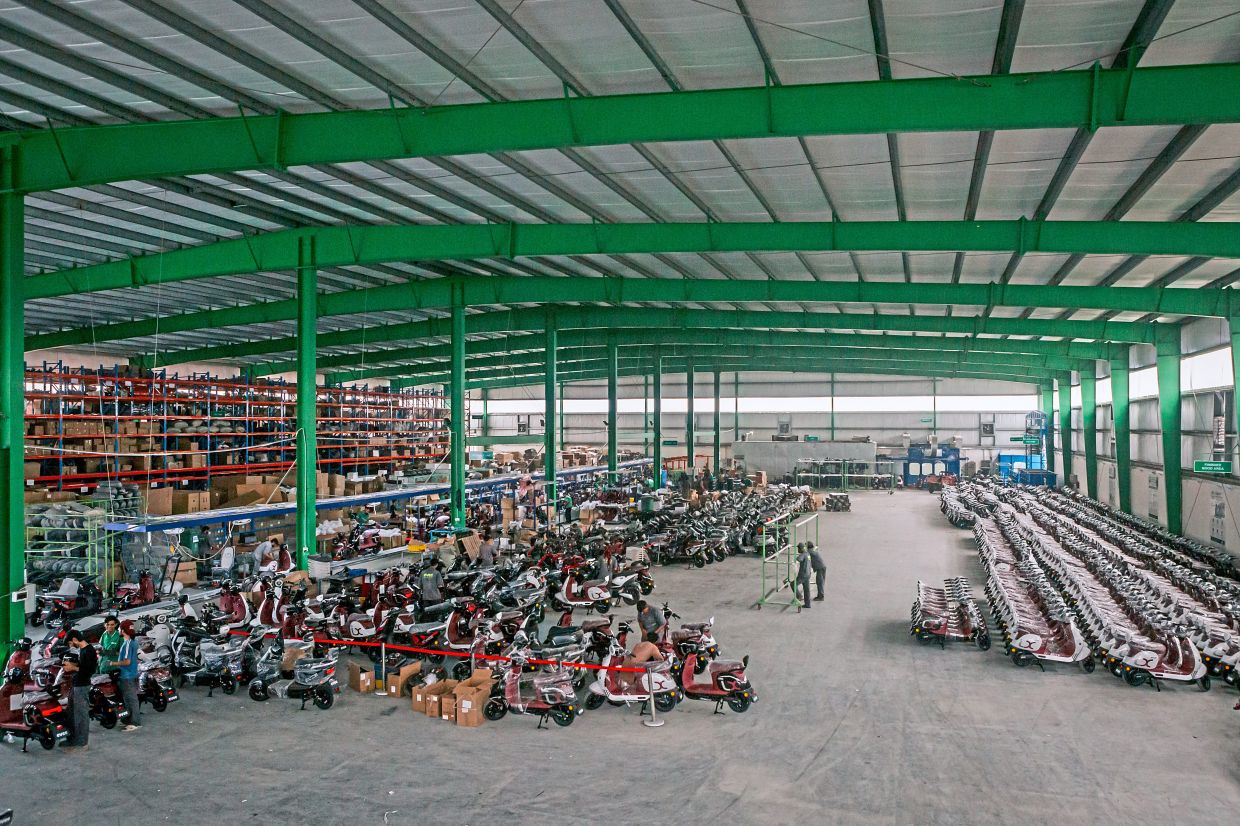
Soon after came Evee, which opened on a nearby street, and which recently doubled the length of its Lahore assembly line, where parts come from both China and Pakistan.
Asad, Evee’s director of sales, said his hope is that the company’s name, pronounced “EV”, becomes synonymous with the product. “Like Kleenex,” he said.
Then there is Vlektra, which opened its dealership just weeks after the start of the Iran conflict this year.
The company’s origins trace back to New York City, where its founder, Syed Raza Mohsin, had been working in his 30s at a hedge fund and “hanging out with too many old rich people”, he said.
Mohsin, now 43, remembers looking at Tesla’s soaring sales figures and realising that his home country would miss out on any EV transition that depended on buying US$40,000-plus vehicles.
So he returned to Pakistan, hired a few people, and tried to figure out if it was possible to make a two-wheeler for around US$1,000.
Mohsin knew his target market.
To appeal to buyers, any bike needed to be visually comparable to the de facto national motorcycle of Pakistan, the Honda CD 70.
It’s everywhere, and it has scarcely changed its appearance in 40 years. The CD 70 doesn’t even have a fuel gauge.
But it is a workhorse. It can churn through shin-high monsoon floodwaters or power up rural roads. And it famously holds its resale value.
“We wanted some sense of familiarity,” said Mohsin, who ultimately rolled out a model with a Honda-like profile, 17-inch rims and a purely decorative cap for a non-existent fuel tank.
Still, on a recent night along Maulana Shaukat Ali Road, Vlektra had the busiest store.
One of the shoppers was Haider Ali Khan, who said he was spending 8% of his salary on fuel and had become convinced the “next age is electric”.
Another man, Saad Bin Arif, said he’d come from 320km away – not to buy a bike, but to inquire about opening a dealership of his own.
And yes, the store has attracted Honda devotees. — ©2026 The New York Times Company
This article originally appeared in The New York Times.
Boost or bust?
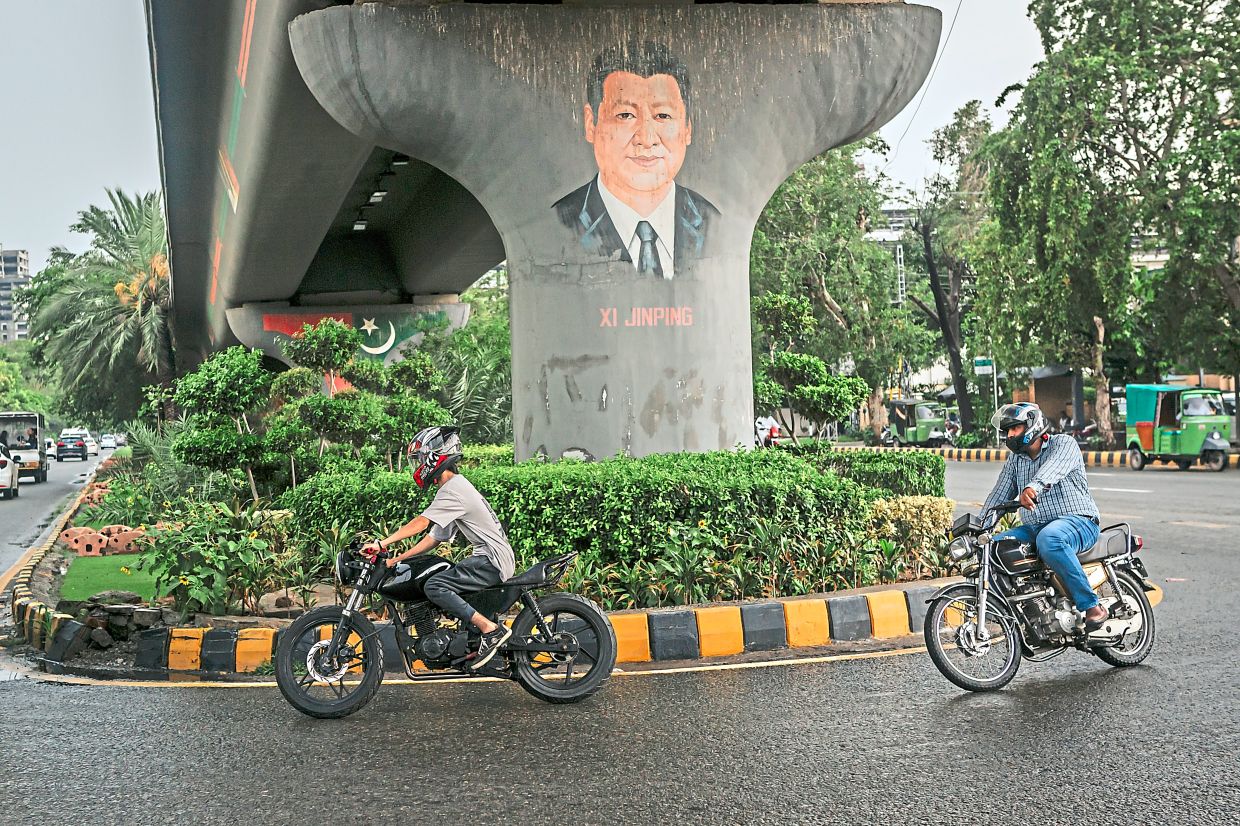
A portrait of President Xi Jinping of China, painted on a support pillar of a highway overpass in Lahore. With gas prices high, people in developing countries like Pakistan are racing to buy battery-powered bikes. —Asim Hafeez/The New York Times
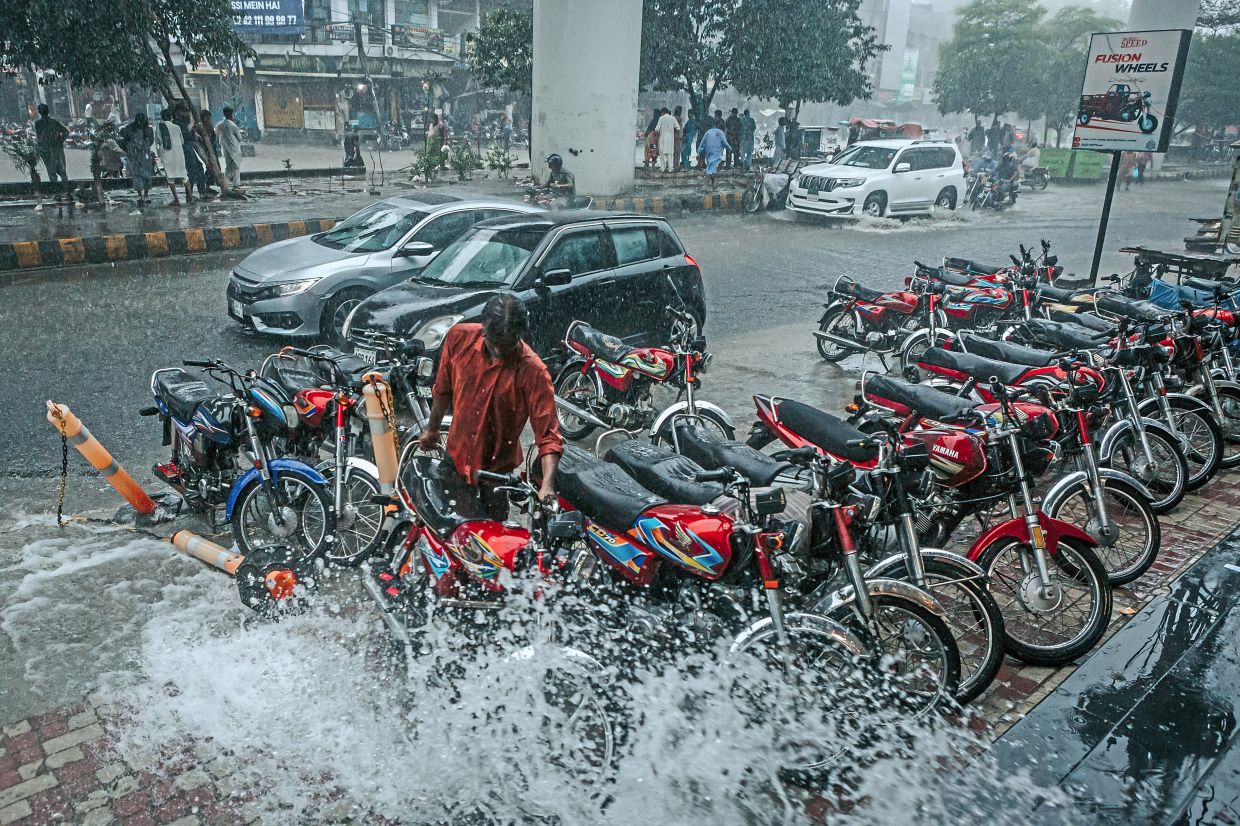
Motorcycle parking during a recent heavy rain in Lahore.
Electric motorcycles ready for delivery at the Evee assembly plant in Lahore, Pakistan. — Asim Hafeez/The New York
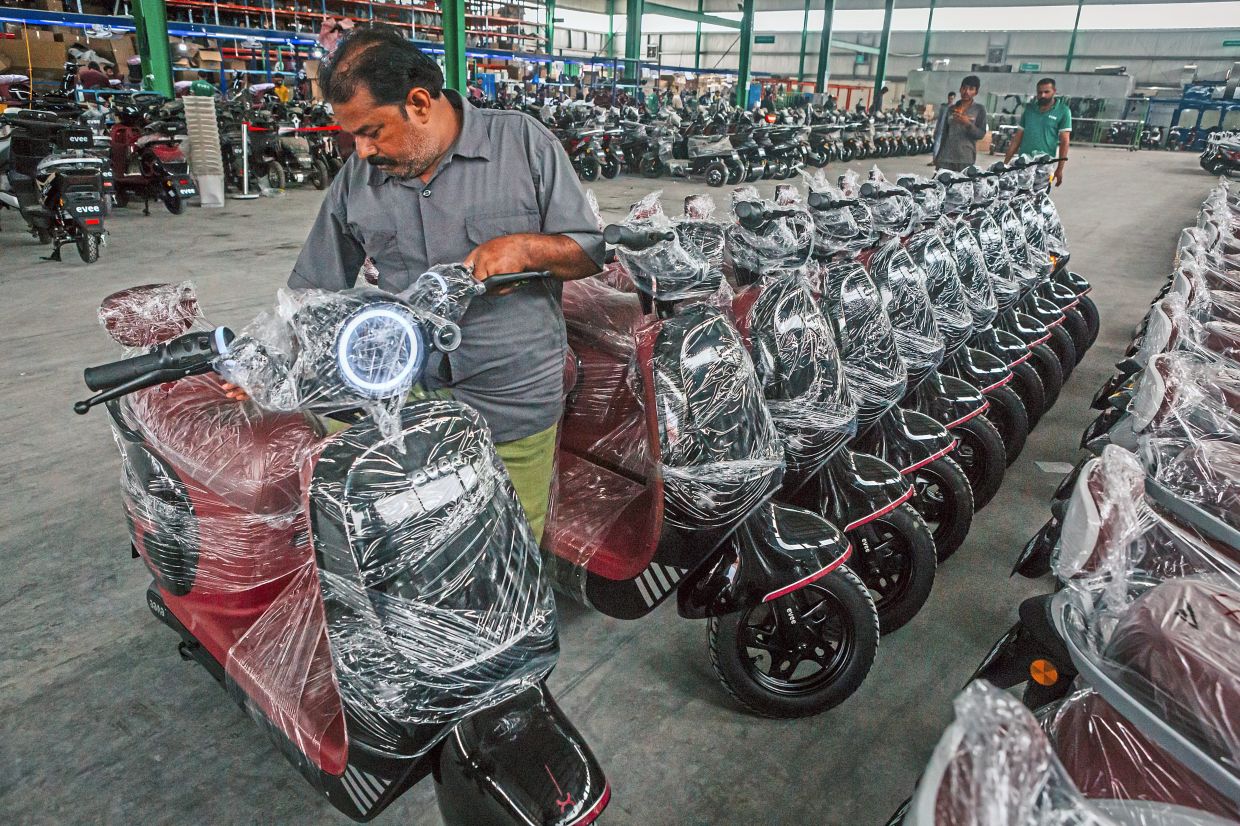
A worker lines up and parks wrapped electric scooters ready for delivery at the EVEE Electric assembly plant in Lahore.
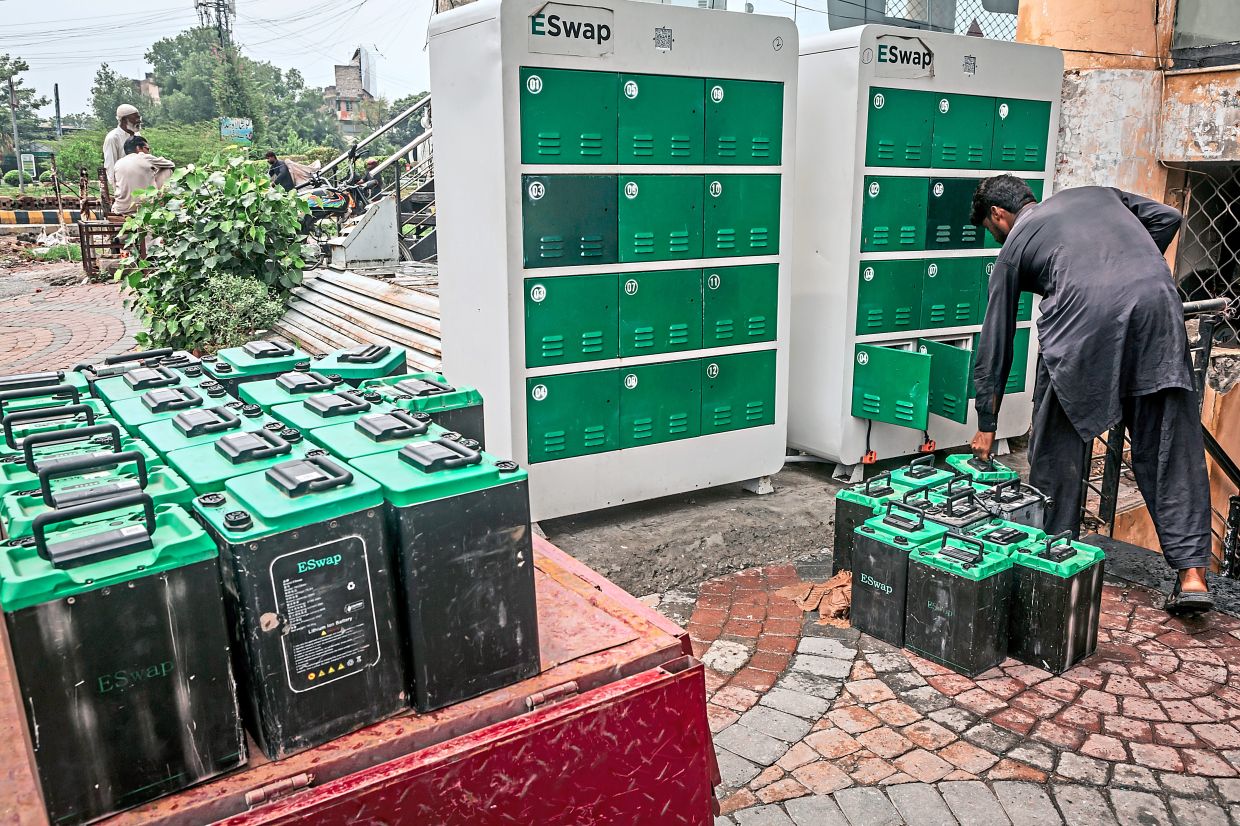
One of many ESwap stations, hubs for charging electric scooter batteries, in Lahore.
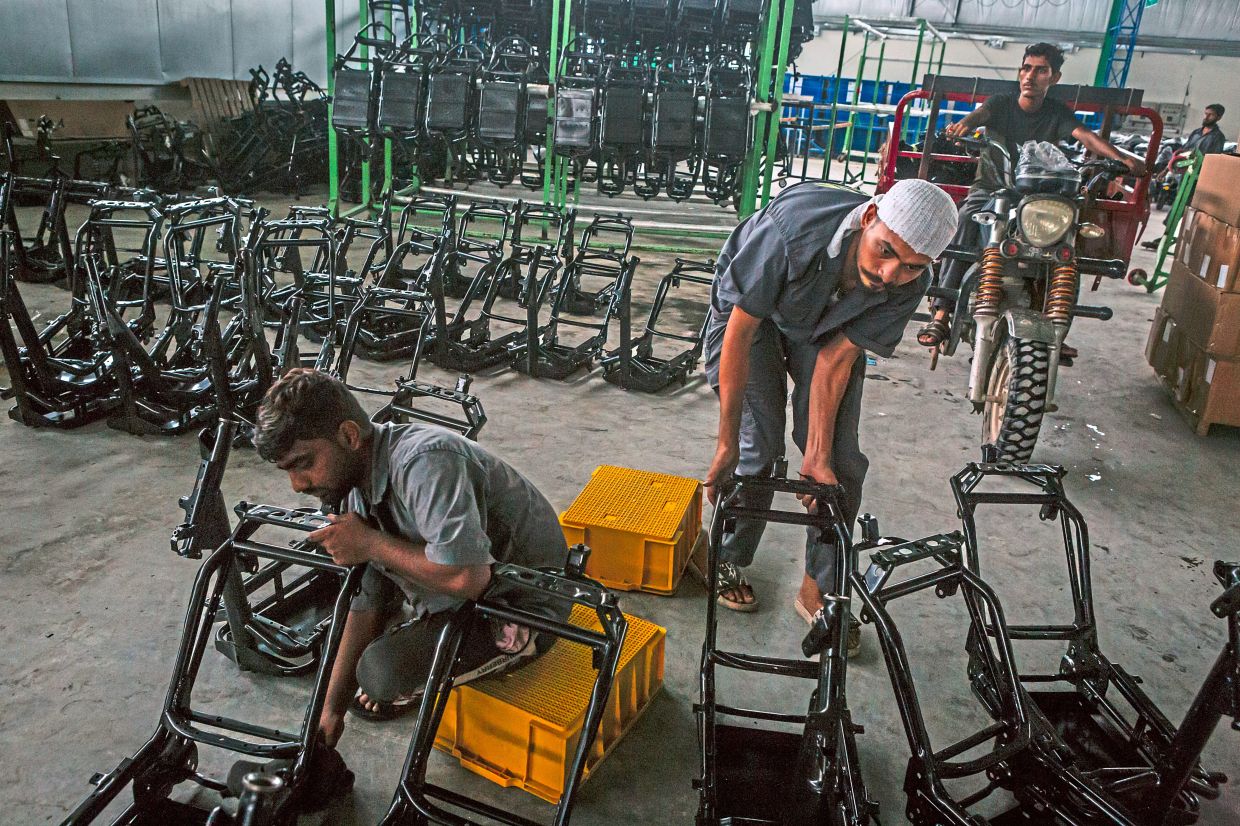
The assembly plant of the electric motorcycle maker EVEE in Lahore.