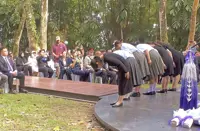
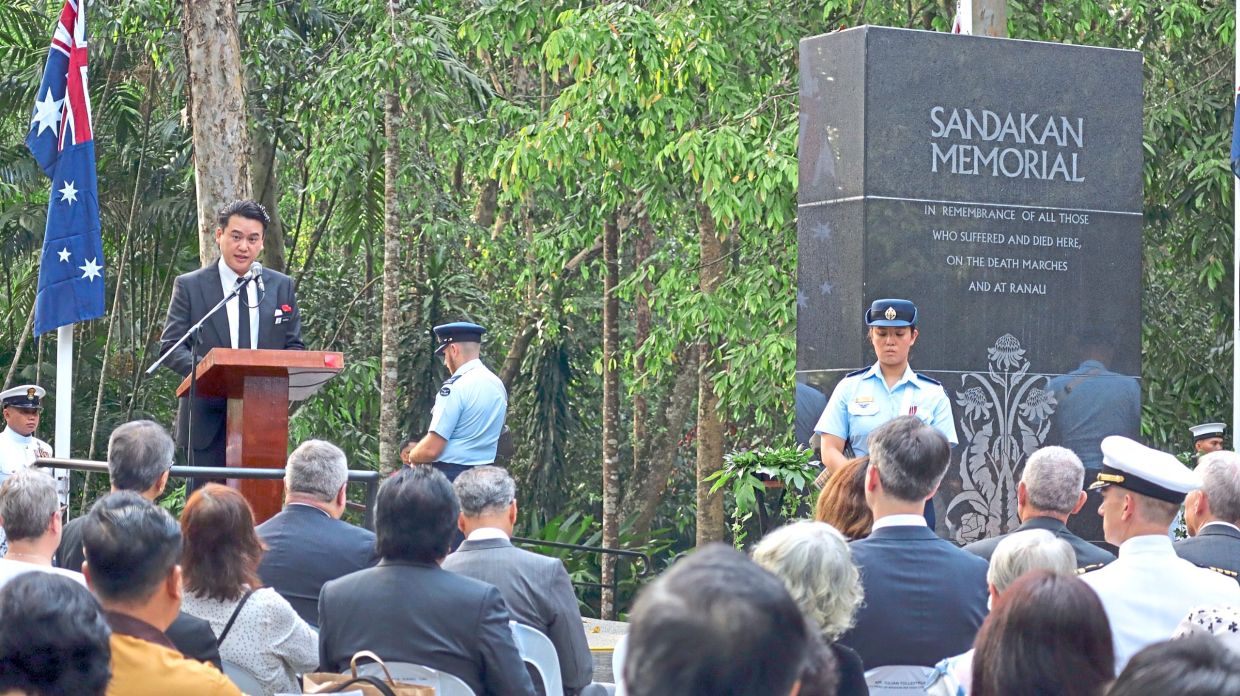
IT was a long, quiet 15 seconds as a row of Japanese high school students remained bent in a deep bow, facing families and other attendees at Sandakan Memorial Park.
The bow seemed to stretch on, and some in the crowd were moved to tears.
Eighty-one years after the end of World War II, young Japanese visitors had come to a place where thousands of Australian and British prisoners of war are remembered, alongside Sabahans who suffered during the Japanese Occupation – including locals who risked and lost their lives helping the PoWs.
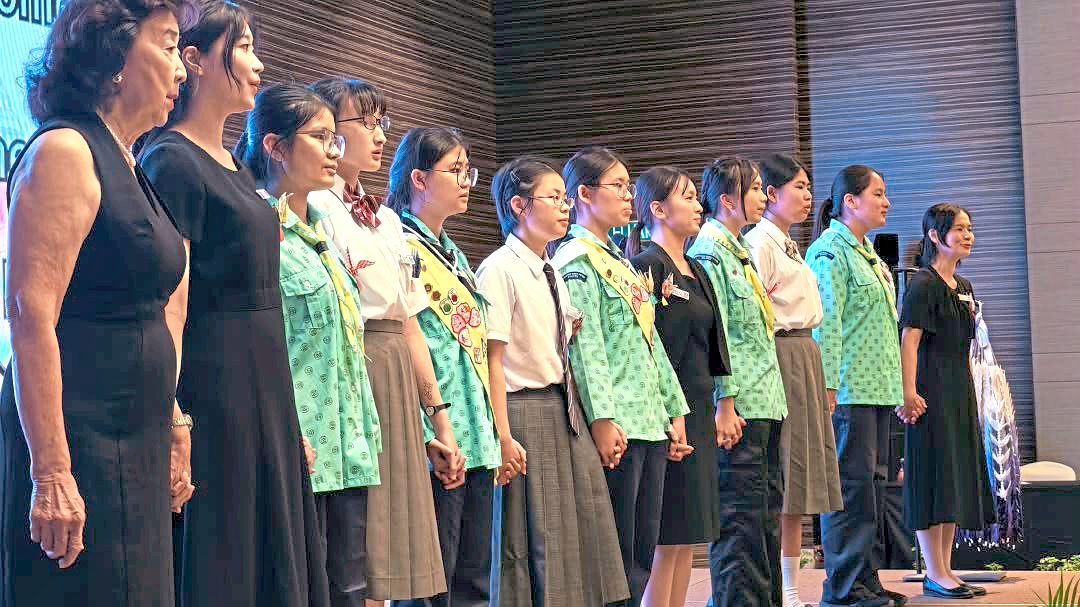
The moment carried added meaning because the night before, the same students had sung alongside students from Yu Yuan Secondary School in Sandakan at a dinner ahead of the Aug 15 Sandakan Memorial Day.
Young people from Sabah and Japan, generations removed from a war that had brought immense suffering, stood side by side on stage.
The following morning, the Japanese students bowed in respect before 1,000 origami paper cranes were presented by the Japanese side as a symbol of peace.
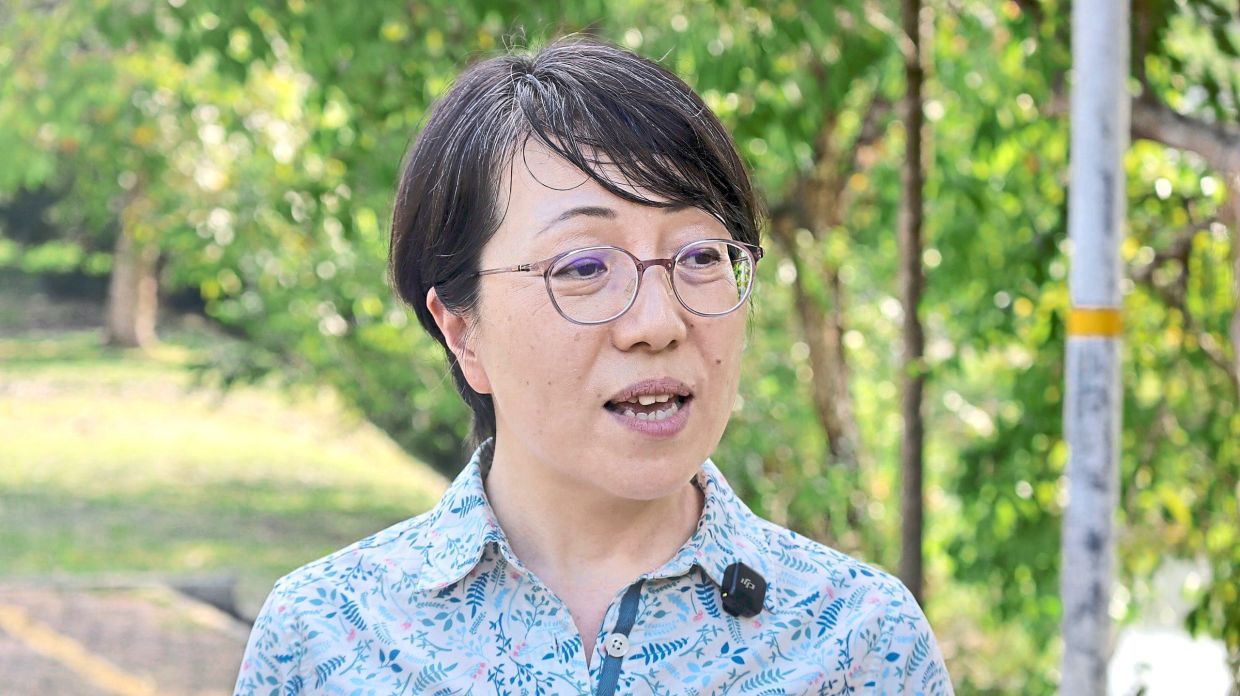
Among the visitors that weekend was Gakushuin University economic history professor Shinobu Majima, 52, who had initially been unsure whether she and her students should attend the memorial at all.
As a Japanese, she worried their presence could be insensitive.
“We didn’t want to intrude into the way Australians and the British remember the end of the Second World War. It’s a very painful moment for them,” she said.
“And also the Sabahans, who also had such a hard time. I didn’t think we could be allowed to come to the Sandakan memorial ceremony.”

Majima eventually attended with seven university students, a separate group from the Japanese high school students who performed and bowed at the memorial.
She said the solemn atmosphere affected some of her students deeply as they listened to accounts of suffering under Japanese forces.
For them, the war happened decades before they were born. Yet at the memorial, they came face to face with families still carrying its memory.
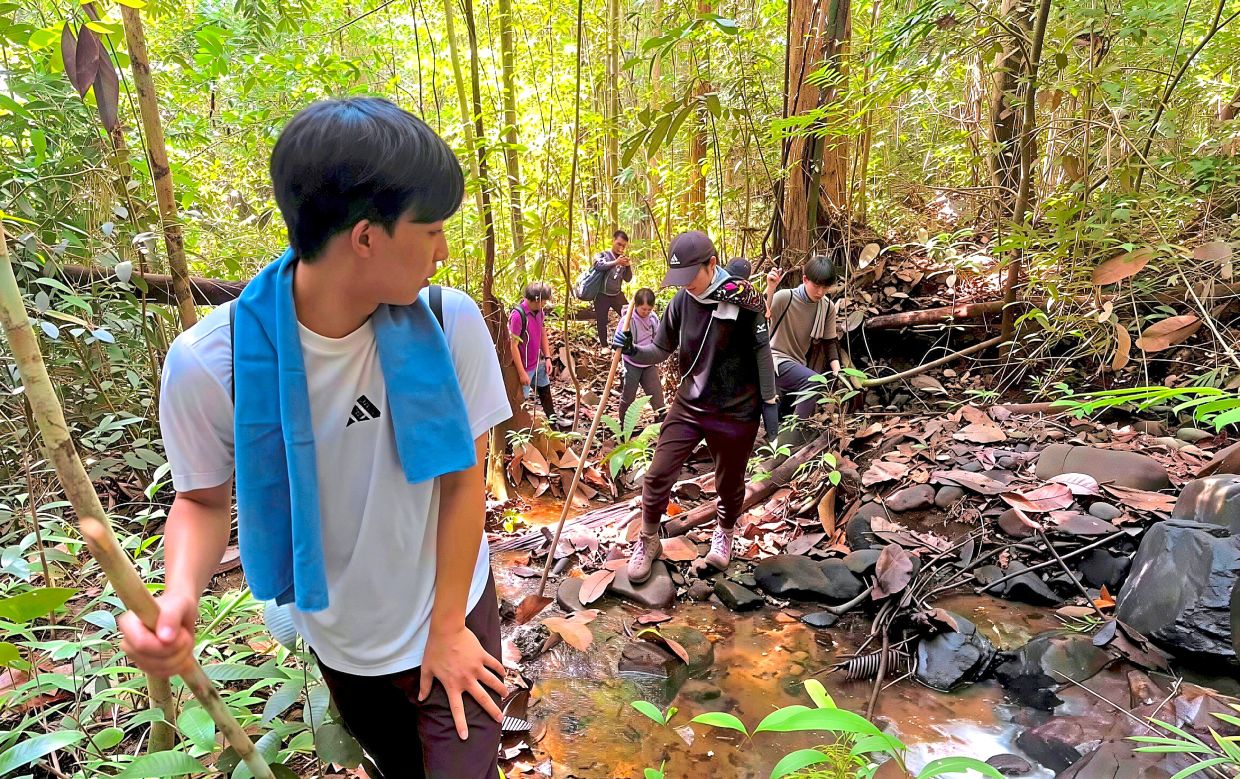
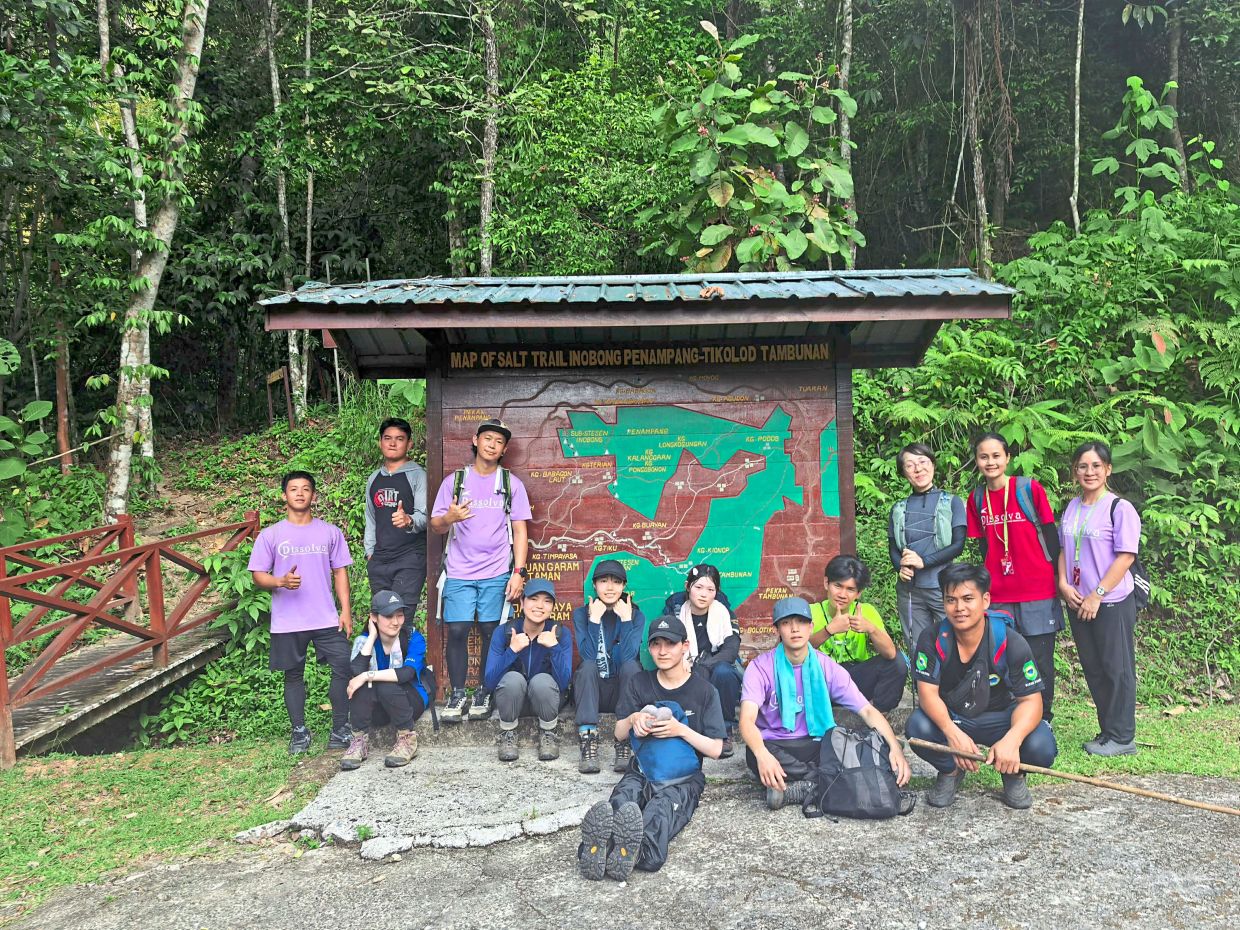
The following day, Majima and her students travelled to Telupid, where they spent about five hours walking part of the Sandakan-Ranau Death March route, becoming the first group from Japan to walk the historic trail.

Walking between two histories
Among the walkers was 21-year-old Takashi Iguchi, who had a particularly personal connection to both Sabah and Japan.
Born in Sabah to a Sabahan mother and Japanese father, he spent about 15 years growing up in the state before moving to Tokyo. He still returns about once a year.
Walking the Death March trail meant confronting both Japan’s wartime history and the history of the place where he grew up.
Even with proper footwear, water, rest and experienced guides, he found the hot and humid journey difficult.
His thoughts turned to the PoWs who travelled through the same landscape in 1945, many already weakened by hunger and illness and without the support his group had.
“We cannot run away. We cannot close our eyes. We have to look at it properly,” he said.
Iguchi said his generation might not have lived through the war, but it could still listen to stories passed down by those who did and their families.
“We know how inhumane war was. We know the stories, and we can work hard so that history will not repeat itself,” he said.
A history she never knew
For 22-year-old Yuna Ishizaki, the experience began from a different place.
It was her first visit to Sabah and, before joining Majima’s project, she had never heard of the Death March.
The history had not been taught at her school in Japan. Her friends and parents did not know about it either.
“In Japan, the Sabah death march is not taught to students. So I didn’t know about it before I learned from her [Majima],” Ishizaki said.
Walking the trail made the history harder to comprehend.
Despite having water, rest and everything needed for a safe journey, she found it exhausting.
Ishizaki said the experience left her determined to tell people back home what she had learned.
“We need to tell it to the next generation. That is very important,” she said.
But the visit also raised another question for her – how should a young Japanese person respond to atrocities committed by previous generations?
Ishizaki said she felt sadness and remorse despite having played no part in what happened, but believes acknowledgement and apology should lead to something more.
“Of course, I have to apologise, but I think it’s not the point. We need to get along because we’re not that generation. So we need to have a good relationship with them. We Japanese have to make a lot of effort,” she said.
Apology as a beginning
Majima has been bringing students to Sabah since 2012, initially through volunteer and community work in the Ulu Papar area.
Over the years, she encountered Sabahans carrying family memories of the Japanese Occupation, including accounts of relatives killed during the war.
Those encounters shaped how she prepared students before bringing them here.
Majima said many people in Japan remain unaware of parts of their country’s wartime history in places such as Sabah, even though those memories continue to live on in families here.
That is why she believes acknowledgement and apology are necessary. But they should only be the beginning.
“We can start from apology, but we shouldn’t end with apology and go back having said we have apologised,” she said.
What should follow, she said, is listening to the stories, opinions and family memories of those affected, and taking those accounts back to Japan.
The Death March walk became part of that process. It could never recreate what the PoWs endured, but it gave the students a more tangible sense of the history.
Datuk Ceasar Mandela Malakun, the assistant minister to the Sabah Chief Minister, said at the memorial service that history should not become a source of inherited hatred.
He said the moment moved him to tears. Watching the young Japanese students bow before the families, he said, was a reminder that they should not be made to carry the actions of generations before them.
“This history must not be used to pass hatred to another generation,” he said.
He said their presence in Sandakan, and the paper cranes they brought, showed a sincere effort to understand the past and pay their respects – and reminded him how easily peace can be taken for granted.
The two groups carried the same message in different ways – one through song, a long bow and paper cranes in Sandakan, the other by walking a trail where PoWs once suffered and died. They cannot change what happened 81 years ago. But they can listen, remember and carry its lessons into the future.