



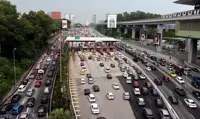
Amanat Lebuhraya Rakyat Bhd (ALR) aims to shorten its concession periods and return four tolled highways under its management to the government earlier than scheduled.
At its media briefing today (Oct 21), group chief executive officer Muhammad Nizam Alias said the private not-for-profit company had repaid RM2.149bil of its debt so far.
ALR raised funds through issuing sukuk (Islamic bonds) to acquire the Shah Alam Expressway (Kesas), Damansara-Puchong Highway (LDP), Sistem Penyuraian Trafik KL Barat (Sprint) and Smart Tunnel.
The company is targeting handover by 2033, five years ahead of the sukuk’s final maturity in 2038.
It issued RM5.5bil in sukuk in October 2022, with total obligations of RM7.935bil.
Its eighth payment was made on Oct 13 – RM513.8mil consisting of RM390mil in principal and RM123.8mil profit.
Muhammad Nizam said toll rates on these four highways had not been increased since it took over operations.
For example, on the LDP, he said, Class 1 motorists still paid RM2.10 even though the toll should have risen to RM3.10 under the original concession agreement..
This translated into a cumulative RM1.796bil in toll fees that motorists did not have to pay over the past four years up to March this year, he said at the Smart Tunnel operations and maintenance complex in Jalan Davis, Kuala Lumpur.
The government was also not required to pay compensation – an estimated RM1.929bil – to ALR over the same period, he added.
Based on figures presented at the briefing, the four highways collected about RM830mil in toll annually, with about RM630mil going to sukuk payments and about RM200mil to operating costs.
According to Muhammad Nizam, about 2.5 million vehicles use the four highways daily, but tolls are only collected from about one million motorists as the highways are open systems with stretches where tolls are not charged.
Despite ALR’s tight finances, all four highways retained the Malaysian Highway Authority’s top four-star maintenance rating, he highlighted.
He added that once the highways have been handed back to the government, the latter could decide whether to make them toll-free or charge a nominal rate to cover maintenance costs.


