Ensuring a smooth drive 


AS Putrajaya continues spending hundreds of millions of ringgit annually to keep toll rates unchanged, questions are growing over whether Amanat Lebuhraya Rakyat Bhd’s (ALR) “no-profit” highway model can be replicated to other mature toll concessions across Malaysia.

The government is expected to bear over RM500mil this year to maintain toll rates on 10 major highways, in addition to roughly RM80mil annually paid to 33 highway concession companies for festive season toll discounts.

Without ALR’s restructuring of four Klang Valley highways in 2022, the government’s compensation burden could have approached RM1bil annually.

The idea behind ALR grew out of the government’s pledge to abolish tolls. However, the reality was that buying back highway concessions from private operators was far more costly than initially expected.

That led to the incorporation of ALR to restructure selected mature highway concessions by removing the profit element and channelling all remaining cash flow, after operating costs, towards debt repayment.

ALR raised RM5.5bil through sukuk issuance in 2022 to acquire four Klang Valley highway concessionaires.

The structure keeps toll rates stable for motorists, removes the need for government compensation to concessionaires and could potentially shorten the concession period.

However, replicating the structure elsewhere may not be straightforward.

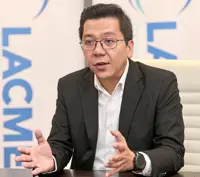
ALR chief executive officer Muhammad Nizam Alias says the feasibility of replicating the “no-profit” highway model depends on the characteristics and cash flow strength of each concession.

“Each highway has its own characteristics and challenges, in terms of traffic, demographics and concession agreements,” he tells StarBiz 7.

He says lenders ultimately prioritise stable cash flows, making mature highways more suitable for such a structure.

He notes that replication is more difficult for highways still in early concession stages.

It would be even more challenging at the construction stage, when there is no cash flow and private operators are expected to finance, build and maintain highways in return for toll collection rights.

Still, he believes financial institutions could potentially structure bridging mechanisms for newer highways.

But ultimately, he says the willingness of existing concession holders to exit would be a key determining factor.

“What is important is whether the existing shareholders of those highways are willing to let go. Once that question is answered, then we can start the modelling in terms of looking into the details of it,” he says.

In 2022, ALR raised RM5.5bil through non-government guaranteed sukuk, collateralised by future toll collections, to acquire Shah Alam Expressway (Kesas), Sprint Expressway (Sprint), Damansara-Puchong Expressway (LDP) and Stormwater Management and Road Tunnel (Smart).

Muhammad Nizam says the four highways generate about RM830mil in annual toll revenue, of which roughly RM200mil is used for operations and maintenance.

“We are left with about RM630mil and the entire amount is paid to the lenders,” Muhammad Nizam says.

He says by removing dividend obligations, estimated at about RM300mil annually under the previous concession structure, ALR is able to channel more cash flow towards debt repayment and potentially shorten the concession period.

Mature highways the key

ALR currently handles more than 1.1 million toll-paying vehicles daily across the four highways, making it among the largest highway operators in the Klang Valley by traffic volume.

Including non-toll-paying motorists using open-system stretches, the total traffic volume rises to between 2.5 million and three million vehicles daily.

Muhammad Nizam says the maturity and traffic stability of the highways are key strengths supporting the structure.

LDP is the largest contributor to the group’s topline, followed by Kesas and Sprint, while Smart records an operating deficit of about RM1mil per month due to its flood-mitigation role and higher operating costs.

Muhammad Nizam says the combination of the four mature highways allows ALR to cross-subsidise Smart’s operations under the broader social purpose of the structure.

“Smart is a critical national asset. Its primary objective is flood mitigation, so operating costs are naturally higher due to its design and flood control features,” he says.

The tunnel is also restricted to Class 1 vehicles only, meaning no heavy vehicles are allowed through, further limiting its revenue base.

Meanwhile, Muhammad Nizam describes LDP, Kesas and Sprint as “the arteries of Kuala Lumpur”.

Since taking over the highways in 2022, ALR estimates motorists have saved about RM1.7bil from avoided toll hikes, while the government has saved roughly RM2bil from compensation payments.

Muhammad Nizam says ALR’s mandate remains centred on maintaining stable toll rates, removing the profit element and eventually handing the highways back to the government.

“We should be able to do that in 2033,” he says.

“Our covenants are such, if we repay (debts) earlier, then all four concessions end at the same time.”

ALR’s cash balance stood at RM1.27bil as at March 31, 2026, after paying RM360mil in sukuk principal and RM131mil in sukuk profit obligations during the six-month period.

The group maintains a cash reserve requirement of about RM1.2bil to preserve its AAA sukuk rating.

Total sukuk repayment obligations currently stand at RM7.94bil, comprising both principal and profit payments, of which RM1.64bil had been repaid as at May 15, leaving an outstanding balance of about RM6.3bil.

While the sukuk programme runs until 2038, Muhammad Nizam says ALR aims to fully repay its obligations and hand back the highways to the government by 2033.

The group’s next sukuk payment, comprising RM390mil in principal and RM123.8mil in sukuk profit obligations, is due on Oct 13, 2026.

ALR has also benefitted from improving investor confidence in its financing structure.

According to ALR chief financial and corporate officer Low Jo-Lyn, the sukuk was initially issued in 2022 at profit rates averaging around 5% amid elevated interest rates and investor unfamiliarity with the structure.

However, yields in the secondary market have since narrowed by roughly 150 basis points.

“Now it is trading on par with Malaysian Government Securities,” she says.

Beyond financing, ALR is also focusing heavily on operational efficiency and congestion management.

Muhammad Nizam says toll plazas remain one of the biggest bottlenecks on urban highways.

He explains that congestion is often caused by the merging of multiple toll lanes into fewer traffic lanes shortly after the plaza.

“You can have 10 or 12 toll lanes, but 500m later they merge into only three lanes,” he says.

Against this backdrop, Muhammad Nizam says ALR is preparing for the eventual implementation of multi-lane free flow (MLFF), which replaces toll booths with overhead gantries and allows vehicles to pass through without stopping.

He says the transition could happen within two years.

According to him, MLFF would remove the choke points caused by toll plazas while improving both traffic flow and toll collection efficiency.

Once fully implemented, the system will eventually eliminate the need for toll collectors, although ALR plans to reskill affected employees into other operational and non-toll revenue functions.

Get 20% OFF The Star Digital Access

Monthly Plan

RM 13.90/month

RM 11.12/month

Billed as RM 11.12 for the 1st month, RM 13.90 thereafter.

Best Value

Annual Plan

RM 12.33/month

RM 9.87/month

Billed as RM 118.40 for the 1st year, RM 148 thereafter.

Follow us on our official WhatsApp channel for breaking news alerts and key updates!

Next In Business News

SNS Network scores record RM1.22bil contract for the supply of servers
CapitaLand Malaysia records higher net profit of RM44mil in 2Q
Wall St futures rise as US, Iran pause hostilities
OCBC Malaysia, CGC launch RM1.3bil guarantee facility to boost SME financing
Malaysia must build future-ready workforce to capitalise on Asia's economic rise
FBM KLCI mirrors upbeat regional performance
Bursa Malaysia to suspend trading in BHIC Securities on Aug 7
MyCEB secures 416 business events for 2026-2030 with RM3.98bil estimated economic impact
South Korea's Naver jumps 10% on Nvidia's US$1bil investment plan
AI to drive Asean+3 growth, 2026 forecast revised higher to 4.1% - AMRO

Others Also Read