150 Orang Asli rangers track poachers, protect wildlife at Belum-Temenggor Forest Complex
WALKING through a field of tall Napier grass, Zainudin Sudin occasionally stopped to inspect the plants around him.
Armed with a machete, he studied strands of half-eaten grass before making his way towards a nearby thicket.
“A gaur has grazed here. The signs are fresh, probably from half a day ago,” he said, pointing out the tell-tale marks at Belum-Temenggor Forest Complex (BTFC) in Perak.
Walking close behind, his colleague Hamizi Azman also scanned the roots and branches of nearby trees for unusual signs that could indicate the presence of poachers or snares.
“It may not be obvious to ordinary people, but we have been trained to spot the signs.”
Zainudin and Hamizi are among 150 Orang Asli who have been working as community rangers in the BTFC over the past 10 years.
Their involvement is part of Project Stampede, an initiative by World Wide Fund for Nature (WWF) Malaysia to strengthen anti-poaching efforts and protect wildlife in the forest complex.
Their duties include locating, deactivating and removing snares, besides assisting authorities in tracking poachers.
Working in teams of five, the rangers can spend up to 14 days on patrol at a time.
Job hazards
Exposure to danger, either from wildlife or poachers, is part of the job for these rangers.
For Hamizi, the memory of his team being “ambushed” by a herd of elephants a few years ago has stayed with him until today.
“We had just finished setting up camp at night when we heard sounds of breaking branches nearby.
“Before we could react, a herd of elephants charged into our camp, forcing us to flee.
“We managed to rescue some of our equipment, but all of our food, clothes and sleeping bags were destroyed.

“It was challenging because we could not use our headlamps for fear of provoking the elephants.”
Hamizi then contacted the WWF-Malaysia operations room and received instructions on how to evacuate safely.
Another unforgettable experience came during his early days as a ranger, when he encountered a hostile poacher.
“The poacher demanded to know who I was, and what I was doing in the area.
“I lied and said I was looking for agarwood. Thankfully, he believed me and left soon after.”
Hamizi was speaking to StarMetro during a media trip to gain a closer look at WWF-Malaysia’s conservation work in BTFC.
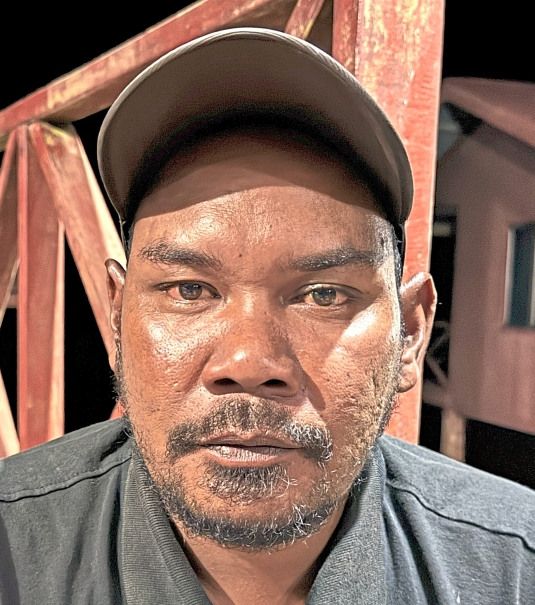
Fellow ranger Merapi Merazi said they were not permitted to engage poachers directly or carry out rescues of trapped or injured animals themselves.
“The standard operating procedure is to contact the Wildlife and National Parks Department (Perhilitan) immediately.
“They will dispatch personnel to track down the poachers and carry out rescue operations.
“Releasing a trapped animal is risky as it may perceive us as a threat and become aggressive,” he explained.
Merapi recalled coming across an injured leopard that had been shot.
“My team and I camped overnight to keep watch over it while waiting for Perhilitan to arrive the next day,” he said.
Diverse landscape
The rangers’ work unfolds in one of South-East Asia’s most ecologically significant landscapes.
According to information from Perak State Parks Corporation (PSPC) and WWF-Malaysia, Belum-Temenggor is estimated to be some 130 million years old.
It is one of the world’s oldest tropical rainforests, and was classified as an Environmentally Sensitive Area (Rank 1) under the Malaysian National Physical Plan in 2005.
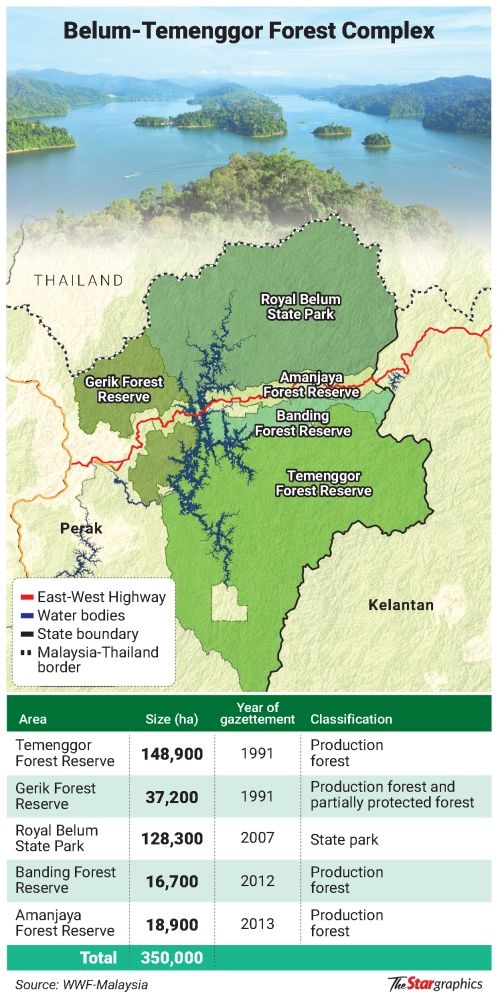
The forest complex comprises five smaller forests: Temenggor Forest Reserve, Gerik Forest Reserve, Royal Belum State Park, Banding Forest Reserve and Amanjaya Forest Reserve (see graphic).
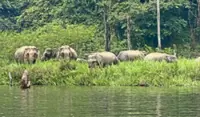
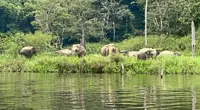
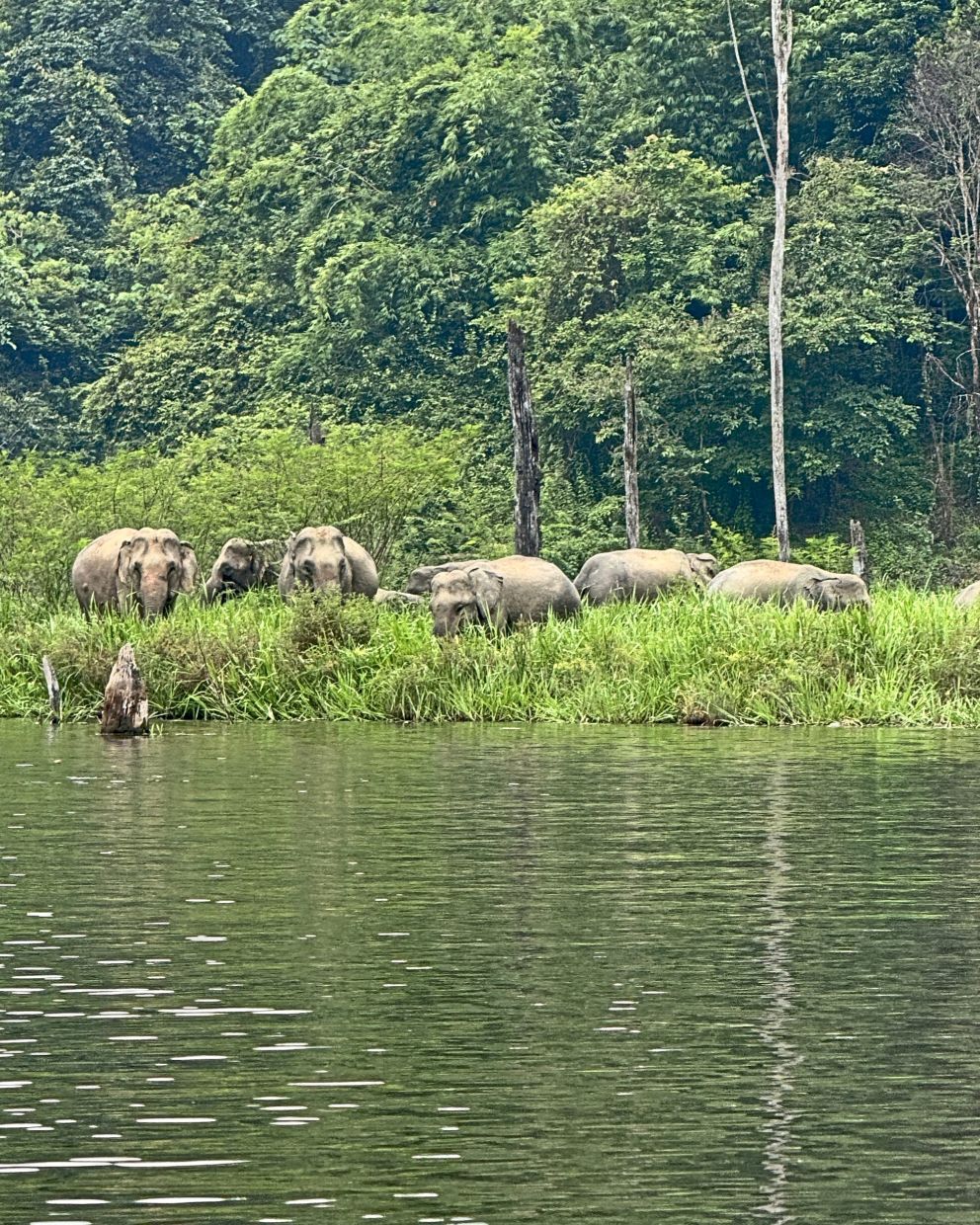
Living within BTFC are numerous protected species, including the Malayan tiger, Asian elephant, Malayan tapir, Malayan sun bear, gaur and white-handed gibbon.
It is also home to 10 hornbill species and supports around 3,000 species of flowering plants.
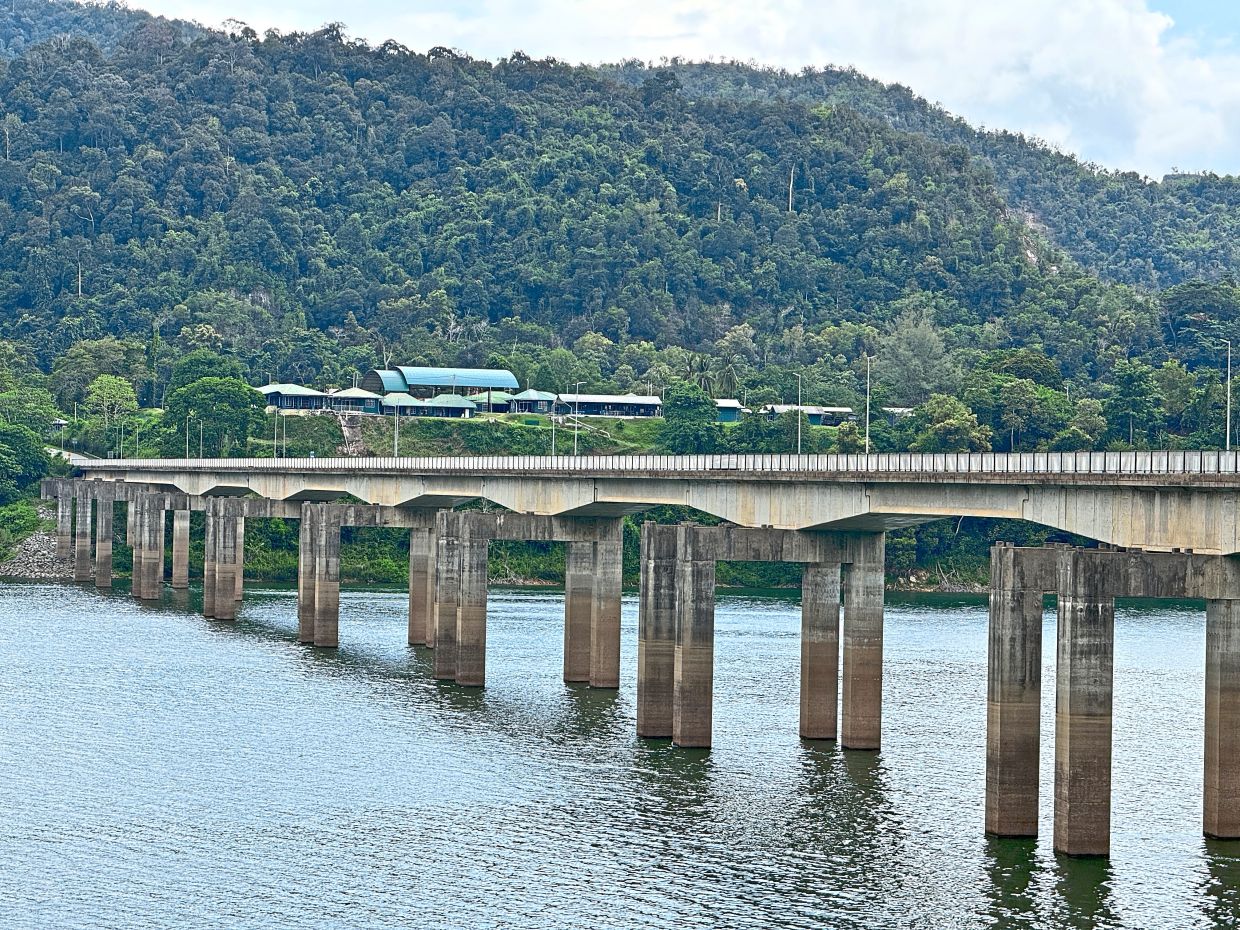
Many Orang Asli settlements are located along the shores of Tasik Temenggor, a 15,200ha man-made lake created in the 1970s to facilitate the construction of the Temenggor Dam.
The dam flooded low-lying valleys, leaving former hilltops to emerge as the islands seen across the lake today.
Pulau Banding, a popular ecotourism stop along the East-West Highway, is one such former hilltop.
Vital data
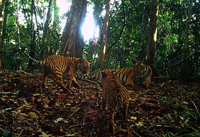
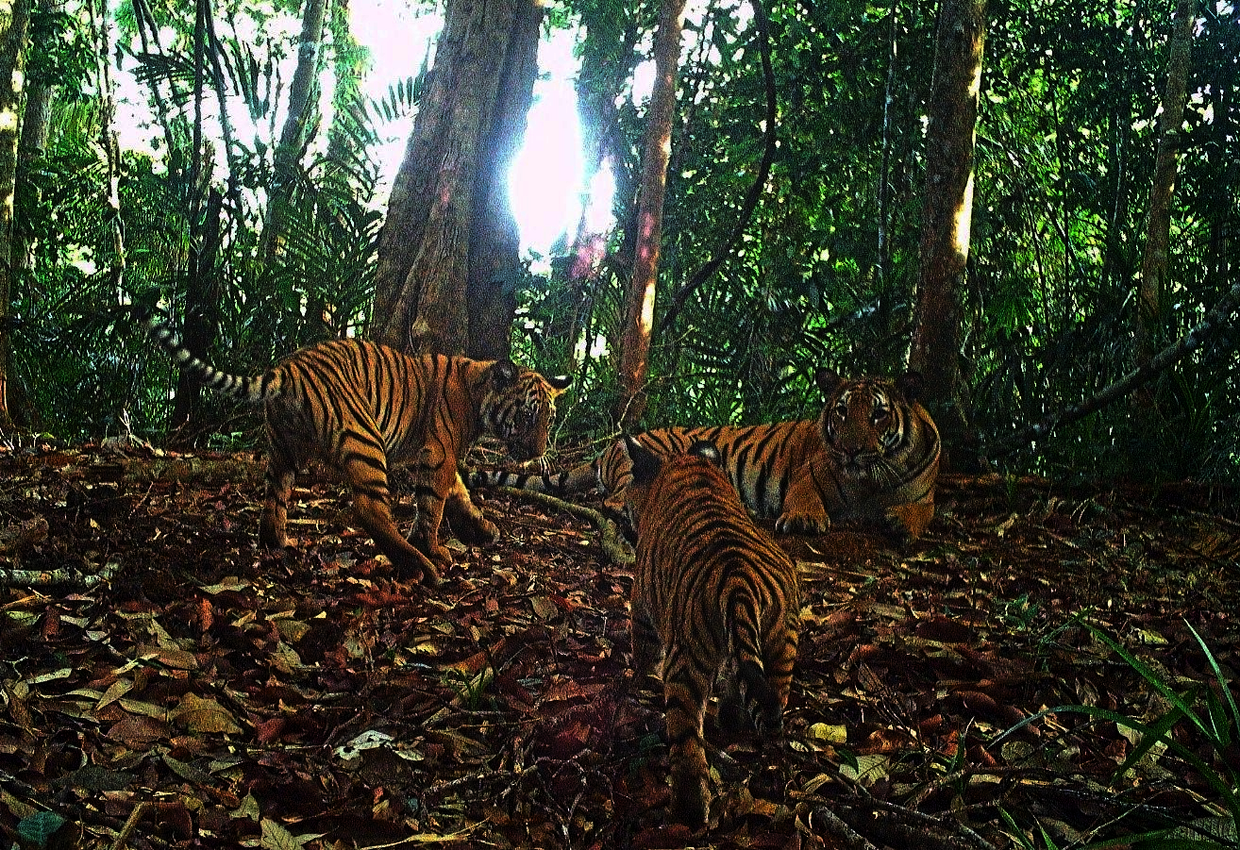
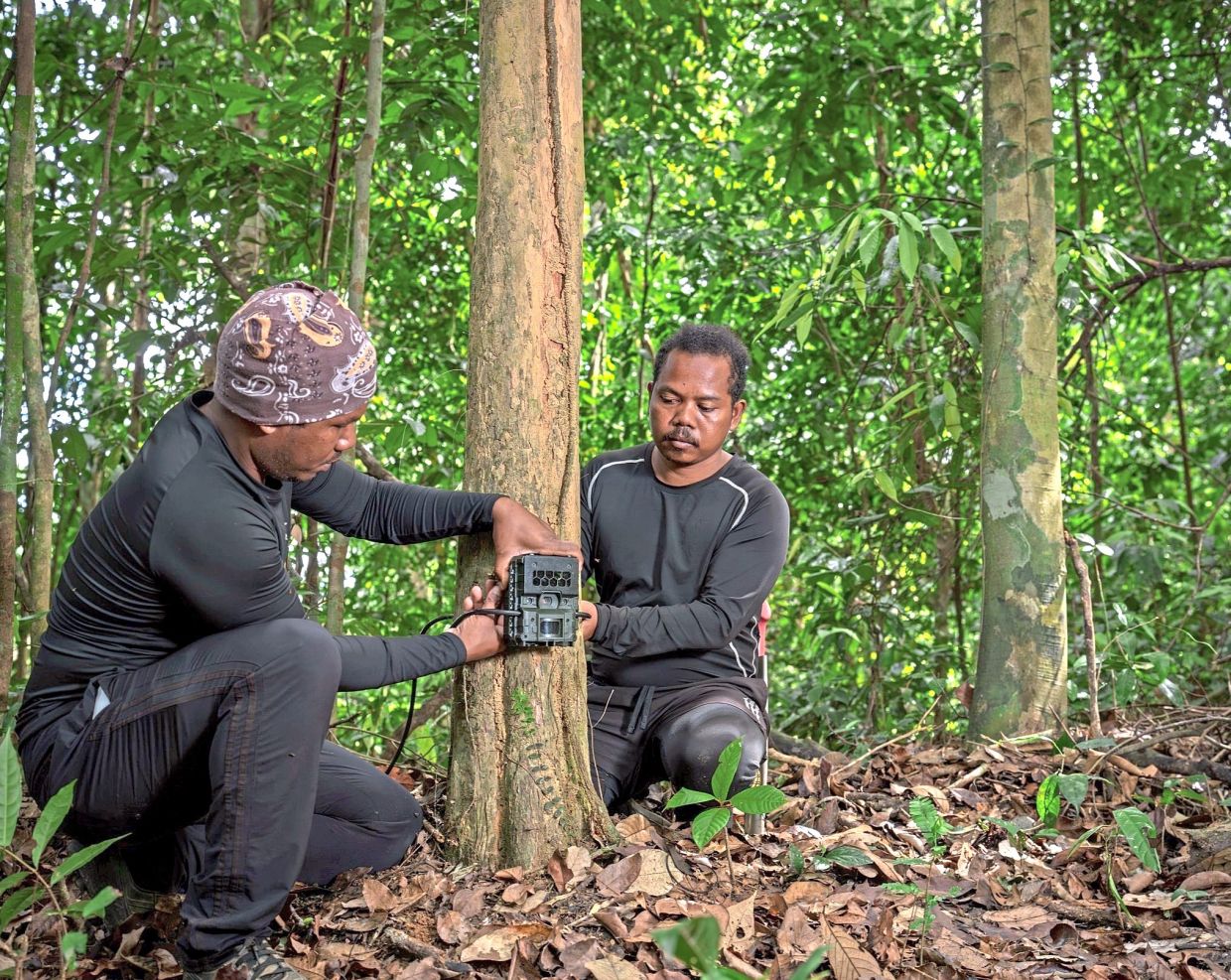
Beyond patrol duty and snare removal, the Orang Asli community rangers also help to collect footage from wildlife camera traps.
WWF-Malaysia operates more than 250 motion sensor cameras at 128 locations within BTFC.
Its Tiger Protection and Monitoring officer Mohd Fikri Zaidim said the photographs collected were used to identify species and estimate wildlife populations within the forest.
“This analysis is carried out every three months to help determine whether there are sufficient prey populations to sustain predators such as the Malayan tiger.”
He added that the camera traps had also recorded elephants, tapirs, sun bears, muntjacs and other deer.

Mohd Fikri, who regularly treks alongside the community rangers, said the drastic decline in the wild boar population during the African Swine Fever outbreak in 2020 and 2021 remained a major concern.
He said the boar population had yet to fully recover.
“Before the outbreak, our cameras routinely captured photos of wild boars travelling in herds.
“But since last year, we began spotting more wild boars travelling alone, which is unusual as they normally move in groups,” he said, adding this might indicate a decline in its population.
The drop in prey populations, Mohd Fikri cautioned, could eventually affect the tiger population and disrupt the food chain.
“Although tigers can hunt other animals, they prefer wild boars which are easier to catch.
“Hunting muntjacs and deer requires more energy as these animals can run faster.
“As for gaurs, they tend to protect one another, making a hunt riskier for a tiger to attempt.”
Mohd Fikri stressed that keeping the tiger population stable was vital to preserve balance in the ecosystem.
“Tigers are considered an umbrella species; taking care of them helps take care of other species.
“Without tigers, prey species could grow uncontrollably, thus increasing the risk of disease outbreaks and contributing to a broader ecosystem collapse and biodiversity loss,” he said.
Cross-border threat
Dealing with poachers and snares is a dangerous task that Mohd Fikri said required the right timing and special skills.
“When we find a snare, it is important that we first assess how long it has been set before deactivating it.
“If we deactivate the snare too soon, the poachers may find it and become alerted to our presence.
“The best course of action is to inform Perhilitan so they can come and catch the culprit,” said Mohd Fikri.
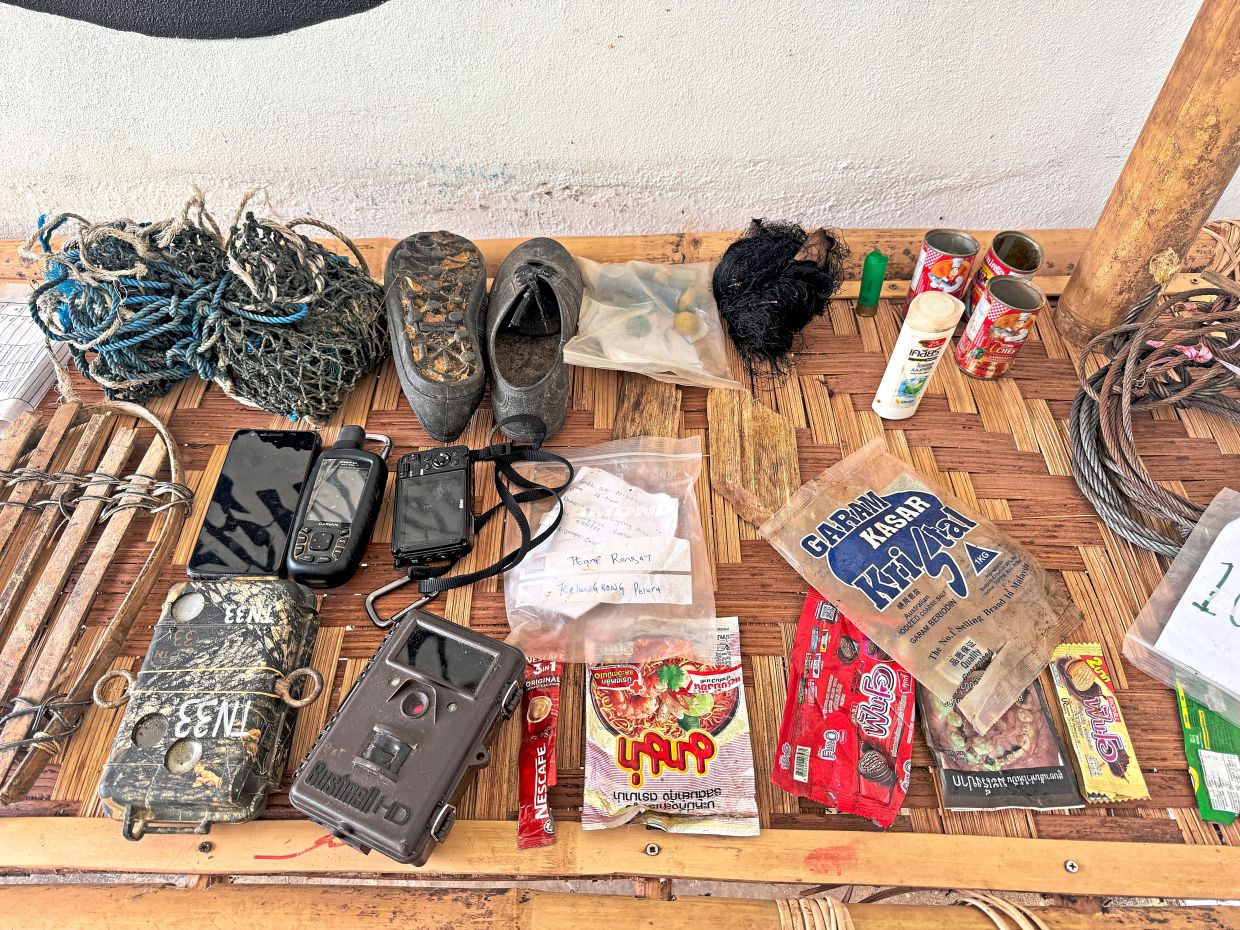
He said rangers had found clues to suggest that some poachers had come from neighbouring countries, such as Thailand, Vietnam and Cambodia.
“We can identify where poachers come from by the rubbish they leave behind, such as discarded food packaging.
“The type of snare offers another clue, as traps usually have features unique to their country of origin,” he elaborated.
Despite various dangers confronting them, the Orang Asli community rangers expressed pride in their job.
Father-of-two Yahya Charol, said his work gave him a deeper connection with the forest and its inhabitants.
“We used to hunt animals for our livelihoods.
“But now we work every day to protect them. Like us, they want to survive too.
“We must learn to share this forest – this is our common home,” said Yahya.