The vibrant wedding traditions of the Malay, Chinese and Indian communities are somewhat familiar to most Malaysians in the peninsula.
However, those of smaller communities are not as well-known.
The Jom Kahwin (Let’s Get Married) Carnival at Taman Botani Perak in Taiping aimed to change that by showcasing the customs of smaller communities including the Orang Asli, Bajau, Iban, Baba Nyonya, Ceylonese, Sikh, Javanese and Siamese.
Orang Asli traditions
For the Orang Asli Semai tribe in Perak, the bride-to-be would first inform her family that she wishes to get married.
Maserna Alang Pelok, a villager from Kampung Batu 8 in Tapah, said the groom-to-be would then need to go to the woman’s house to stay with her for several days.
“Even though they are not yet married, they can stay together.
“On the third day, the woman’s parents would ask the man to prepare a ring for himself and necklace for his fiancee.
“These are tokens to symbolise their engagement,” she said.
On the fourth day, the woman’s family would send the groom a songkok, a customary wedding headgear made of cloth that is not worn.
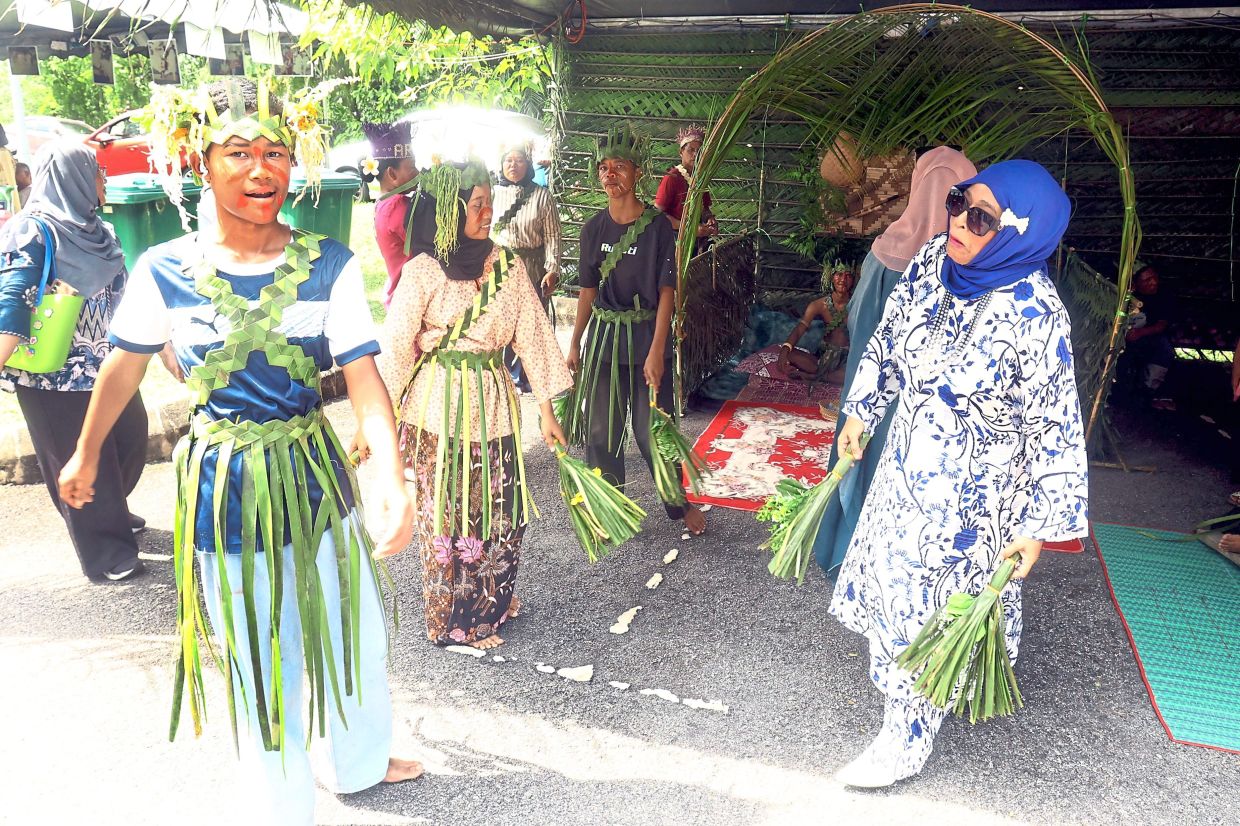
“The songkok is almost sacred. Once given to the groom’s side, it has to be kept properly before being returned to the bride’s family later on.
“The way he receives the songkok will also be how he gives it back,” Maserna said.
The songkok is not just used for wedding ceremonies but for other purposes as well. If there are any disputes, it will be brought out.
“If a household sends the songkok to another person, it means there is a serious problem between them.”
Maserna said the groom must return to the bride’s house with the songkok to discuss their marriage plans further.
“If he doesn’t come, the woman will go look for him.
“If everything goes well, their marriage will be approved.”
On the wedding day, a Tok Batin would bless the couple by sprinkling water mixed with herbs over them.
“This is meant to cleanse the couple spiritually and wash away any bad luck.
“The Tok Batin will also feed the couple betel nut and leaf.
“The couple would also feed one another, which symbolises sharing a life together.”
Depending on one’s budget, Maserna said the entire wedding ceremony could be completed within three days.
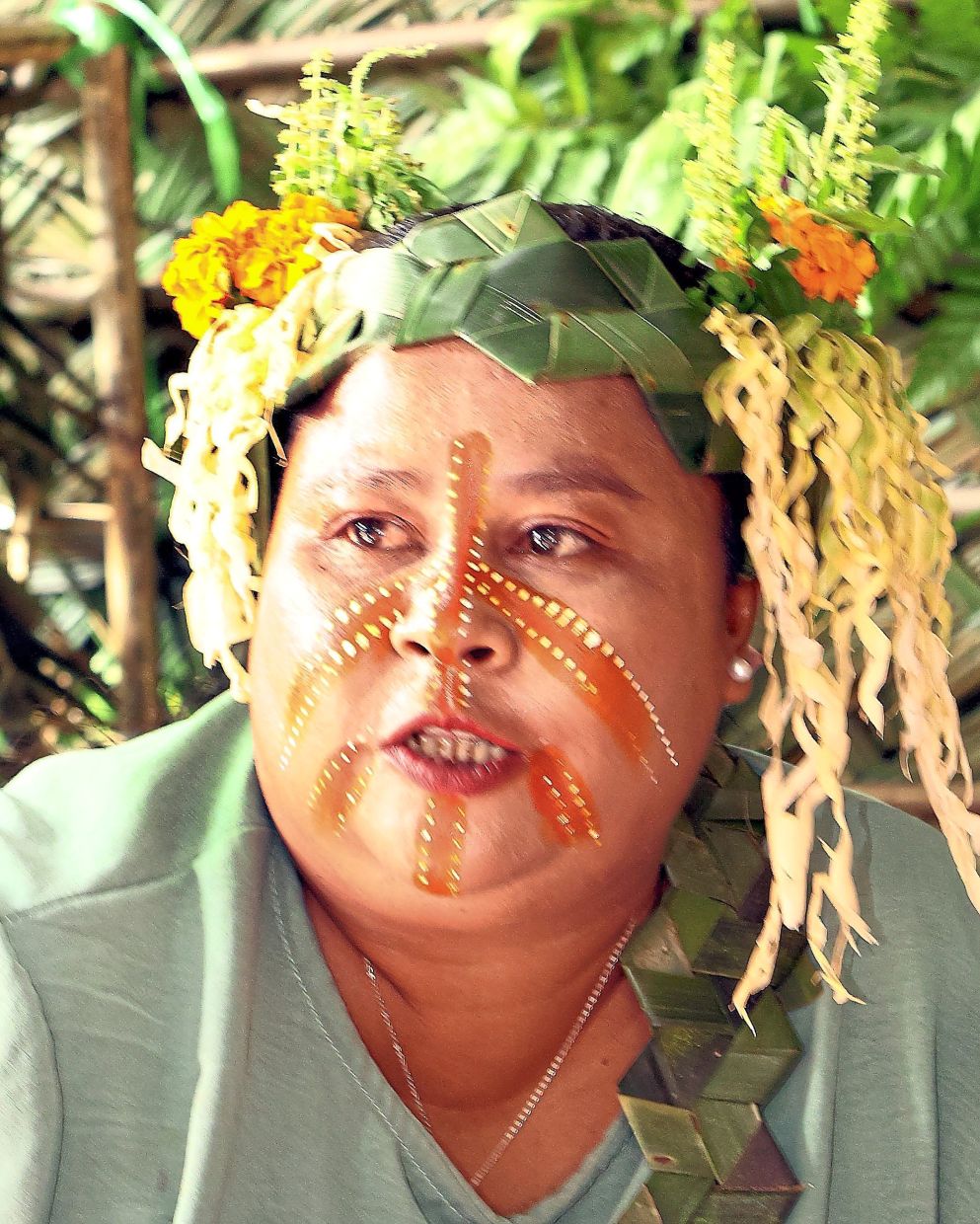
“People with a bigger budget who want a large wedding will extend the celebration,” she
said, adding that customary rites are usually conducted in the bride’s village or home.
Iban customs
For the Iban people, a merisik event seeking information about potential bride would first take place.
Visco Philip, an army personnel from Kuching, Sarawak, said, “It is basically for the groom-to-be’s side to seek permission from the woman’s family for marriage.
“What comes next is the bertunang (engagement), where the couple would set the date of their wedding.
“For the wedding, the bride and groom would wear the ngepan Iban, a traditional attire, and celebrate the occasion at a longhouse with their family.”
Visco said the groom would also wear a lelanjang, a traditional headgear that symbolises courage, bravery and leadership.
The groom would also wield a terabai or shield, and wear kumbu, a handwoven cloth.
“The bride will wear sugu tinggi, a headpiece that symbolises elegance, beauty, dignity and their status,” he said, adding that the main colours were black, yellow and red.
“Black signifies the richness of Sarawak’s natural resources and the unity of various races.
“Red symbolises bravery and willingness to face challenges, and yellow symbolises sovereignty.”
Apart from traditional attire, Visco said several items are important including betel leaf and areca nut, wang adat (customary money) and jewellery.
“The betel leaf and areca nut symbolise the bond, agreement and relationships between two families, while the money is a sign of appreciation to the bride’s family.
“The jewellery is a symbol of willingness and capability to take care of the partner.”
Visco said a wedding was not merely the union of two individuals, but also of their respective families and local community.
“Longhouse residents will work together to prepare the premises, food and other things for the wedding ceremony.
“Folk will play Taboh Iban, their traditional music, to welcome and entertain guests,” he said, adding that a wedding could be celebrated over several days.
Bajau beliefs
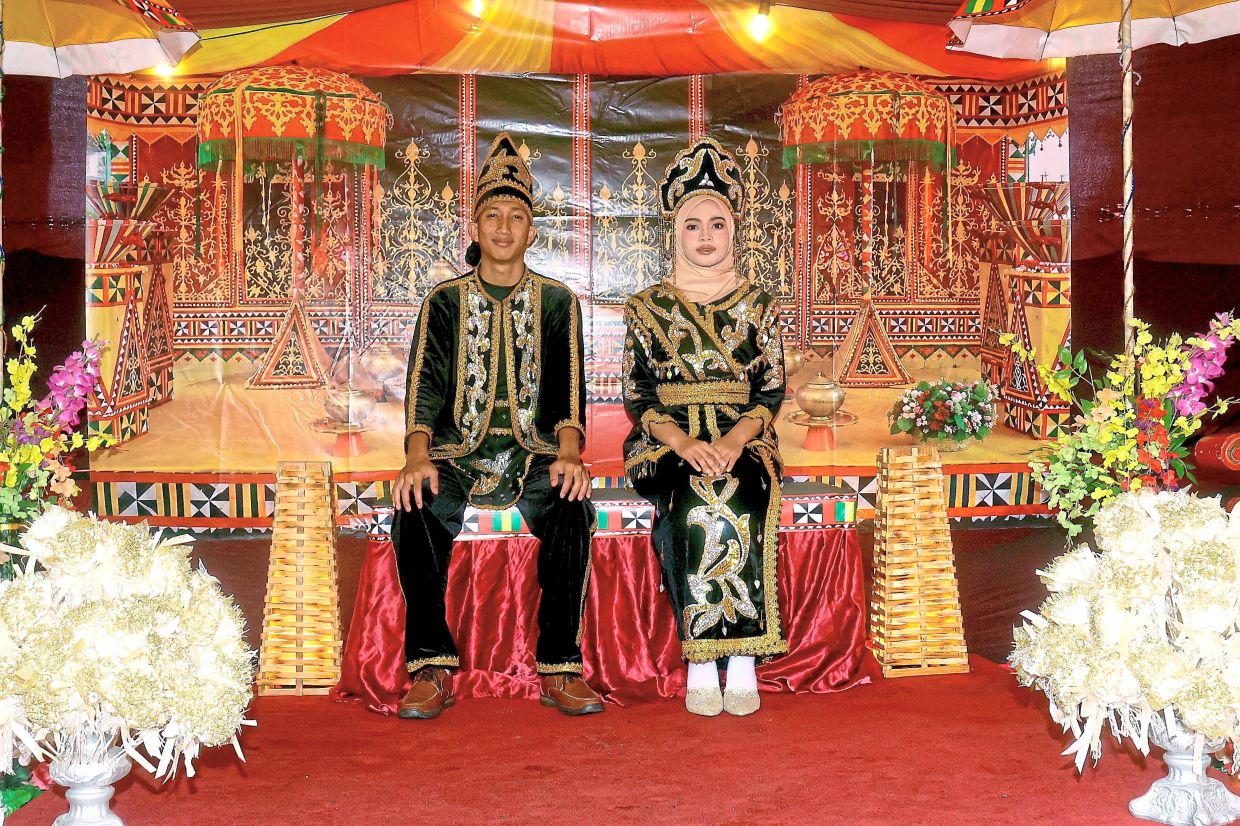
Pertubuhan Wanita Ikhlas Taiping Perak member Fatin Nur Izzati Mohd Asri said the Bajau Samah or Darat (land) and Bajau Laut (sea) communities had some differences in their wedding customs.
She said both followed a similar nikah (solemnisation) law but have distinct customs, clothing and celebrations.
“Both have the merisik, meminang (proposal), norong (gifting of dowry), menanti (arrival of the groom), mayad tabir (opening of veil to reveal the bride) and lastly the majlis maglami-lami (the celebration).
“For the Bajau Darat, the groom would traditionally arrive at the bride’s village on horseback.
“For the Bajau Laut, the groom would arrive in a wooden boat,” she said, adding that she learned the customs from Bajau women based in Taiping.
Fatin Farishah Mahamood, another member of the group, said the mayad tabir was the most unique and anticipated moment of the wedding.
“The bride will be seated behind a platform.
“Before the groom could see her, his representatives would need to negotiate with a mak andam (wedding custodian) or the bride’s representatives for a token sum to open the veil.
“During the celebrations, guests would be entertained by musicians playing the kulintangan, which consists of a row of small brass gongs and percussions,” she added.
Showcase of Malaysia
The carnival was jointly organised by non-governmental organisation (NGO) Pertubuhan Wanita Ikhlas Taiping Perak and the state government.
It was opened by Puan Sri Zavirah Shaari, wife of Perak Dewan Negara member Tan Sri Mohd Annuar Zaini.
In her speech, Zavirah said it was important to respect each other’s culture and traditions.
“Respecting and understanding our differences can strengthen relationships.
“Just like marriage, true love is about understanding and bridging our differences.
“Marriage is not just about two individuals, but also the coming together of two families.”
NGO chairman Toh Puan Norisha Abdul Rahman, who was the event’s organising director, said Malaysia’s multiculturalism was an asset.
“By understanding each other’s culture, we can truly appreciate one another,” said the wife of Larut, Matang and Selama district Orang Besar Jajahan Datuk Seri Wan Mohd Isa Wan Mohd Razalli.
In his speech, Perak tourism committee chairman Loh Sze Yee said the carnival was aimed at showcasing the various cultures of Malaysians.
“In tourism, we are not selling a location, as foreign tourists do not just want to eat or see buildings, they also want to experience our culture.
“This carnival showcases our heritage that has been passed down over several generations.”
Civil servant Siti Mariam Mahdar from Miri, Sarawak, was happy to view a Sikh wedding, which she had only seen in pictures and read in books.
“The wedding customs of the Orang Asli were also new to me.
“I realised that their attire had strong environmental elements.”
She said the common element in the various communities was celebrating the newlyweds and the coming together of families.
Company director Mike Hinton from the United Kingdom said he chanced upon the carnival during his visit to Taiping.
While he was aware of the different traditions in Malaysia, he said seeing the various wedding customs in real life was fascinating.
“I understand that all these customs date back many years and each one is special in its own way.
“I found the Malay and Indian weddings to be very colourful and I have attended a Chinese wedding before. It is so different from weddings in the UK.”
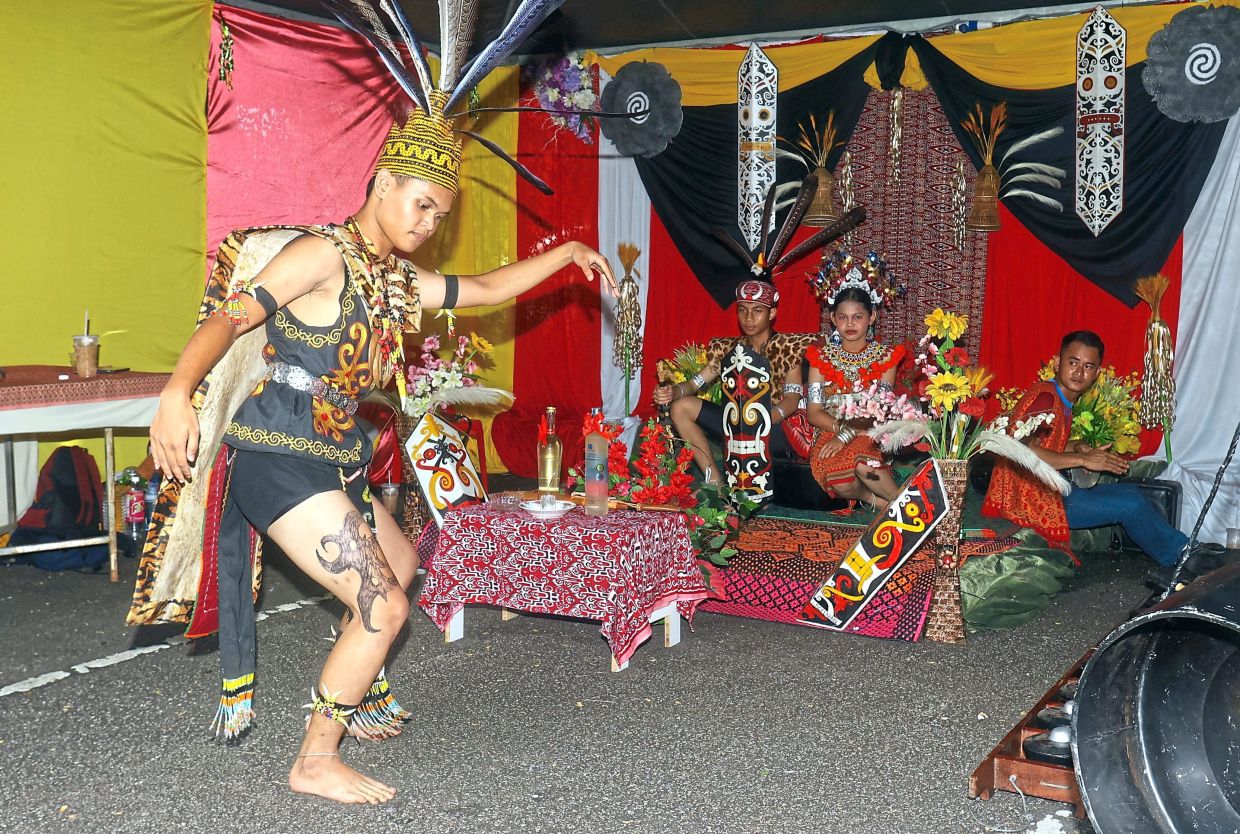
A performer showcasing a traditional dance in front of the ‘bride and groom’ of a mock Iban wedding at the Jom Kahwin Carnival in Taiping, Perak.
Semai community members dancing as they await visitors at the carnival.
Maserna: The ‘songkok’ is a vital piece of a Semai wedding.
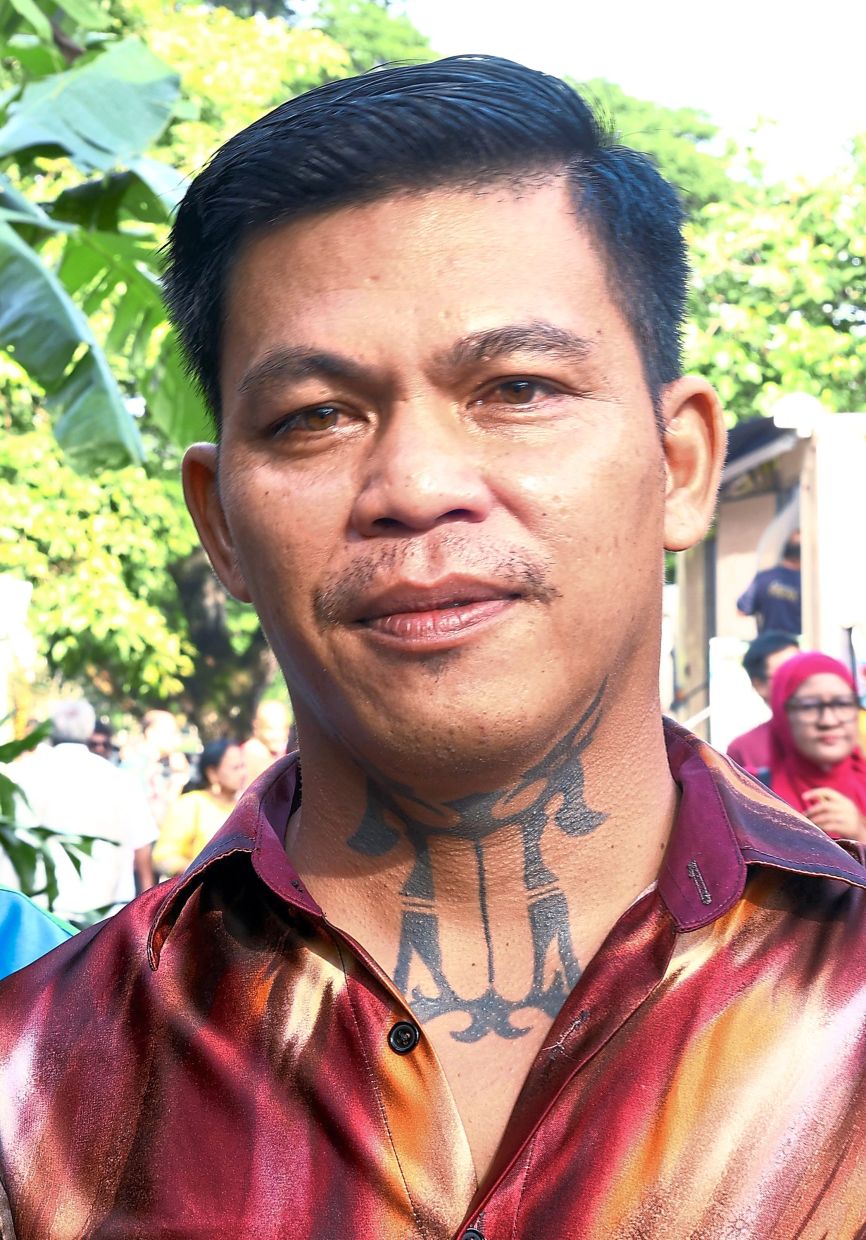
Visco: Iban wedding features many cultural paraphernalia.
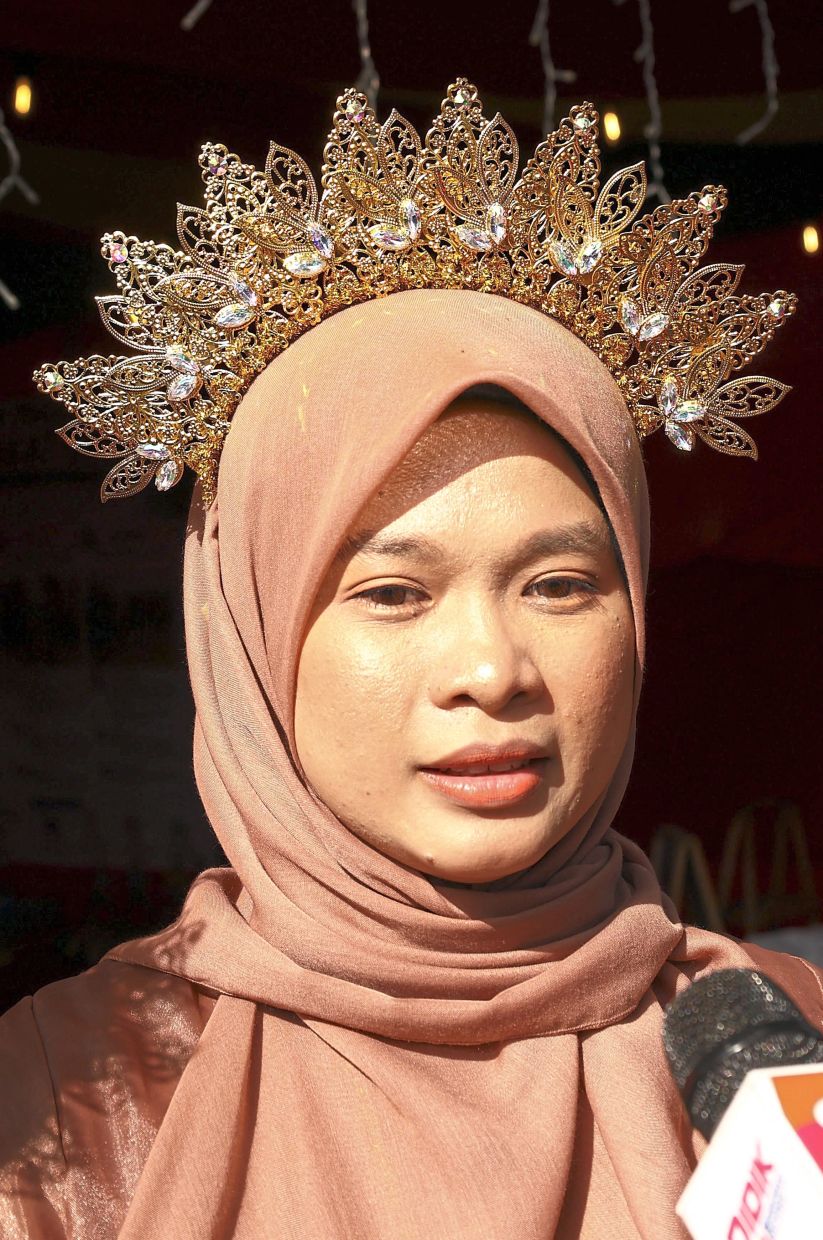
Fatin Farishah: Opening of bride’s veil anticipated in Bajau wedding.
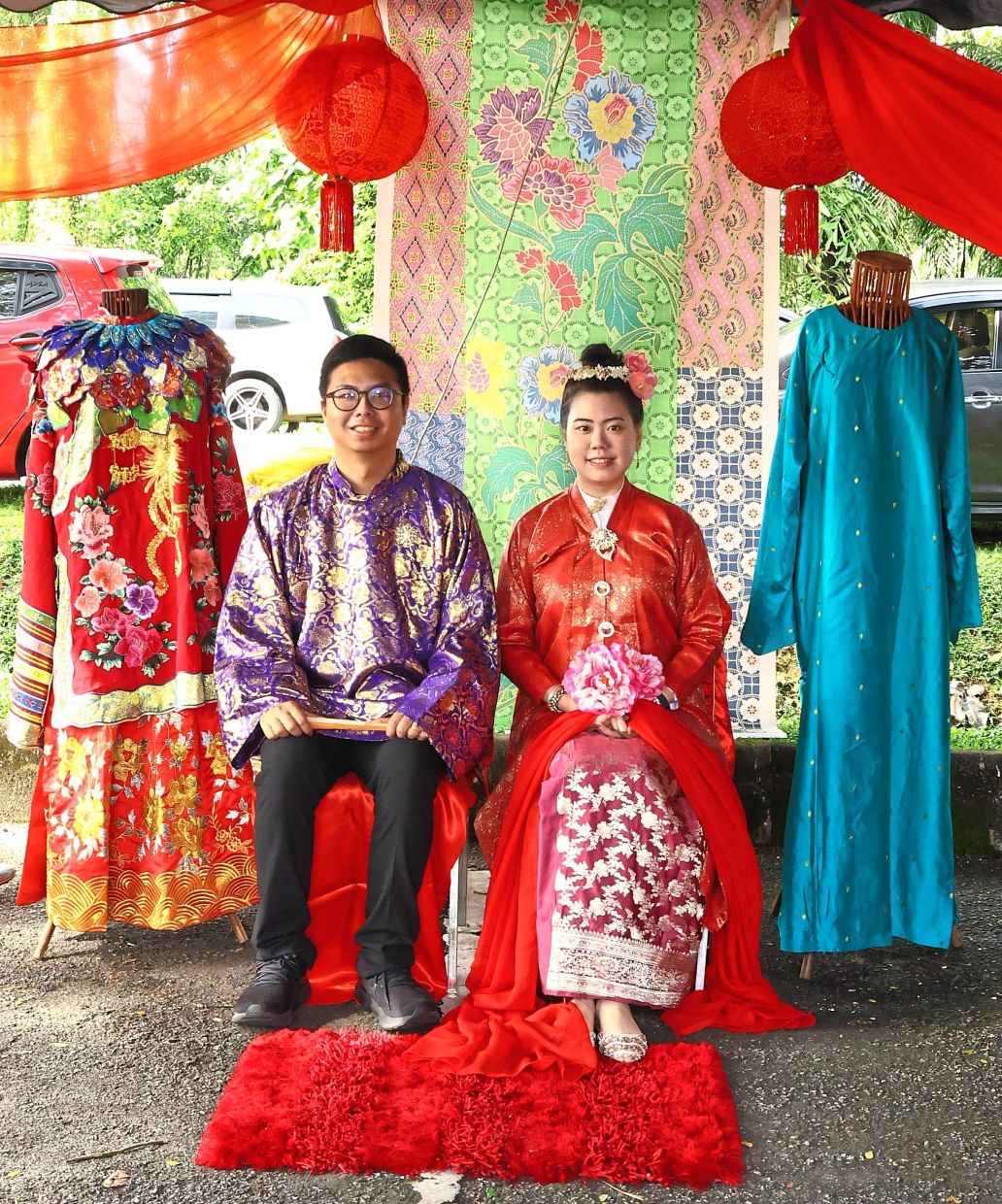
A pair highlight the richness of a Baba Nyonya wedding ceremony.
Showcase of a Bajau wedding ceremony which traditionally takes place at the bride’s residence.
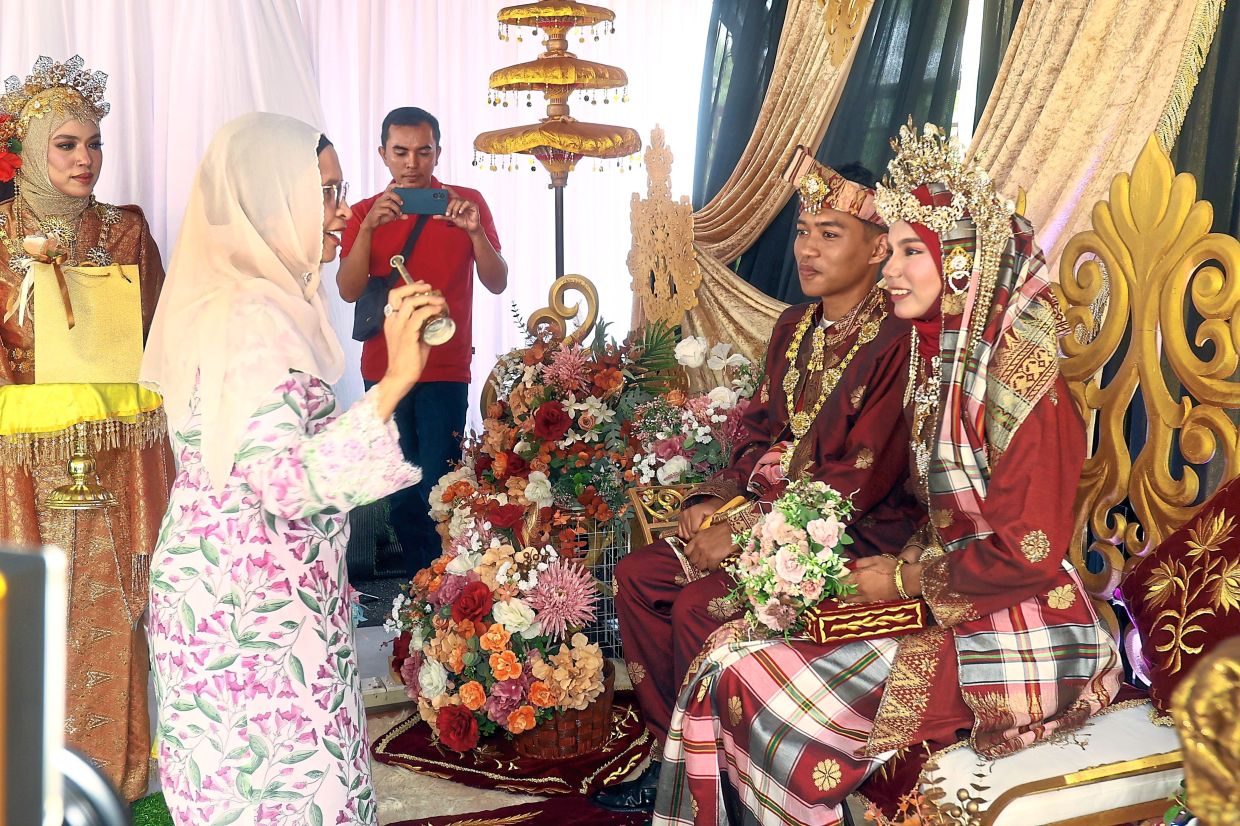
Norisha (left) blessing a couple as part of a mock Malay traditional bersanding ceremony.